
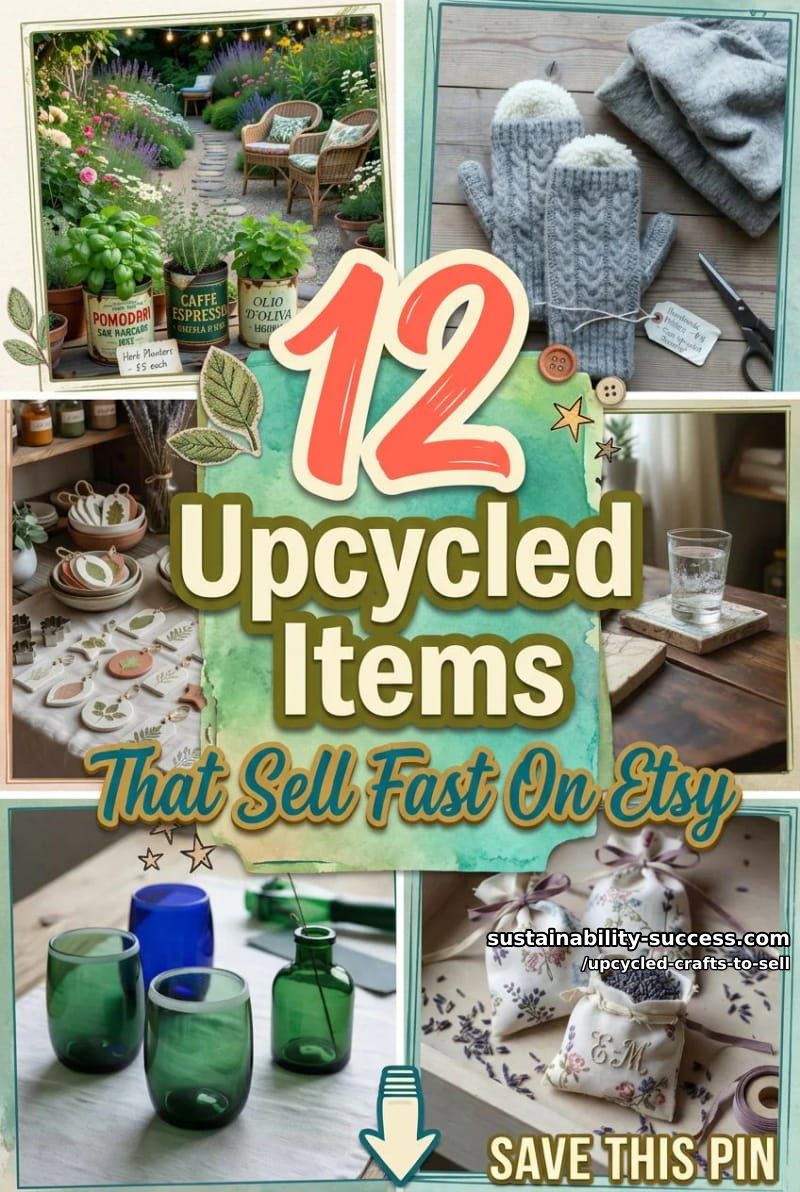
The crafts that sell are rarely the ones that look hardest to make. They are the ones with a wide gap between what the materials cost (often nothing) and what a buyer will pay, plus a photo that survives a thumbnail. This list is built for that gap. Every item below uses thrifted, scrap, or free material, every one has a realistic price you can actually charge at a market table or on Etsy, and a few of them have margins so wide that the only real cost is your afternoon. Where the money is in shipping versus selling in person, I say so, because that decision quietly kills more upcycling side hustles than bad glue ever has.
1. Tin can candles in scrubbed food cans
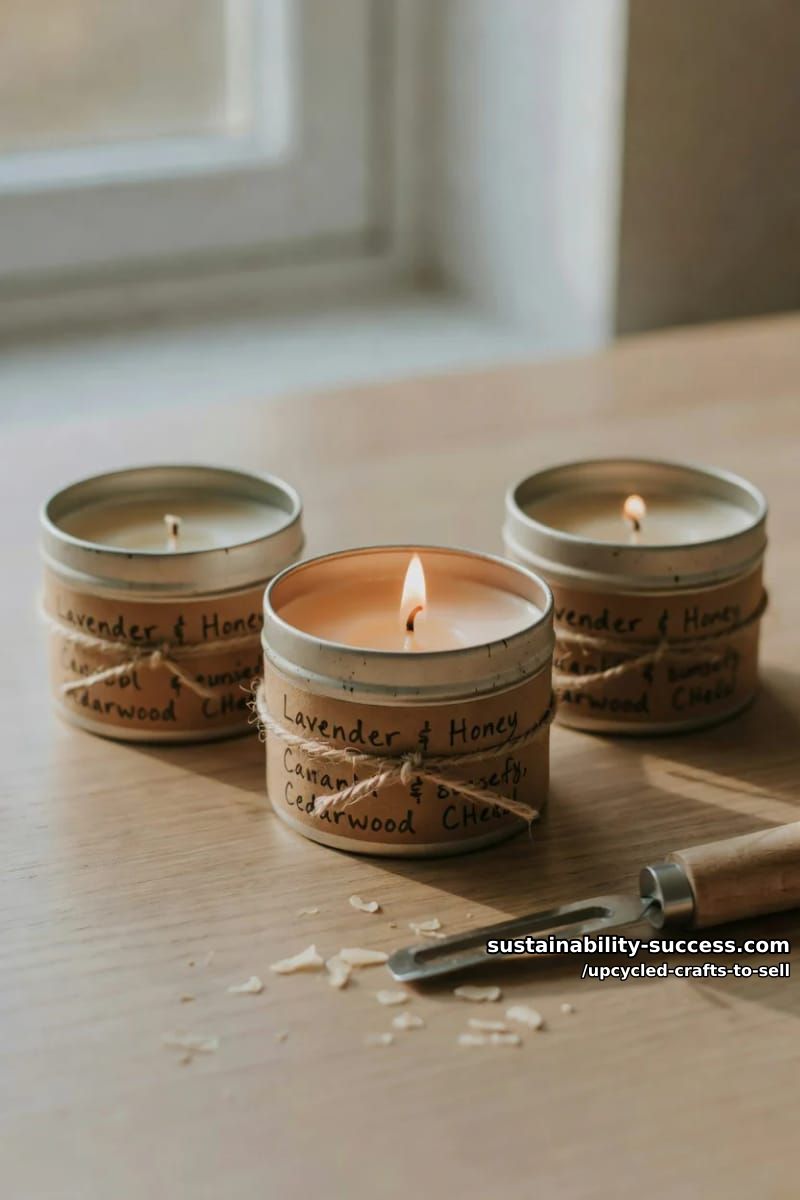
Tin can candles are the closest thing to a guaranteed seller here, and the math is why. A free can, a few ounces of soy wax (about $10 a pound in bulk, enough for four or five small tins), one cotton wick, a few drops of fragrance, and you have a product that lands inside the $15 to $30 range an eight-ounce container candle normally retails for. Container candles are what most candle buyers actually reach for, so you are not fighting the market, you are riding it. The common mistake is scrubbing the cans until they look new. Leave the half-worn original label; the slightly rustic one reads handmade, while the shiny one reads like it fell off a shelf.
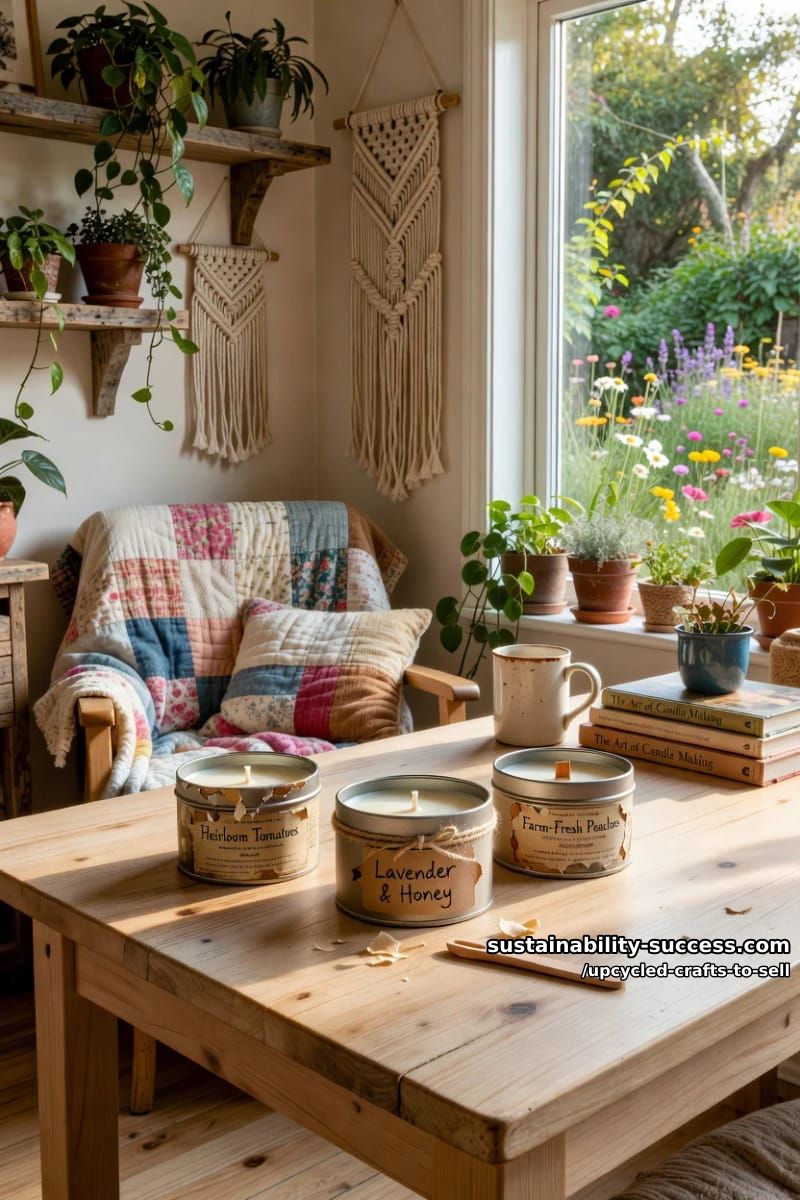
Brand it and bundle it. A kraft label, a named scent (something like "Cedar and Smoke" beats "Vanilla"), and three tins banded together as a $30 set move faster than singles ever do. One caution that only applies because you are selling these: tin gets hot, so size the wick to the can's diameter and stick a small burn-instruction label on the base. You take on a liability with a stranger's candle that you never had with your own.
A 10 lb bag with 100 pre-waxed wicks and centering devices is enough to test scents and pour your first 40 candles without reordering.

2. Felted mittens from thrifted wool sweaters
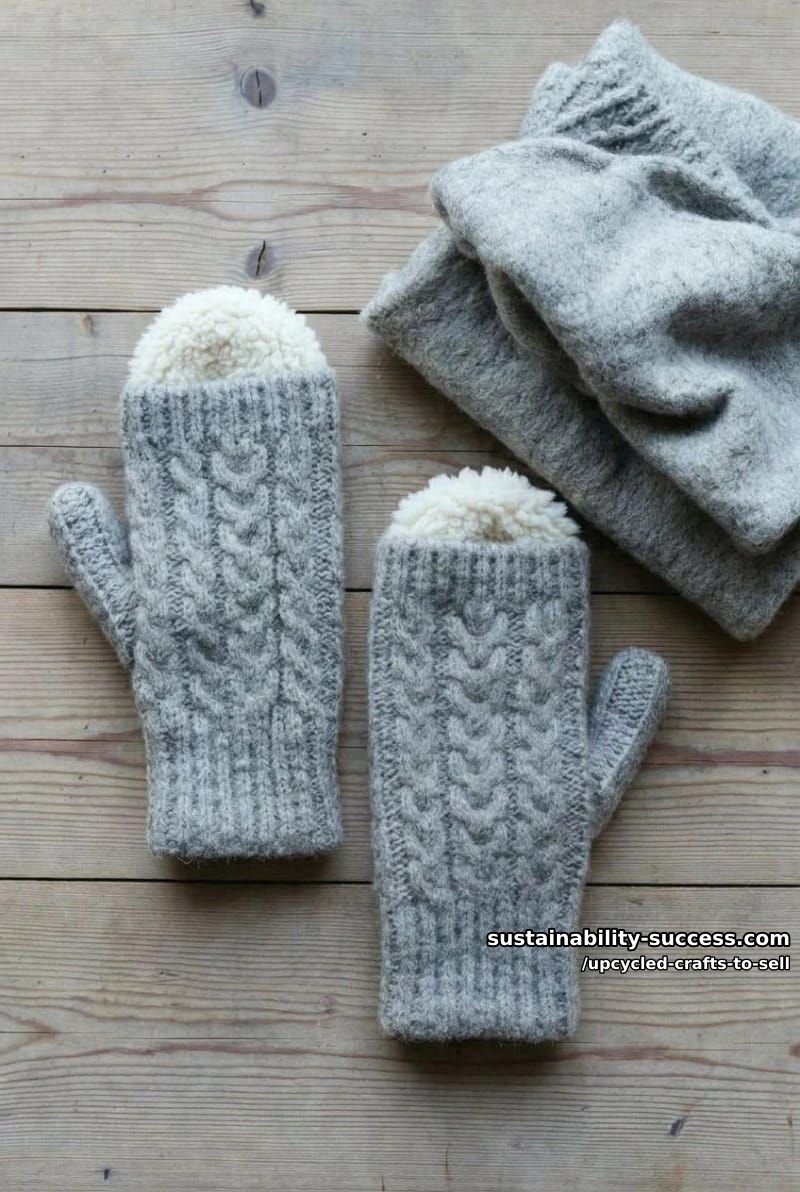
A $3 thrifted lambswool sweater becomes two or three pairs of mittens that sell for $22 to $35, which is the fattest margin on this list. Felt the sweater first (hot wash, hot dry) so the cut edges won't unravel, then cut the mittens from the body and use the ribbed hem as a ready-made cuff. Line them with fleece salvaged from another thrifted piece and you have a warm, finished-looking product nobody would guess started as someone's old jumper.
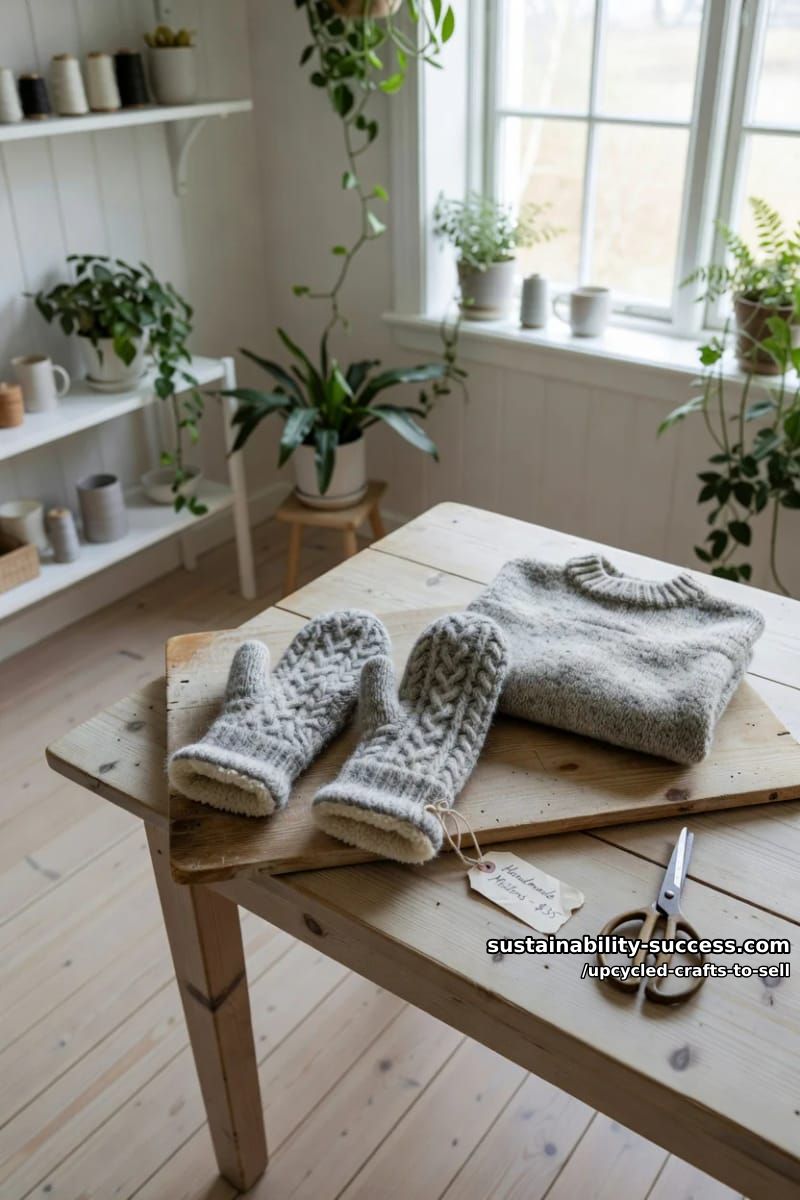
Granted, this only works if you read the label. Look for "lambswool," "merino," or "cashmere" and skip anything more than lightly blended with acrylic, because acrylic refuses to felt and the raw edges fray on the first wear. The Goodwill bins sold by the pound are where this margin actually lives. Make these from August through November; nobody buys mittens in April.
3. Cut wine-bottle tumblers and bud vases
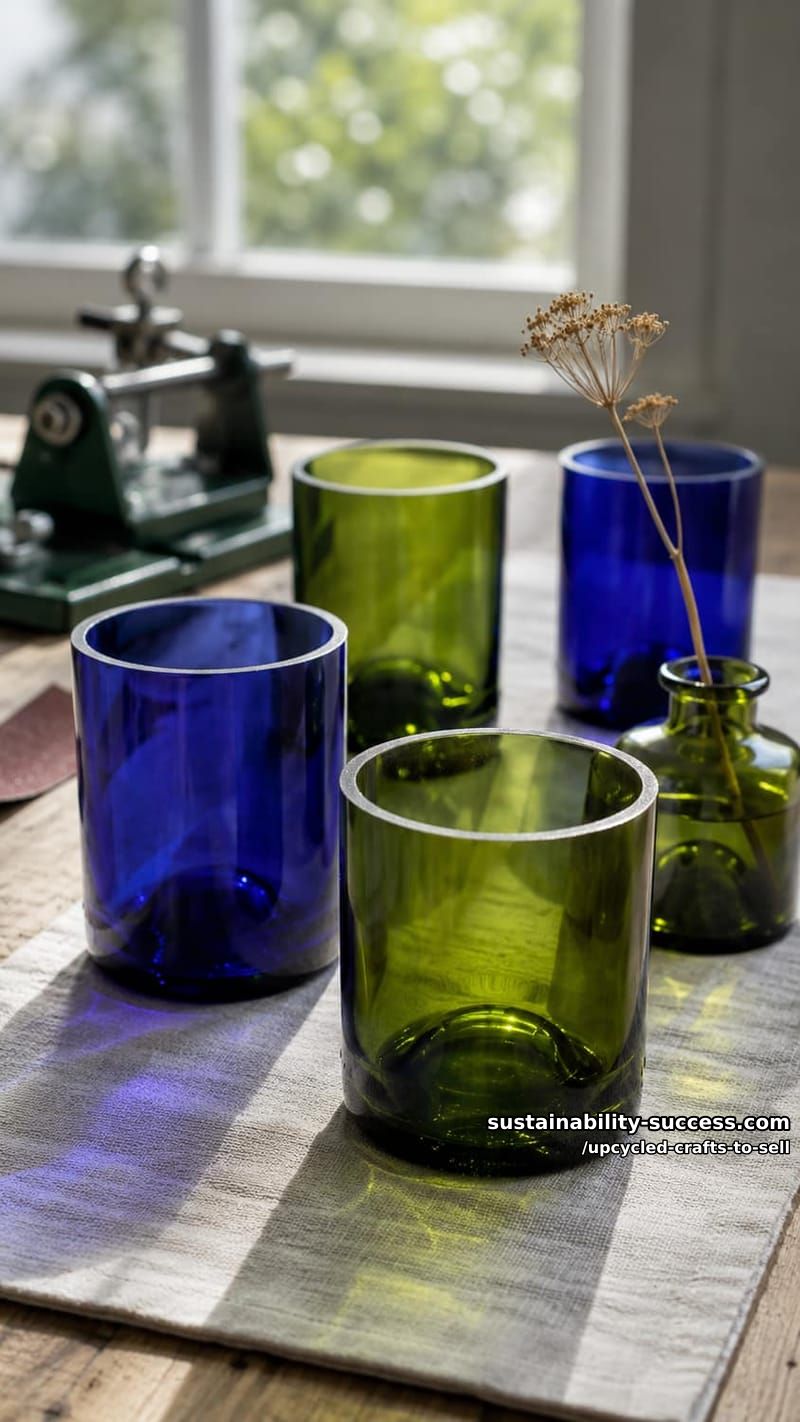
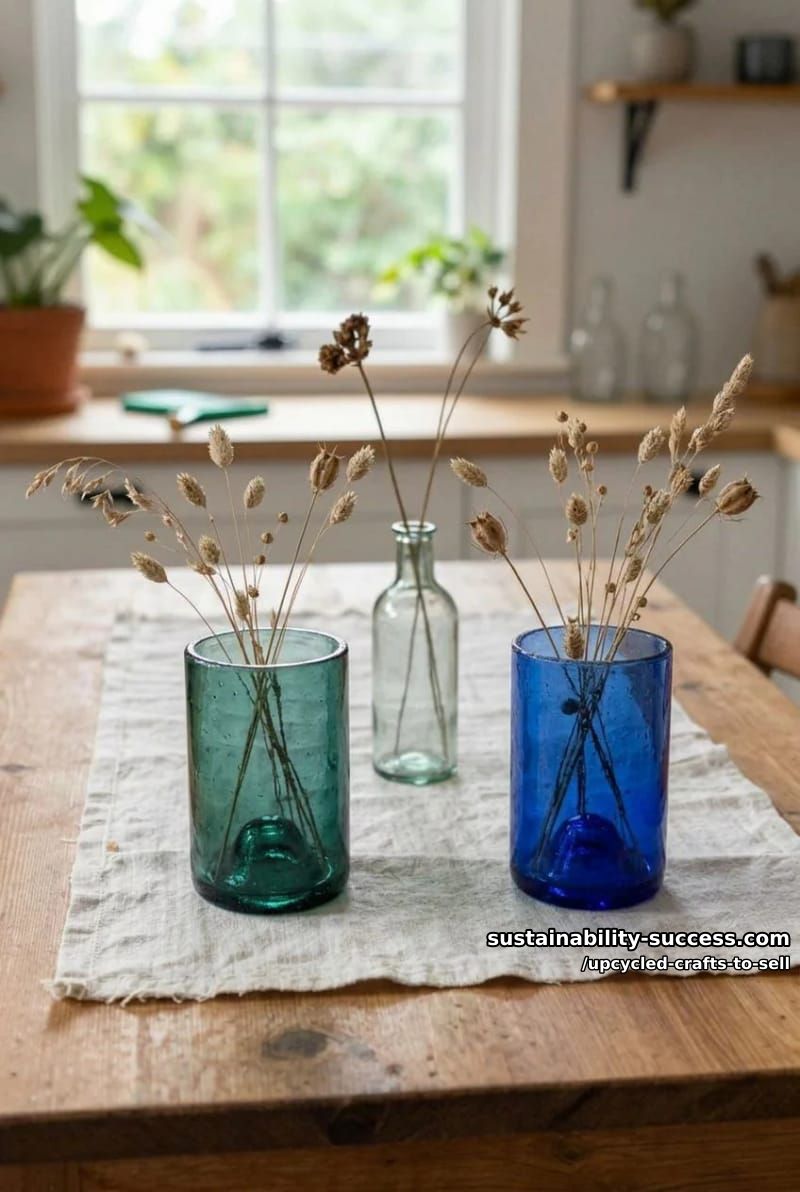
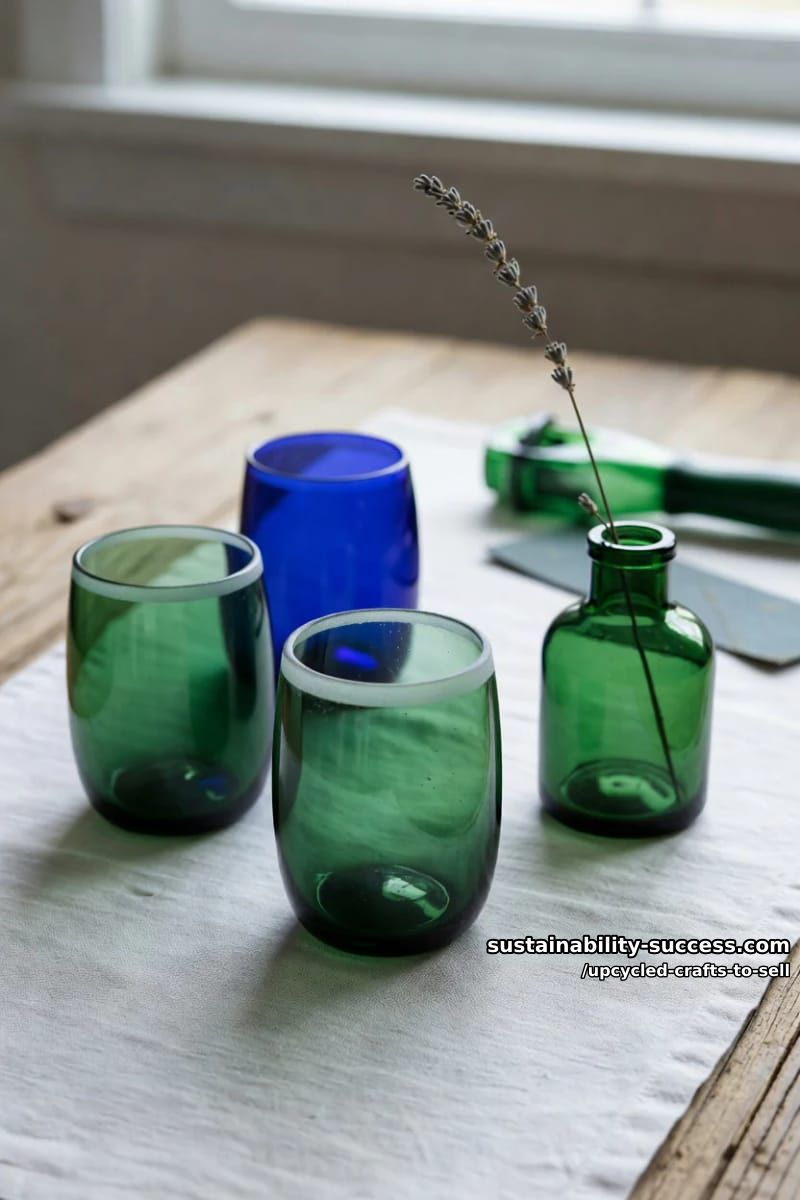
Cut wine and beer bottles turn a recycling bin into a $40 set of four tumblers. The whole craft hinges on one tool and one trick: score the bottle once, then alternate boiling and ice water over the score line until the glass separates clean, and sand the rim smooth so it is safe to drink from. The cobalt gin bottles and deep green wine bottles sell better than clear ones, so the color is genuinely the product.
The cheap single-wheel cutters wobble and give you a jagged break about half the time, which means a wasted bottle and a re-score. The five-wheel kits and the old green Ephrem's are the two that score straight enough to be worth your time. Sell tumblers as sets, never singles; a lone glass looks like a sample, four matched ones look like a gift.
The original green-frame cutter has a flexible backstop that gives a repeatable score line, which is the difference between a clean break and a coaster you throw away.

4. Denim pocket organizers from old jeans
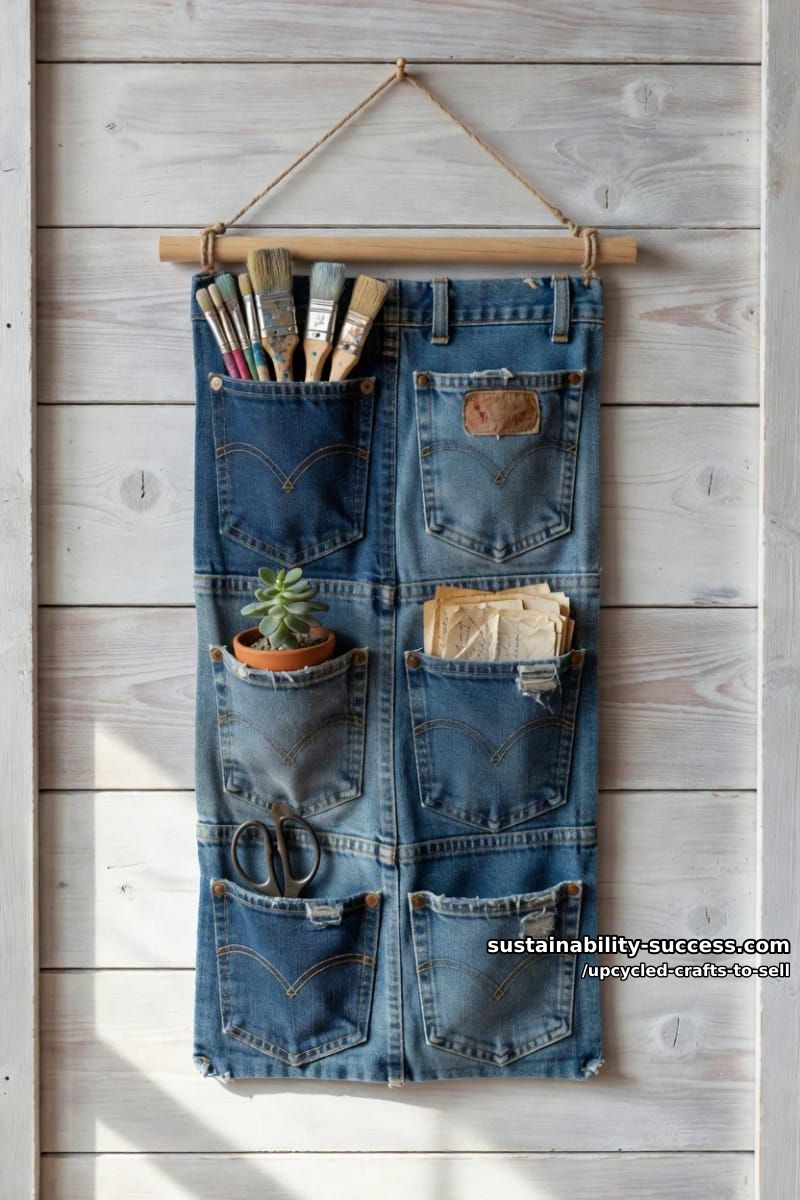
A worn pair of jeans gives up its back pockets to a wall organizer that sells for $20 to $35 and uses something everyone has in a drawer. Cut each pocket out with an inch of denim around it, stack three or four in a column on a fabric backing, and hang the whole thing from a dowel. The varied washes and the visible rivets and topstitching do the styling for you.
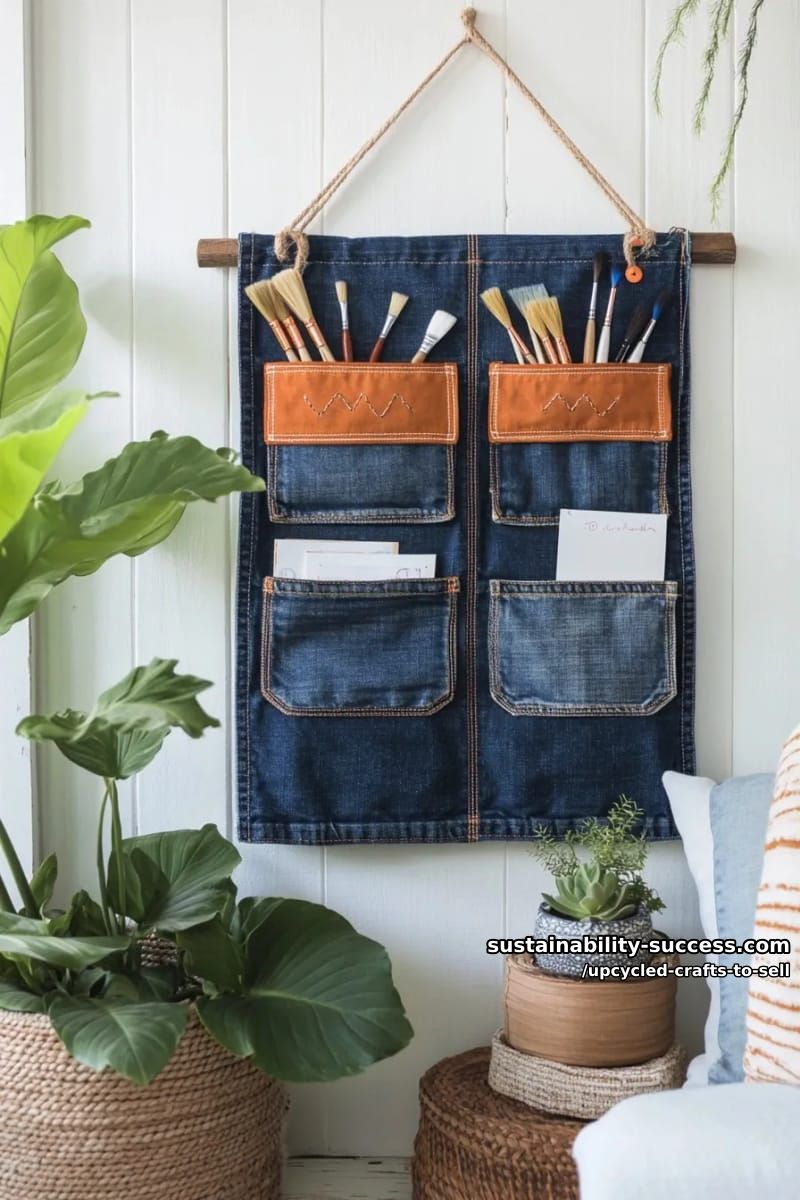
This is a market item, not an Etsy item. It is bulky, awkward to box, and the margin does not survive a $9 shipping label. Sell it off the table where the buyer can carry it home, and keep your Etsy shop for the flat, light, high-markup pieces further down this list.
5. Broken-china pendant necklaces
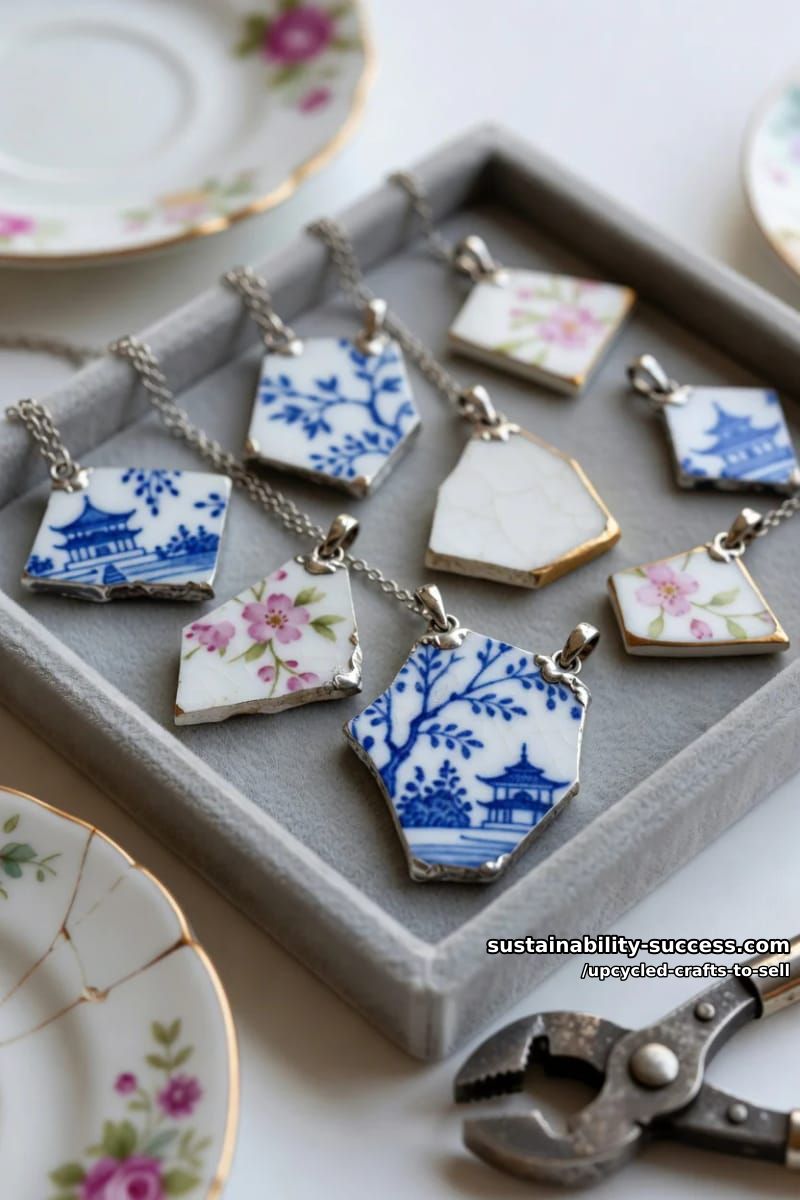
A chipped vintage plate nobody wants becomes a tray of pendants at $18 to $30 each, and broken china is far easier to source than intact. Nip the plate into rough shards with tile nippers, grind the edges smooth, then either set each piece in a bezel or wrap it in copper tape and solder the edge. The soldered look is the one collectors actually pay up for. Hunt the blue-willow and floral patterns; the plain white ones don't sell.
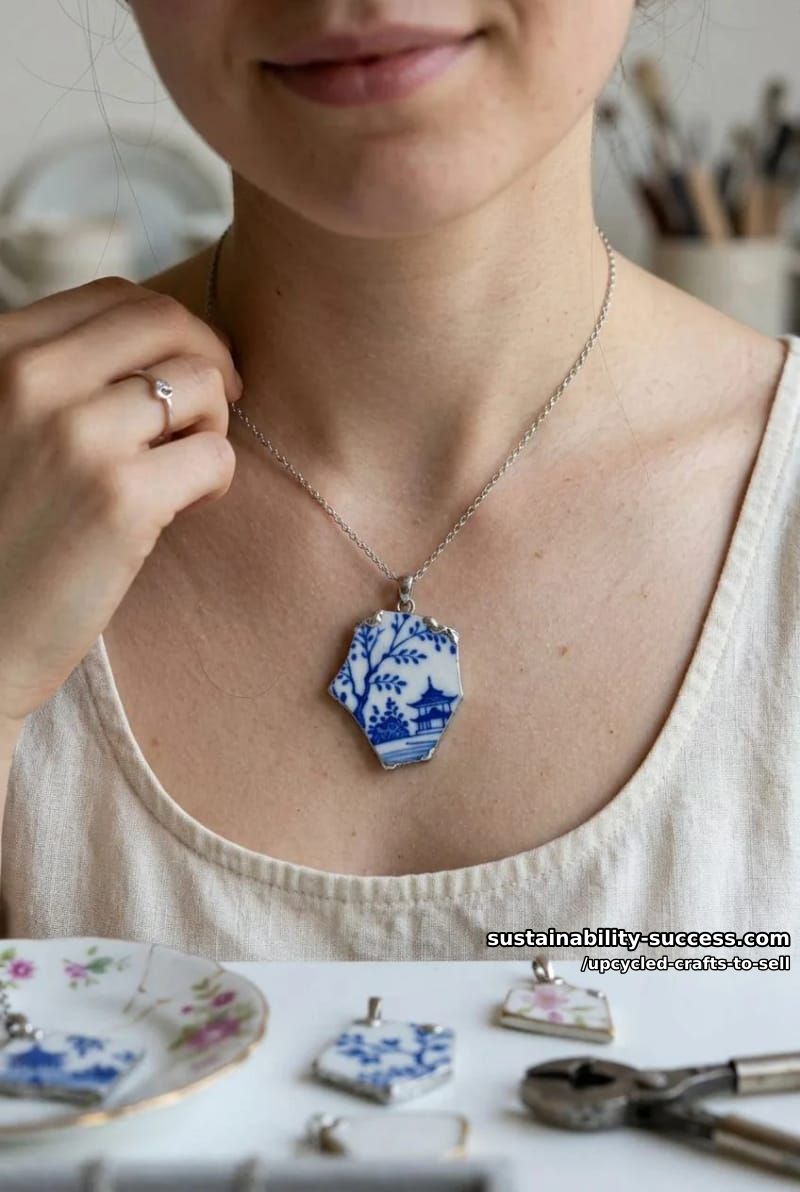
Estate sales hand you the raw material for almost nothing, because a chipped single plate from a broken set is worth a quarter to them and a pendant blank to you. This is a flat, light, high-value piece, so it ships cheaply and belongs in your Etsy shop.
6. Pressed-flower botanical frames

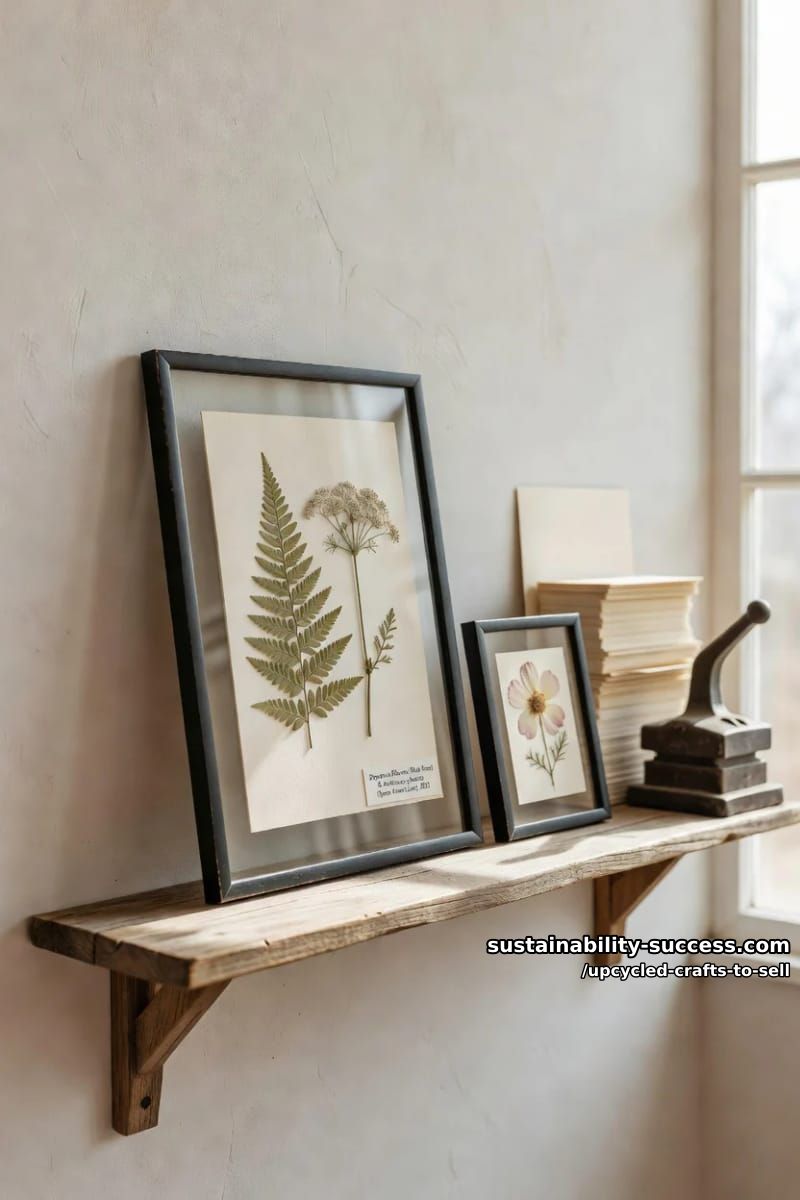
Pressed flowers in a thrifted glass frame are the highest-margin, lowest-skill flat item here, and flat means cheap to ship, which makes this your Etsy headliner. Press your specimens for two to three weeks (a phone book works, or a $15 press if you are producing in volume), mount them on cream cardstock, and either back them in a thin frame or float a single stem between two panes of glass.
The herbarium look outsells a busy bouquet by a wide margin: one specimen, a small typed latin name, a lot of white space. Restraint is what reads as expensive. Ferns, cosmos, and queen anne's lace press flat and keep their color; I used to recommend roses, then pressed two batches into brown mush and stopped. Anything thick or fleshy will do the same.
Which of these actually pencil out
Margin and venue decide which of these earn your weekend, not how charming they look on the table. The numbers below are rough and your sourcing will shift them, but the pattern is stable: light and flat goes on Etsy, heavy or bulky earns more at a market where there is no shipping label to eat the difference.
| Product | Material cost | Sells for | Where it sells |
|---|---|---|---|
| Tin can candle, set of 3 | ~$3 to $4 | $30 to $40 | Market or Etsy |
| Wool mittens | ~$3 to $6 | $22 to $35 | Market and Etsy |
| Cut-bottle tumblers, set of 4 | ~$2 plus tool | $40 to $50 | Market |
| Broken-china pendant | under $1 | $18 to $30 | Etsy |
| Pressed-flower frame | ~$3 to $5 | $15 to $25 | Etsy |
| Labelled-can planter | free | $8 to $15 | Market |
The single most common reason upcycled sellers quit is that they price off the material, which cost nothing, and forget the labor. A can is free, so the candle “should” be $5, right? No. Price it against what it replaces on the buyer’s shelf (a $16 boutique candle) and against your time. A workable floor is materials plus your hourly rate times the minutes per piece, then doubled so a wholesale order is still possible later. If you can’t comfortably sell something for at least four times its true cost, you have a hobby, not a side hustle.
One pour of soy wax, three tins
About $3.50 in materials, roughly 40 minutes, three 4 oz candles.
One pound of soy wax (around $10) fills four to five 4 oz tins, so call it $2.50 of wax across three candles, plus three wicks (about $0.30), a few cents of fragrance, three free cans, and three kraft labels. Round the batch to $3.50 in materials. Band the three tins as a gift set and a $30 to $40 price is normal at a market, roughly a tenfold return before you account for the 40 minutes. Sell them as singles at $12 to $14 and the per-unit margin is similar; the set just lifts your average sale, which is the number that decides whether a market day was worth the booth fee.
7. Stamped air-dry clay ornaments and gift tags
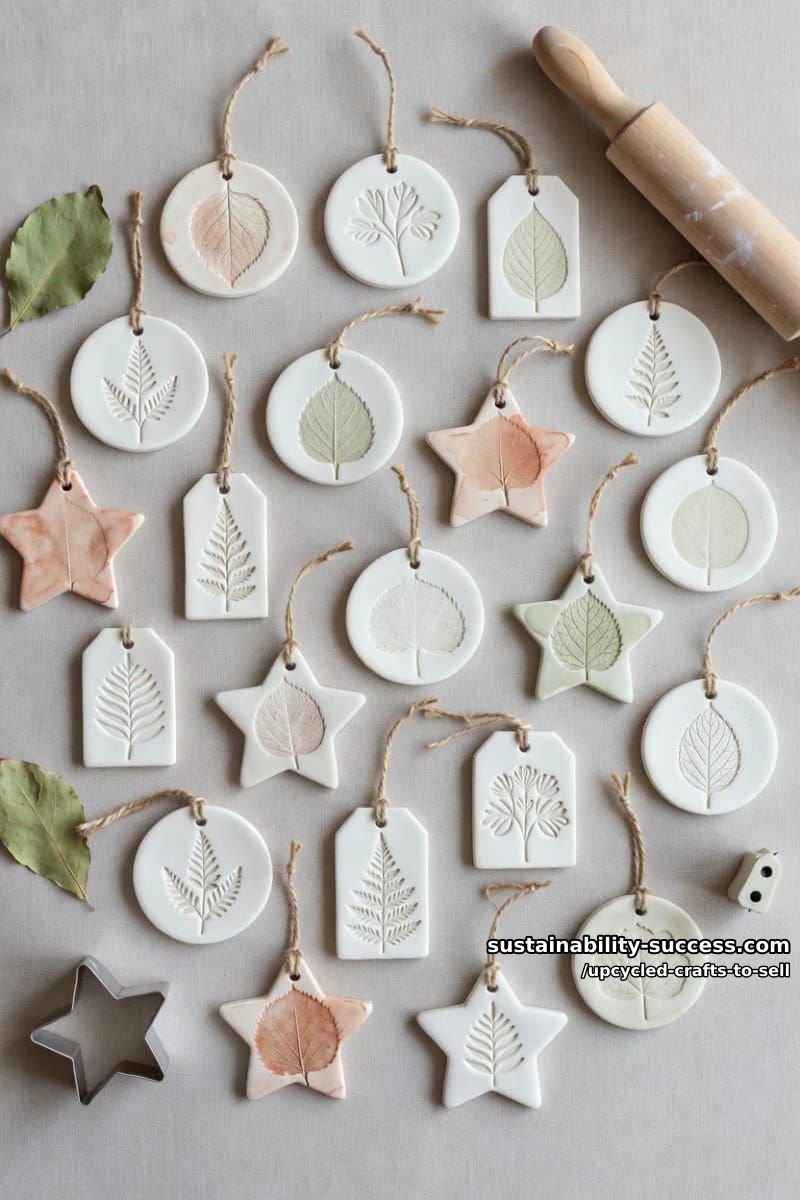
Air-dry clay stamped with botanicals and cut into ornaments or gift tags is a seasonal cash machine that costs almost nothing per piece. A $10 block rolls out dozens (or use free salt dough); press a real leaf or a stamp, cut with a cookie cutter, punch a hanging hole, and dry overnight. Sell singles at $6 to $10, or a boxed set of six tags as a small gift-with-a-gift item that buyers grab on impulse near the register end of your table.
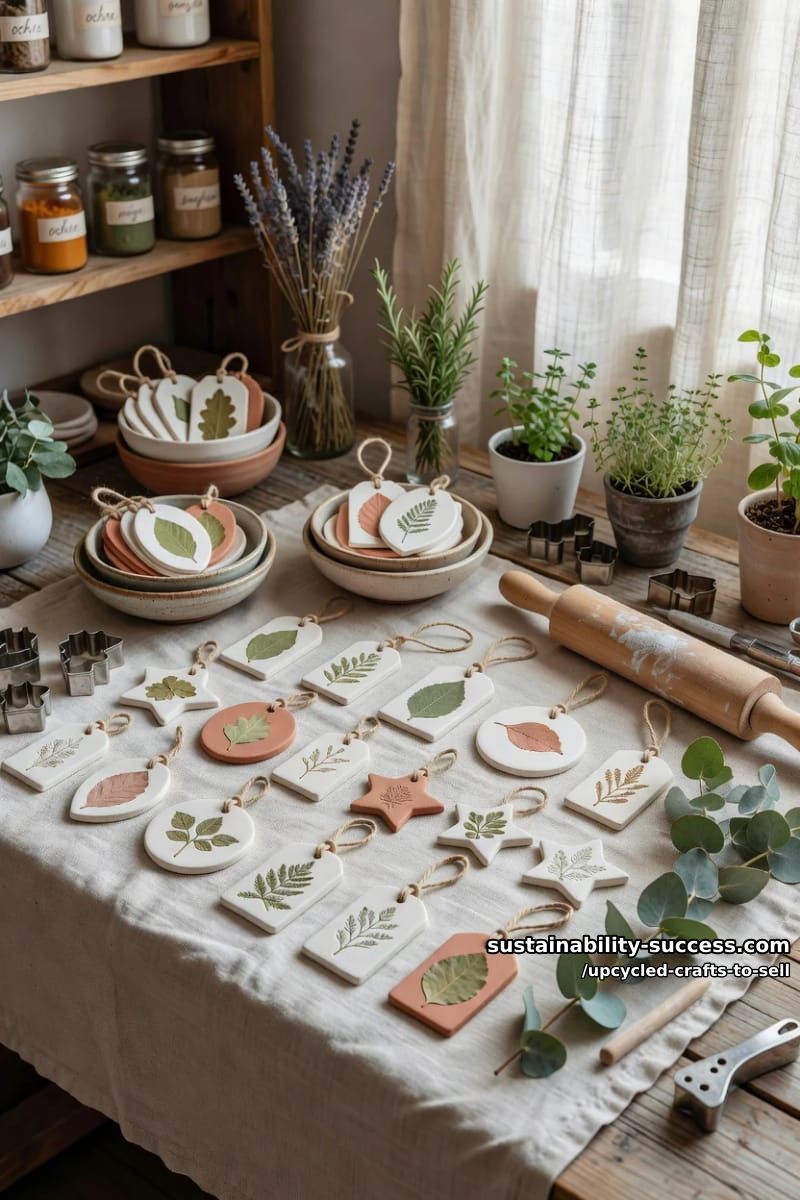
Leave them raw white for the Scandinavian look that actually sells, or wash them with a thin terracotta or sage. Skip the glitter, which dates them instantly and reads dollar-store. Seal everything with a matte varnish so they don't chip in a buyer's ornament box come January.
8. Vintage map and sheet-music coaster sets
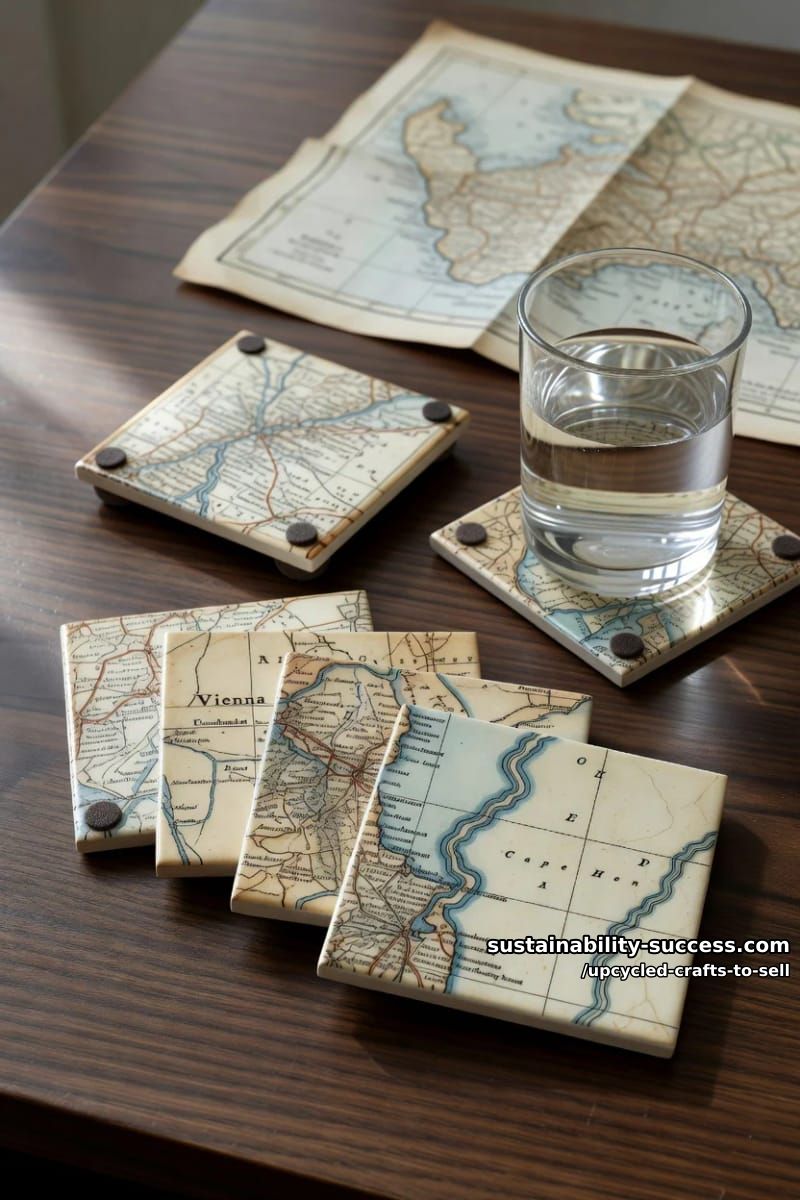
Decoupage a scrap of old map or vintage sheet music onto a plain ceramic tile and you have a coaster set that sells for $20 to $28 for four. Hardware-store tiles run about a dollar for a four-pack, and the paper is free from a damaged atlas or a thrifted songbook. Glue the paper down, seal it with several coats of waterproof acrylic, and felt the bottoms so they don't scratch.

The real money is in personalization. Cut the map so each coaster centers on a different city, then sell it to someone buying for a person from there. A generic vintage-map set is fine; "four coasters, four cities where you have lived" is a $35 custom order that took the same ten minutes to make.
9. Wine-cork trivets and memo boards
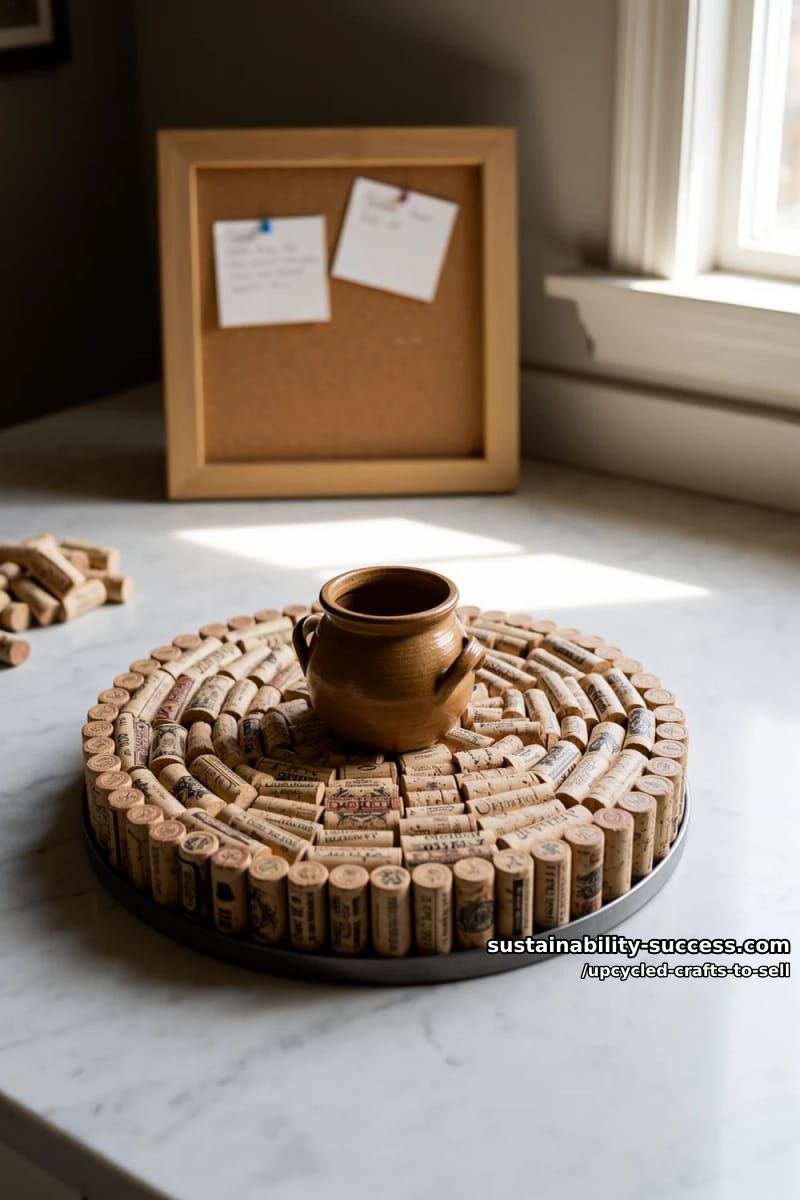
Wine corks glued edge to edge into a trivet or framed as a memo board sell for $15 to $25, and the corks are free the moment you ask a restaurant or wine bar to save them for a week. A trivet takes about 30 corks halved lengthwise and packed into a thrifted picture frame or a metal ring.
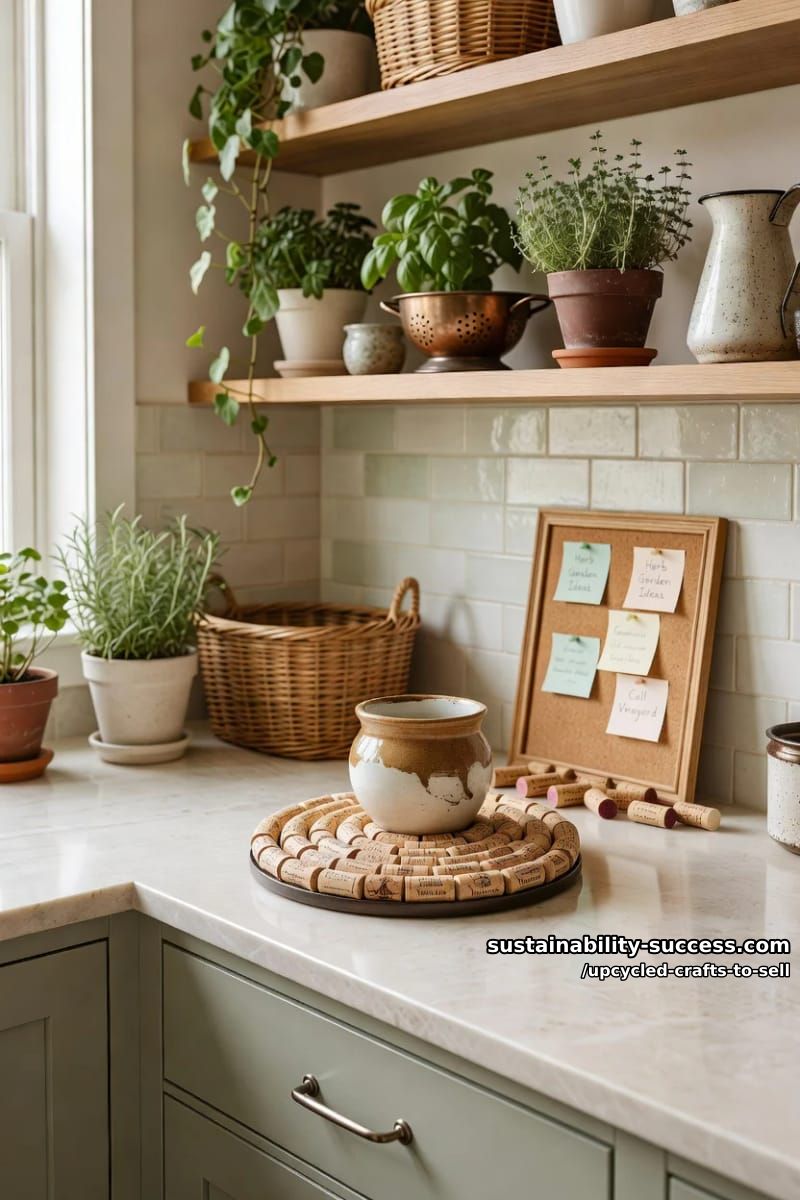
Be honest with yourself about this one: it is the lowest dollars-per-hour item here, because corks are fiddly to cut straight and the glue-up is slow. Treat it as a filler product, the thing you assemble while watching TV, not your headliner. It does move at markets to the wine-themed-kitchen buyer, who is a real and reliable shopper.
10. Vintage-linen lavender sachets sold in threes
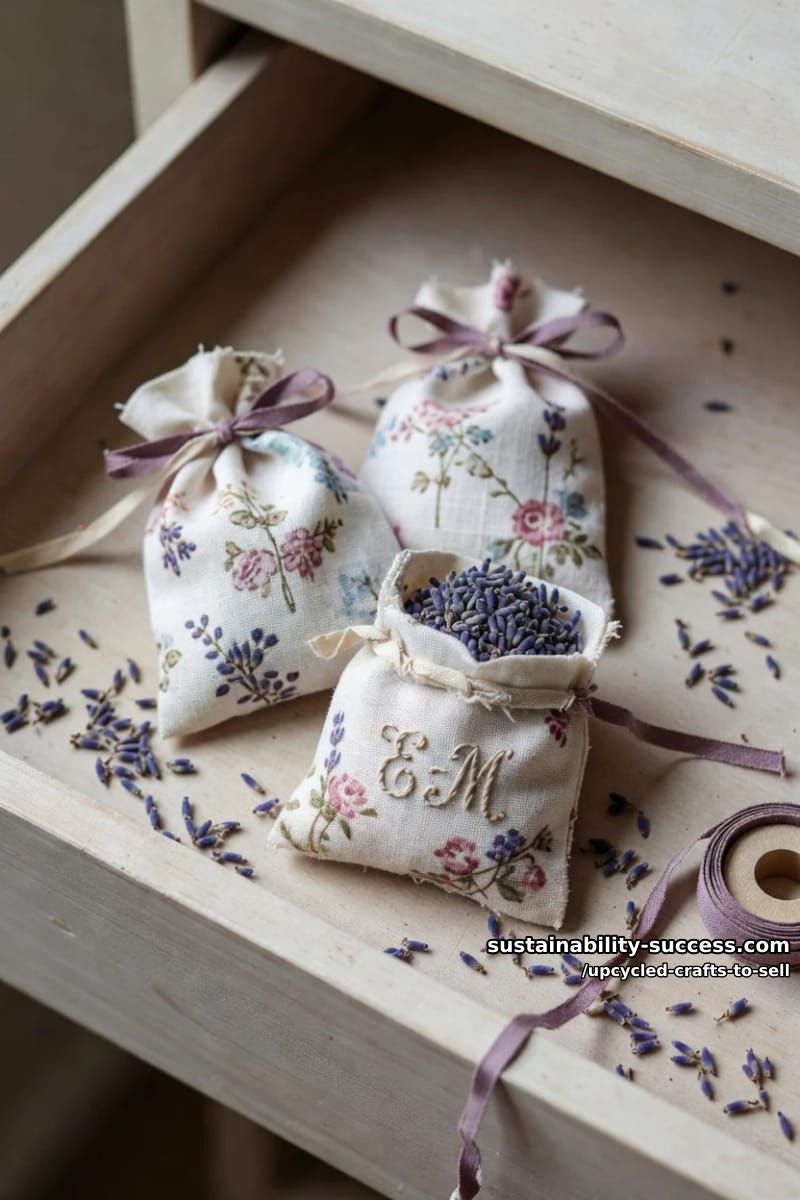
A square of vintage linen or a tea-towel scrap filled with dried lavender is the cheapest thing to make on this list and one of the easiest to sell in multiples. A pound of buds (around $15 to $20) fills 30 to 40 small sachets, and the linen comes free from a stained tablecloth nobody wanted. A set of three at $15 to $20 outsells a single every time.
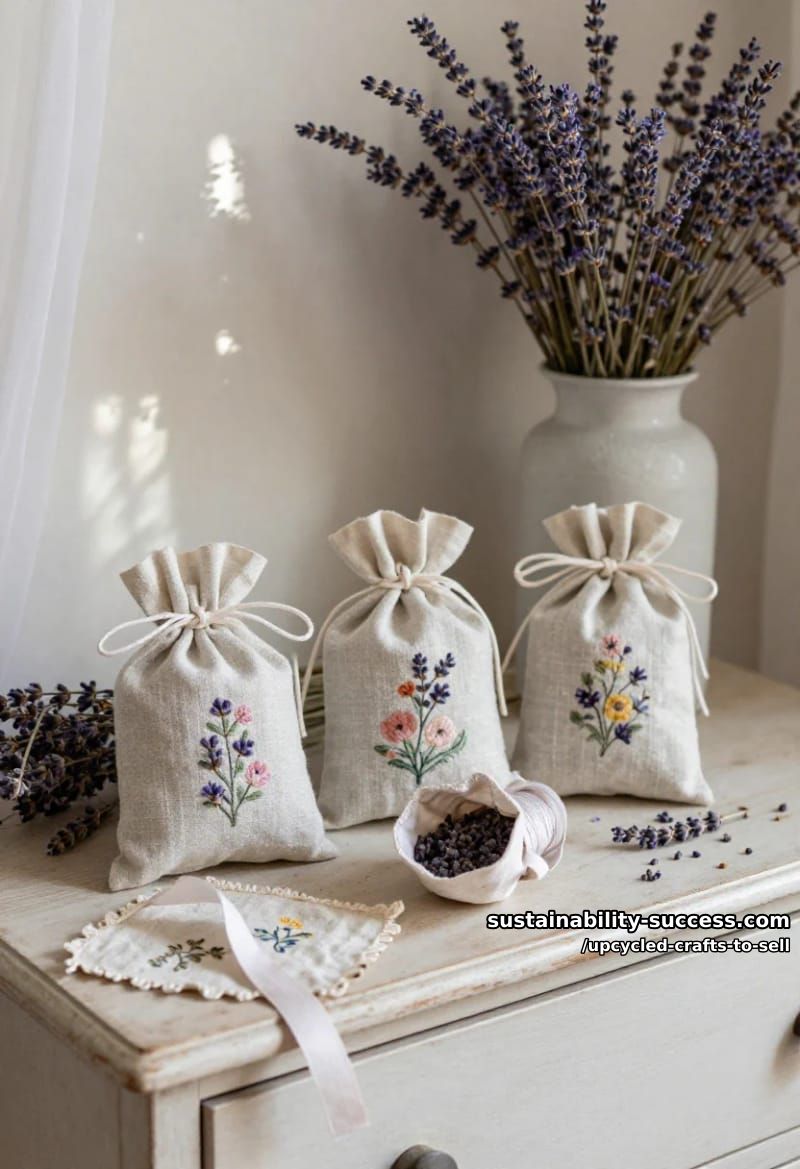
Make them refillable. A little ribbon tie instead of a sewn-shut seam lets the buyer top up the scent when it fades, and "refillable" quietly justifies the higher price. Sell drawer sachets, not just closet ones, and stack them next to your candles, because the customer who buys a candle for the scent will add a sachet without thinking.
A full pound of fragrant buds is enough for dozens of sachets and a few candles, which is the unit economics that makes this product work.

11. Button and glass-bead wind chimes
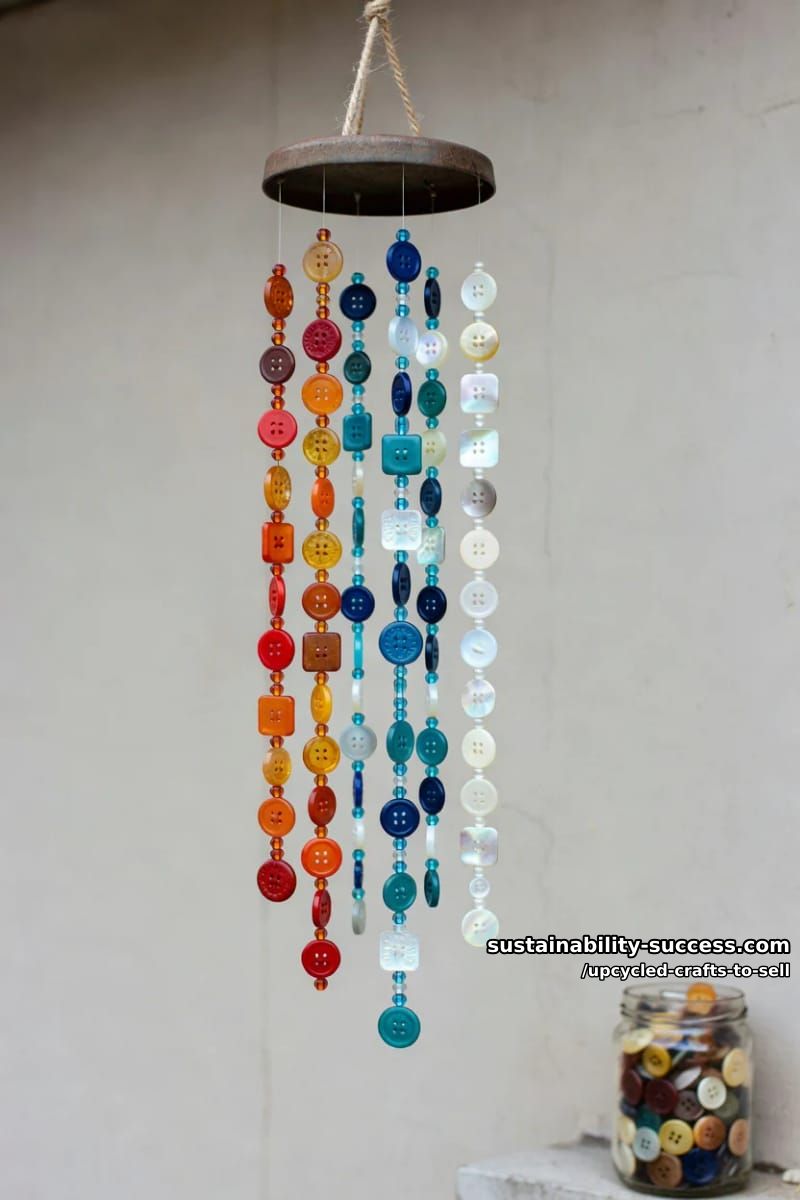
Buttons and beads from a jar of orphaned craft supplies, strung on fishing line under a thrifted lid or a piece of driftwood, make a wind chime that sells for $20 to $35. The sound is incidental; buttons clack, they don't ring, and buyers know it. They buy these for color, so sort by palette and string monochrome strands, because a sorted red strand looks intentional while a random mix looks like leftovers.
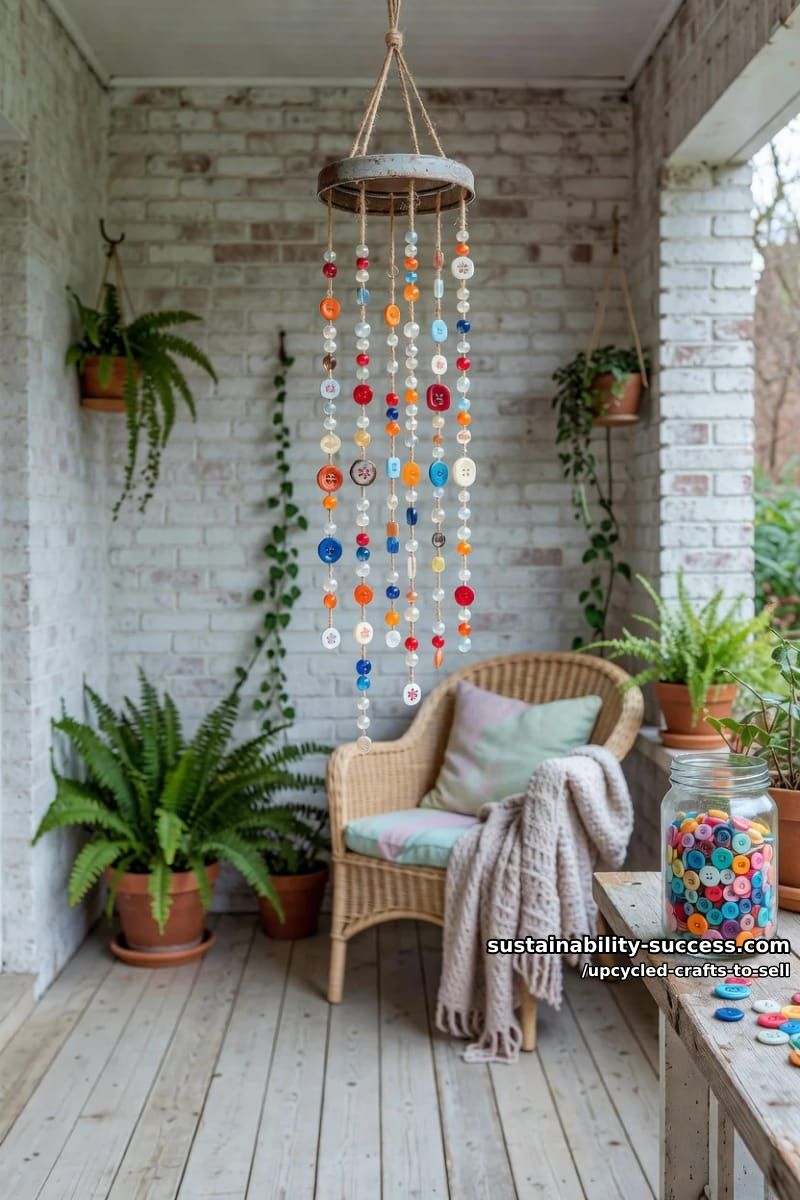
Estate-sale button tins go for a couple of dollars and hold hundreds. Pull out the mother-of-pearl and bakelite buttons before you string anything; those are worth more sold separately to sewists than glued into a chime.
12. Coffee-tin and labelled-can herb planters
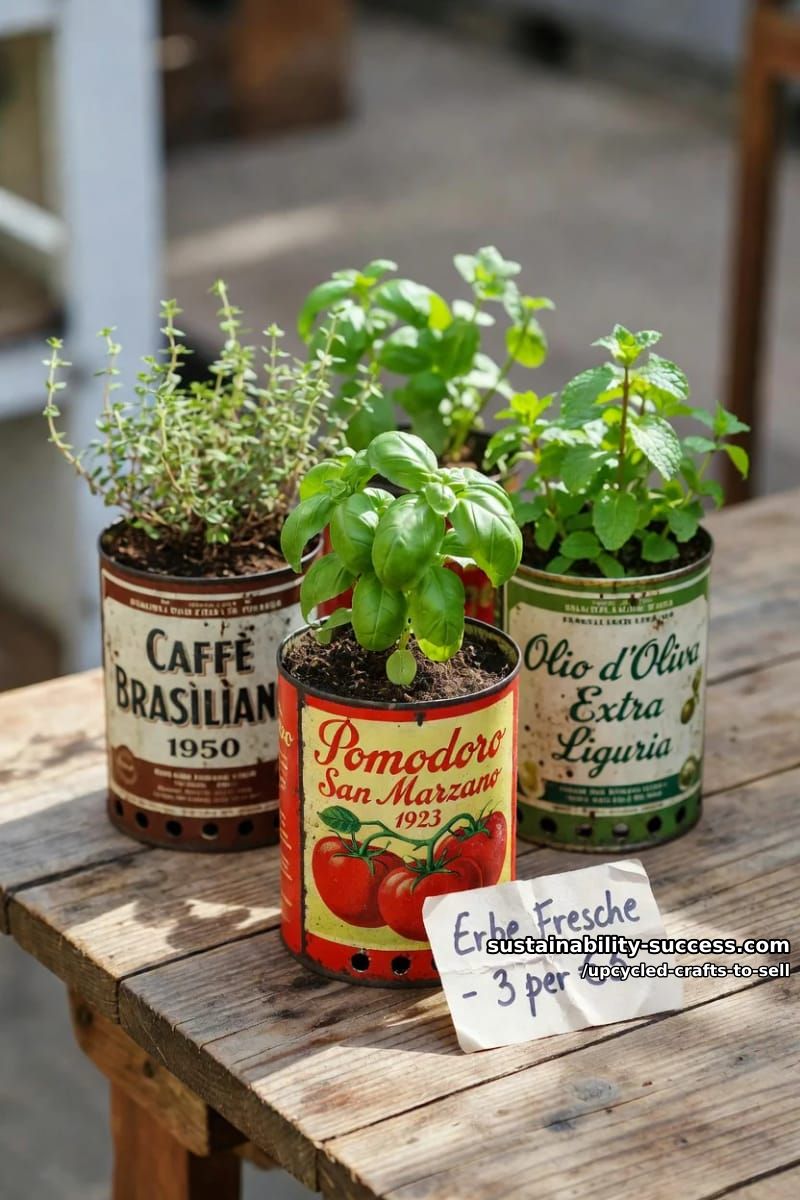
A coffee tin or a vintage olive-oil can with the label intact, drainage holes punched in the base, becomes an herb planter that sells for $8 to $15 empty, or a good deal more as a planted set of three. The original label is the entire appeal, so a faded Italian tomato tin or a 1970s coffee can beats anything you could paint yourself.
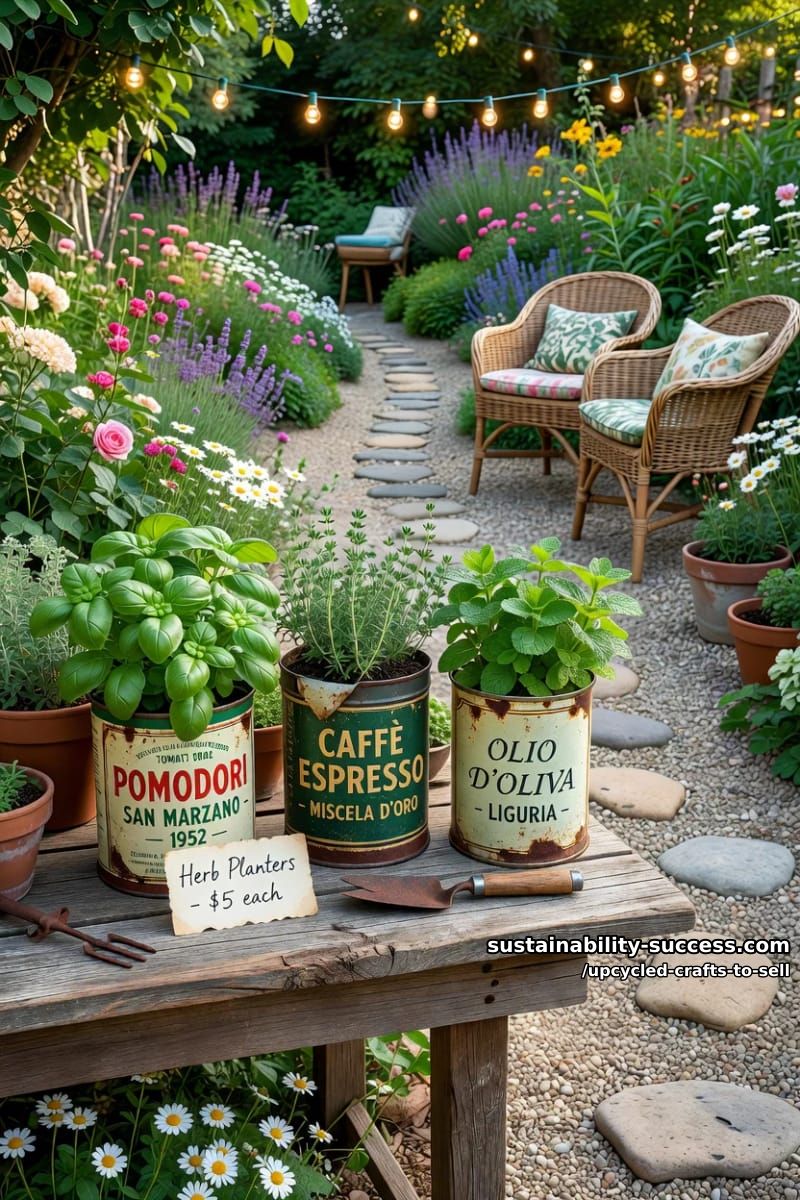
Sell them planted and grouped. A $4 grocery-store basil more than pays for itself in the markup, and a basil-thyme-mint trio in matched tins is a $30 gift, where an empty can is just a craft. These are heavy and a little fragile to ship, so keep them on the market table and out of your Etsy shop.
The photo and the box do half the selling by now
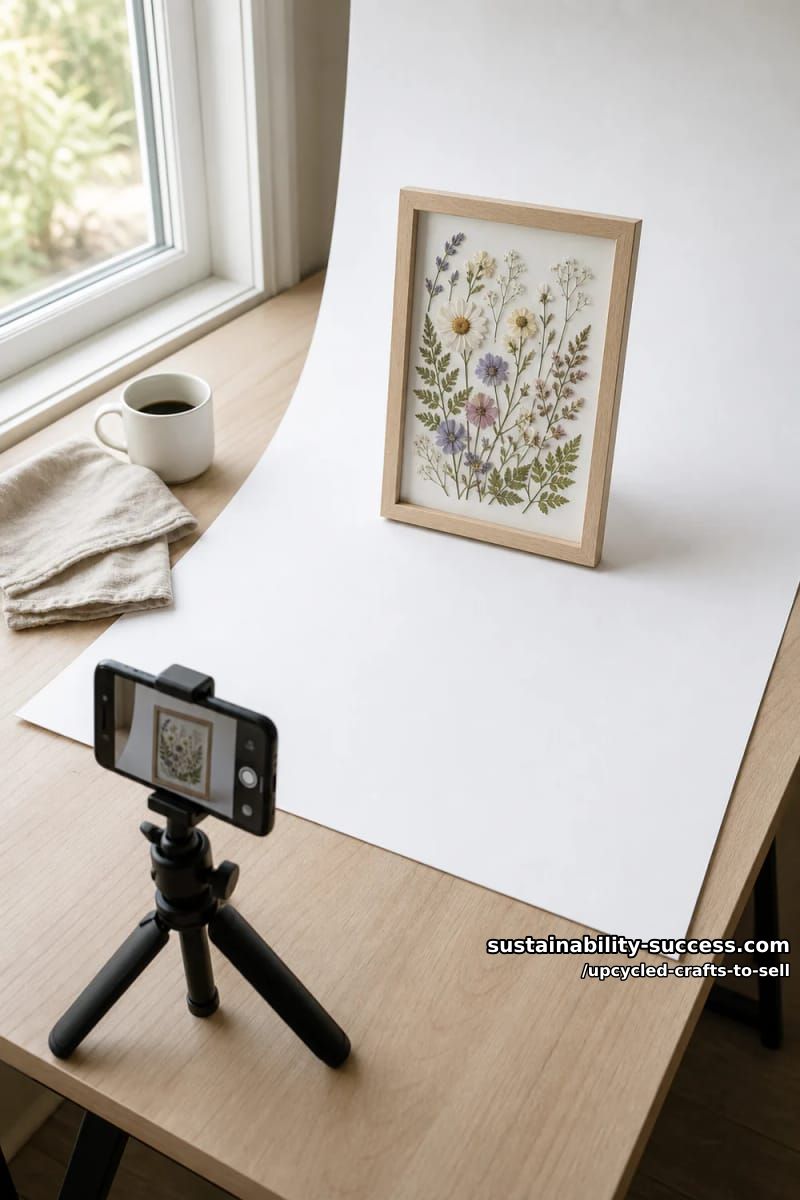
At this point the product is made, and whether it sells is mostly the photo and the packaging. A pressed-flower frame shot on a clean backdrop in window light outsells the identical frame shot on a cluttered counter under a yellow bulb, every single time, and on Etsy the first thumbnail is the entire decision.
Do this
- Shoot in indirect daylight near a window, never under indoor bulbs.
- Use one neutral backdrop: white foamcore, a linen napkin, or a weathered board.
- Show scale with a hand, a cup, or a coin so buyers judge the size.
- Brand it: a kraft label, a named scent or pattern, a small logo stamp.
- Band or box your sets so the buyer sees one $30 purchase, not three $12 ones.
Avoid
- Overhead flash and warm yellow bulbs that turn whites muddy.
- Busy props that compete with the product for attention.
- Pricing off the free material instead of your time and the shelf alternative.
- Listing singles when a banded set lifts your average sale.
- Licensed-character fabric, sports logos, or modern song lyrics, which get listings pulled and can carry real fines.
Conclusion
If you are starting this weekend with $30, buy the soy wax and pour candles first. They sell in every season, they fund the bottle cutter, and the cutter unlocks the $40 tumbler sets. Save the mittens for fall and the planted tins for spring, and make the cork trivets only when you need to fill a gap on the table, because the dollars-per-hour there are thin.
Then shoot everything the same afternoon against one board by a window, and reshoot the candles specifically: the tin catching soft daylight beats the same tin under a kitchen bulb, which is the gap between a thumbnail that gets the click and one that gets scrolled past.