

Ever thought about growing fresh herbs while cutting down on waste? It’s easier than you might think.
Sustainable herb garden ideas are sprouting up everywhere, offering simple ways to green your space and your plate at the same time.
Imagine harvesting basil from a mason jar or thyme from a rain gutter garden. These projects don’t require a green thumb, just a bit of creativity and old materials lying around.
Ready to roll up your sleeves and rethink how you grow your greens?
1. Spiral herb garden using reclaimed bricks and stone for visual impact
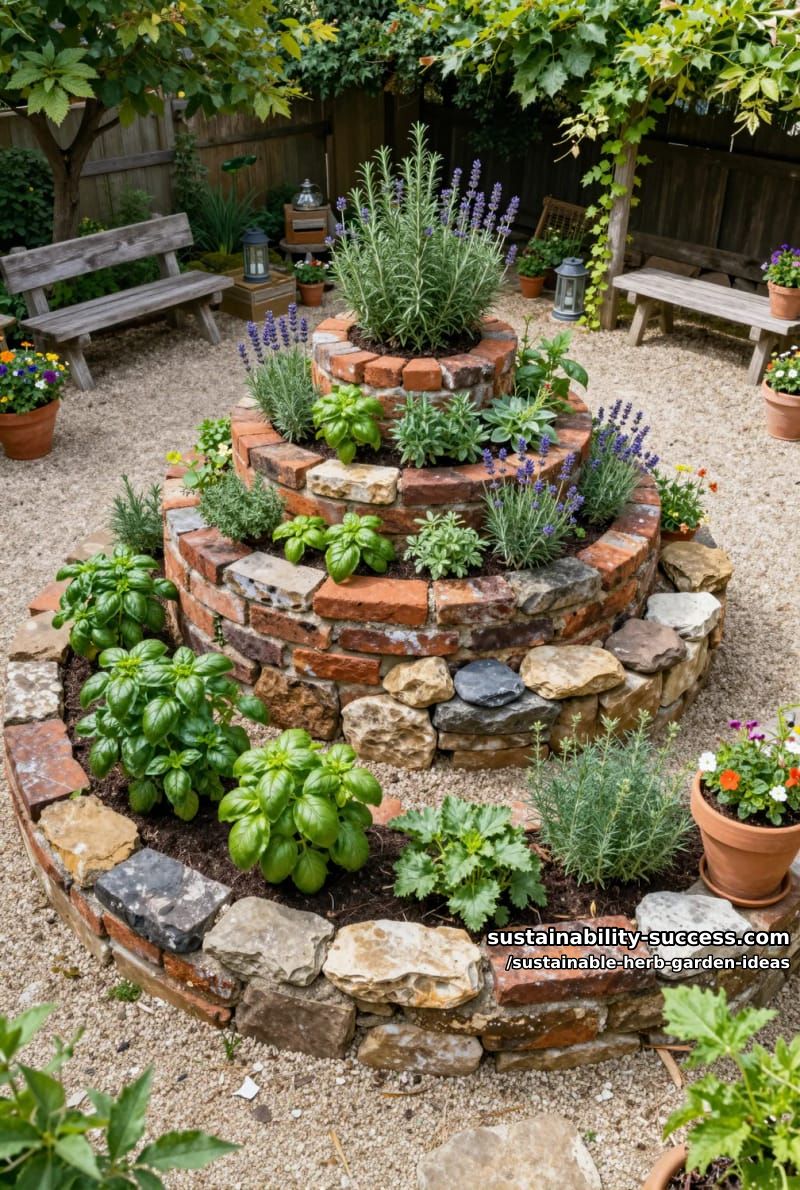
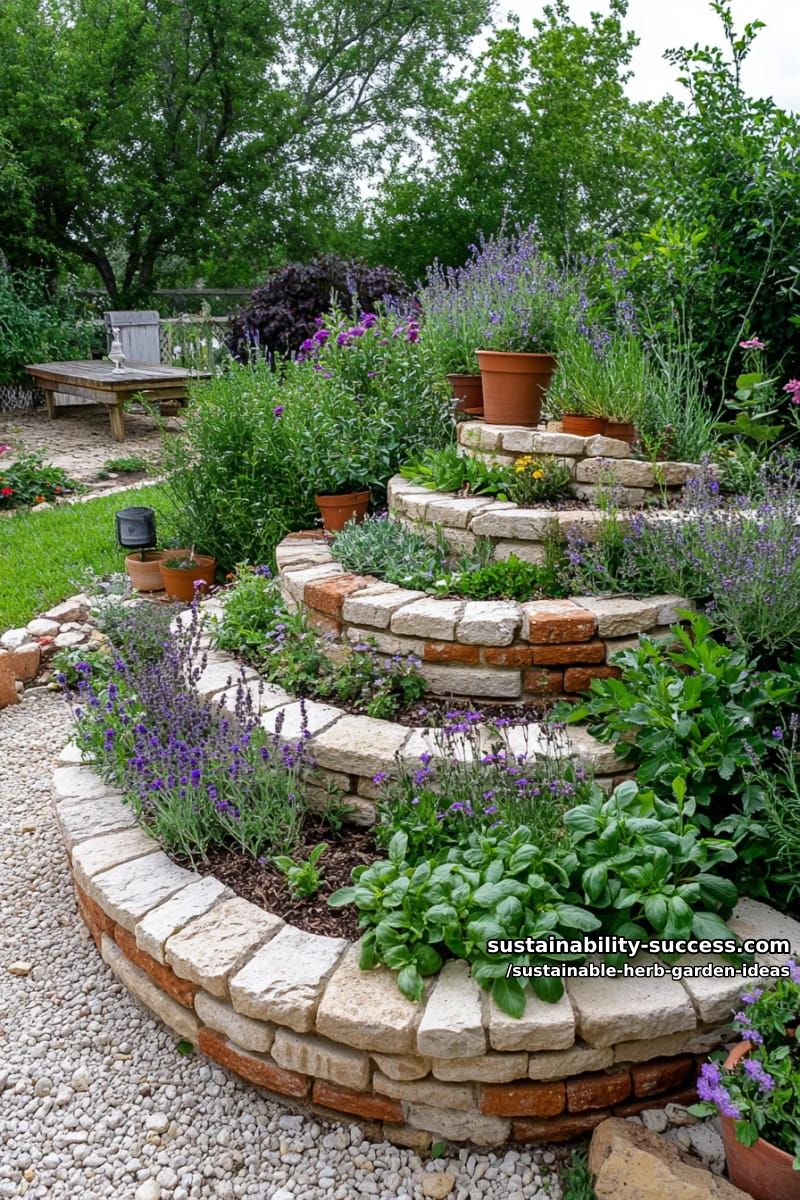
Old bricks and stones can turn an ordinary garden into a striking spiral centerpiece. This layout saves space and uses materials that might otherwise end up in a landfill.
The spiral shape creates microclimates, letting you grow both sun-loving and shade-tolerant herbs in the same small area.

Building with reclaimed materials has its hiccups, finding enough uniform pieces can be tricky. But the eco-friendly payoff is worth it.
Start with a sturdy base, stack your bricks or stones in a gentle spiral, and fill the spaces with soil and herbs like thyme, parsley, and basil.
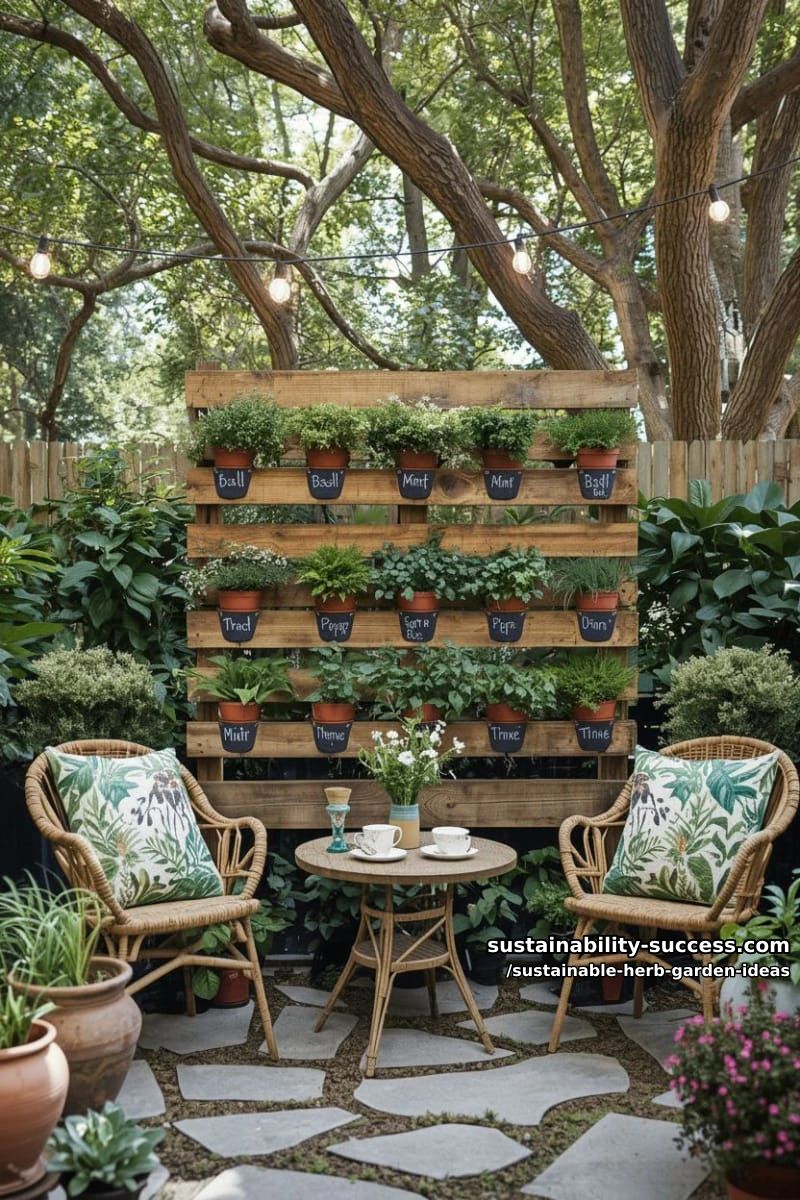
2. Pallet wall herb garden with chalkboard labels for sustainable charm
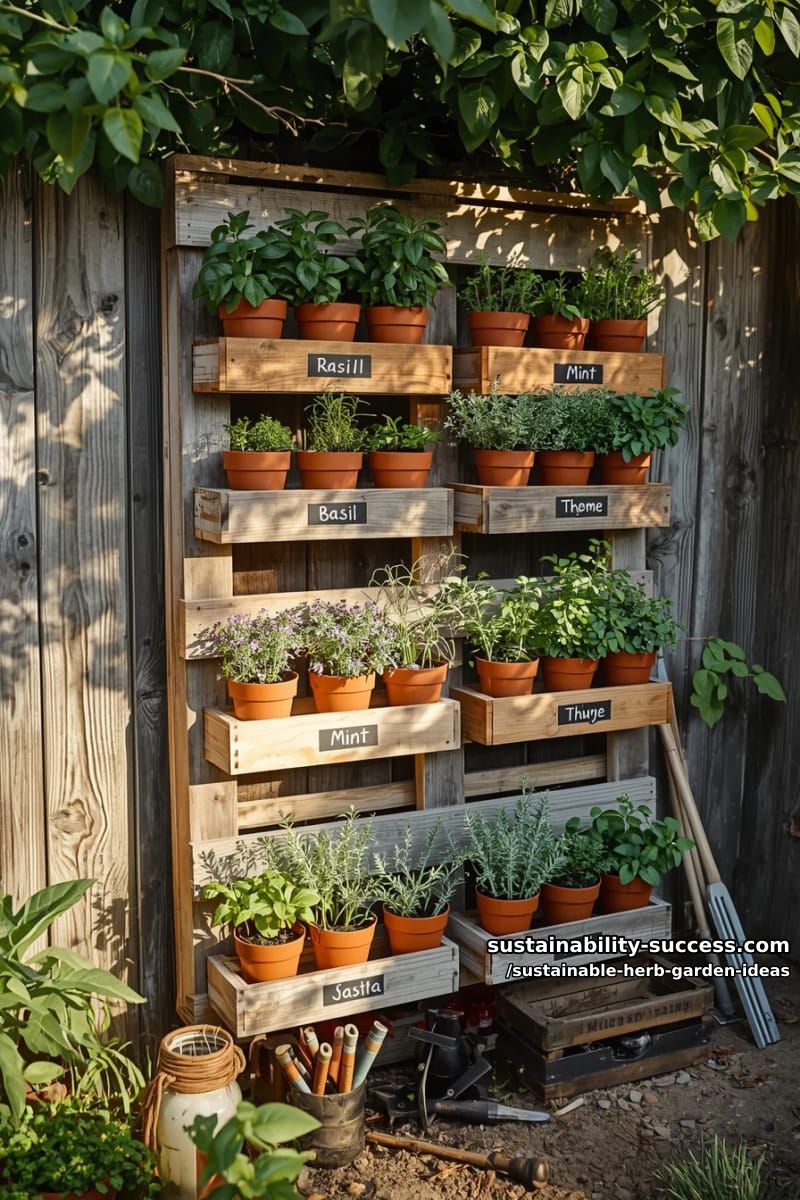
Old pallets can become stunning vertical herb gardens. All you need is a sturdy pallet, some soil, and a little creativity. Attach small pots or pockets, then plant your favorite herbs.
Chalkboard labels add a fun twist, change the names as you rotate your crops or experiment with new varieties.

This setup saves space and keeps everything within arm’s reach. Plus, using reclaimed wood reduces waste. However, double-check that your pallet hasn't been treated with chemicals.
With fresh herbs always available, your meals get tastier, and your outdoor space gains a quirky, eco-friendly conversation starter.
3. Raised bed herb garden bordered by wildflowers for pollinator support

Raised bed herb gardens edged with wildflowers offer more than just visual appeal. Wildflowers attract bees and butterflies, boosting pollination for your herbs.
You’ll notice healthier basil and more fragrant thyme, simply because pollinators are doing what they do best. It’s a win-win for flavor and the ecosystem.
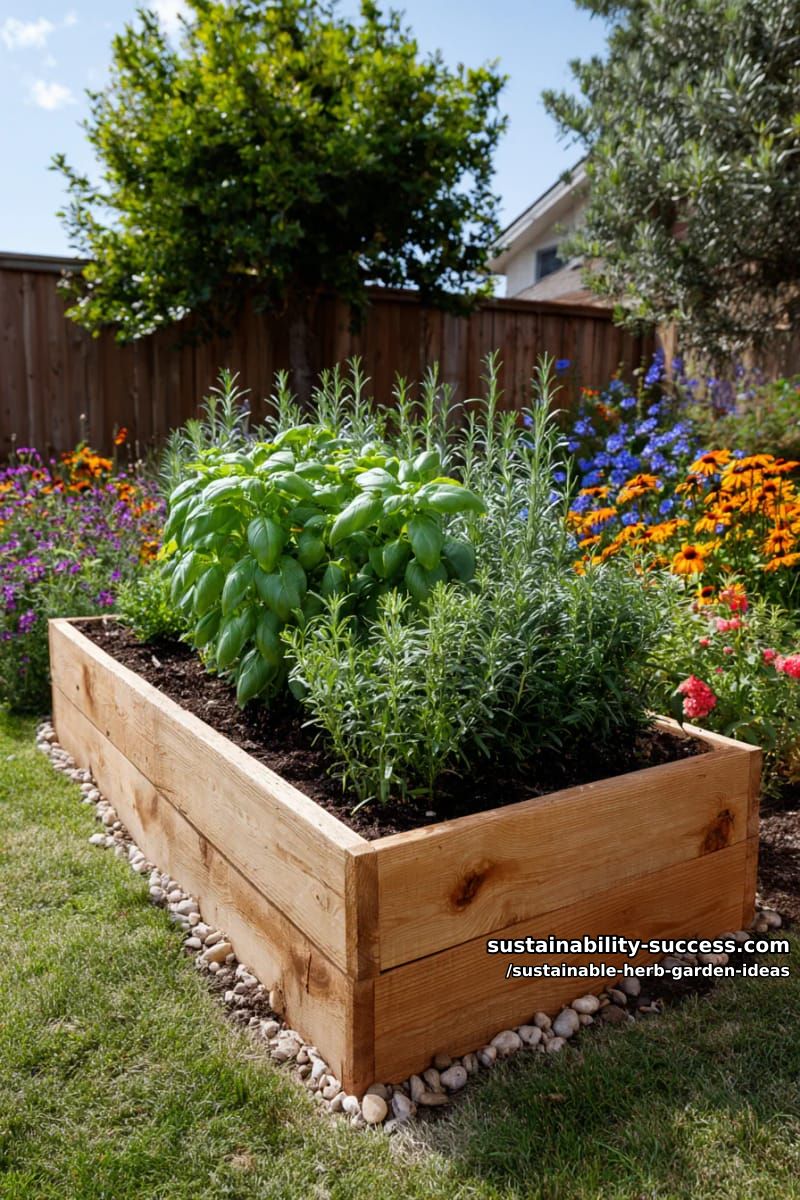
However, wildflowers can spread quickly if not managed. Choose native varieties to avoid aggressive growth. Regular trimming helps keep wildflowers in check.
With a little effort, your raised bed becomes a low-maintenance, productive patch that benefits both your kitchen and local wildlife.

4. Mason jar vertical herb planter on a reclaimed wood frame
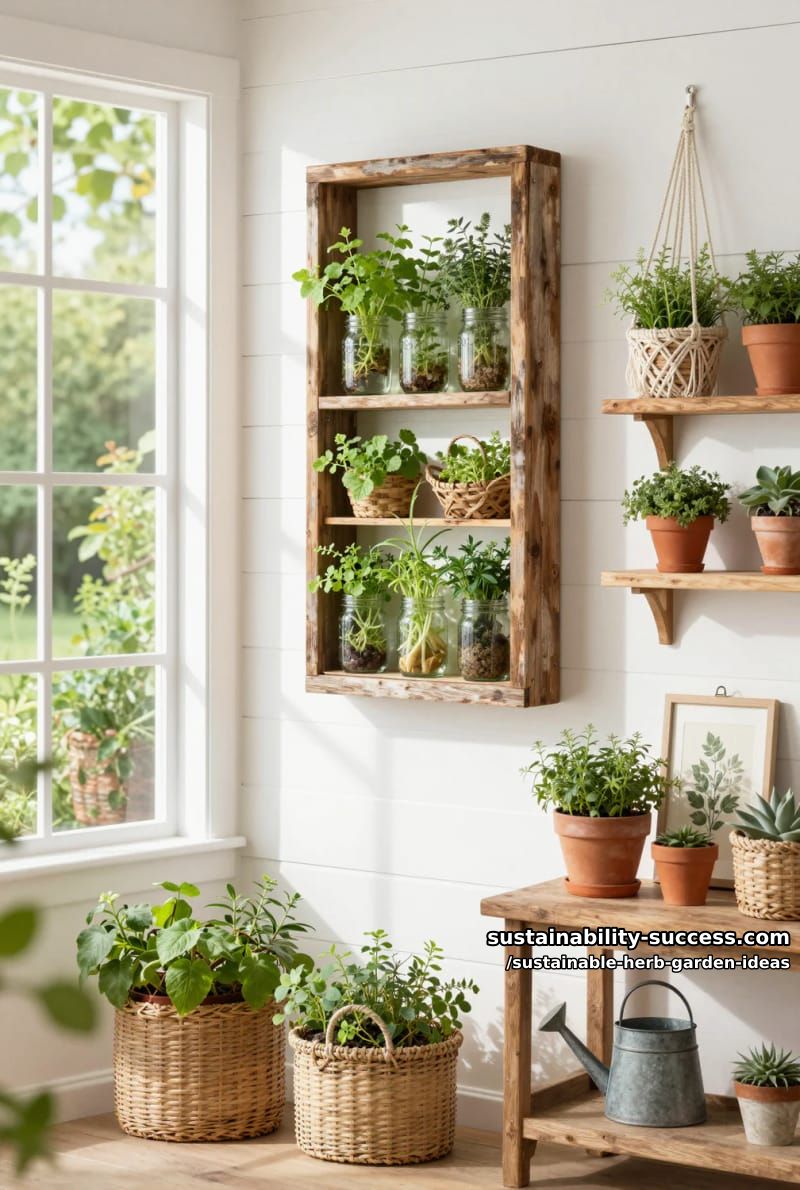
Curious about growing herbs in small spaces? Try a vertical mason jar planter. Fasten empty jars onto an old wood frame, think forgotten fence posts or that pallet you almost tossed.
You’ll save space, recycle scrap materials, and add a rustic touch to your kitchen or balcony.

However, mason jars don’t drain well. Herbs can get soggy roots if you're heavy-handed with water. To avoid this, layer pebbles at the bottom before adding soil.
Use fresh herbs for cooking, snip what you need, and let the rest keep growing. It’s resourceful, practical, and easy to maintain.

5. Living herb wall on balcony with eco-friendly irrigation system

Imagine stepping onto your balcony and seeing a lush, vertical herb wall thriving beside you. A living herb wall uses vertical space, making it perfect for apartment dwellers.
Choose recycled planters and native herbs. This setup saves space and brings fresh fragrances and flavors within arm’s reach.

Thinking about watering? An eco-friendly irrigation system takes out the guesswork. Consider a simple drip system powered by a rain barrel or repurposed bottles.
You’ll use less water and keep your herbs consistently happy. It’s smart, sustainable, and makes your balcony a conversation starter.
6. Stacked terracotta pots forming a cascading herb waterfall

Stacked terracotta pots create more than just a pretty sight; they let you grow a range of herbs in cramped spaces.
The design channels water from top to bottom, making sure nothing goes to waste. Imagine basil, thyme, and mint, all thriving in their own little tier.

This setup isn’t just practical, it’s a conversation starter. You reuse old pots, reduce your water bill, and cut down on plastic planters.
Sure, it needs occasional rebalancing and sunlight, but the payoff is fresh herbs at your fingertips. Why settle for bland dinners when your balcony could double as your spice rack?
7. Upcycled tin can window herb garden with painted designs
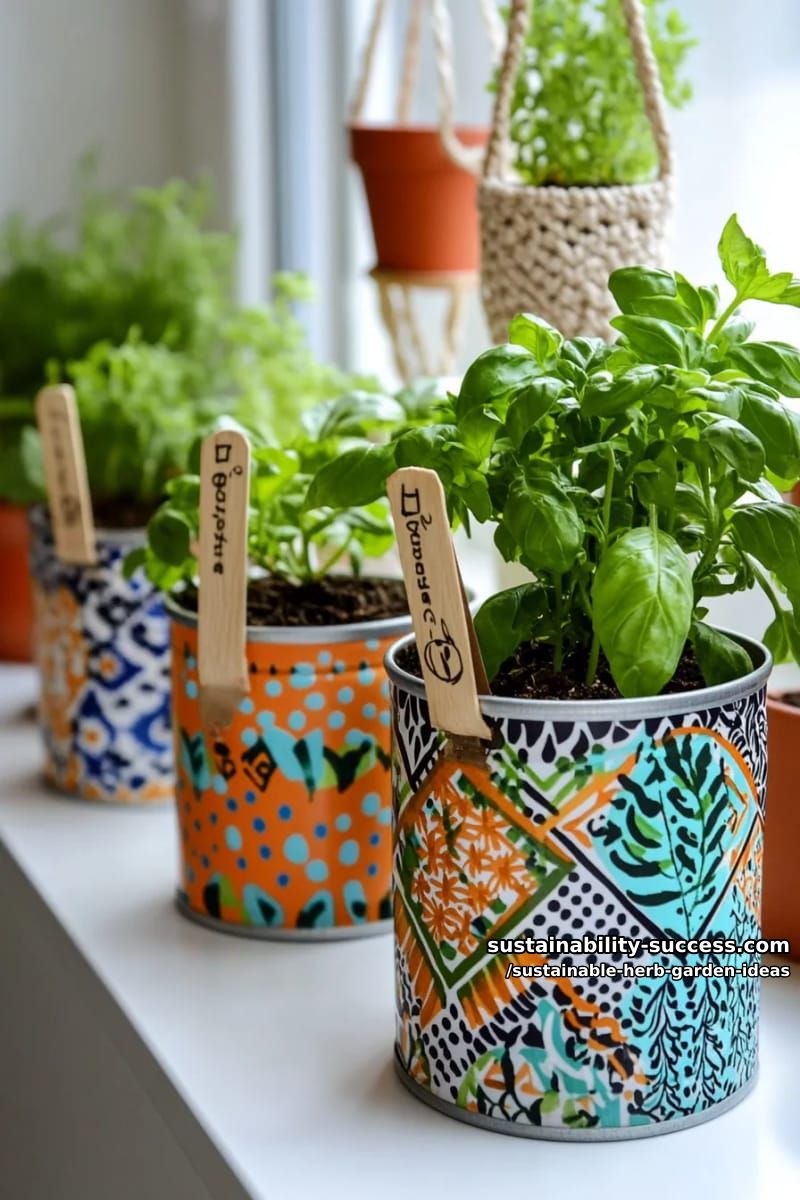
Turn old tin cans into cheerful herb planters by giving them a splash of paint and a second life.
Kids and adults alike can get creative with designs, think polka dots, stripes, or even quirky faces. These colorful cans brighten any windowsill while saving money and reducing household waste.

While tin cans are simple to hang or stick to a ledge, drainage can be tricky, poke holes in the bottom to prevent soggy roots. Basil, chives, and mint work well in small containers.
This project proves sustainability can be both fun and practical, even if you’re short on space.

8. Repurposed wooden crate herb planters with vintage stenciled names

Old wooden crates often get tossed out, but they make fantastic herb planters. Stenciling vintage names on each crate adds charm and helps you remember which herb is growing.
Place them by a sunny window or on a balcony. They’re low-cost, practical, and give your space a rustic touch.

While these planters look great and support recycling, be mindful of wood quality. Some crates might have been treated with chemicals. Line the inside with burlap or plastic before adding soil.
That way, your basil and mint stay safe to eat, and your planters last longer.
9. Keyhole herb garden layout for efficient composting and water use

Ever tried a keyhole garden? Picture a round raised bed with a wedge-shaped path, allowing easy access to all your herbs. In the center sits a compost basket.
Toss in kitchen scraps and water here, plants feed off the nutrients as compost breaks down, saving water and fertilizer.

This layout is genius for hot climates or tight spaces. Moisture stays locked in, and nothing goes to waste. However, it does require upfront effort to build.
If you value efficiency and reducing food waste, this setup pays off in fresh basil, mint, and thyme right at your doorstep.
10. Hanging herb baskets under a pergola with climbing edible vines

Imagine stepping beneath a pergola, where sunlight filters through edible vines like scarlet runner beans or grapevines.
Hanging baskets crowded with basil, thyme, and mint dangle above, making fresh herbs just an arm’s reach away. This setup saves ground space and creates a living, edible canopy.
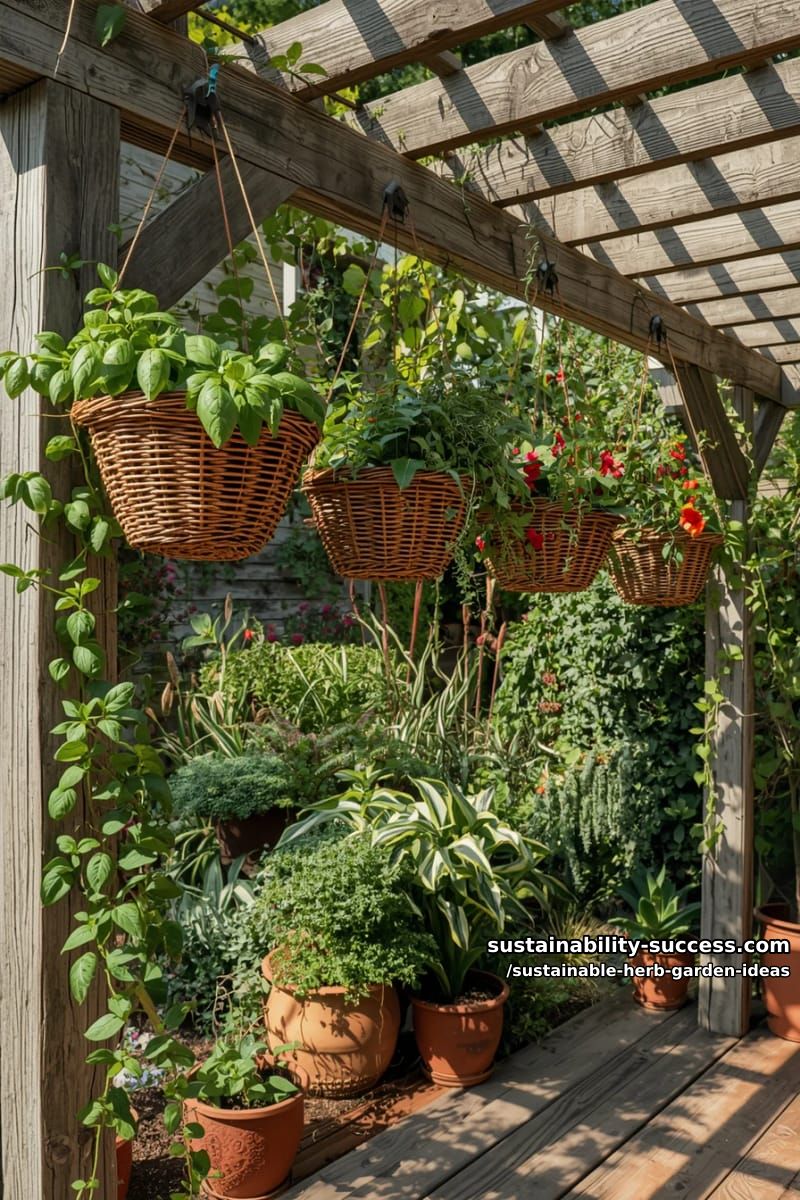
Watering is simple, collect rainwater in a nearby barrel and use it for both baskets and vines. However, keep an eye out for pests hiding in dense foliage.
Don’t let the lush look fool you: some herbs prefer more sunlight than vines allow, so plan your plant choices with light in mind.
11. Circular herb garden with stone pathways and companion planting

A circular herb garden with stone pathways brings both charm and practicality. The stones help prevent soil compaction and keep weeds at bay.
With a central focal point, access is simple from any angle. This layout suits small or large spaces, making plant maintenance less of a chore.

Companion planting in this design offers real benefits. Basil next to tomatoes, chives near carrots, each pairing supports healthier growth and deters pests. Rotating herbs through the seasons keeps the soil nourished naturally.
While the initial setup can require effort, the payoff is a low-maintenance, productive space.
12. Multi-level wooden shelf system filled with lush, trailing herbs

Why settle for flat when you can go vertical? Multi-level wooden shelves bring new life to small patios or kitchens. Fill each tier with trailing herbs like thyme and oregano.
Suddenly, your wall becomes a green masterpiece. Plus, harvesting is a breeze, you just snip what you need, right at eye level.

However, wood needs care. Moisture can damage shelves over time, so use a water-resistant sealant. Place drip trays under pots to catch runoff.
This setup saves space, increases your harvest, and adds rustic charm. Want fresh basil for pizza? Just reach out and pluck it, no grocery trip required.

13. Rain gutter herb garden attached to a sunny fence

Mounting rain gutters along a sunny fence creates a clever herb garden that saves space and recycles materials. This setup lets you grow basil, chives, or mint right outside your door.
Water drains well, and you can stagger the gutters for more planting area without crowding roots.
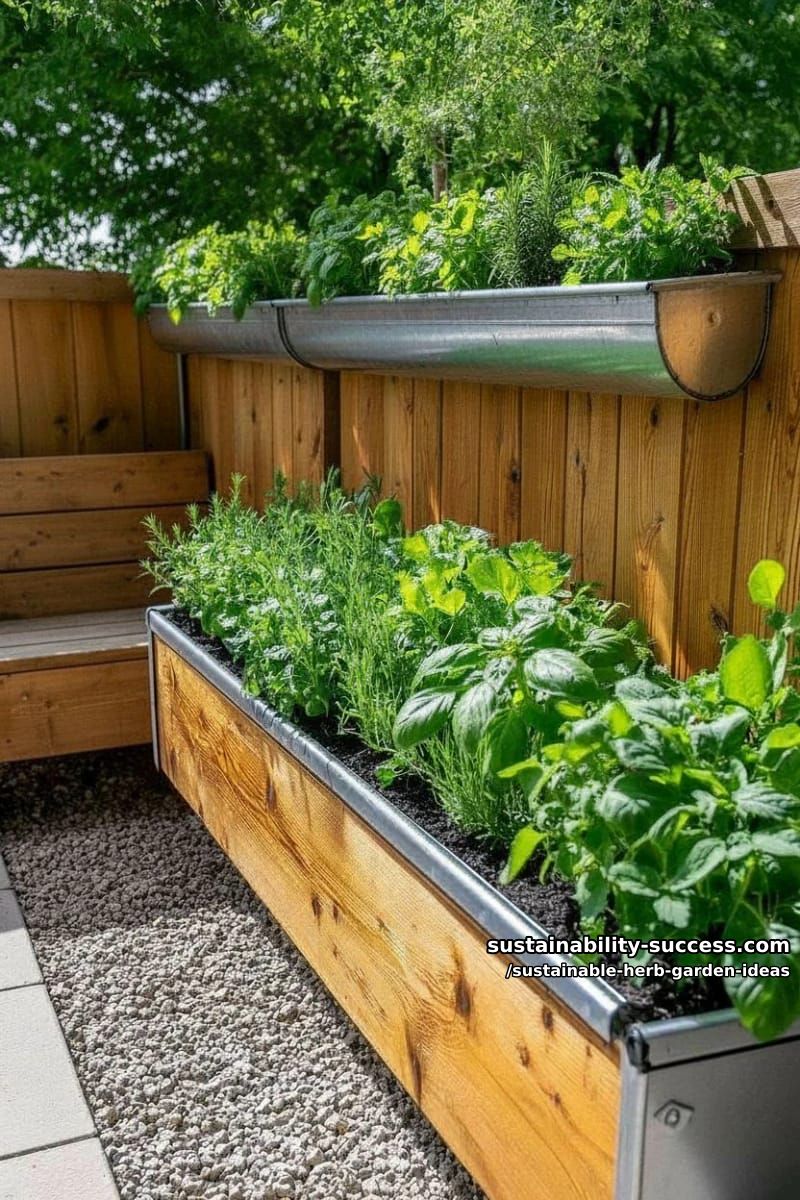
However, gutters dry out quickly. You’ll need to water more often, especially in summer. Using compost-rich soil helps herbs thrive and cuts down on watering.
Why not ask neighbors for old gutters? You save money and keep waste out of the landfill. Sometimes, the simplest ideas are the smartest.

14. Foodscaping garden border mixing perennial herbs and edible flowers

Tired of boring borders? Try foodscaping by mixing perennial herbs like rosemary or thyme with edible flowers such as nasturtiums or violets.
This approach brightens the edge of any garden, offering both beauty and a pantry’s worth of fresh, flavorful garnishes. It’s practical and undeniably eye-catching.

Maintenance is a breeze, perennial herbs often thrive with minimal care, and many edible flowers self-seed. However, be mindful: some herbs can take over if left unchecked.
Plan spacing carefully to keep everything in harmony and maximize both harvest and aesthetics. Why not make your garden both delicious and delightful?
15. Recycled glass bottle hydroponic herb garden in a sunny kitchen

Repurpose empty glass bottles into hydroponic planters for herbs. Just add water, a bit of hydroponic nutrient solution, and your herb cuttings. Place them on a sunny kitchen windowsill.
It’s cost-effective and cuts down on waste. Plus, watching roots grow through the glass never gets old.

However, keep in mind that some herbs like basil and mint thrive in water, while woody herbs may struggle. Clean the bottles regularly to avoid algae buildup.
This setup is perfect for renters or anyone short on space, but don’t expect to harvest armfuls, think garnishes and fresh sprigs.
Conclusion
Bringing these sustainable herb garden ideas to life doesn’t require a green thumb or heaps of time. Start with one simple project, like a pallet wall or tin can planter.
See your windowsill or backyard fill with color, texture, and fresh aromas.
Curious which style fits your space? Test a few on a small scale. Fresh basil from a jar or thyme from a crate, each brings flavor and joy.
Why not swap store-bought for homegrown? Your senses, wallet, and the planet will thank you.
Related Posts
- Eco-Friendly Herb Garden Ideas
- Sustainable Garden Decor Ideas
- Spring Small Space Sustainable Garden Decor
- Eco-Friendly Garden Art
- Upcycled Garden Ideas


