
The junk in your shed already has the one thing a garden center charges extra to fake: real rust, real patina, real wear that took a decade to earn. The ideas below run from a pair of old boots holding sedum to a galvanized watering can rigged into a recirculating fountain, a cobalt bottle tree borrowed from Southern folk yards, and a salad trough cut from a length of rain gutter. I've also put in a blunt word about tire planters, which people email me about constantly, and the single drainage mistake that quietly kills most of these projects before the plants ever settle in.
Before the list, the boring thing that decides whether any of this lives or dies is water getting out. Match the vessel to its treatment and almost nothing else can go wrong:
| Vessel material | Drainage holes? | Seal or line? |
|---|---|---|
| Terracotta & ceramic | Bare terracotta drains through the wall; glazed pieces need 1 or 2 drilled holes. | No sealing. Soak bare clay overnight before its first planting or it steals water from the soil. |
| Galvanized & tin | Drill 3 to 5 holes. Metal holds a puddle and rots roots fast. | Punch or drill from the inside out so the sharp burrs face the ground, not your plant. |
| Wood (pallets, drawers, ladders) | Slat gaps usually drain on their own; add holes to any solid bottom. | Line the inside with landscape fabric, clear-coat the outside with exterior spar urethane. |
| Rubber (boots, tires) | Always drill. Rubber traps every drop. | None needed. Stab the sole, not just the toe, or water pools at the foot. |
| Cast iron & enamel (tubs, sinks) | For planting, drill the existing drain wider. For a pond, plug it. | Pond liner or a food-safe sealant only if you want to hold water. |
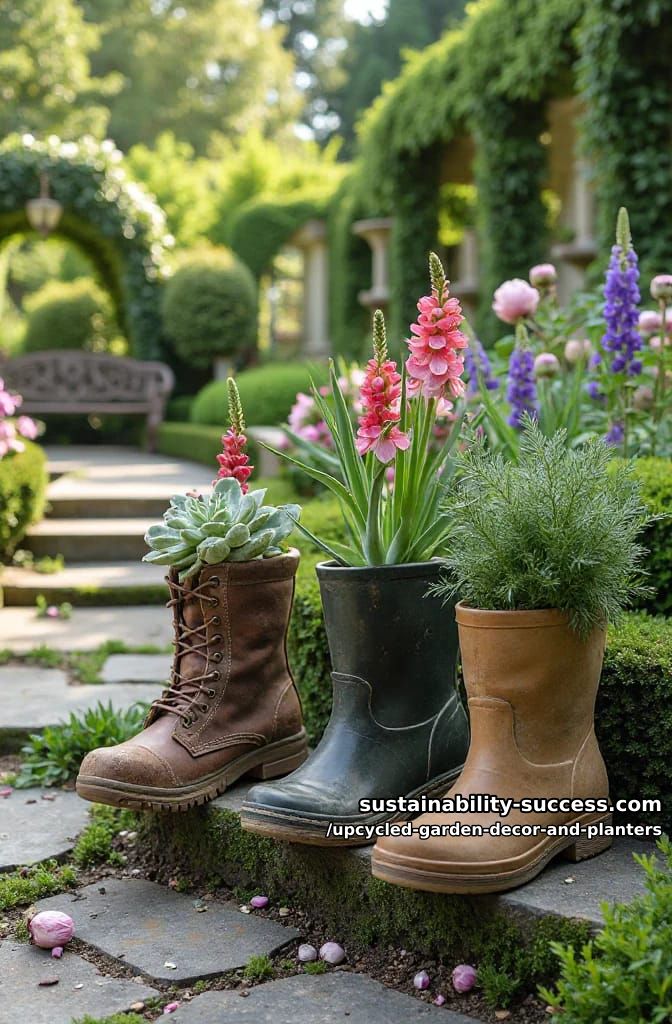
1. Old boots and rubber wellies as planters
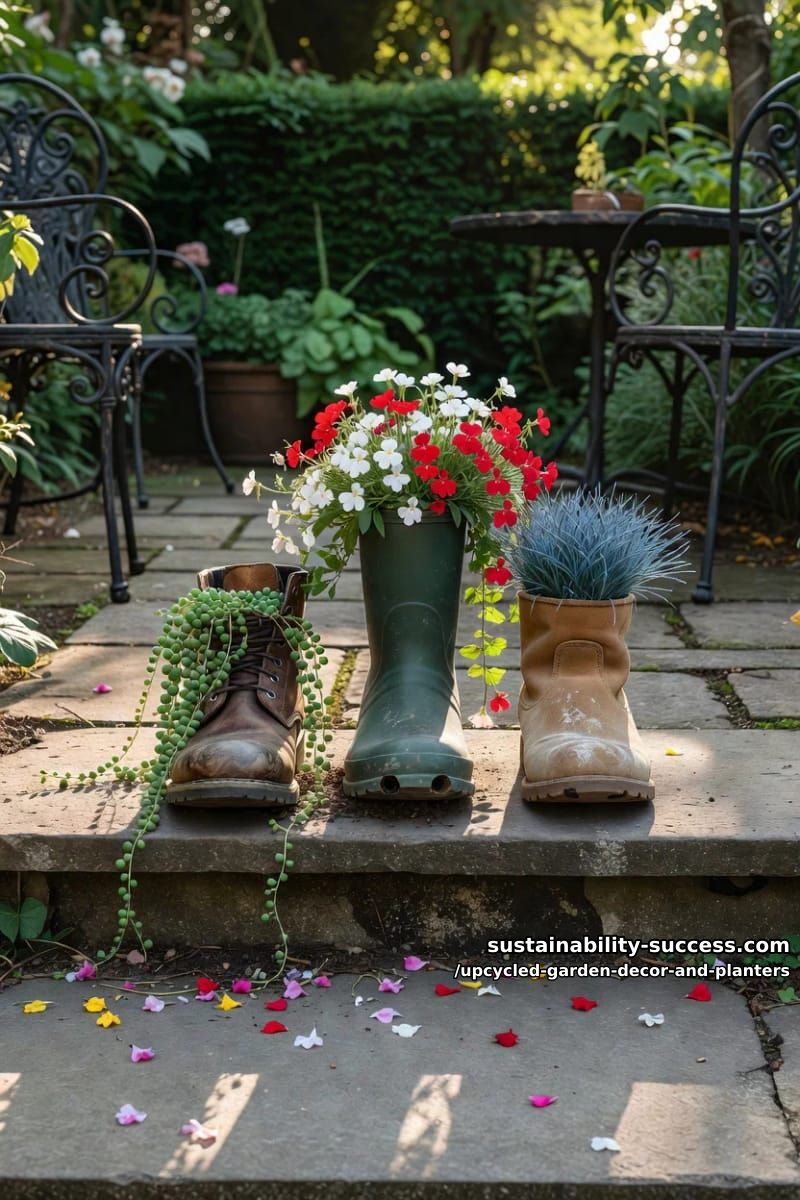
Drill the sole, not just for looks but because rubber and leather hold water like a bucket and drowned roots are the usual cause of death here. Boots are shallow, so they suit plants that don't mind it: sedum, hens-and-chicks, trailing lobelia, or a single annual like calibrachoa that you'll swap each season. A child's outgrown rain boot makes a better gift planter than anything at the register, and it costs nothing.
2. A galvanized watering can turned into a recirculating fountain
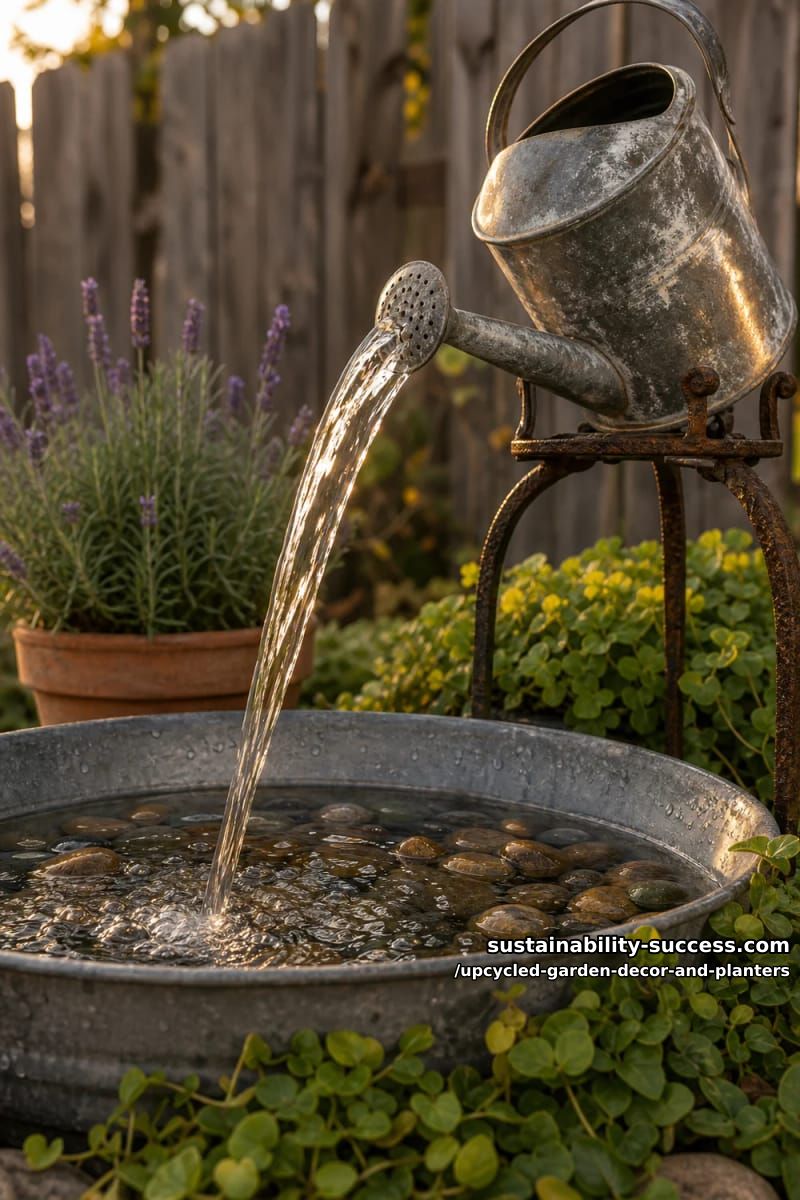
The illusion is that water pours endlessly from a can that's clearly empty; the reality is a hidden pump pushing the same water in a loop. A small submersible pump runs about $25 to $60 and sips somewhere between 2 and 25 watts, so running it on summer evenings costs a few dollars a month, not a fortune. The trick everyone gets wrong: support the tilted can on a length of rebar threaded up through the spout, so the can looks like it's floating and the rigid pipe hides inside the stream.
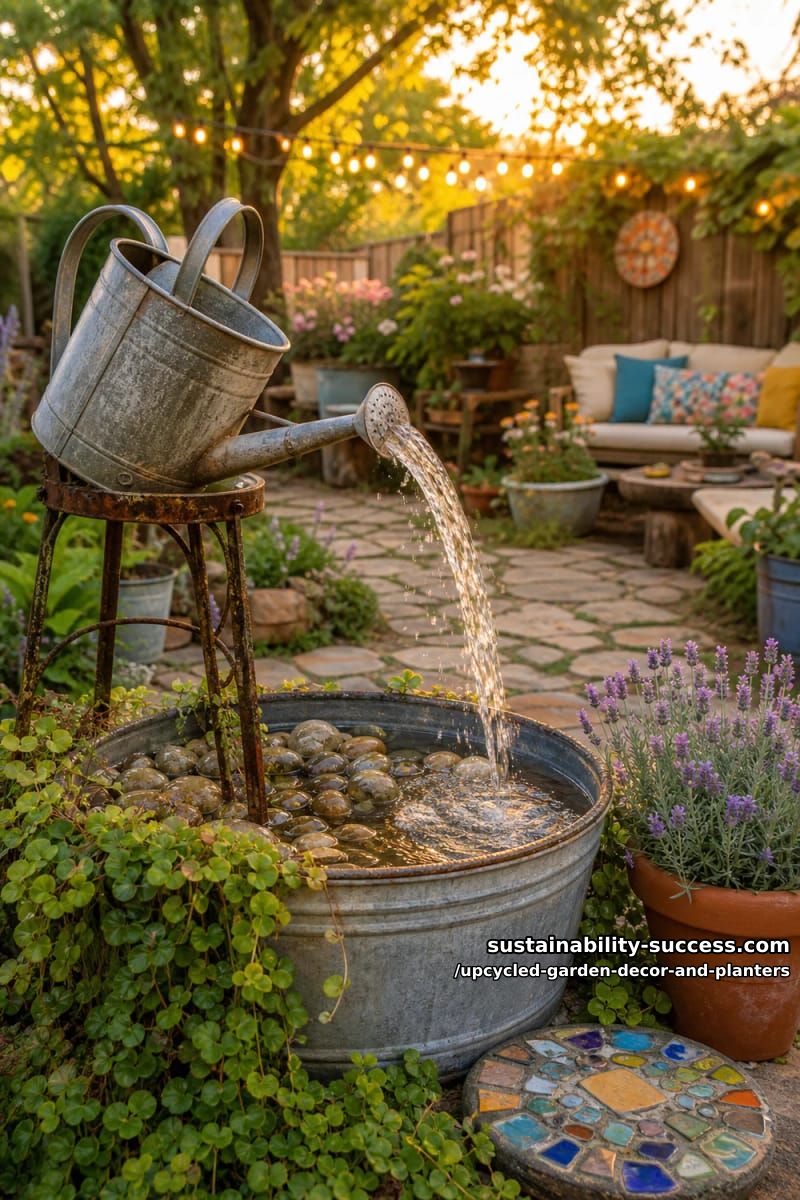
Reservoir: a bucket or tub sits below the basin, hidden under pebbles, holding the water supply.
Pump: a submersible pump rests at the bottom of that reservoir and lifts water up flexible tubing.
Riser: the tubing runs up through a piece of rebar or copper pipe that doubles as the support for the tilted can.
Return: water pours from the spout, trickles through pebbles over a hidden grate, and drains straight back to the reservoir to be lifted again.
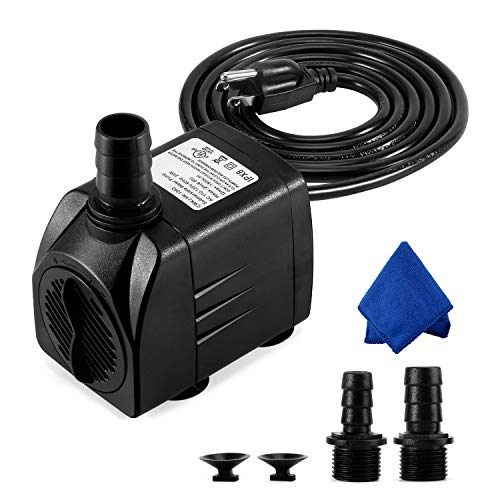
400 GPH is more than a watering-can fountain needs, but the adjustable knob lets you dial the pour down to a quiet trickle, and the three nozzles cover future projects.
3. A wood pallet stood up as a vertical herb wall
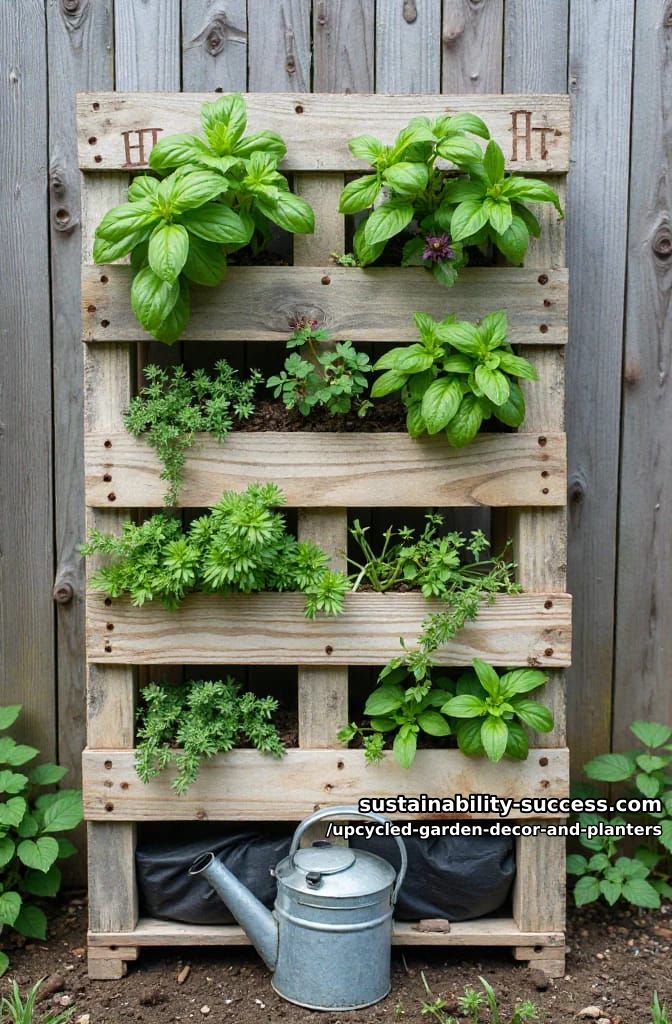
Staple landscape fabric across the back and bottom before you fill it, or every watering washes a tongue of mud across your patio. Lay the pallet flat to plant, leave it horizontal a week or two so roots grip, then tip it upright. One caution that matters more than people think: only use pallets stamped HT (heat treated) under the IPPC logo, and skip anything marked MB, which means it was fumigated with methyl bromide. Free pallets show up behind hardware stores and garden centers; ask the manager rather than taking them off a loading dock.
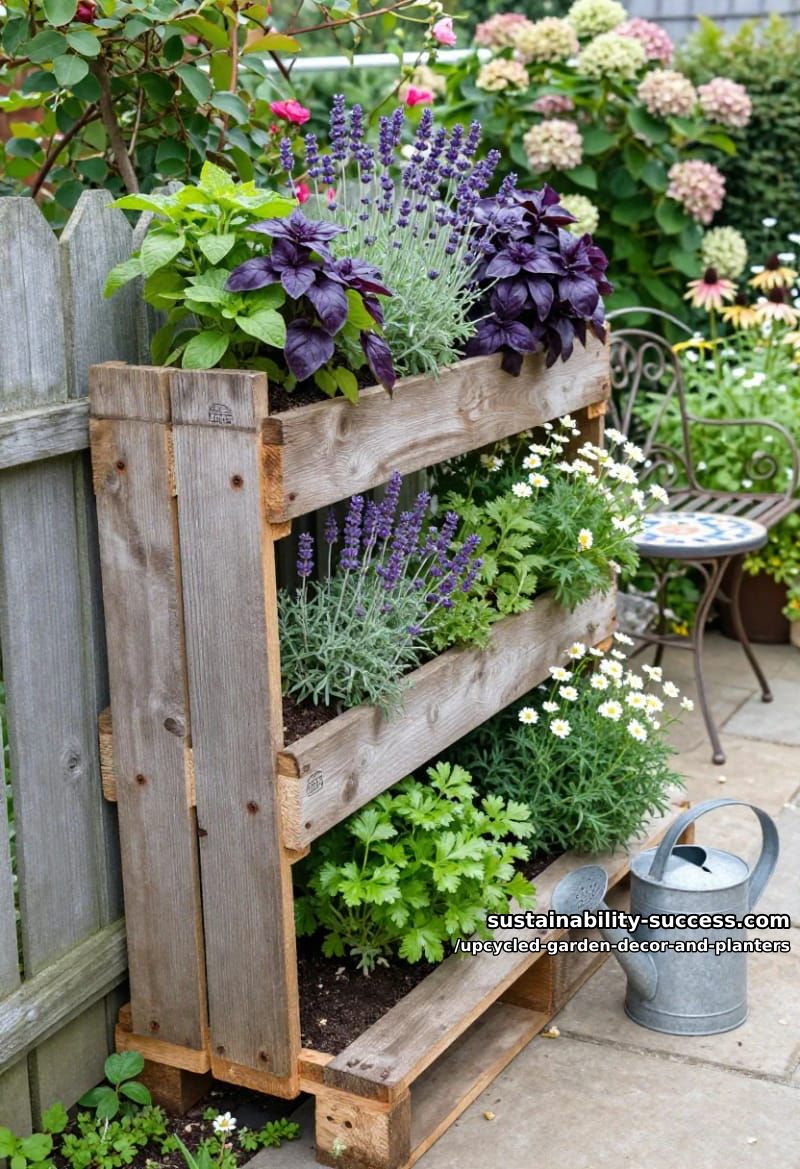
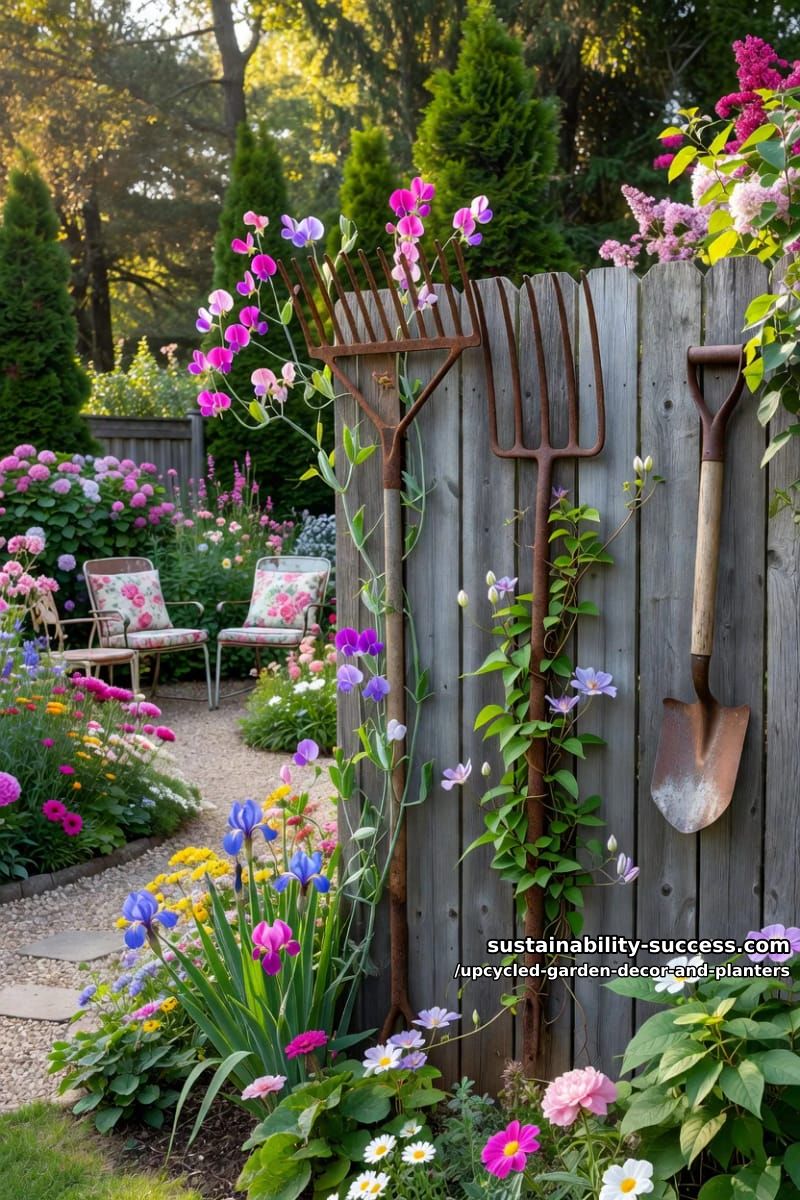
4. Rusty rakes, forks, and shovels as fence art and trellises
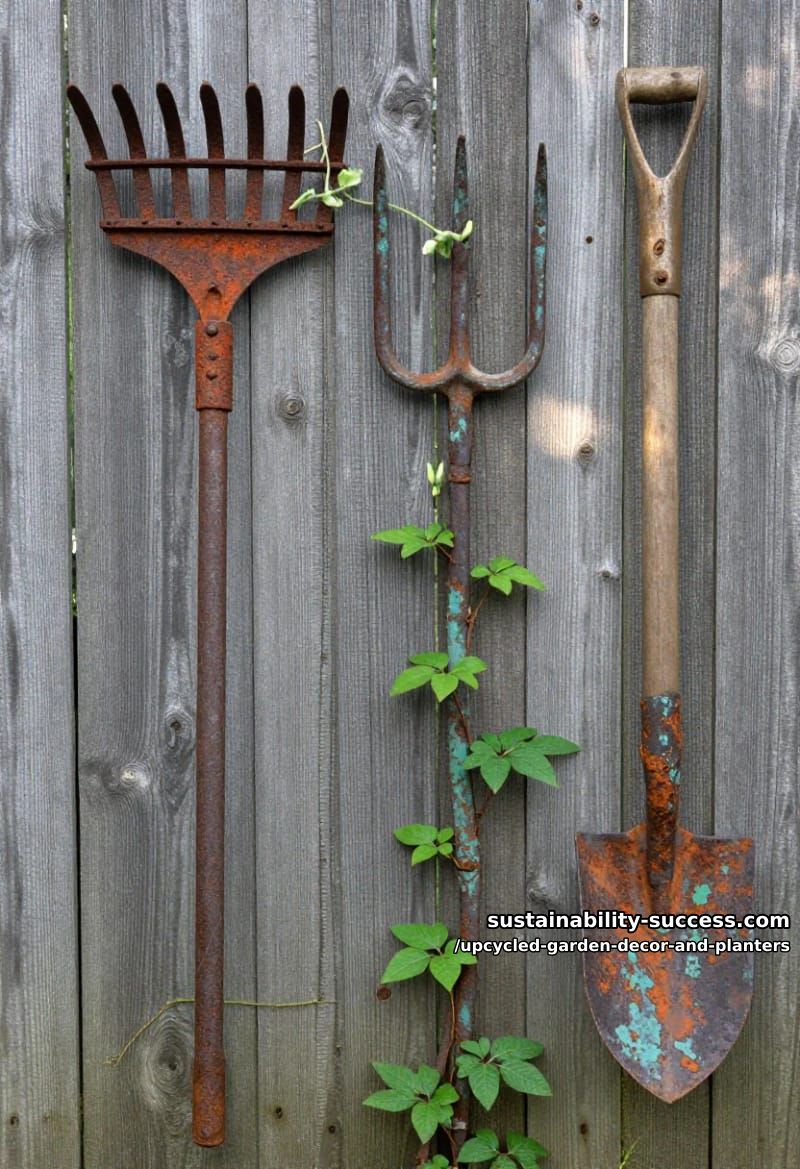
A rake head screwed tines-out to a fence becomes a trellis the instant you plant a pea or a morning glory at its foot. The patina is the appeal, so resist the urge to wire-brush them clean; a quick coat of clear matte sealer locks the rust where it is and keeps it off your hands. Long-handled tools read best mounted in a loose fan, not a tidy row.
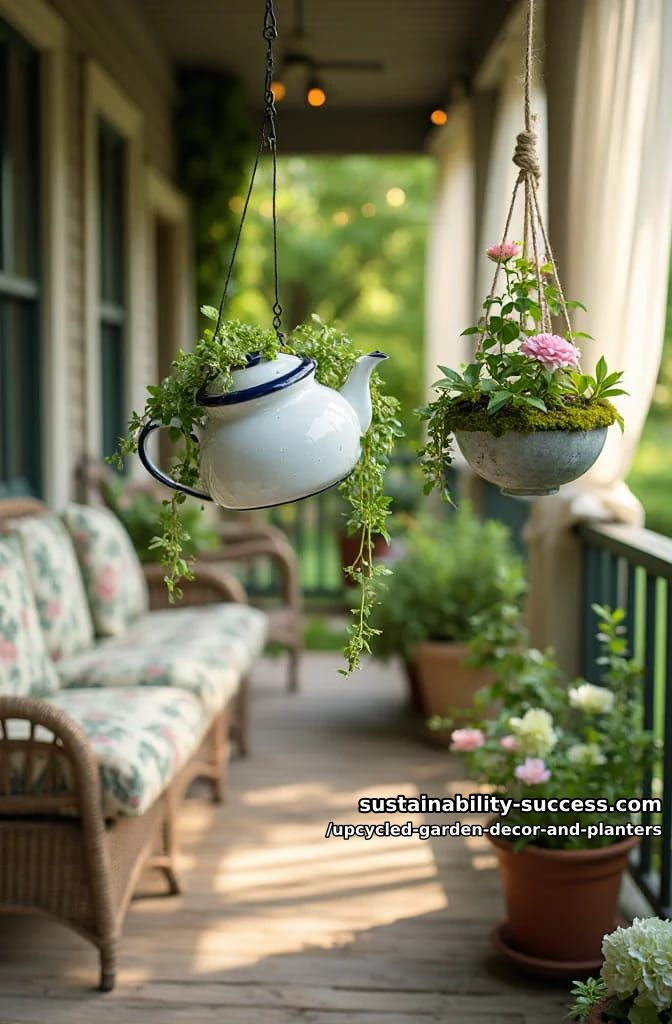
5. Chipped teapots, kettles, and a colander as hanging planters
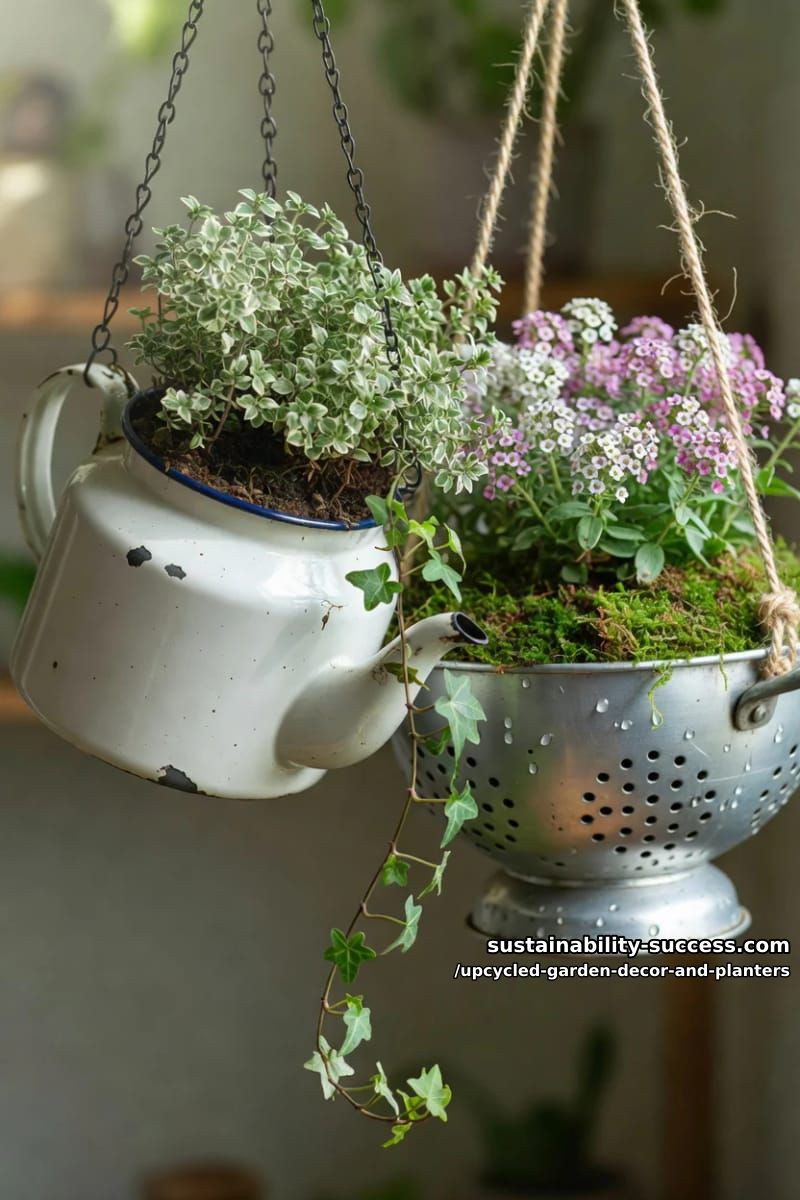
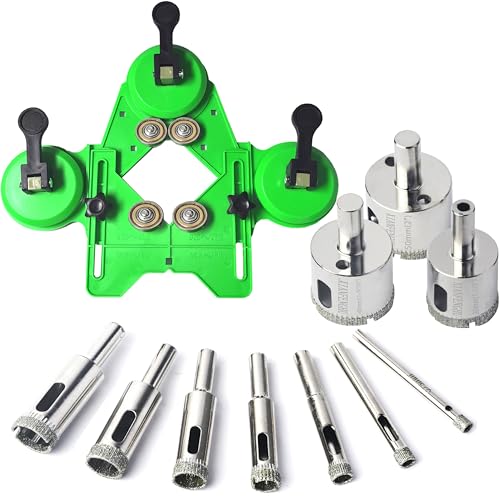
A colander is the easy win because the drainage is already done for you; line it with sheet moss or coir, fill, and hang. A teapot needs one hole drilled in the base, and glazed ceramic will crack if you rush it, so go slow with a diamond bit and a steady drip of water on the spot. Thrift-store teapots with a chip or a missing lid sell for a dollar or two precisely because nobody wants them for tea.
A 10-piece set covers everything from a teapot drain hole to a wide saucer port, and the small sizes are what actually keep glazed ceramic from spider-cracking.
6. A wooden ladder as a tiered plant stand
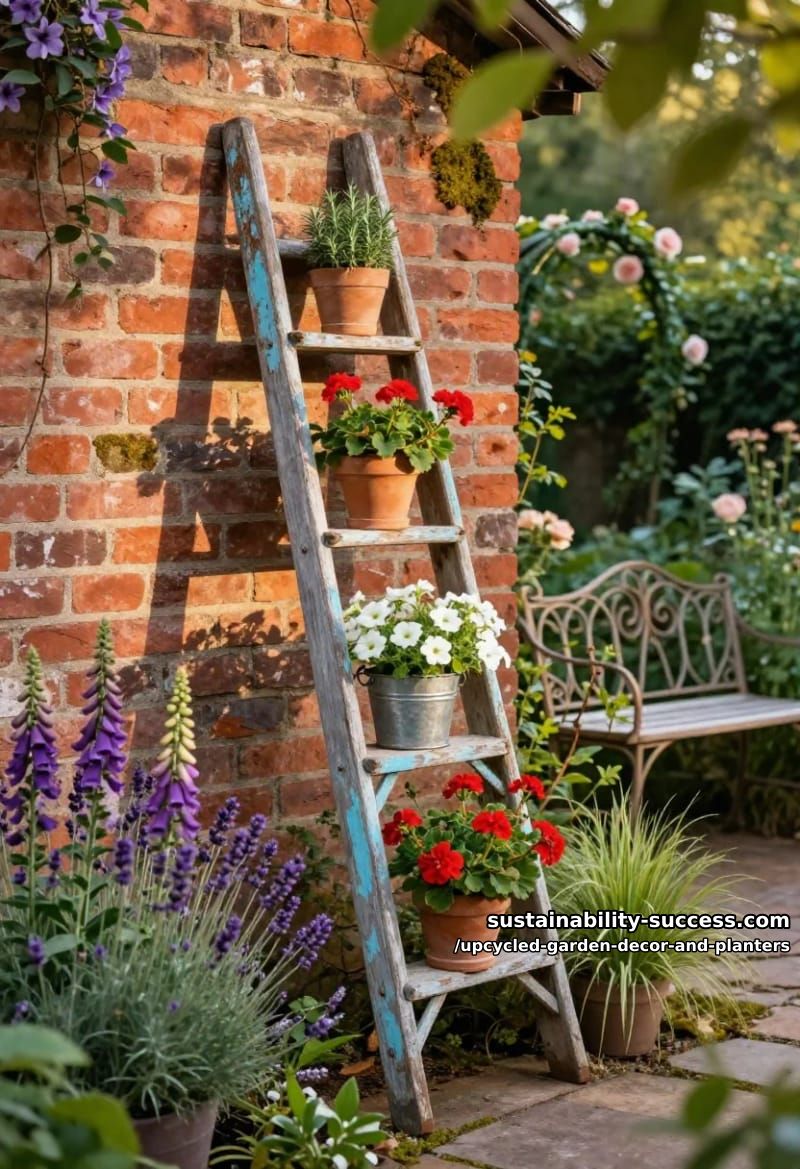
A leaning ladder turns a flat corner into three or four planting heights without any building. Wooden ones will gray and rot at the feet within a couple of seasons outdoors, so seal them. I used to leave mine raw for the weathered look and lost two good ladders to soft, punky bottoms before I started clear-coating the feet and the end grain.
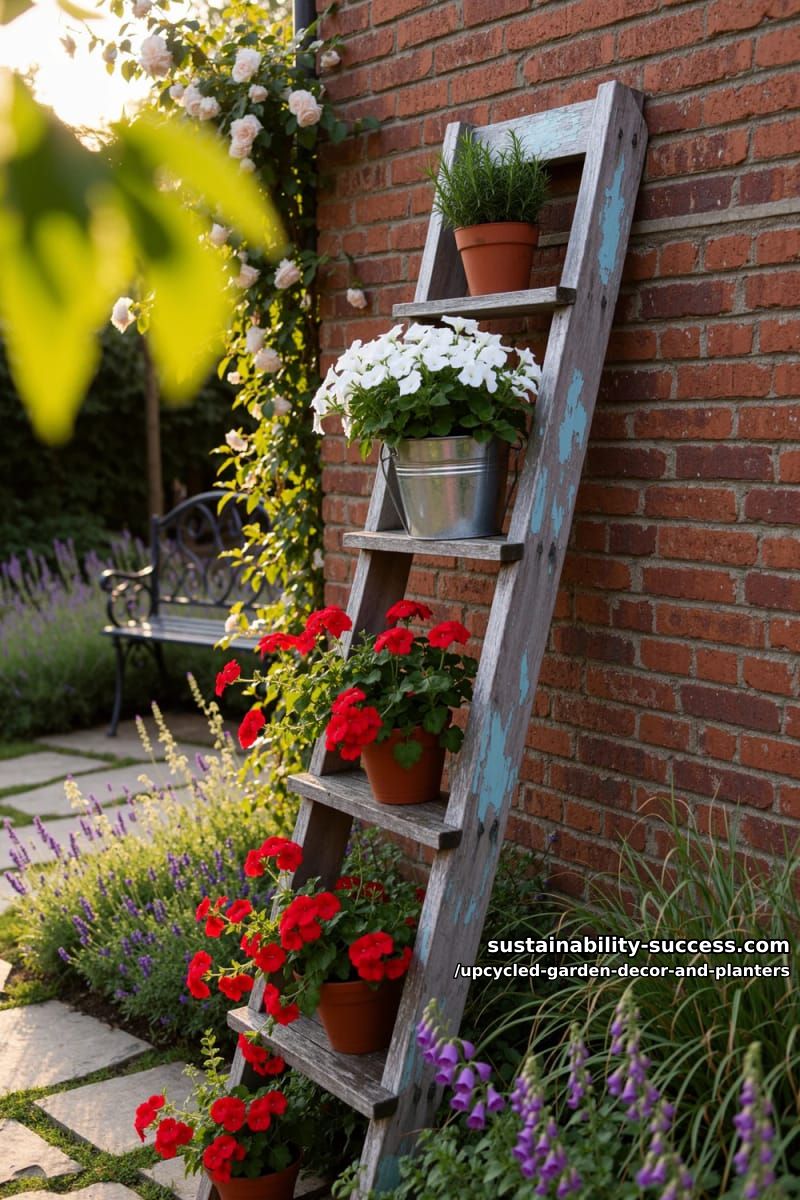
For that, a clear exterior coat like Minwax Helmsman spar urethane spray with UV blockers keeps the wood from graying without hiding the grain.
7. Dresser drawers stacked into a planted staircase
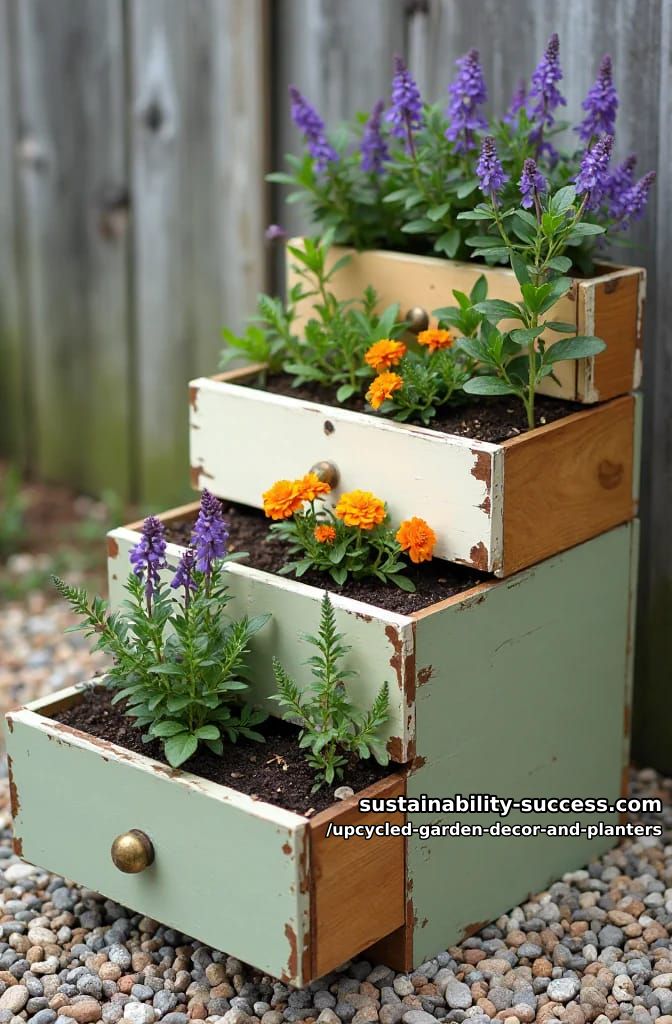
Drawers from a curb-side dresser nest into a stepped display in about ten minutes, and the staggered depths read as deliberate even though they're whatever you found. Drill the bottoms and line them with fabric. Pull the runners off or leave them; nobody looks underneath.
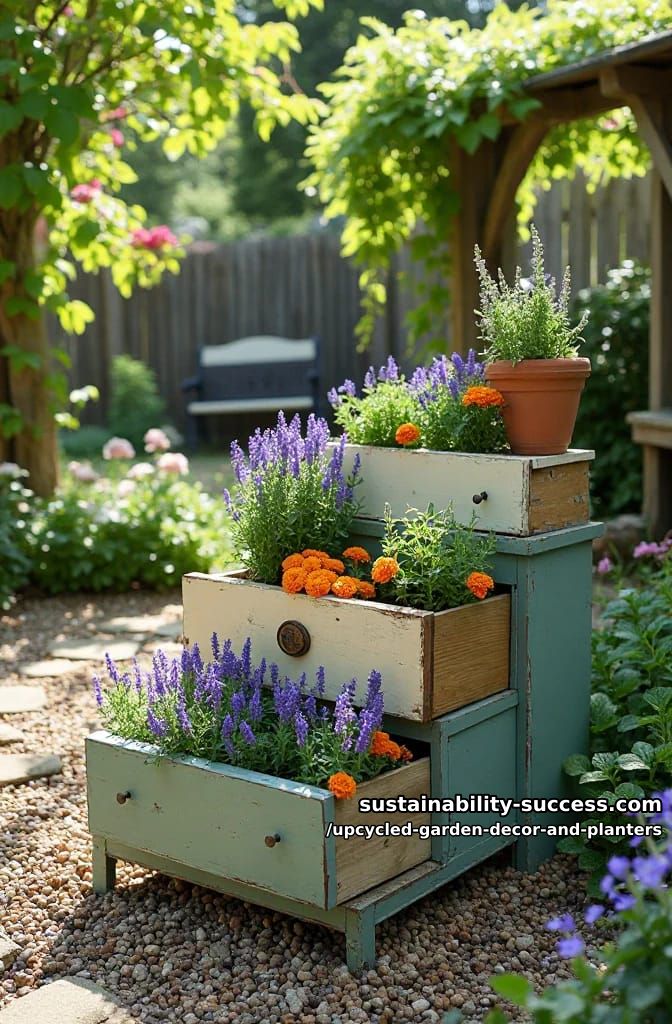
Painted furniture made before 1978 may carry lead paint, and you don’t want lead flaking into soil you’ll grow edibles in. If a piece is old and the paint is chalky or peeling, plant flowers in it rather than herbs, or seal the interior thoroughly first. A cheap lead test swab from the hardware store settles it in two minutes.
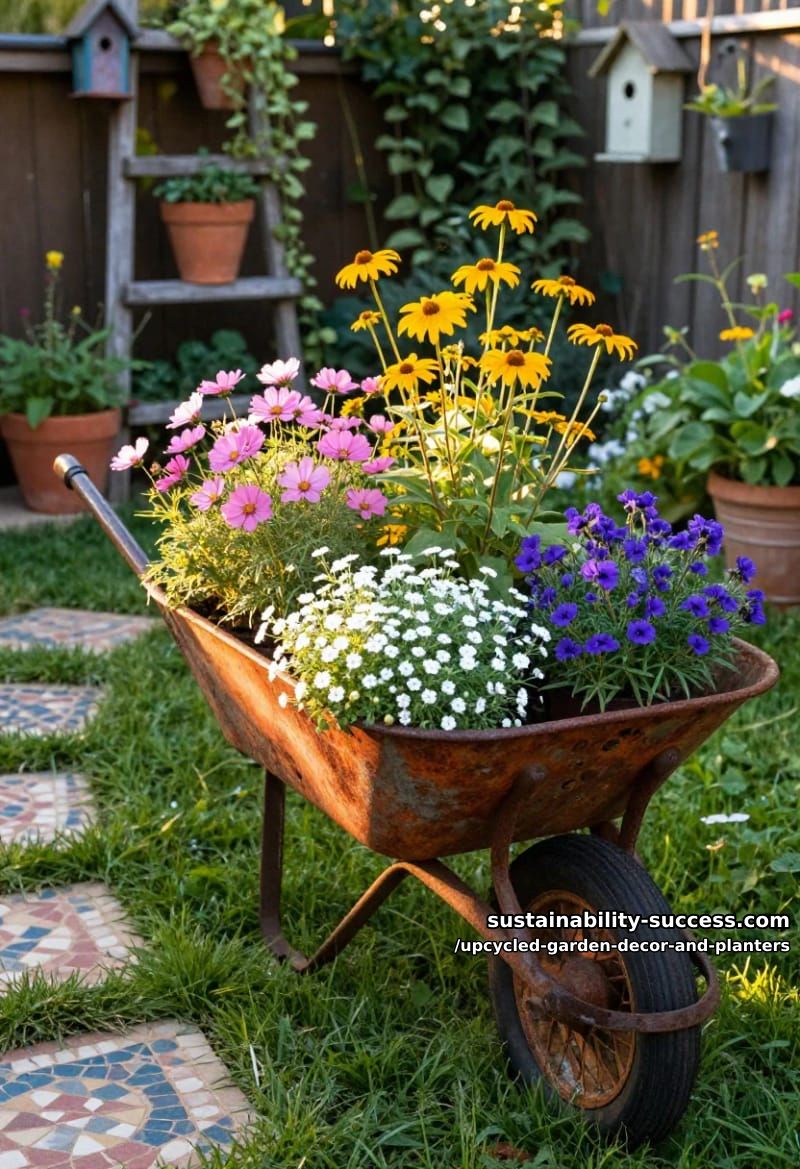
8. A rusted wheelbarrow as a rolling container bed
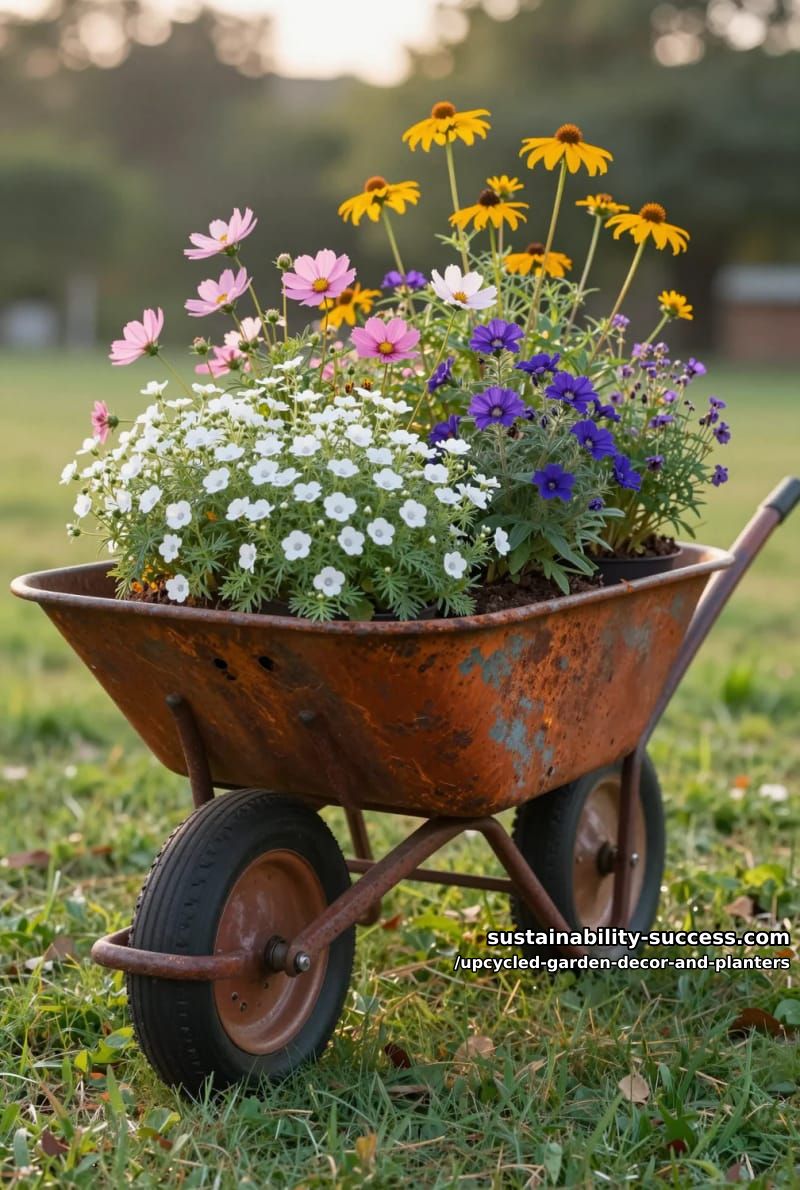
The wheel is the whole point: plant it heavy with annuals and you can chase the sun or roll it into the shade for a party. Rust looks right here, so leave it. Drill the low point of the tray, because the curved bottom collects water exactly where roots sit.
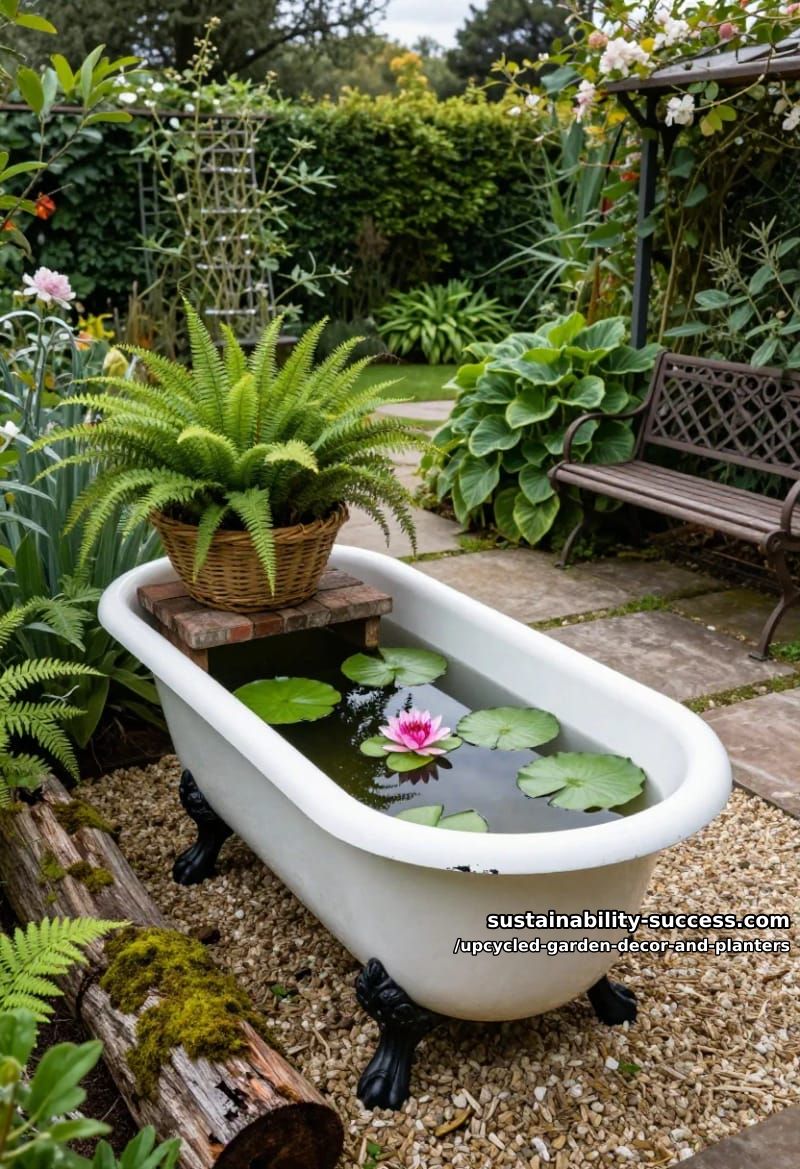
9. A clawfoot tub or enamel sink as a planted pond
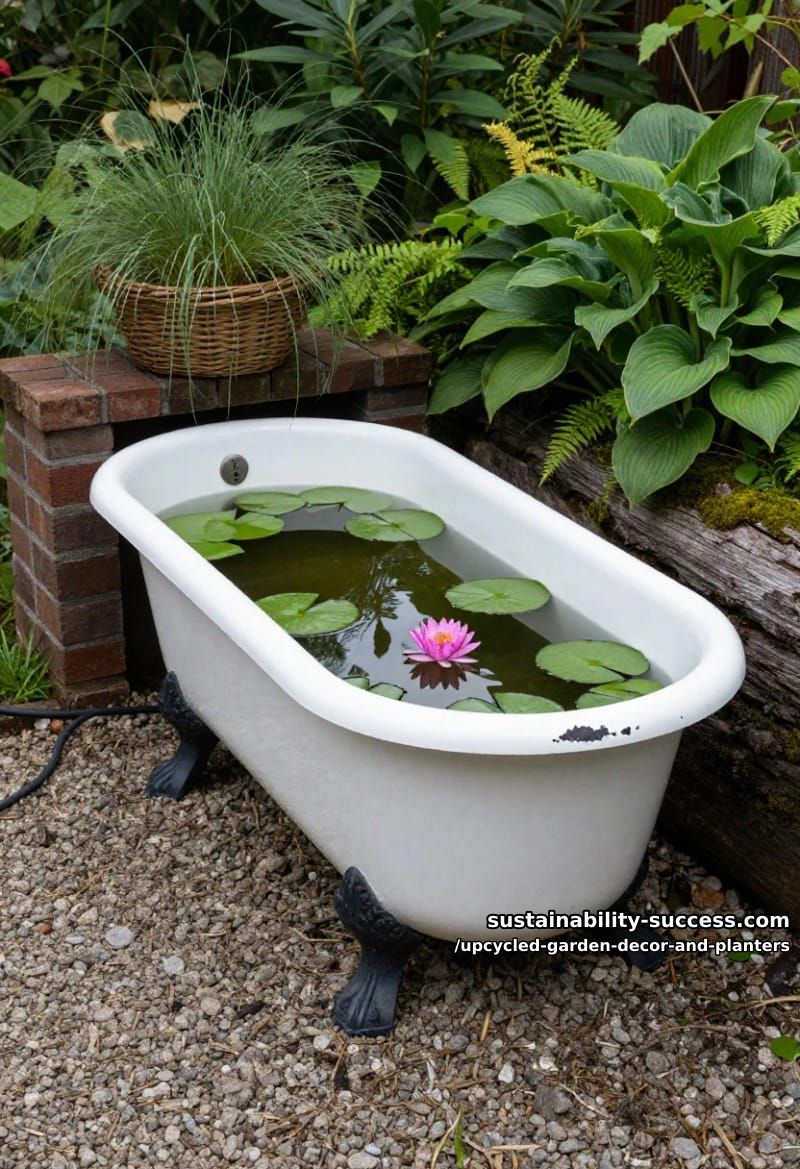
An old tub holds water already, which makes it the easiest pond a beginner can build: plug the drain, set it on level ground, fill, and add a couple of marginal plants in baskets. A barn sink or laundry trough does the same job in a smaller footprint. If you'd rather plant it than flood it, drill the drain wider and treat it like a deep raised bed; cast iron is forgiving and the enamel keeps soil off your hands. Skip fish unless you're adding a small pump and a shaded spot, because a tub in full sun cooks.
10. Aged terracotta: the buttermilk-and-moss patina
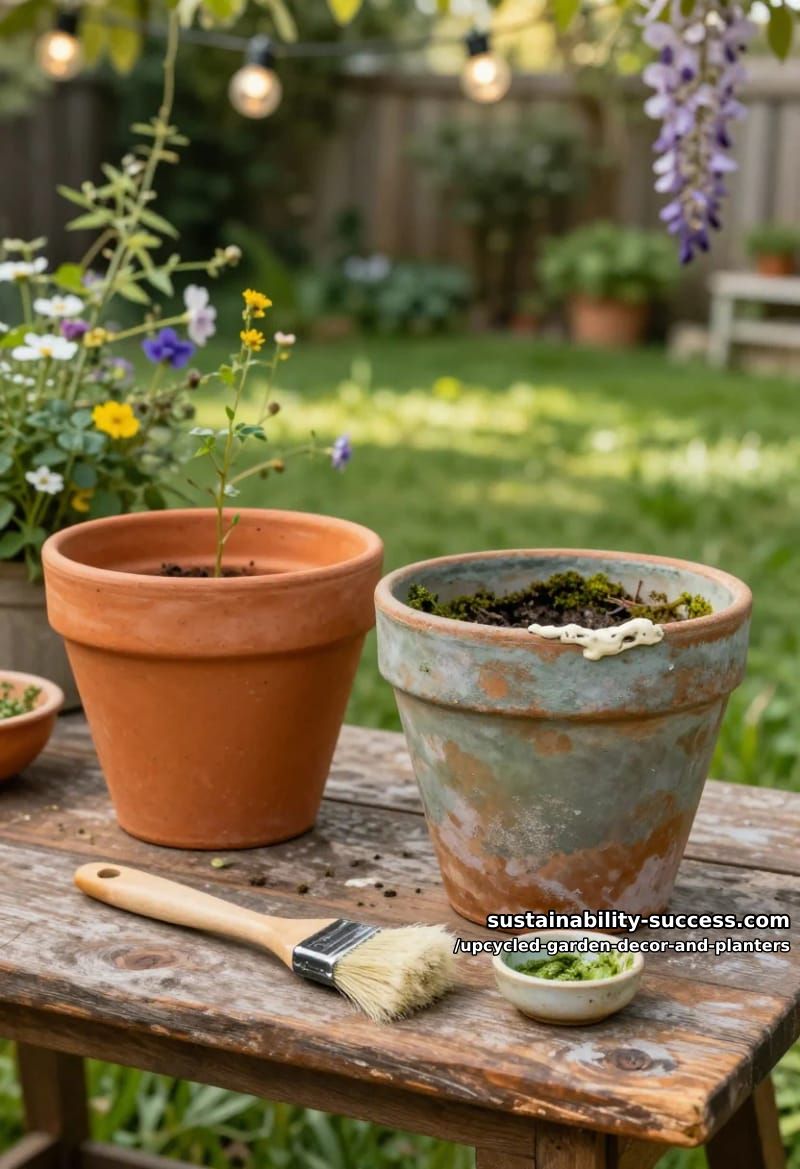
Slather a new pot with plain yogurt or buttermilk, press torn moss into it, and park it somewhere shady and damp; Martha Stewart's team popularized this years ago and it still circulates because it mostly works. Mostly. Here's the part the tutorials skip: actual moss rarely takes hold in a few weeks, and a fair number of pots just grow black mold and attract ants for the first few days before settling into a mineral-stained, weathered look. That stained look is fine, often better than the picture you were chasing, so don't fuss it. If you want faster, more reliable aging, a coat of thinned garden lime or a long soak in heavily salted water both give a chalky bloom without the funk.
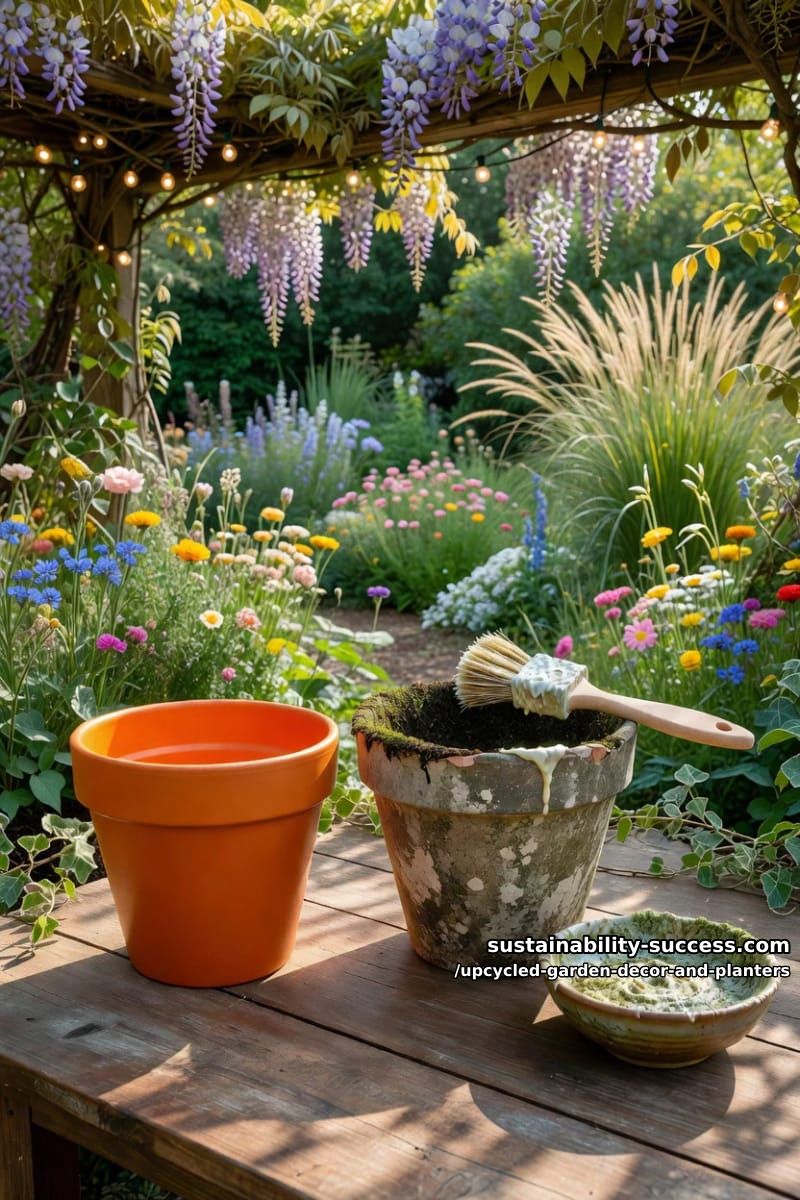
Do this
- Work on dry, unsealed terracotta; yogurt grips a dry pot harder and the patina reads stronger.
- Keep treated pots in shade and mist them so the surface stays damp while it ages.
- Soak the finished pot overnight before planting, since bare clay will wick water away from your roots.
Avoid
- Glazed or sealed pots. Nothing sticks, and you’ll just have rancid dairy to rinse off.
- Expecting lush green moss in two weeks. Mineral staining is what you’ll usually get, and that’s the look that lasts.
- Doing it on a hot, sunny patio; the dairy dries to a crust before it can do anything.
11. Bowling balls as mosaic gazing globes
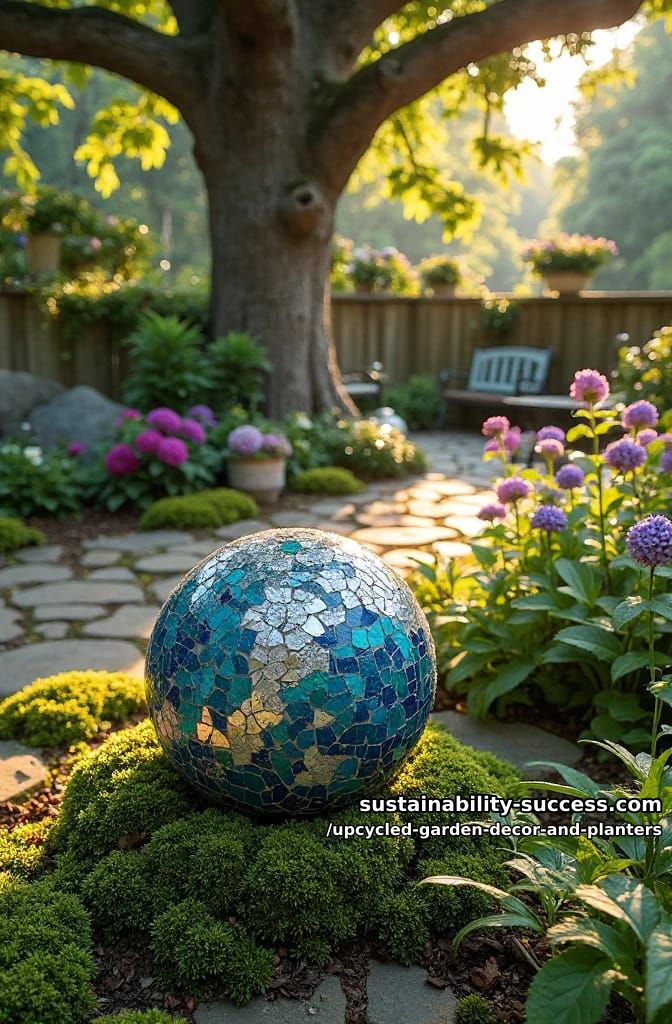
A scratched bowling ball is dense, weatherproof, and exactly the right shape for a garden orb, which is why thrift stores can barely give them away. Glue glass tiles, mirror shards, or broken china to the surface with clear outdoor silicone, fill the gaps with sanded grout, and you've replaced a $40 garden-center gazing ball for the price of a bag of tiles. Nestle it low in groundcover so it looks like it grew there.
12. A cobalt wine-bottle bottle tree
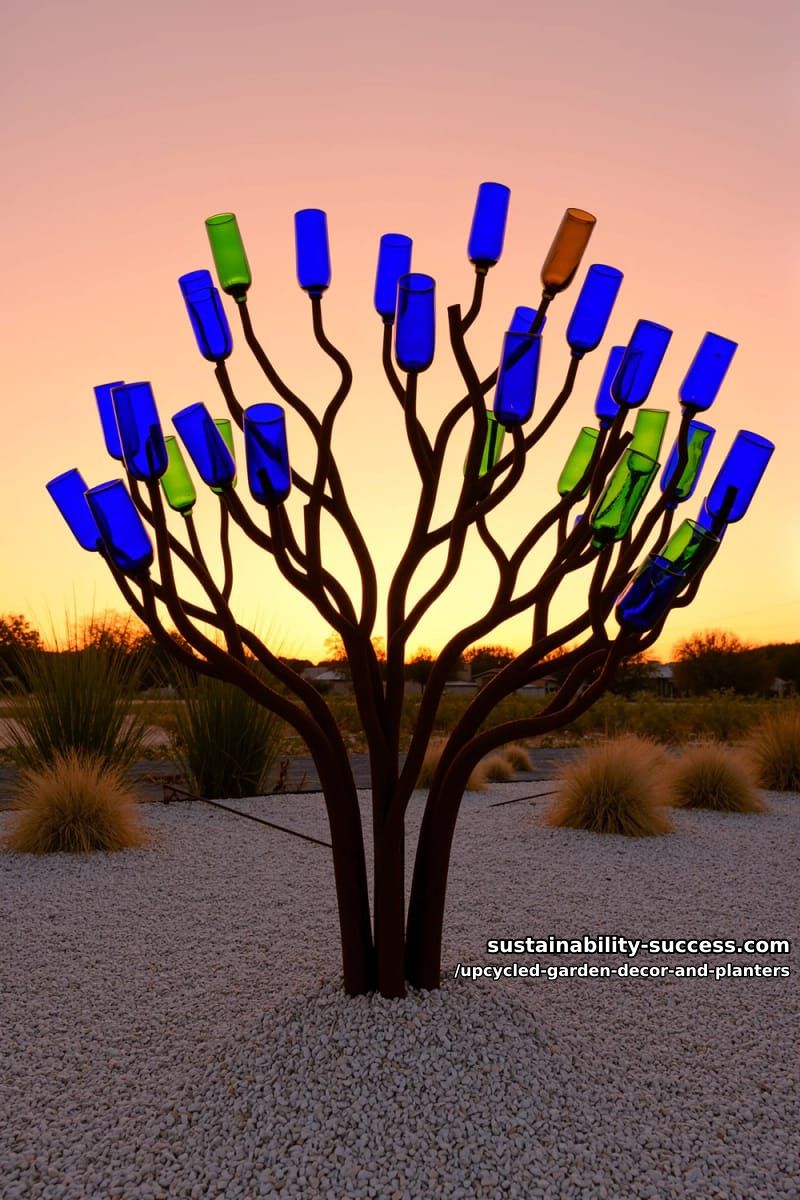
The bottle tree is folk art with roots in the American South and West African tradition, where cobalt bottles on bare branches were set to catch wandering spirits at dawn. You don't need the metaphysics to want one: blue glass against a sunset is reason enough. Cobalt holds up to UV far better than clear or green glass, which is why old Milk of Magnesia and certain wine bottles became the classic stock. A length of rebar with welded pegs, or a dead sapling stripped of bark, takes about a dozen bottles.
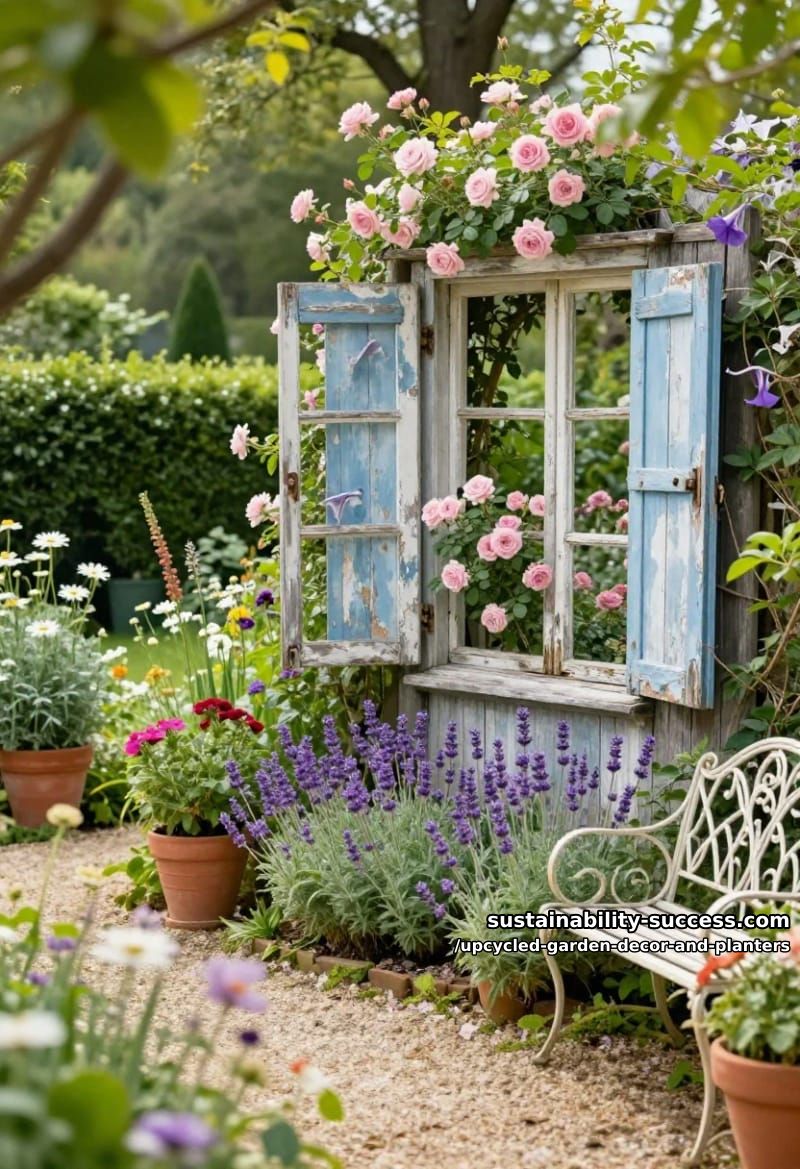
13. Old windows and shutters as a trellis or cold frame
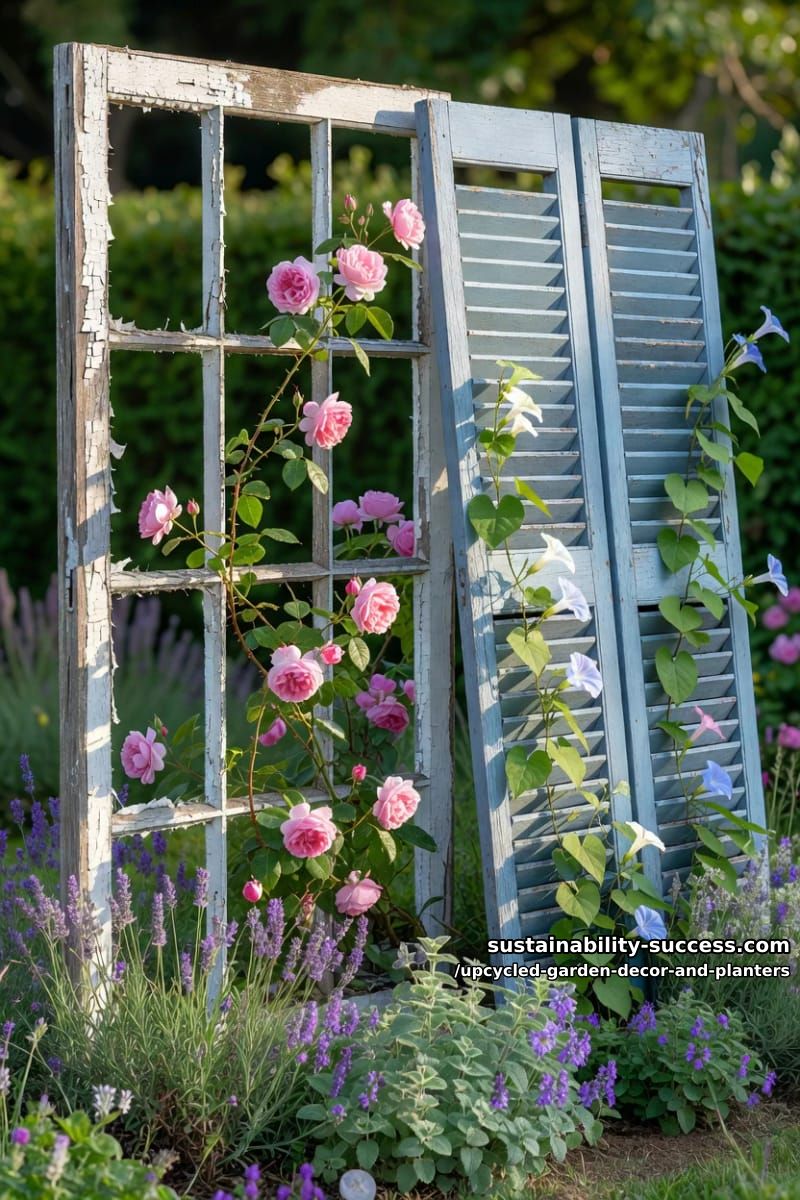
Knock the glass out of an old sash window and the muntins become a ready-made grid for climbing roses, clematis, or beans. Leave the glass in and lean two together over a seed bed and you've built a cold frame that buys you a few extra weeks each end of the season. Salvage yards and Habitat ReStore locations are full of these for a few dollars, since old single-pane windows are worthless to renovators.
14. A rain gutter mounted as a salad trough
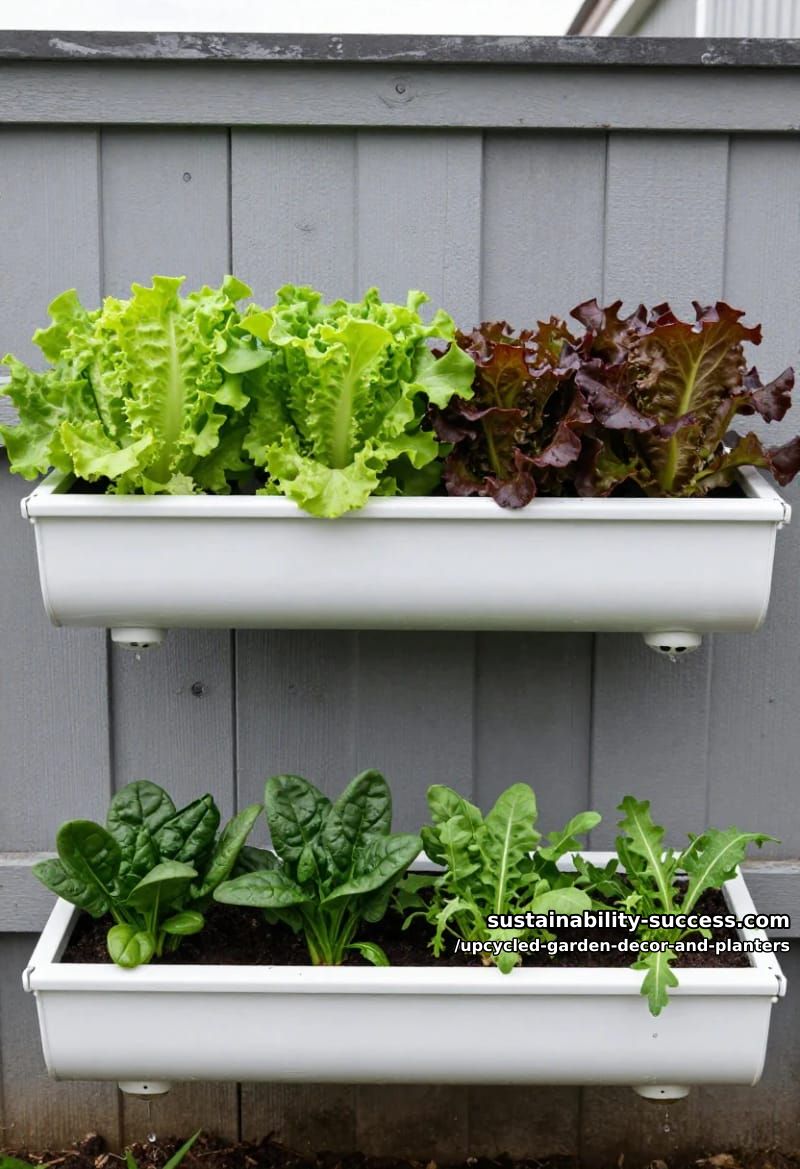
Lettuce and spinach have shallow roots, which is the whole reason a 4-inch gutter works as a planter where nothing deeper-rooted would. Mounted on a fence at waist height, a salad trough keeps slugs off and saves your back. Drill drainage every foot along the bottom or the roots sit in a trough of standing water after the first rain.
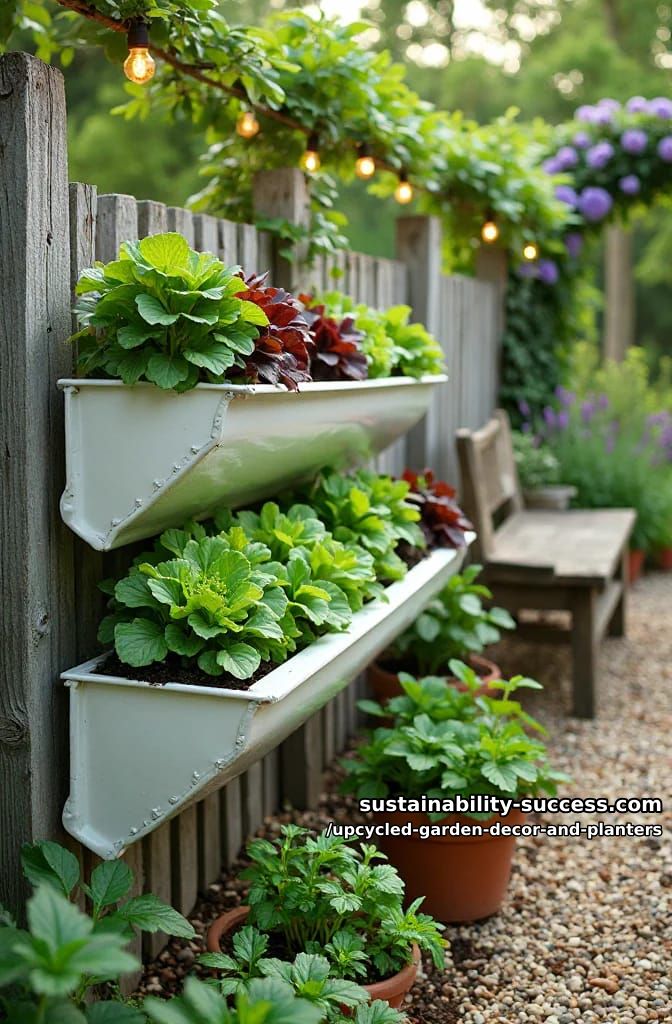
Two-run fence-mounted salad trough
Two 10 ft runs, enough lettuce for a steady household supply through spring.
This is a one-afternoon build with parts from any hardware store. Buy vinyl, not metal, since vinyl won’t bake the roots in summer sun and it drills like butter.
Shopping list
| Qty | Item | Spec | Price |
|---|---|---|---|
| 2 | Vinyl rain gutter | 10 ft length, 4 in or 5 in K-style | $8 to $14 each |
| 4 | End caps | matched to gutter profile | $3 to $6 per pair |
| 1 | Gutter brackets / hangers | set of 6 to 8, fence-mount | $6 to $12 |
| 1 | Stainless deck screws | small box, 1 in | $6 to $10 |
| Total (drill and 1/4 in bit assumed on hand) | $25 to $45 | ||
Prices are approximate ranges as of June 2026; verify before purchase.
15. A chandelier reborn as a hanging succulent frame
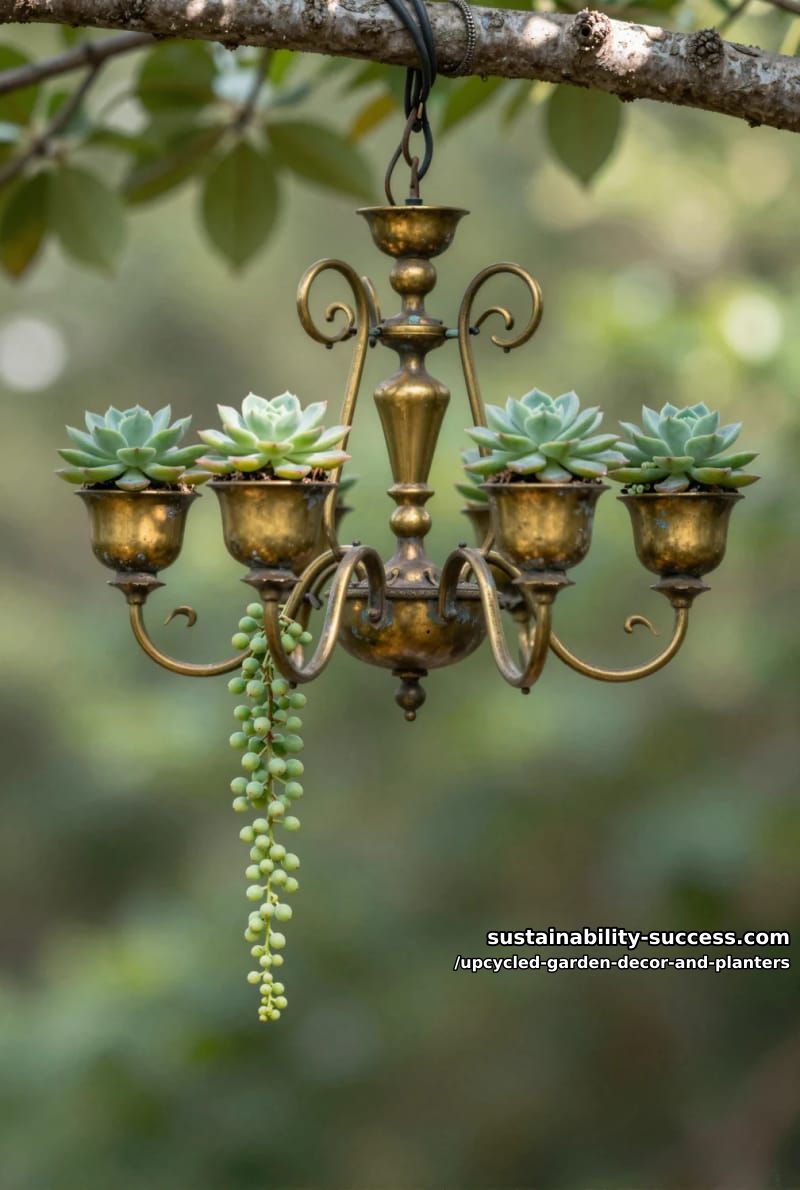
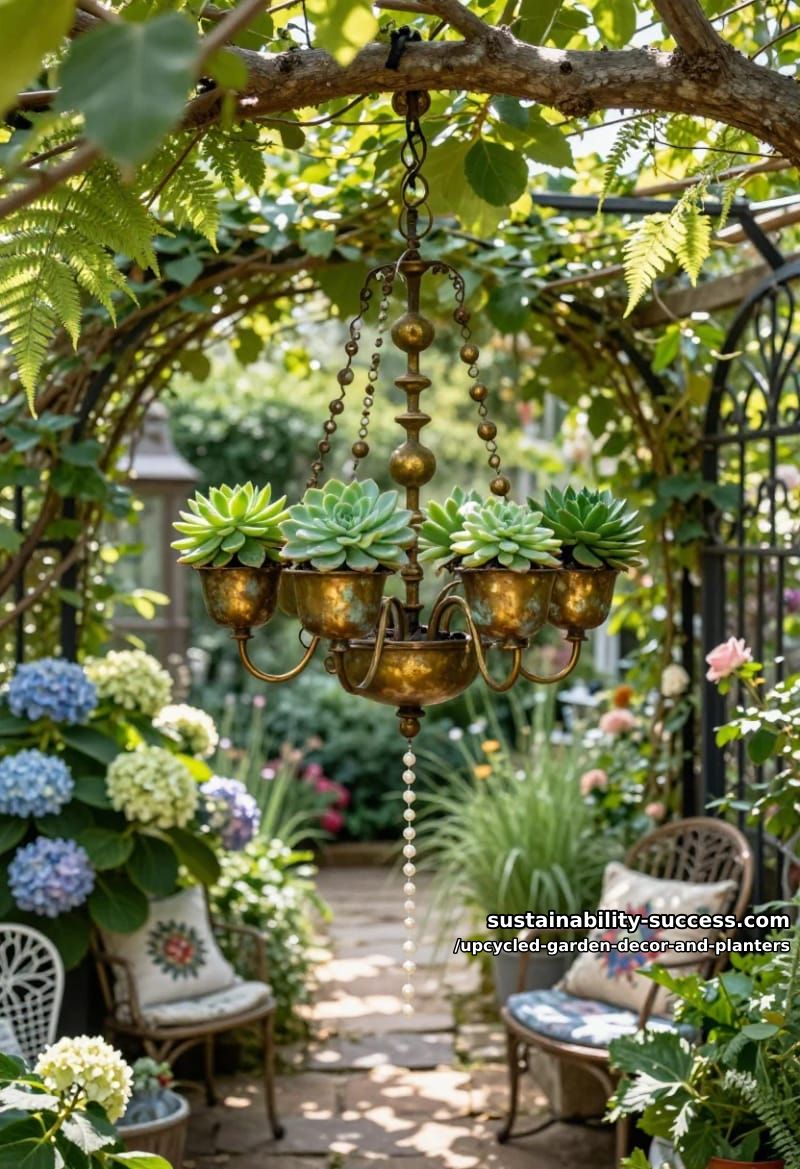
Strip the wiring out of a tarnished chandelier and each bulb cup becomes a tiny pocket for a single rosette succulent, with trailing types spilling from the lower arms. Hung in dappled shade from a sturdy branch or a shepherd's hook, it reads like something rescued from an estate sale, which it probably was. Line each cup with a scrap of moss to hold a teaspoon of gritty soil. This one wants weight-bearing chain, not the original flimsy mounting loop.
16. Punched tin cans as path lanterns
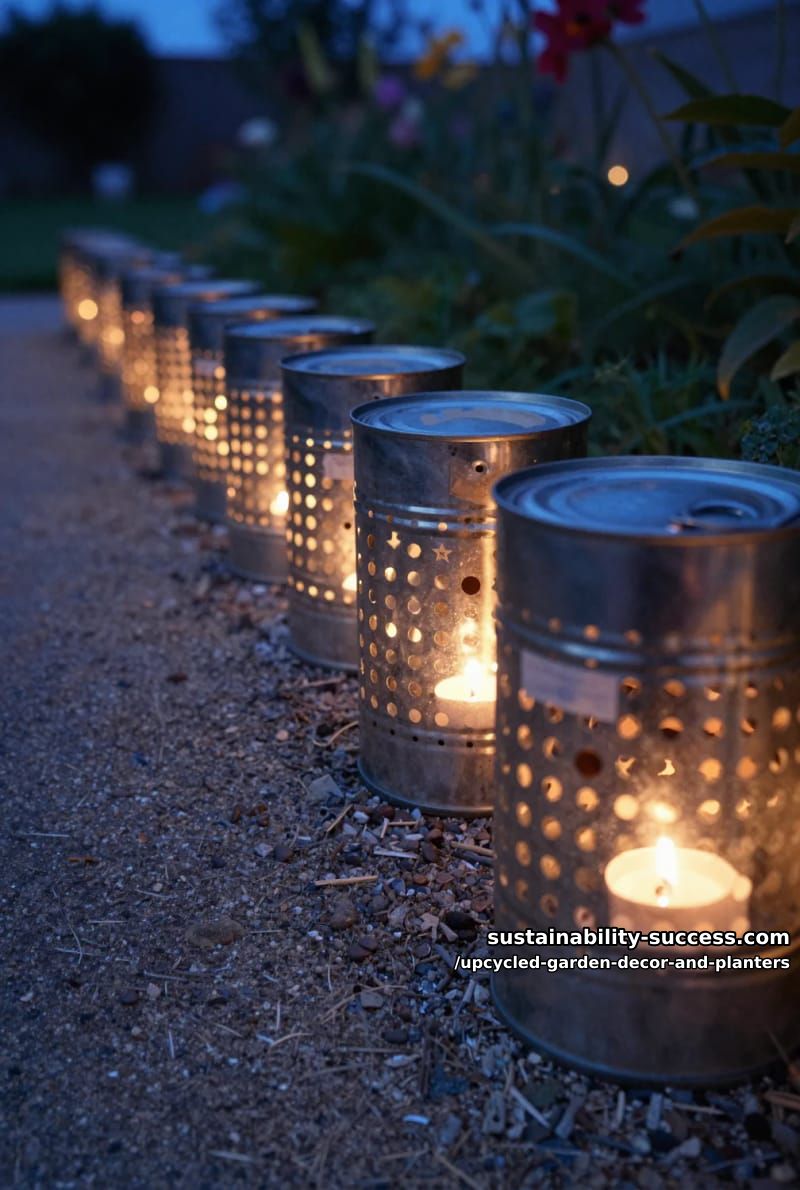
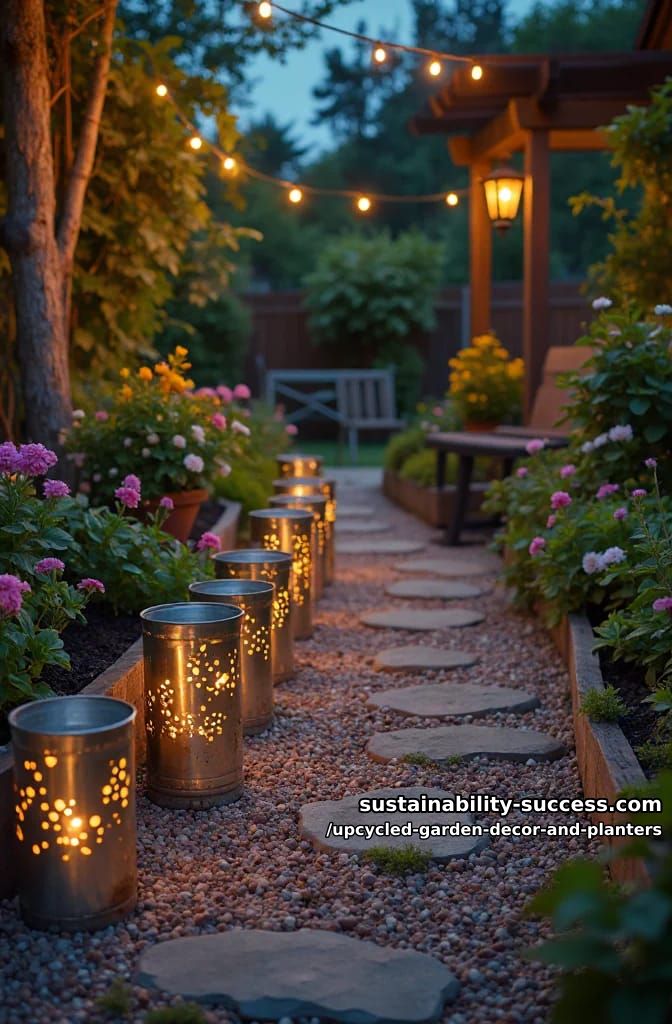
Fill a can with water, freeze it solid, and the ice braces the wall so your nail punches clean holes instead of denting the metal; thaw, dry, and drop in a solar tea light. Lining a path with five or six of these costs nothing but a few empty cans and an evening. Vary the punched patterns can to can rather than repeating one, or the row looks machine-made instead of handmade.
17. Tire planters (and why I usually talk people out of them)
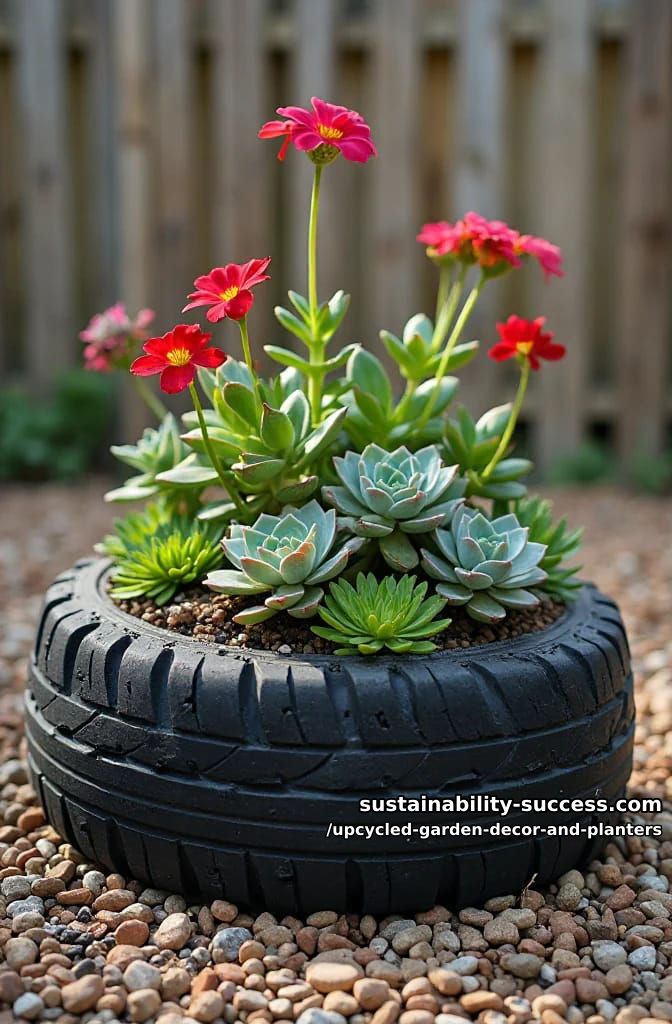
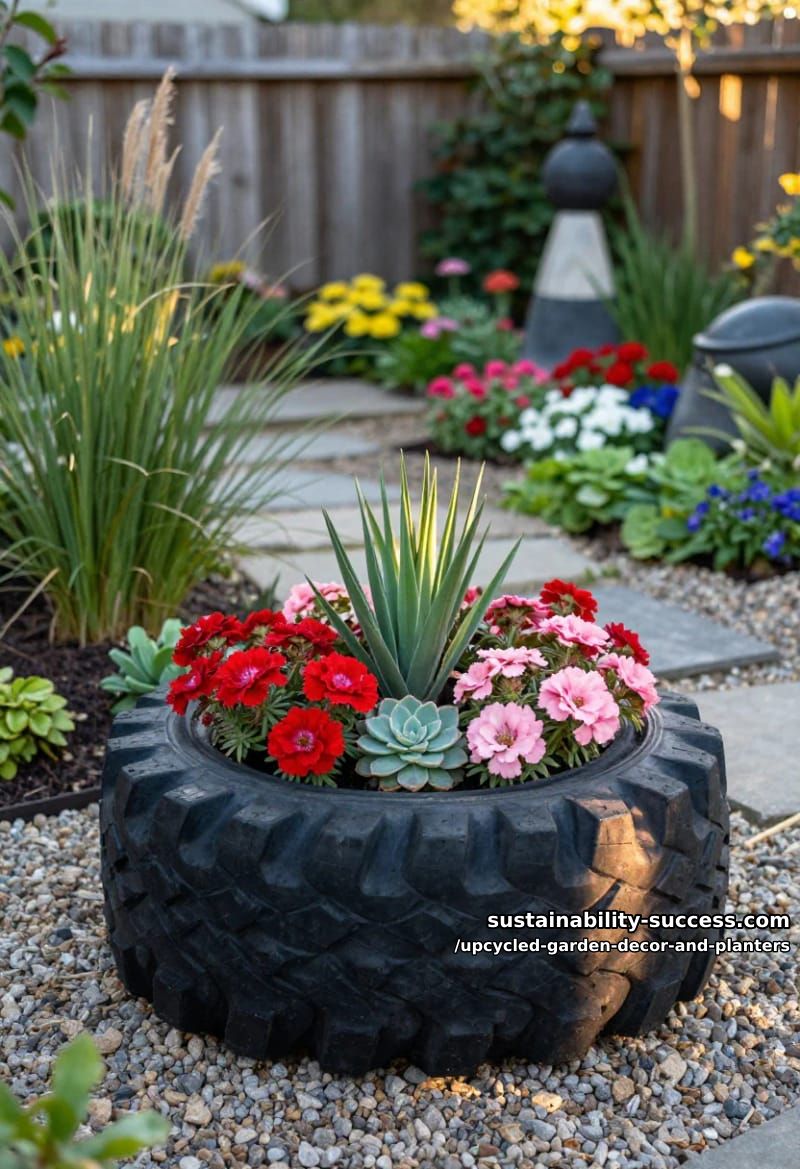
People email me about tire planters more than almost anything, and my honest answer disappoints them: most painted-tire planters look cheap, and there's a real, unsettled debate about whether tires leach compounds into soil over time, which is enough reason to keep them out of any bed where you grow food. If you still want one, leave it black and cut the sidewall into a flipped petal edge so it reads as a deliberate shape rather than a stack of garish painted rubber by the mailbox. Use it for flowers, never edibles, and one tire, not a pyramid.
18. A buried olla or wine bottle for hands-off watering
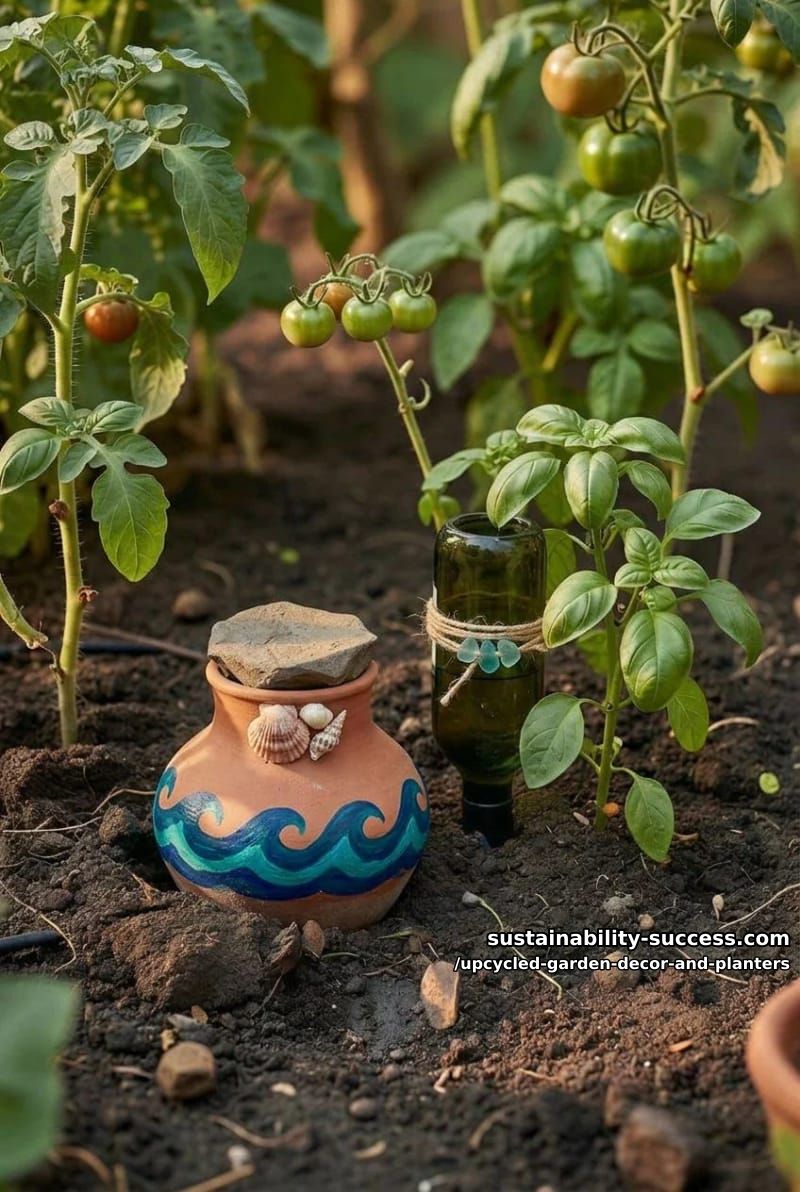
Bury an unglazed clay pot up to its neck, fill it with water, and the porous walls seep moisture straight to the roots around it; this is the olla, an irrigation trick that's thousands of years old and still beats a sprinkler for thirsty summer crops. No money for a proper olla? Push an upturned wine bottle full of water neck-down into the soil beside a tomato and it does a rougher version of the same job, draining slowly over a day or two. Cap the olla's neck with a stone so it doesn't evaporate or breed mosquitoes.
Conclusion
If you only do one thing from this list, make it the unglamorous one: drill the drainage before you fall in love with a vessel, because the drowned boot and the rotted ladder foot are the failures I see over and over. Start with a boot or a colander to get a feel for it, then graduate to the watering-can fountain once you're comfortable hiding a pump and a basin. And take the tire warning seriously even though it's the idea everyone wants; a single black tire of flowers is fine, a painted pyramid of them by the road is the thing your neighbors quietly resent. The patina, the rust, the chipped enamel: that's the part you can't buy new, so stop sanding it off.