
A single GMA shipping pallet gives up about a dozen usable deck boards, each roughly 3½ inches wide and a half-inch thick, and the boards run 40 to 48 inches long. That is enough slat to build a tree taller than most rental ceilings want to deal with, from wood that cost you nothing. The catch in a small apartment was never the material. It was the floor: a real tree eats a square metre you don't have, and then you have to store the stand for eleven months.
Every idea below solves for that. These are flat, leaning, wall-hung, and door-mounted trees that give the floor back, plus the finishing and lighting choices that keep reclaimed wood from reading as scrap lumber in a room where every surface is on display. A quick safety note first, because it decides which pallets you're even allowed to touch, then the builds.
Wall-mounted pallet tree: a full tree that gives back the floor

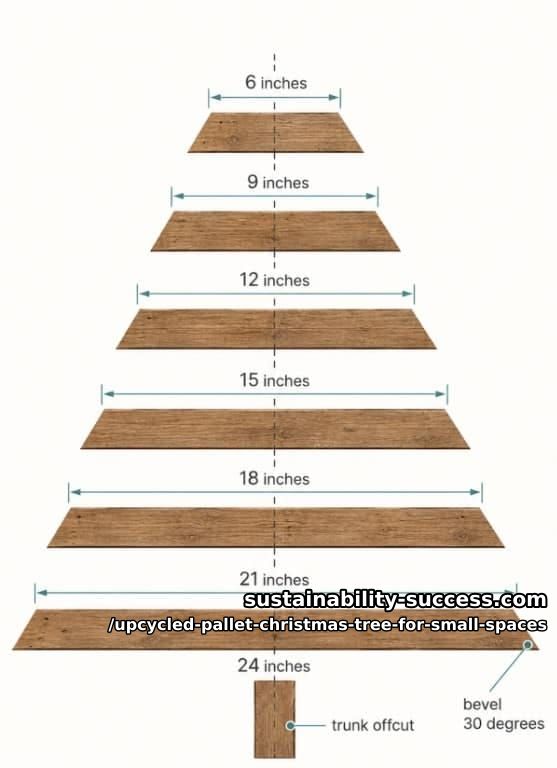
If you only build one, build this one. A flat tree of horizontal slats, widest at the bottom and stepping in toward a point, hangs on the wall and takes exactly zero floor. One pallet's worth of deck boards makes a tree three to four feet tall, which is plenty for a studio where a full-height anything would crowd the walkway.
Granted, "flat" is where most of these go wrong. The failure isn't the wood, it's the geometry, so two details do all the work.
Getting the taper to read as a tree, not a fence
Cut a run of slats in decreasing lengths and space them evenly up a hidden vertical batten on the back. I like a drop of about three inches per slat on a knee-to-shoulder tree; too little and you've built a ladder, too much and it looks like a dartboard. Bevel the outer ends of each slat at a shallow matching angle so the silhouette forms clean diagonal edges instead of a stack of blunt rectangles. A short offcut at the base, painted or left raw, reads as the trunk.
Hanging it on a wall you can't drill
Weight is the constraint renters forget. A solid slab of half-inch pallet boards gets heavy fast, and Command picture-hanging strips top out around 16 to 20 pounds on a smooth, clean wall (they fail on textured paint, so wipe with rubbing alcohol first and don't bother on a bumpy surface). If your tree comes in heavier, thin the slats or switch to a 3M CLAW-style hanger, which holds far more and leaves only a pinhole. Build light from the start and the whole thing lifts off in January with no patching and no lost deposit.
Only build with a pallet marked HT(heat treated). Skip any stamped MB, which means methyl bromide, a fumigant the EPA classes as toxic, and skip unmarked pallets too, since you can’t know what shipped on them. The mark is branded into the stringer beside the IPPC wheat symbol, never a peel-off sticker. Most US pallets made after 2005 are heat treated, but MB and imported stock still turn up, so look before you load it into the car.
A slim leaning pallet tree for the gap beside the sofa
A leaning tree buys you a full standing silhouette in a footprint a couple of inches deep. Build the same graduated-slat shape onto a light frame, skip the wall fixings entirely, and prop it in the dead vertical slot between the sofa arm and the window or in a corner the traffic never uses.
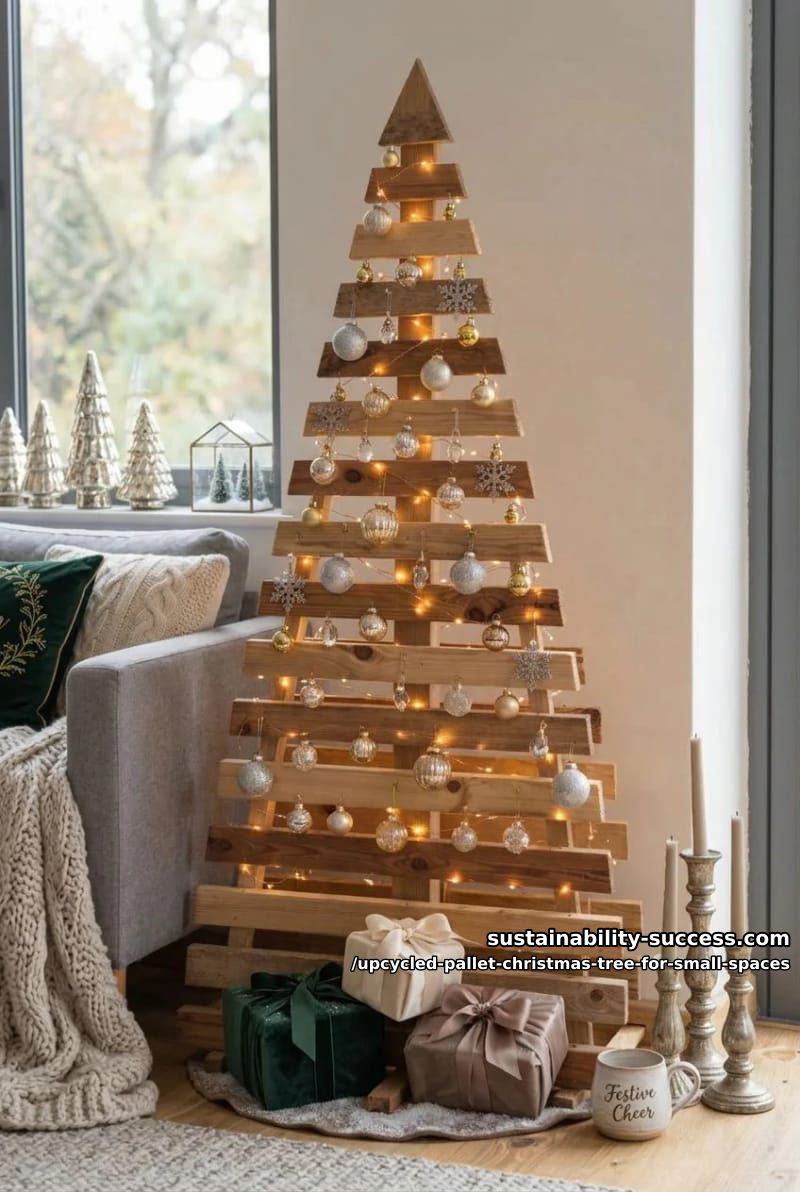
The honest limitation: it needs a wall to lean on and a little anti-tip sense, so weight the base slat or run one discreet strap to a hook if there are pets or a toddler in the mix. Otherwise it's the least committed build here. Nothing is drilled, nothing is glued to the wall, and it folds flat against the back of a wardrobe for storage.
Tabletop pallet tree from the offcuts you'd throw away

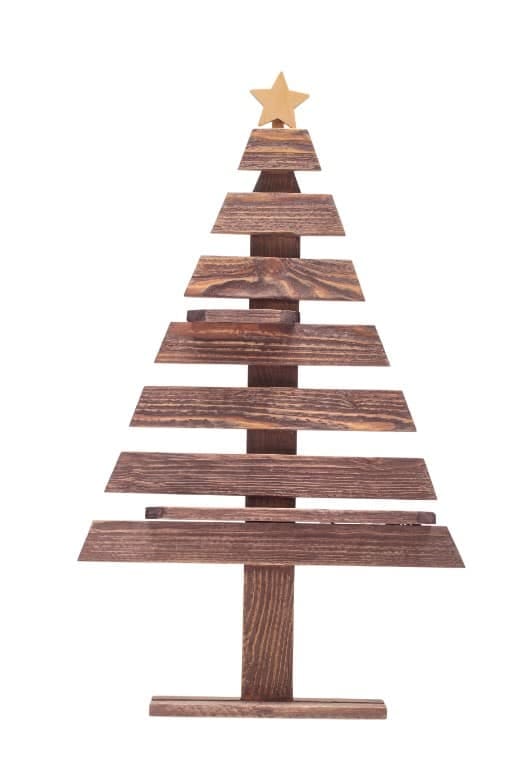
This is the one for people with no spare wall at all: a mantel, a bookshelf, a windowsill. Save the short ends left over from a bigger build, stack five or six graduating tiers on a dowel or a scrap of threaded rod, and you have a foot-tall tree for the price of nothing. It's also the safest option around curious cats, which is not a small consideration in a one-room flat.
The pallet tree that moonlights as an advent calendar
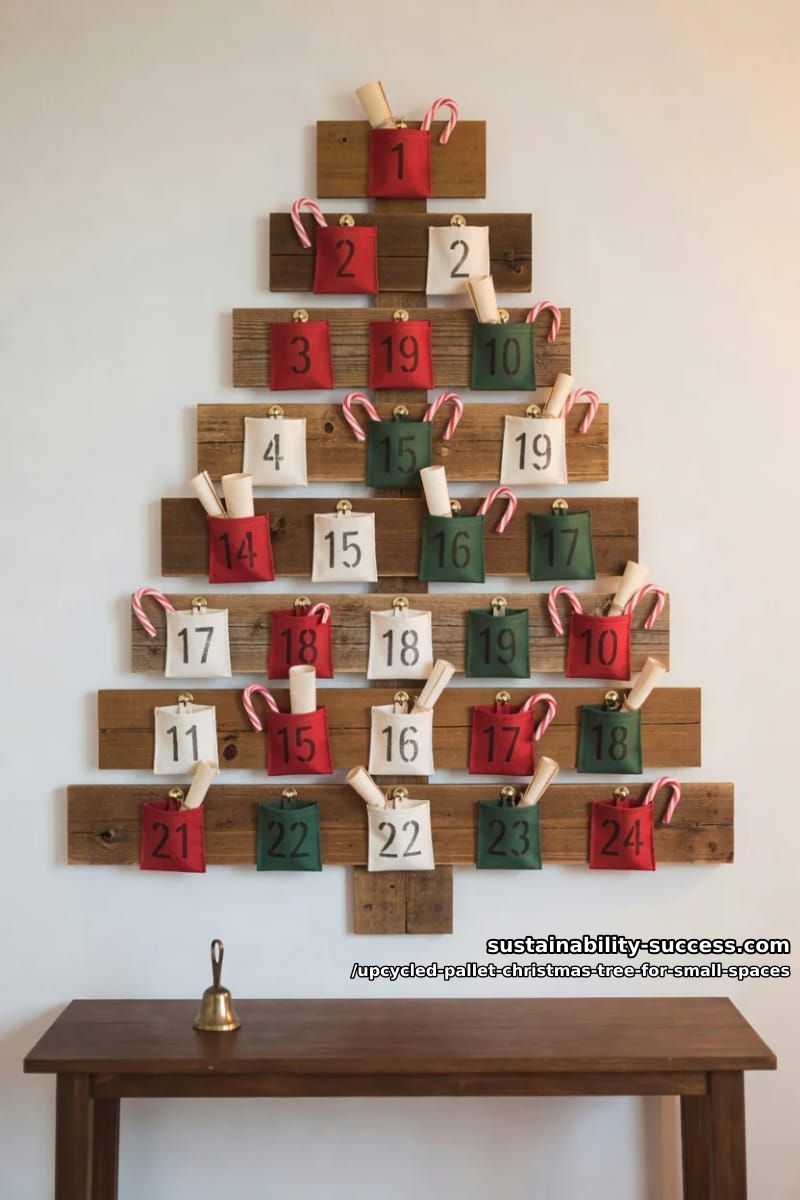
Here's where a small space actually wins: one object doing two jobs. Instead of finding room for a tree and a separate advent calendar, hang a wall tree whose slats carry the countdown.
Pockets, pegs, or envelopes
Small numbered fabric pockets stapled along each slat hold sweets or tiny notes. If you'd rather not sew, screw a row of little brass cup hooks and hang numbered kraft-paper cones or folded envelopes, which strips out on the 25th and leaves a plain wood tree for the rest of the season. Stencil the numbers in charcoal straight onto the boards for the version that survives being handled by kids every morning.
Backlit pallet trees for a small room that reads after dark
Lighting is where a flat wooden tree stops looking like a craft project and starts looking intentional, and it matters more in a small room because you see the thing from four feet away, not across a hall. Two approaches, and they're not the same.
Threading warm-white fairy lights through the gaps between slats gives you points of light on the wood itself. Mounting a strip behind the tree, aimed at the wall, throws a halo that makes the whole silhouette float. I'd run the second one only against a dark or mid-tone wall, where the glow has something to bounce off; on white it just washes out.
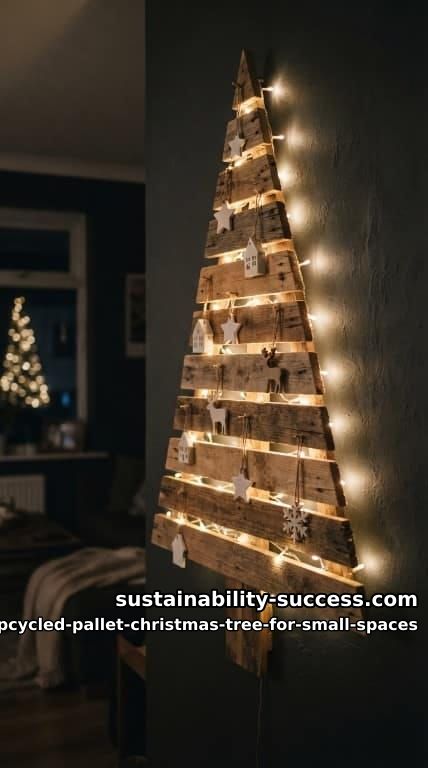
On temperature, be stubborn about warm white in the 2200 to 2700 kelvin range. Cool-white and that faintly blue "daylight" string make raw pine look grey and clinical, which is the opposite of what you built a reclaimed-wood tree for. Battery packs with a timer keep the cabling invisible, which counts double when the tree hangs at eye level and there's nowhere to hide a plug.
Paint the pallet tree pale, don't leave it raw
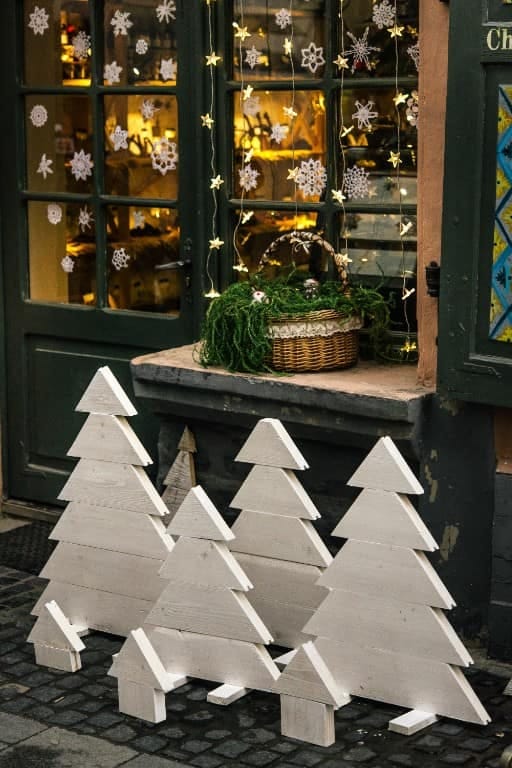
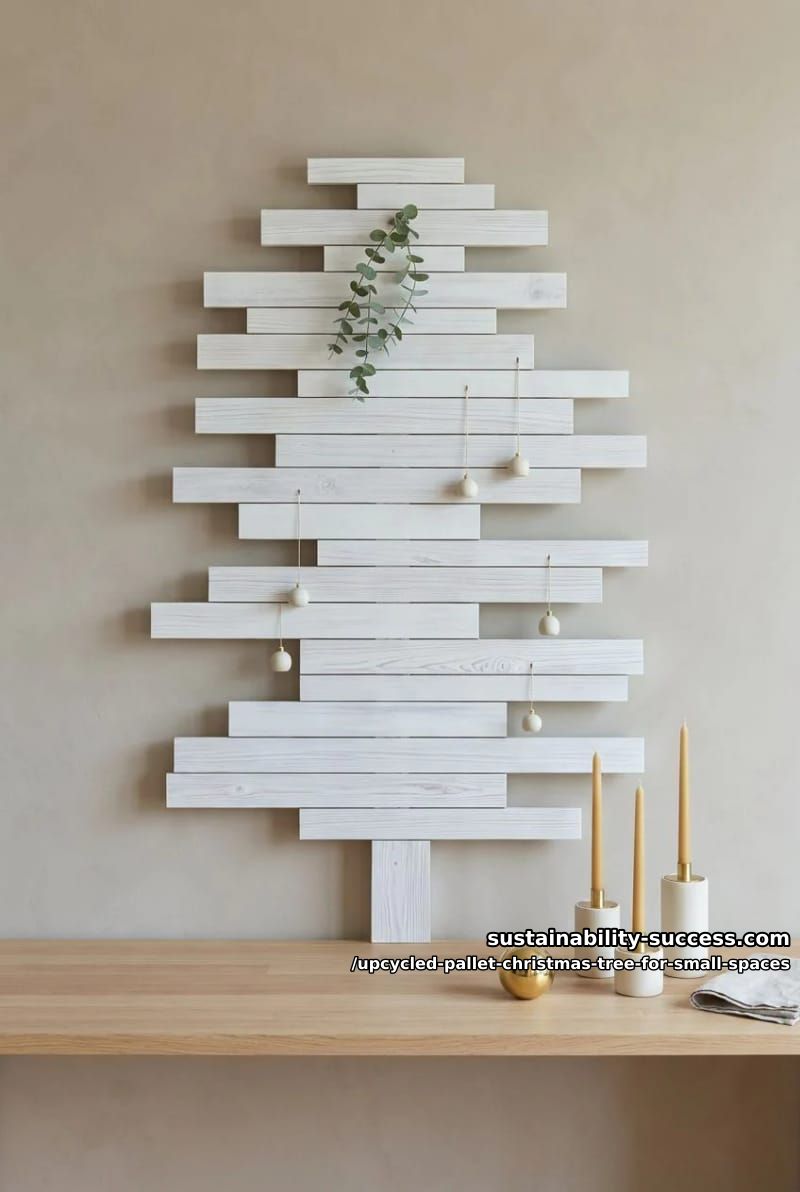
The received wisdom is that pallet wood should stay raw for that reclaimed look. In a small room, I think that's usually wrong. Untreated pine skews orange, and a big orange object on the wall of a tight space reads heavy and pulls the walls in. A thinned whitewash keeps the grain and the knots (you're not hiding that it's pallet wood) while dropping the visual weight so the tree recedes and the room feels bigger.
Three palettes that suit a small wall
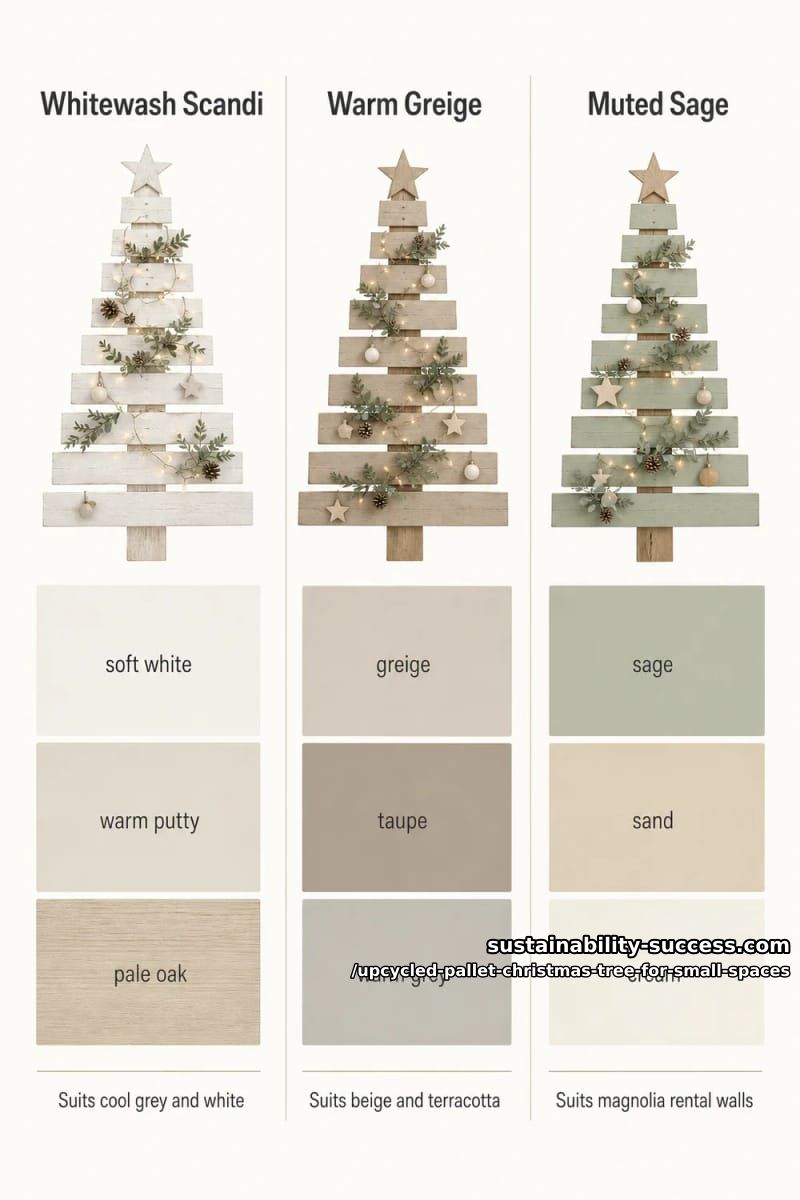
Match the finish to your wall, not to a Pinterest board. Whitewash reads Scandinavian against cool grey or white; a warm greige wash sits better on beige and terracotta walls; a muted sage plays well with a lot of rental magnolia without fighting it. Pick one and commit, because a two-foot tree doesn't have room for three competing colours.
Do
- Sand the faces and every edge first. Pallet wood splinters, and this is going on a wall people brush past.
- Thin the paint with water for a wash that keeps the grain instead of burying it.
- Seal with a matte poly if the tree lives somewhere it’ll get knocked.
Avoid
- Glossy varnish. It reads plasticky under fairy lights and kills the reclaimed texture.
- Painting over grime or an old shipping stamp without sanding it back.
- Leaving it orange-raw in a pale, small room and hoping.
Over-the-door and corner pallet trees for when the walls are full
When every wall is spoken for, the door and the corner are the last unused vertical real estate in a small home. Fix a narrow slat tree to the flat face of an interior door (it swings, decorations and all, and you reclaim the wall entirely), or build a two-sided tree that tucks into a corner and reads from both approaches.
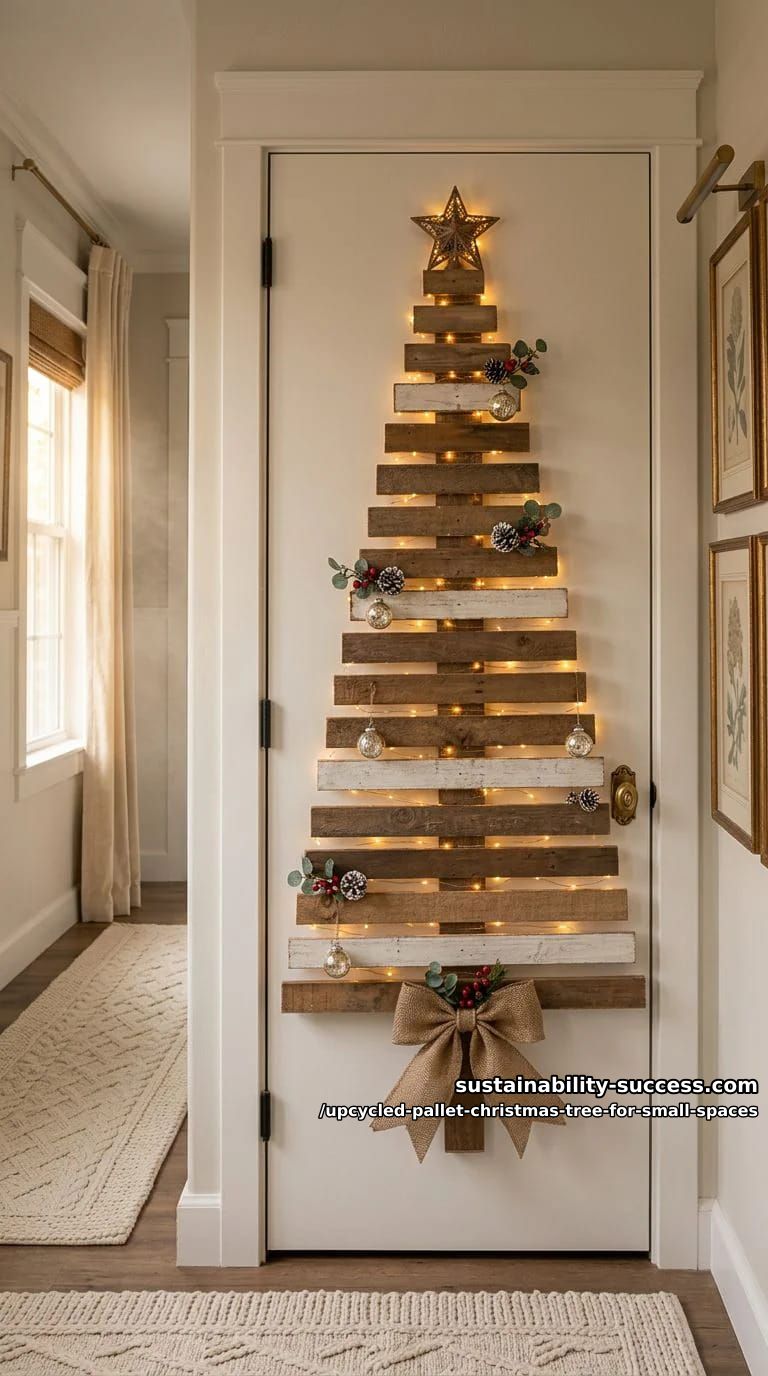
Keep the door version light and slim so it clears the frame and doesn't bang the wall on every open. It's the most space-efficient idea here by a wide margin, and the one nobody expects when they walk in.
Conclusion
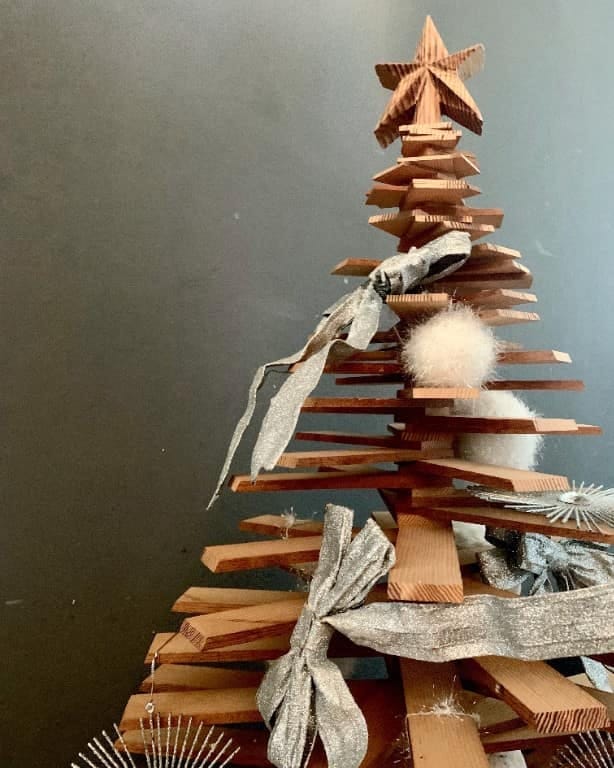
Start from where your empty space actually is, not from the prettiest photo. No floor and a bare wall means the flat wall-mounted tree; a rented wall you can't drill means keeping it under 16 pounds or reaching for a CLAW hanger; no wall at all sends you to the tabletop stack or the door. Whatever you build, sort the stamp before you cut and whitewash before you decorate, because repainting a hung tree covered in ornaments is a job nobody finishes. The advent-calendar version is the one I'd start with if you're on the fence: it earns its wall space twice, and by December 25th it quietly turns back into an ordinary tree.