
Every project here either stands on the floor, leans against a wall, or peels off clean, because the fastest way to lose a deposit is a row of anchor holes a landlord can bill you to patch. The pieces are thrifted, salvaged, or pulled out of someone's curb pile: a $6 dresser repainted in an afternoon, a stack of dollar-bin records turned into bowls, an old sash window leaned on a console as a layered photo tray. None of it reads like a dorm, and all of it comes apart when the lease ends.

1. Chalk-paint a thrifted dresser instead of buying flat-pack
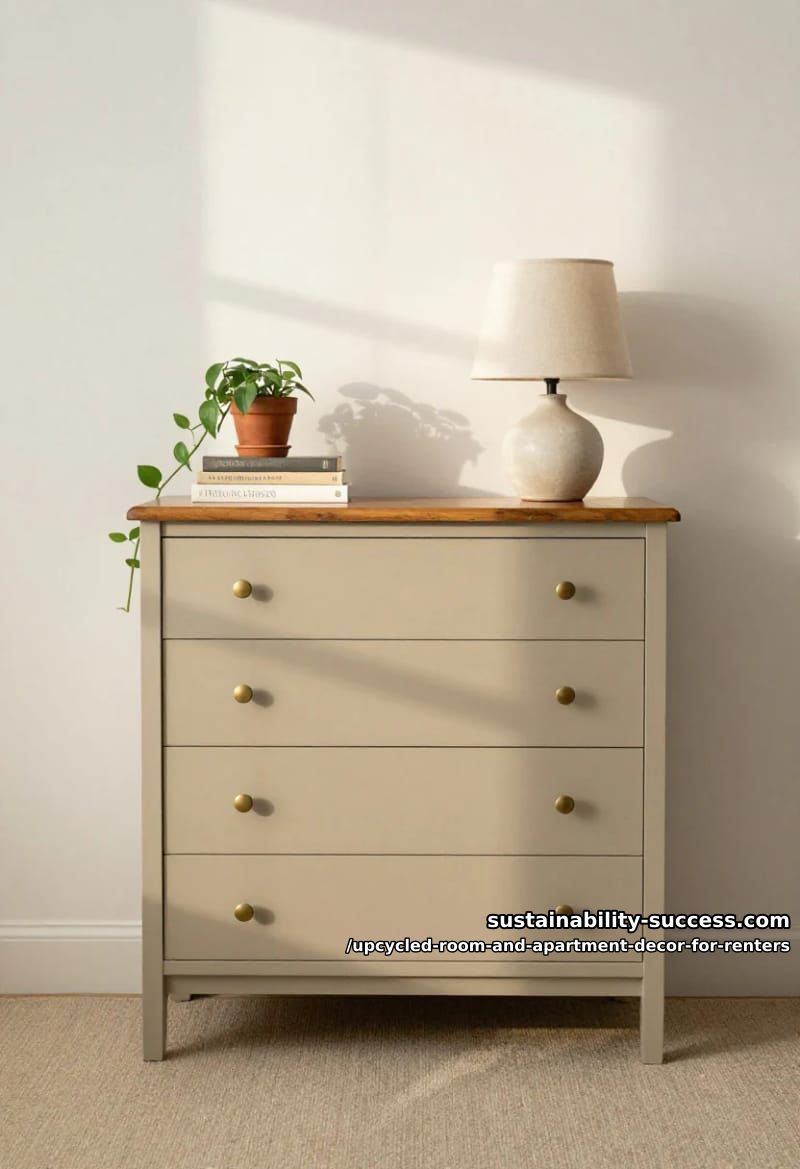
The one piece that anchors a rented room is a solid-wood dresser somebody else gave up on. Thrift stores and marketplace listings are full of 1970s veneer dressers for $10 to $40 because nobody wants the orange-brown finish, and that finish is exactly what chalk paint covers without sanding or priming. Rust-Oleum Chalked runs about $15 to $18 a quart and will cover a small dresser in one or two coats; Annie Sloan is roughly $35 to $40 a quart and worth it if you want a specific color or better grip on a slick surface. A warm putty or greige reads cozier than stark white in a beige rental.
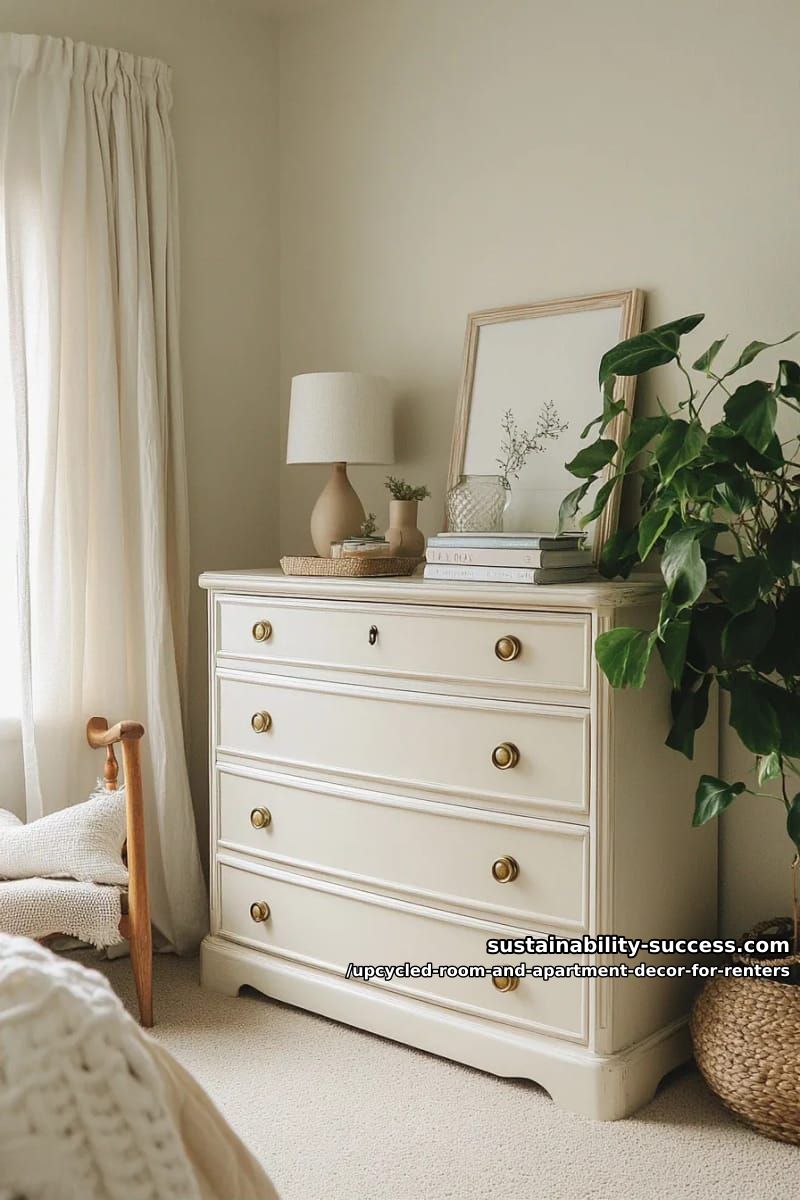
One thing the cans don't shout about: chalk paint scuffs if you leave it bare, so seal it with a clear wax or a matte polycrylic before you load the drawers. And skip the Chalked spray formula. It is solvent-based, it off-gasses for days, and you lose the whole point of a low-fume project you can do in a small apartment.
Do this
- Wipe the piece down with a degreaser first; old dressers carry decades of furniture polish that paint won’t grip.
- Leave the original brass or wood knobs unpainted for contrast, or swap them for ones from a different thrifted piece.
- Seal with wax or matte polycrylic, especially on drawer tops and edges that get handled.
Avoid
- Particleboard with a peeling laminate skin. Paint won’t save it and the edges will keep flaking.
- Distressing every edge. A little worn edge looks collected; an evenly sanded-back whole piece looks like a 2014 farmhouse blog.
2. Turn dollar-bin vinyl records into a wall grid and a bowl
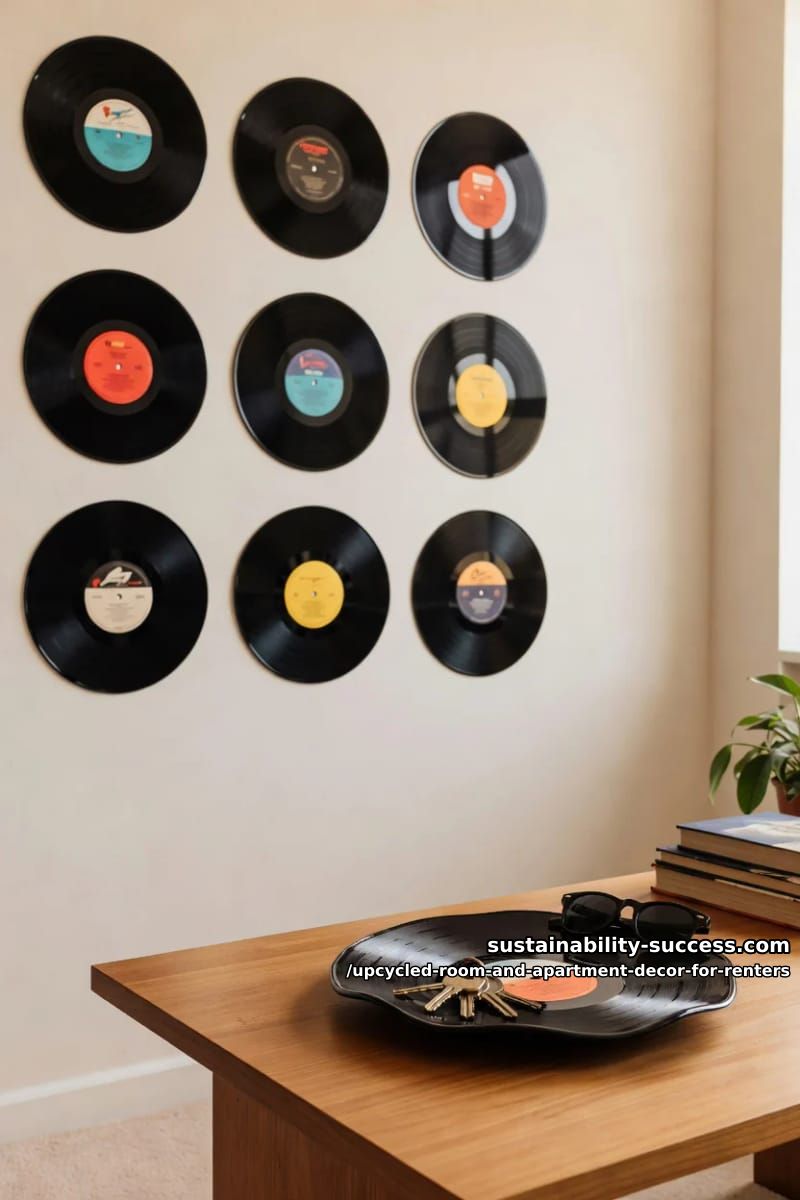
Records do two jobs at once: a flat grid of them turns a blank wall into a graphic feature, and a single melted one becomes a catch-all bowl for keys by the door. Thrift stores sell scratched, unplayable LPs for about a dollar, and the warped Mantovani and easy-listening titles nobody will ever spin are the ones to grab. For the wall, nine records in a three-by-three grid, stuck flat with damage-free strips, reads more deliberate than a scatter.
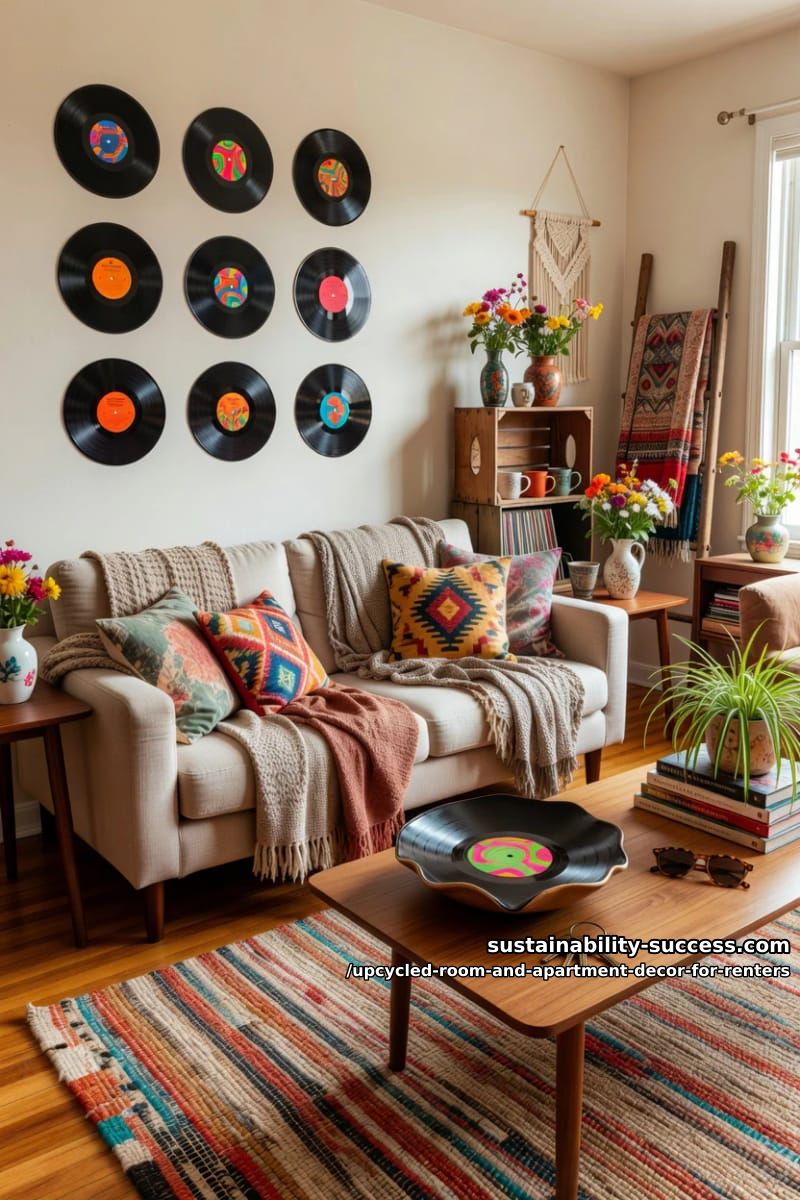
The bowl is a ten-minute oven project. Sit a record on top of an oven-safe bowl on a baking sheet, heat it, and shape the droop by hand once it goes floppy.
- Preheat to 200°F. Not higher.
- Heat 5 to 10 minutes until the record sags over the bowl.
- Pull it out with mitts, press it into shape against a second bowl, and it sets in under a minute.
Records are PVC, and above roughly 200°F the vinyl starts releasing fumes you do not want in a studio apartment with one window. If you smell anything, turn the oven off and open the window. Run the fan, keep the time short, and never walk away from a record in a hot oven.
3. Lean an old window frame as a layered photo tray
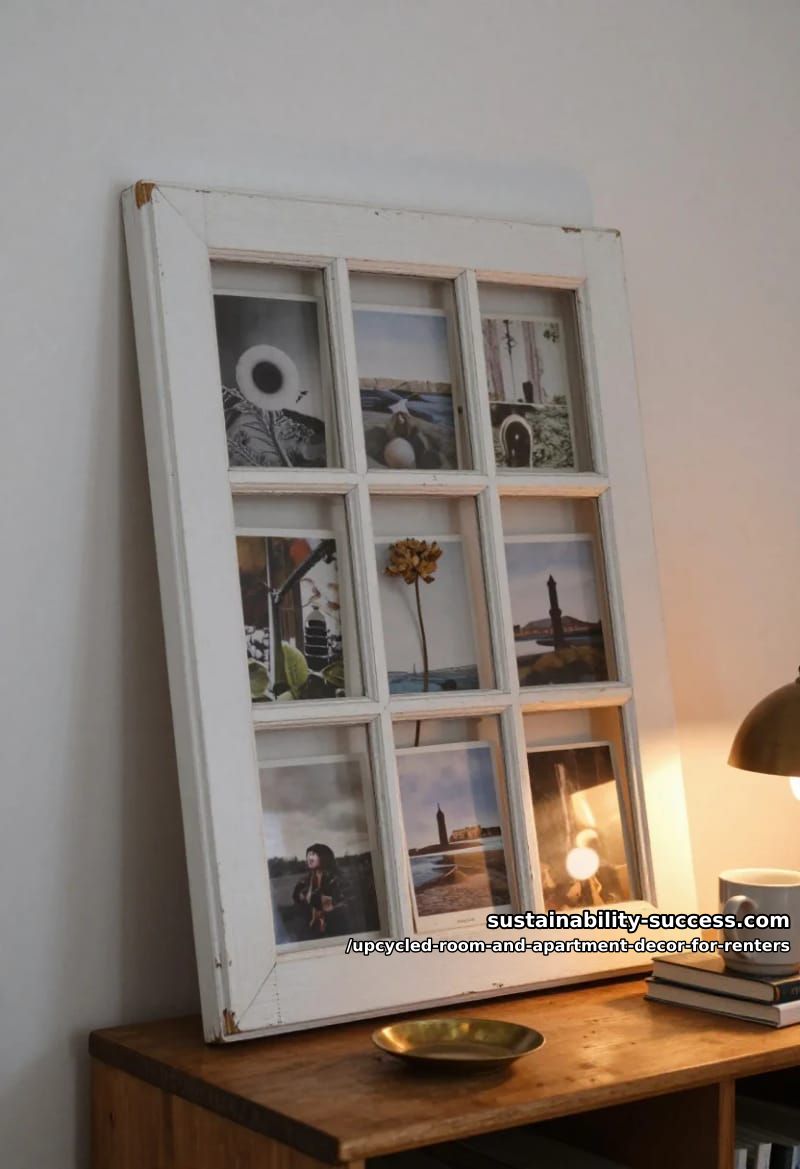
An old multi-pane window becomes a propped display once you lean it on a dresser or console instead of trying to mount it. Habitat for Humanity ReStore and architectural salvage yards sell single sash windows for $5 to $15, often with the wavy original glass that gives the whole thing its age. Slide photos, postcards, ticket stubs, and pressed flowers behind the muntins so they sit in the grid, or clip them to the glass.
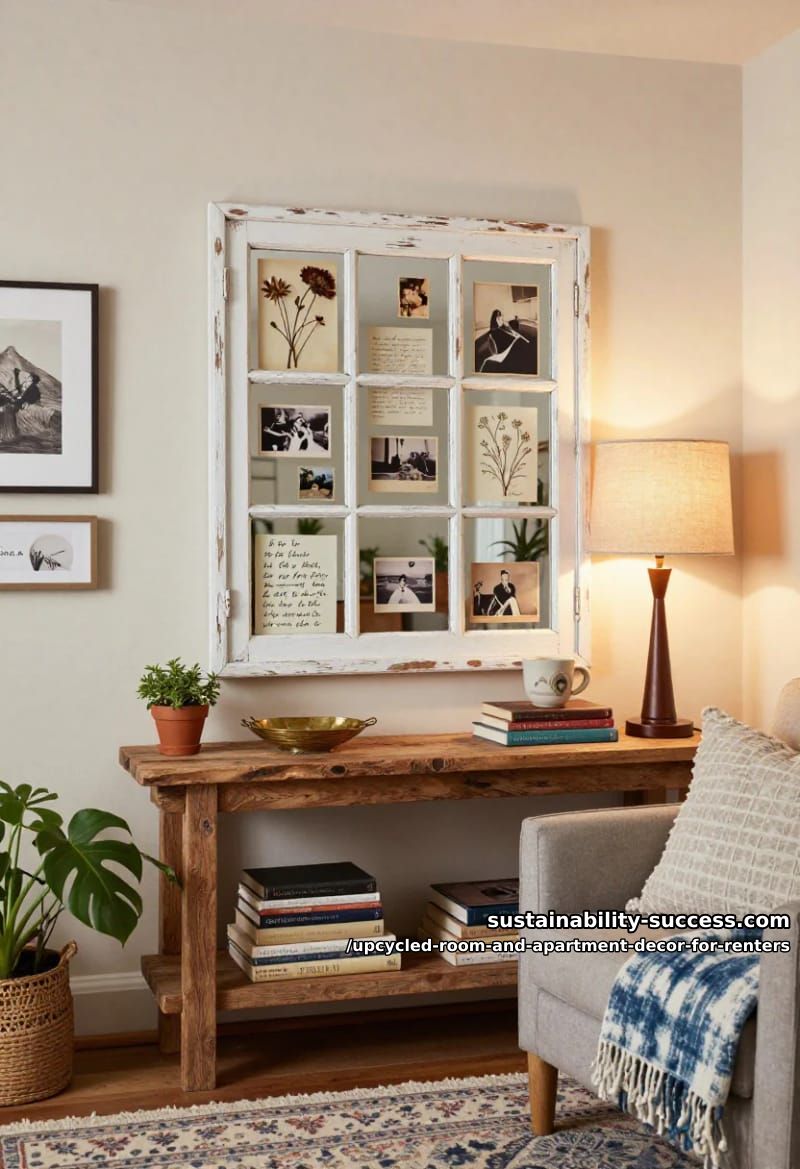
If the window predates 1978, assume the paint could be lead-based and don't sand or scrape it; leave the chipped finish alone and just clean it with a damp cloth. The chipping is the look anyway.
4. Tie a rag wreath from cut-up old clothes
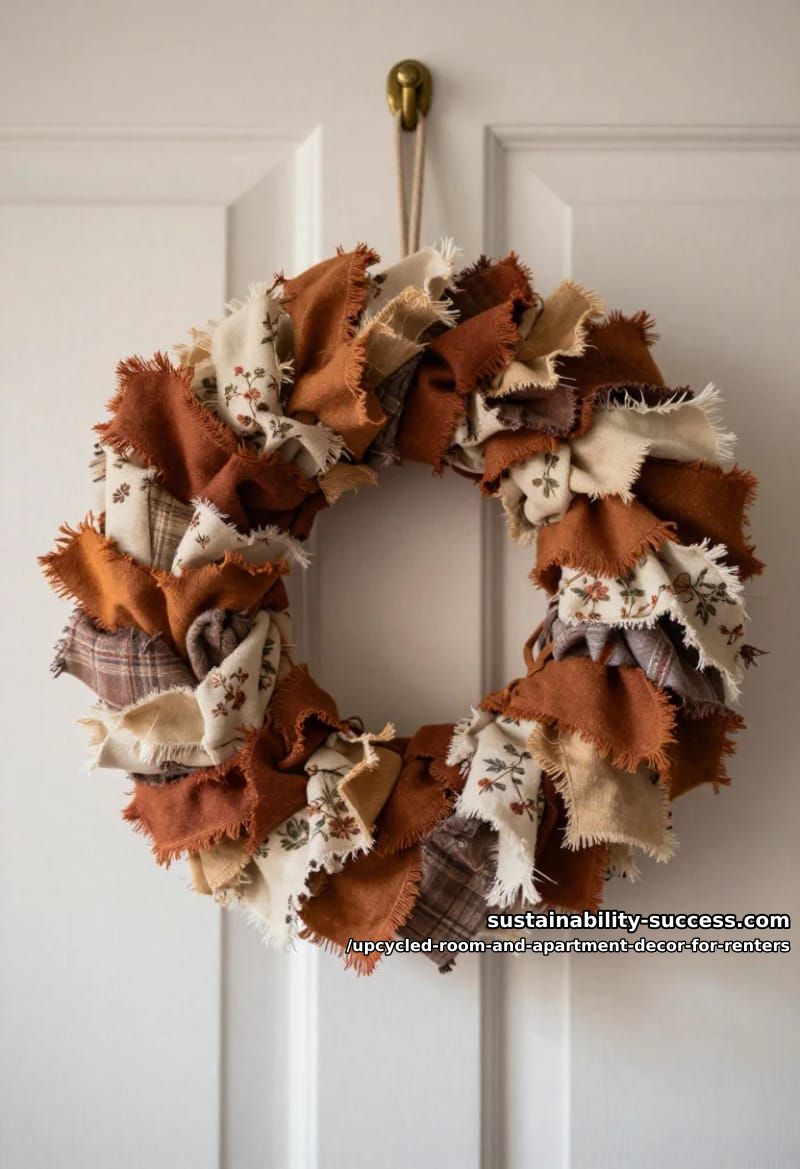
Worn clothes you'd otherwise bag for donation become a wreath with no glue and no sewing, just knots. Cut old flannel shirts, floral cotton, and soft jersey into strips about an inch and a half wide, then tie them in a double knot onto a wire wreath form or an embroidery hoop until it's packed dense. You'll want roughly two to three yards of fabric total for a full wreath; the more strips you cram in, the fuller it reads.
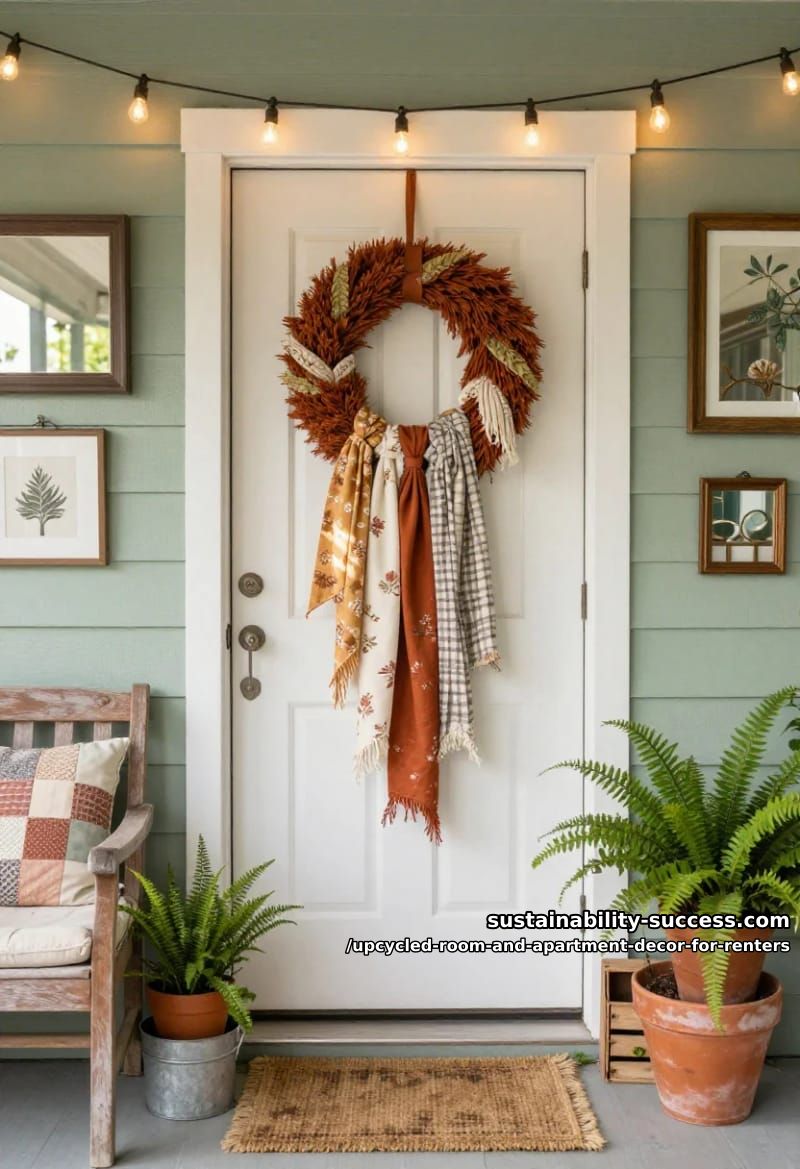
The thing that separates a good rag wreath from a craft-fair reject is restraint with color. Pick three shades that already live in the room and stop there.
5. Stand mason jars on a reclaimed plank for ledge lighting
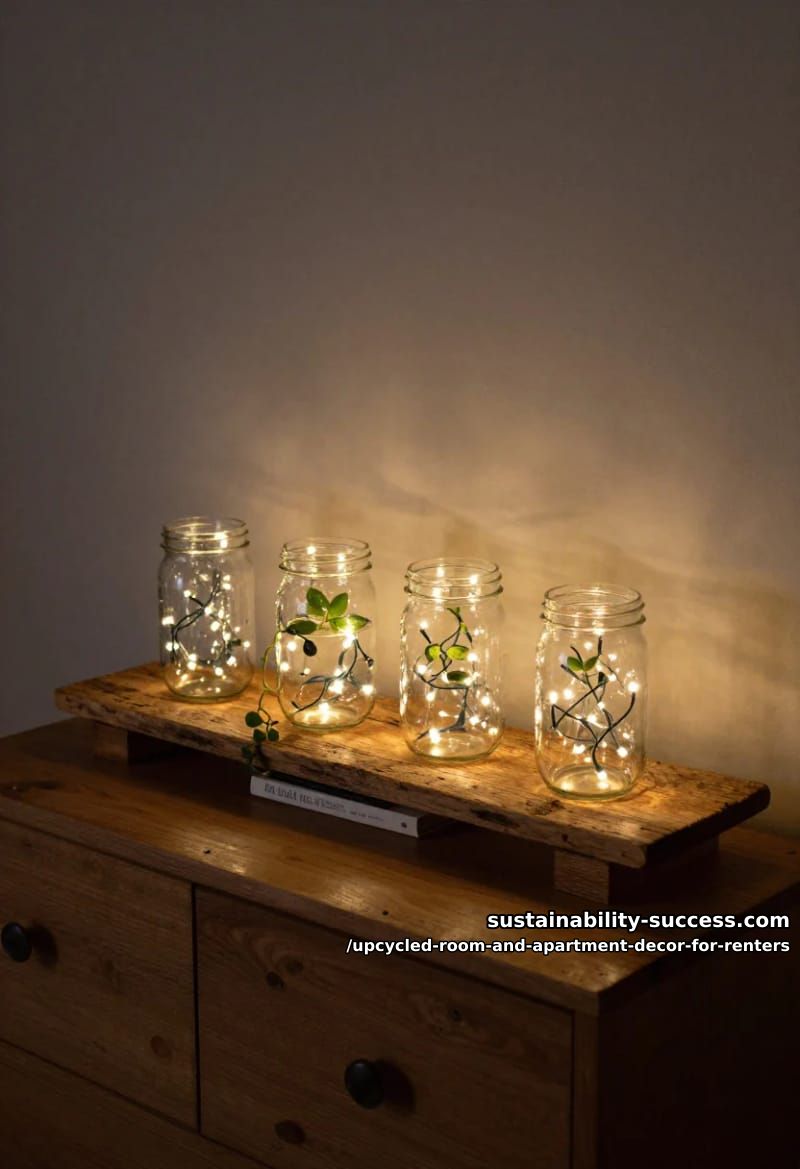
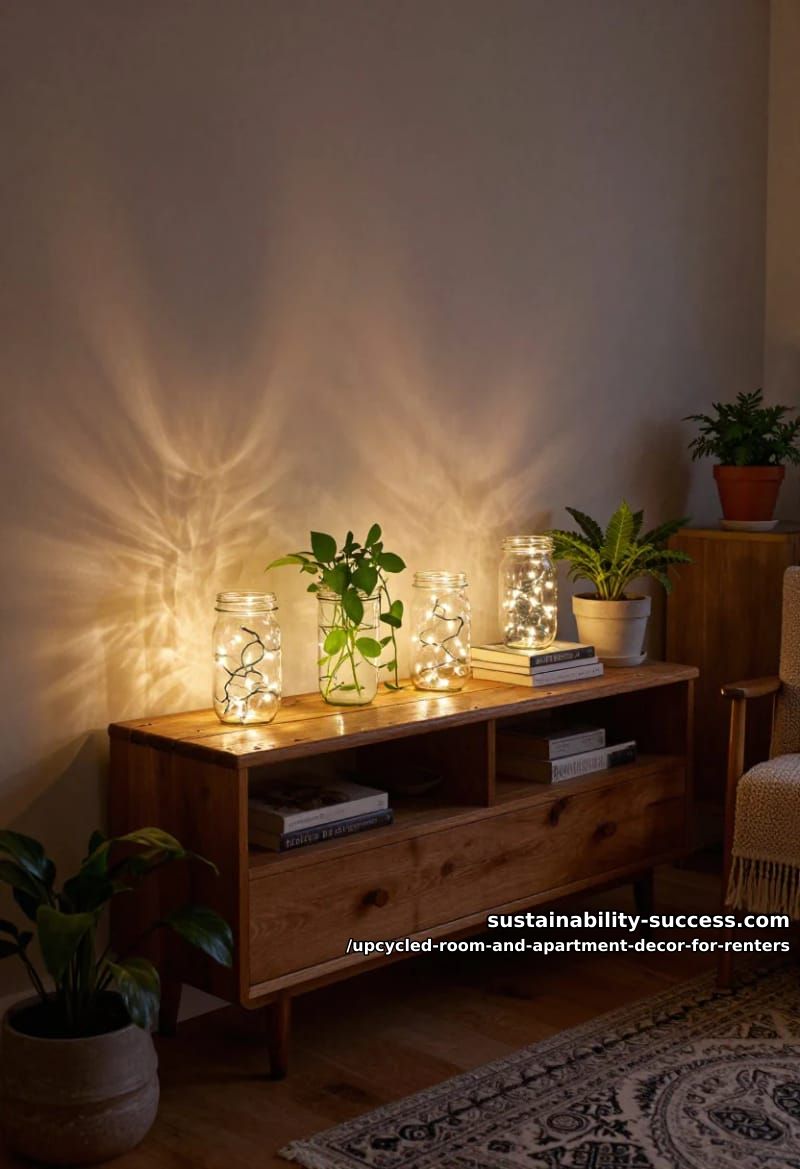
Mason jars with battery fairy lights give a rental a second, warmer light source exactly where the builder put none. Most apartments hand you one harsh ceiling fixture you can't change, so the fix is to add low warm light at eye level: a salvaged board (or a freestanding shelf) holds three or four jars, each stuffed with a coil of warm-white string lights or a flameless tea light. No outlet required, no rewiring, nothing the landlord has to approve.
6. Hang macramé from t-shirt yarn on a tension rod
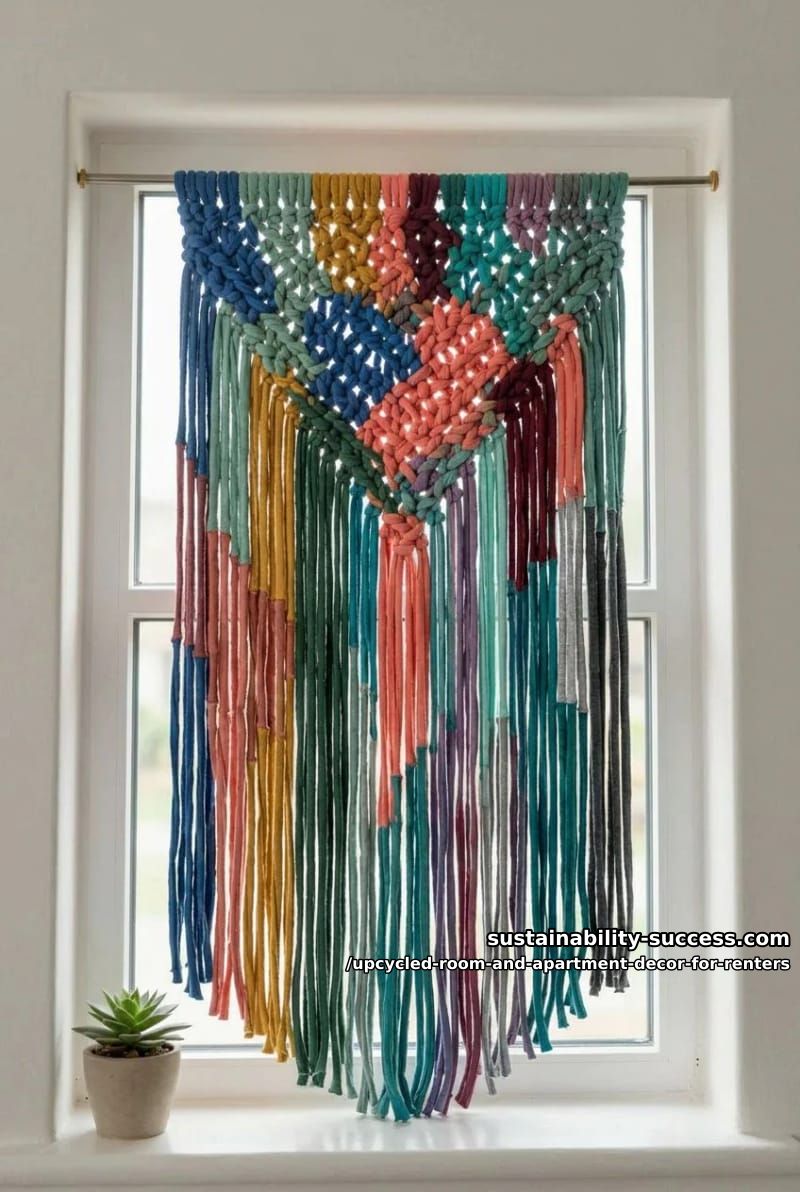
A tension rod is the renter's whole toolkit: it wedges into a window recess or between two walls under pressure, holds a wall hanging, and leaves zero marks. Loop a big macramé piece over it and you've covered a blank wall without touching it. The yarn can be free, too. Cut an old jersey t-shirt into one continuous spiral strip and stretch it, and the edges roll into thick soft cord that knots fast and forgivingly for a first attempt.

Before any project, ask whether it can stand, lean, or wedge instead of fixing to the wall. A tension rod, a leaned ladder, a stacked shelf, and a peel-off strip all do the work of a drilled bracket without the part that costs you money on the way out. Reach for an anchor only when nothing else holds, and even then weigh whether the piece is worth the patch.
7. Mosaic a thrifted pot or vase with a broken mirror
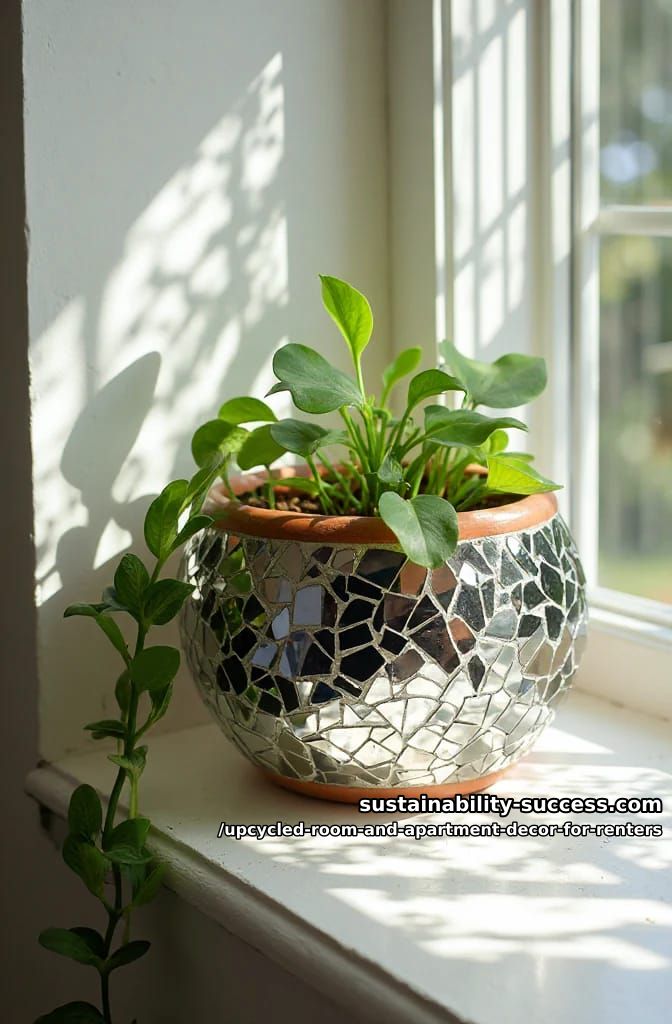
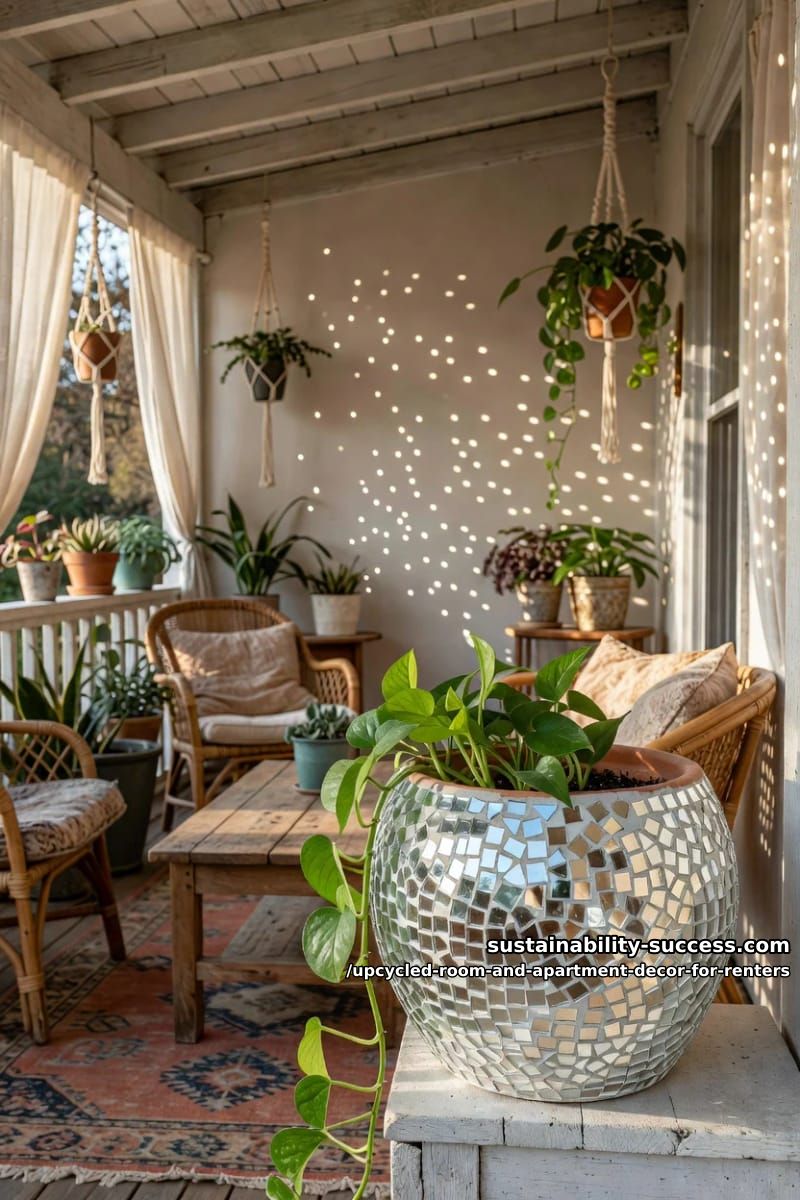
A small mirror mosaic does more for a dark north-facing room than another lamp. Glue broken mirror shards (or old CDs cut into pieces) onto a thrifted terracotta pot or a glass vase, grout the gaps, and the surface scatters whatever daylight you get into dozens of moving spots on the walls. E6000 or tile adhesive both hold; gloves and safety glasses are non-negotiable because mirror edges are vicious. Sit the finished pot where morning or afternoon light hits it directly. This one started as the disco-ball planter all over the rental Pinterest boards, and it earns its keep in a basement-level studio that never sees direct sun.
8. Stack wooden crates into a freestanding bookshelf
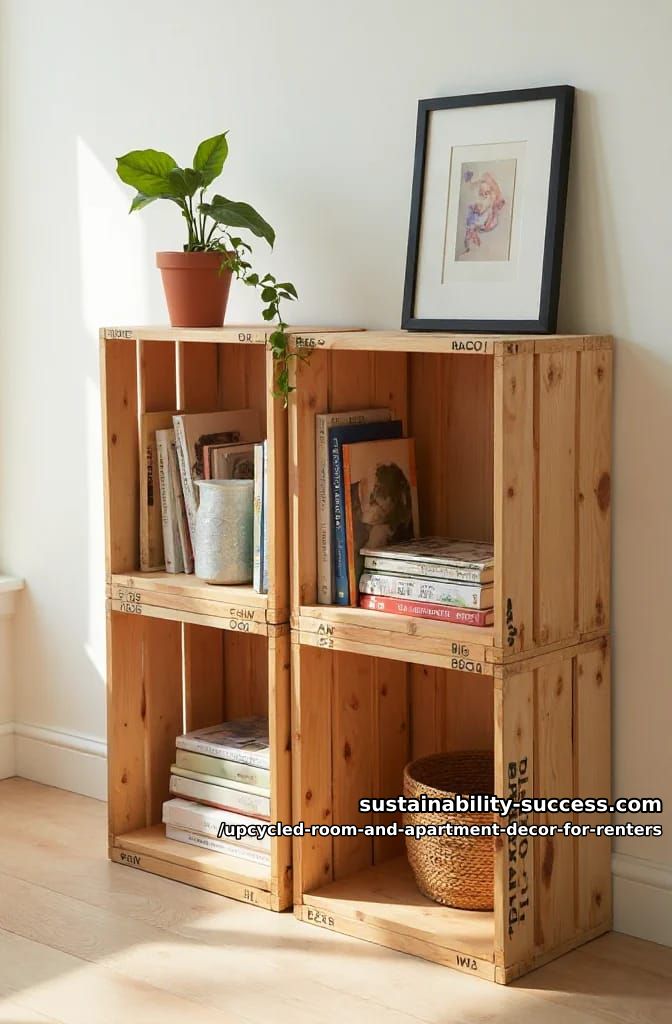
Stacked crates give you reconfigurable storage that never touches the wall and loads into a moving van flat. Pine crates run about $13 to $18 new at craft stores, and you can often find old wooden wine or produce boxes for less at flea markets. Stack them, screw or zip-tie the crates to each other (not to the wall), and you have a bookshelf that becomes a bench or a console in the next apartment.
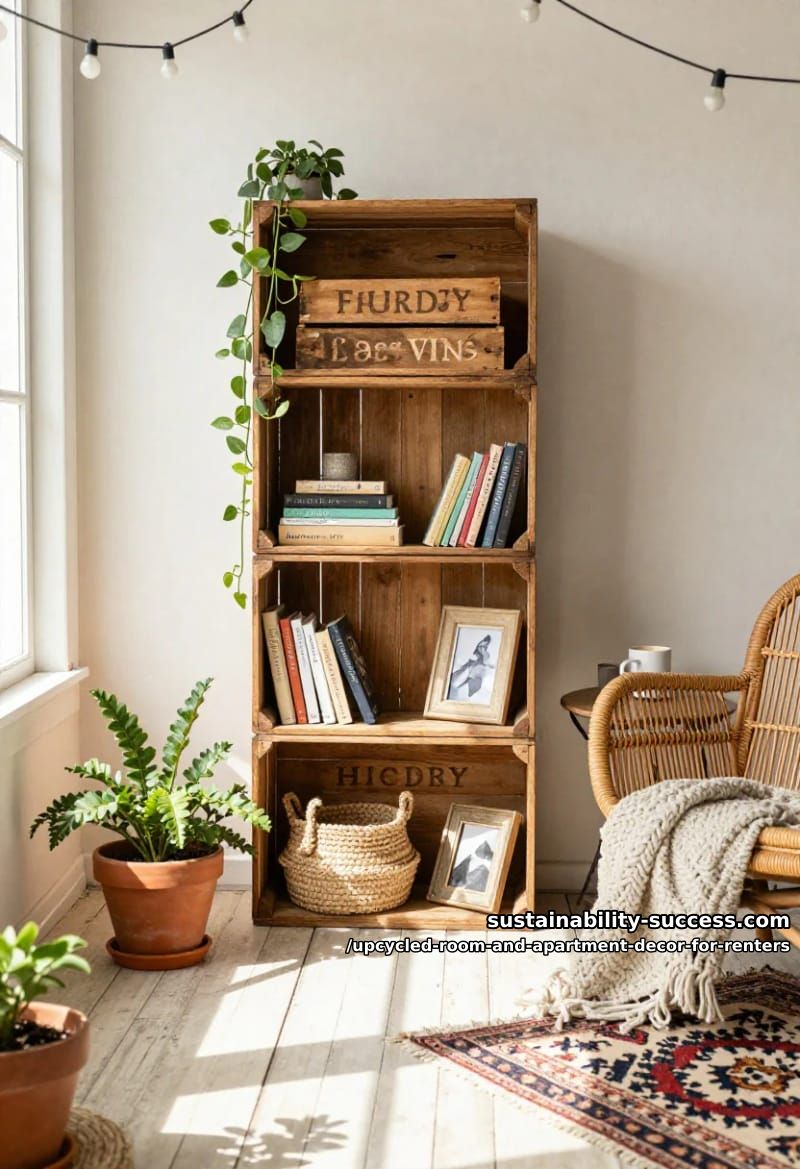
The look depends entirely on whether you finish them. Raw crates read like a garage; a coat of the same chalk paint from the dresser, or a quick rub of wood stain, pulls them into the room.
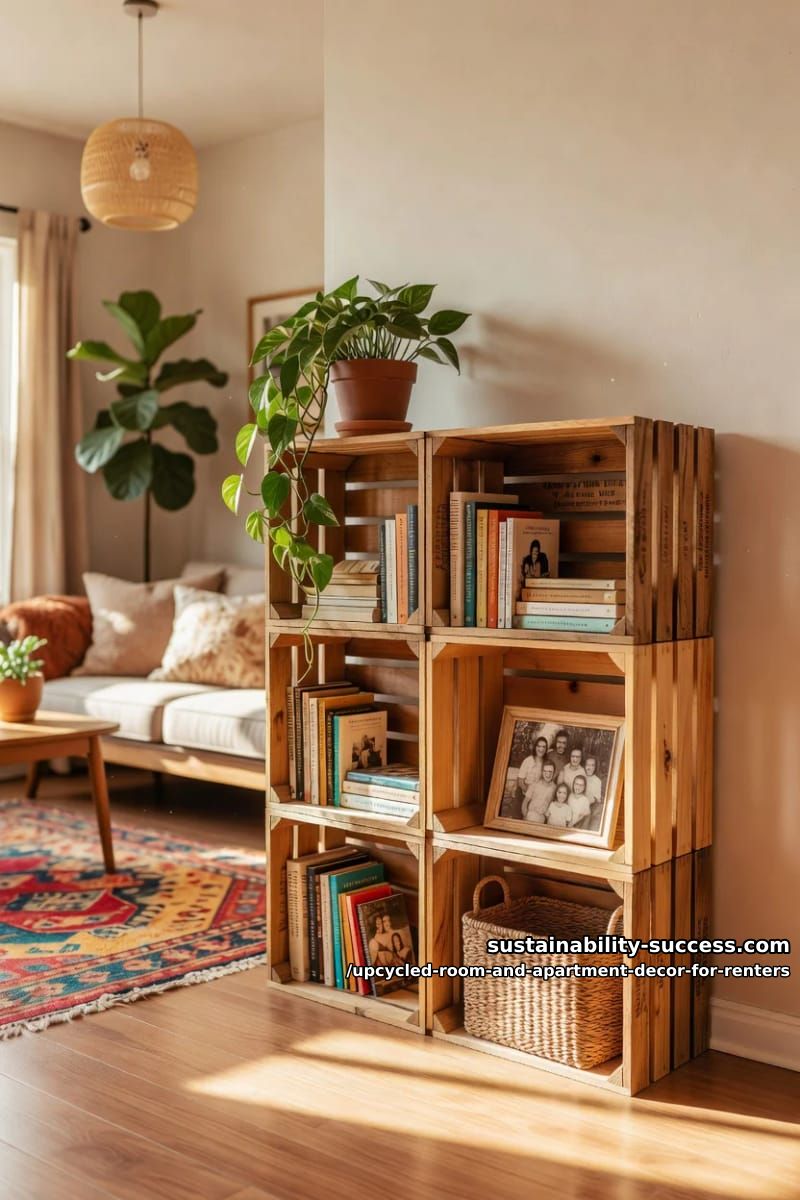
A four-crate freestanding bookcase
Roughly 36 inches wide by 36 inches tall, two crates wide and two tall
This is the build behind the photo above: four standard wooden crates, joined to each other and finished to match a painted dresser. Everything here moves with you, and nothing fastens to the apartment.
Shopping list
| Qty | Item | Spec | Price |
|---|---|---|---|
| 4 | Wooden crates | Pine, approx. 18 x 12 in | $13 to $18 each |
| 1 | Wood screws or heavy zip ties | To join crates | $5 to $8 |
| 1 | Chalk paint or stain | Leftover from the dresser works | $0 to $18 |
| 4 | Stick-on felt pads | For the floor-contact corners | $4 to $6 |
| Total | $61 to $104 | ||
Prices are approximate ranges as of June 2026; verify before purchase.
9. Clip vintage saris and silk scarves as curtains
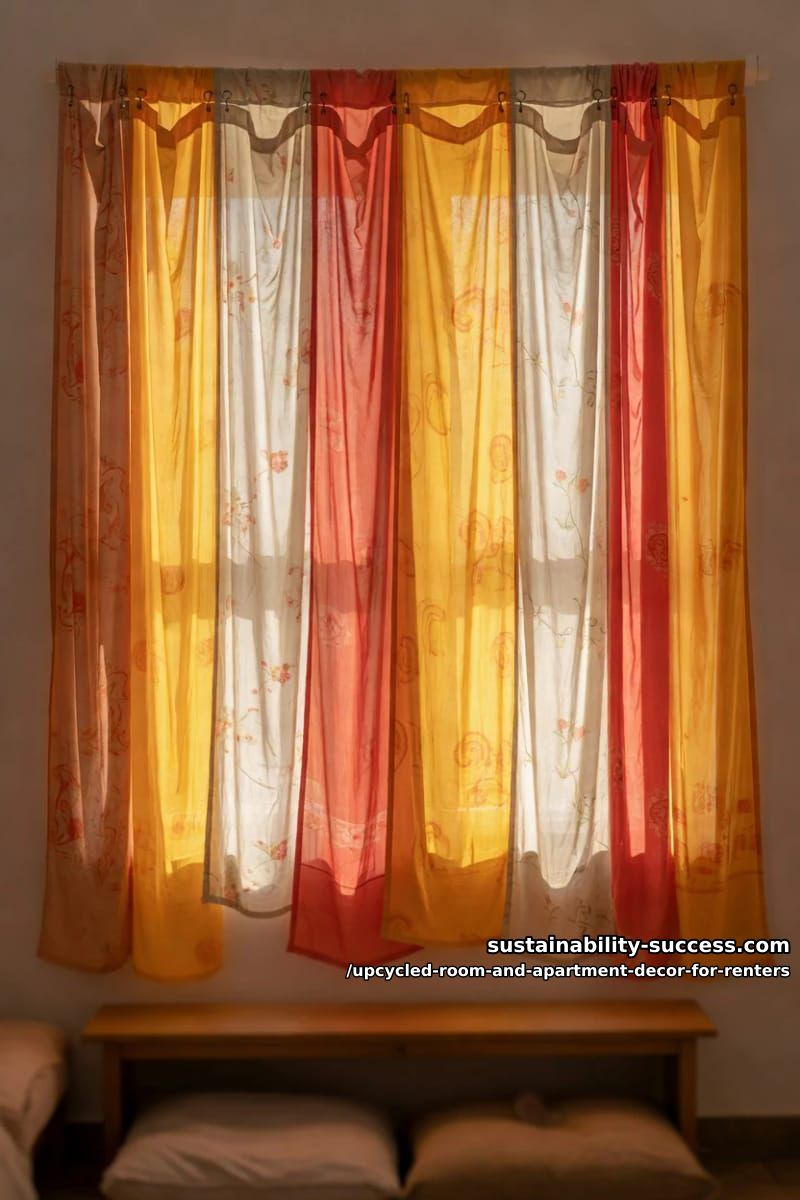
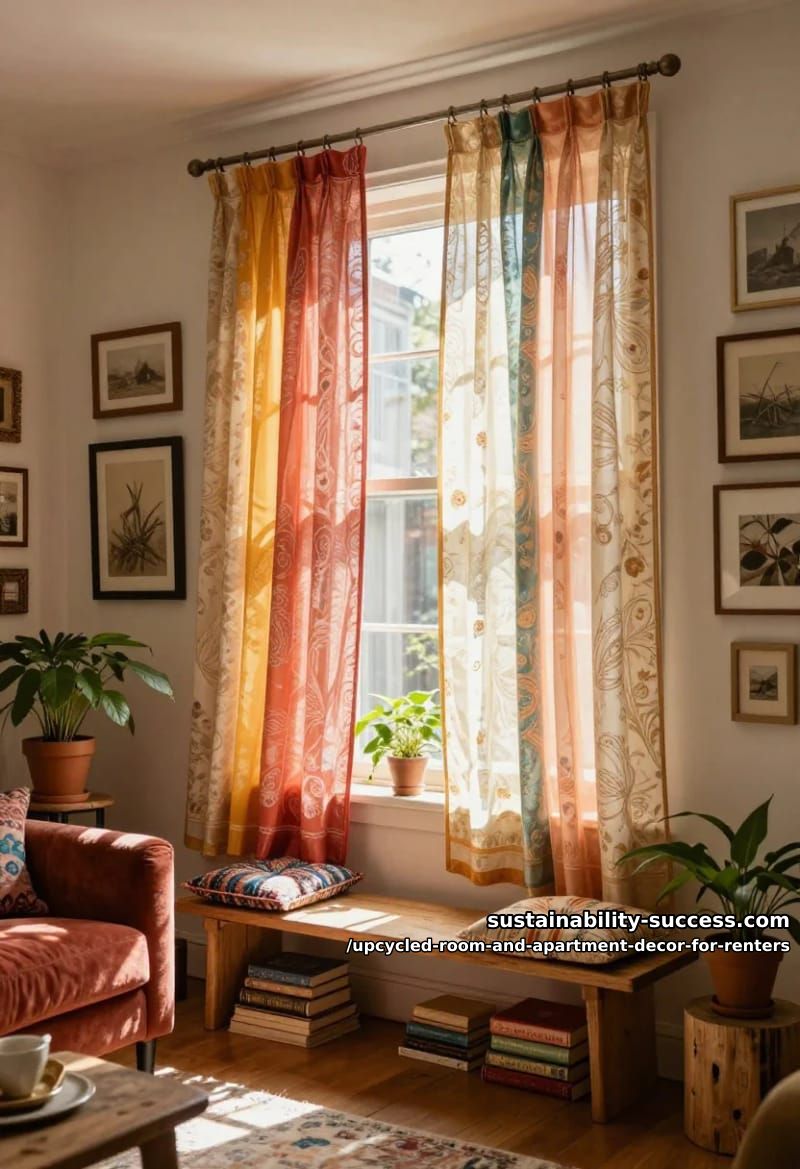
Secondhand saris, silk scarves, and even old tablecloths make better curtains than the $40 polyester panels at the big-box store, because thin colored fabric turns daylight warm as it passes through. Curtain ring clips mean no sewing at all: clip the top edge of the fabric, slide the rings onto a tension rod, done. Indian grocery districts and resale shops sell vintage saris for a few dollars, and a single six-yard sari can dress two windows. Layer two patterns if you want fullness; keep them in one color family so it stays calm.
10. Lean a branch ladder for plants and throws
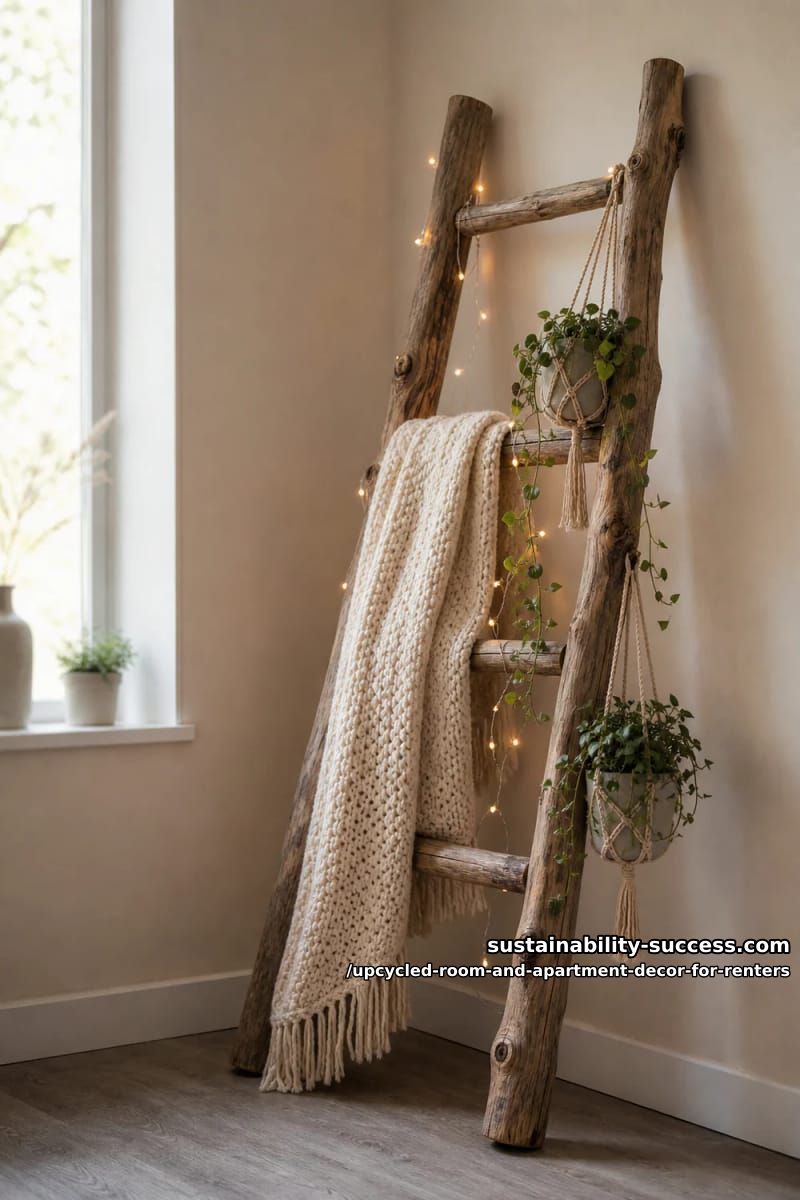
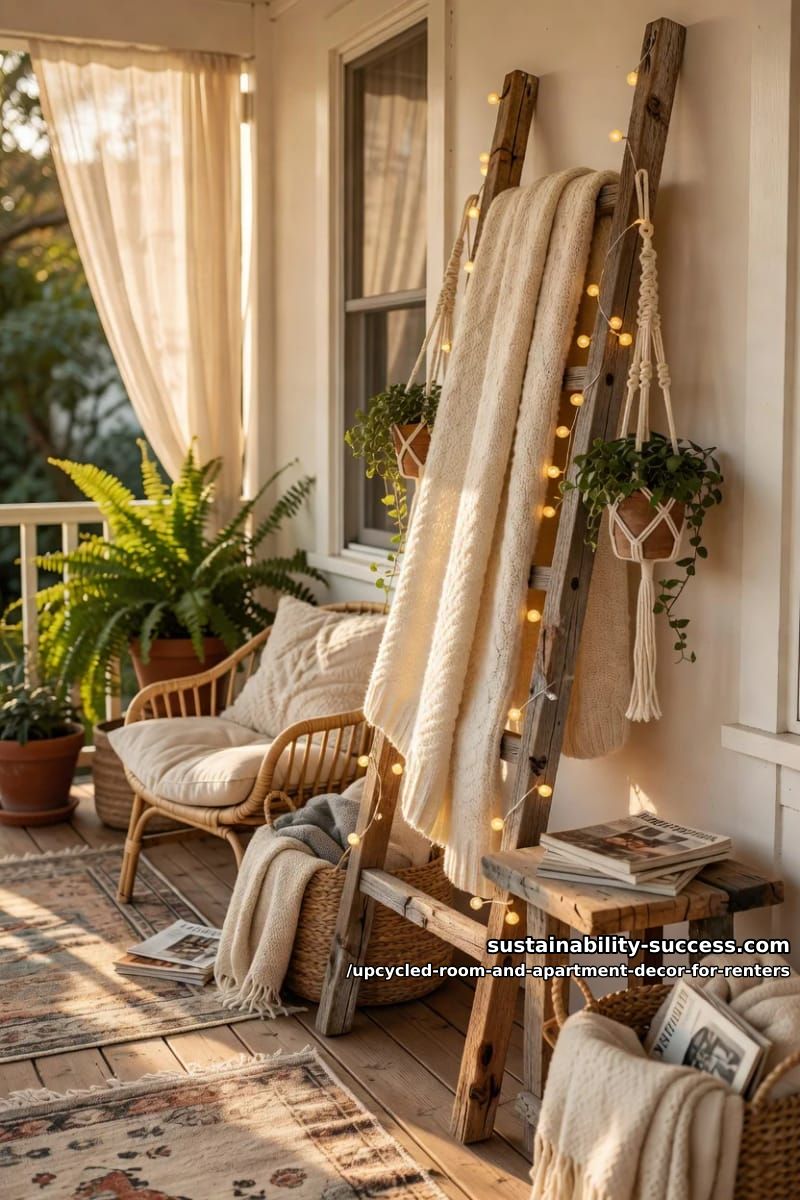
A leaned ladder turns dead corner space into vertical storage for throws, plants, and string lights without a single screw. A real fallen branch found on a walk works as well as a thrifted wooden ladder and costs nothing; wedge it into a corner where two walls catch it. Drape a chunky throw over one rung, hang a couple of trailing plants in macramé holders off the others, and wind fairy lights up the side.
11. Build a thrifted-frame gallery wall, hung damage-free
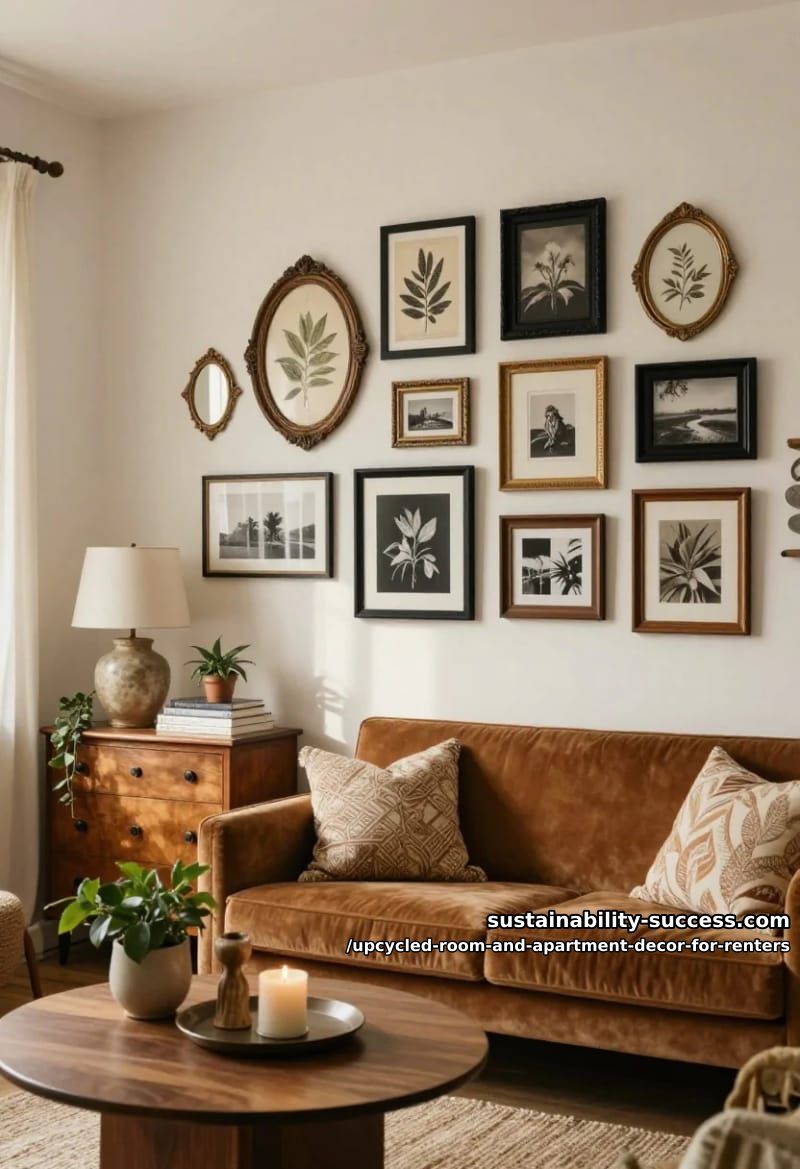
Mismatched thrifted frames painted one color beat any matched gallery-wall kit, which always looks like it shipped from a hotel supply catalog. Buy whatever frames the thrift store has for a dollar or two each, regardless of finish, then spray them all one warm black or one cream so the shapes vary but the color unifies. Fill them with botanical book pages, printed photos, or a small mirror. Then hang the whole thing with damage-free strips and walk out at lease-end with clean walls.
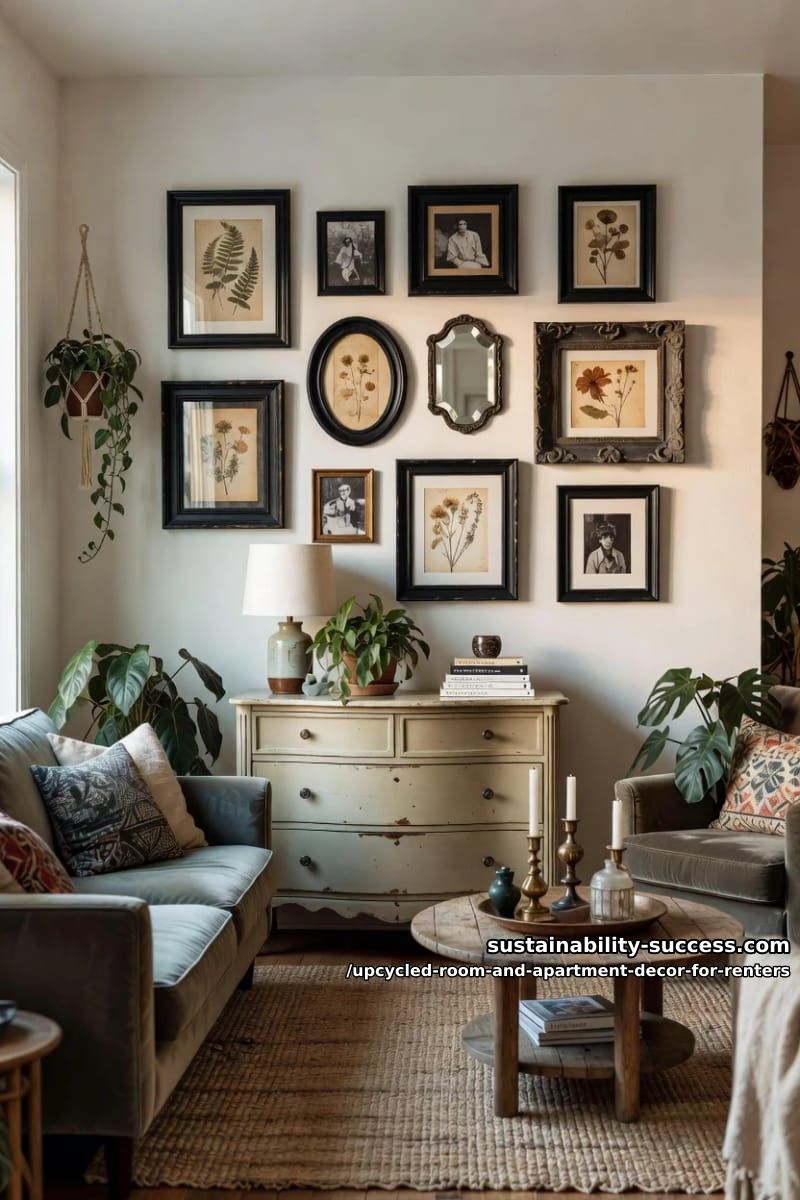
Command-style strips bond to smooth painted drywall and lift clean, but they slide off textured or orange-peel walls because the adhesive can’t get full contact, and they let go over time in humid bathrooms and kitchens. They are not rated for shelves. Weigh each frame and use the right strip size; four large picture-hanging pairs hold around 16 pounds total, so a heavy ornate frame needs more pairs or a lighter twin. Press hard, wait an hour before loading, and on textured walls test one frame for a few days before you commit the whole grid.
Conclusion
Do these in roughly the order they appear, because the dresser sets the palette for everything after it. Once you've landed on a paint color, the crate shelf, the frames, and even the rag wreath should pull from it, and the room starts to look styled instead of accumulated. Hang the gallery wall last, after you've lived with the space long enough to know what actually belongs there; rearranging strips is easy, but you'll waste fewer of them if you wait. The honest caveat on the whole list is the broken-mirror pot: it is the one project where I'd tell a true beginner to wear the gloves and mean it, because a sliced thumb is a high price for sparkle.