

Thrift stores are full of the right stuff, and almost nobody gets it home intact. The trick to a junk chic cottage is not taste or budget but order of operations: what you paint, what you leave chipped, and how much bare surface you leave for the eye to rest on. Get those three wrong and the same furniture reads as a yard sale with a rug under it. Get them right and the identical room reads deliberate. Here is the sequence, the finishes that age instead of failing, and the two salvage problems worth checking before you open a tin of paint.

Chippy paint is a finish, not a failure
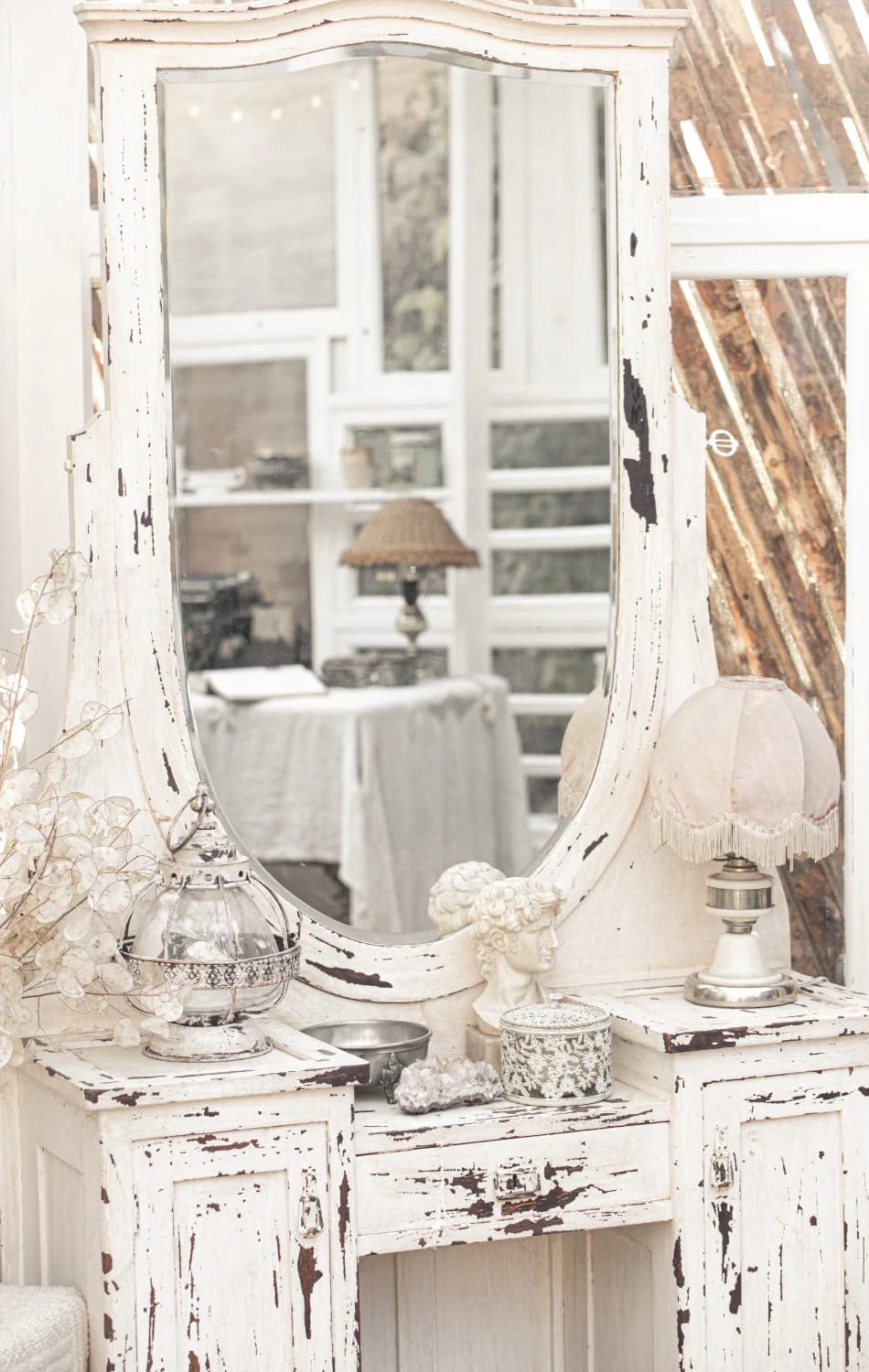
Paint that has failed in an old house is usually the reason to buy the piece, and on a genuine 1930s dresser the chipping runs along the drawer edges because that is where hands landed for eighty years. Sanding that flat removes the only thing the piece had that a new one cannot buy. A stable chip with a raised lip and a shadow under it is doing work in the room; a chip you can flake off with a thumbnail is not, and that one either comes off or gets bound down.
| Finish | How it ages | Where it earns its place |
|---|---|---|
| Chalk paint | Matte and powdery, no sheen at all. Wears through on edges and corners rather than peeling in sheets. | Anything with carving or a moulding, where a flat finish shows the shape. Wants wax or a topcoat on a surface that gets handled. |
| Milk paint | Thin, uneven, sometimes translucent. Binds to bare wood and slides off a sealed surface in patches. | Bare pine and cheap softwood. The patchiness that reads as a mistake on a factory finish is the entire point here. |
| Flat latex | Wears smoothly instead of chipping. Scuffs at the edges and burnishes where it gets wiped. | Wall colour carried onto furniture, so painted pieces stop reading as separate objects in the room. |
| Oil-based enamel | Hardest film of the four, sharpest chip, and it yellows with age on white. | Kitchen cabinet doors and anything you scrub. The trade is the colour shift a few years in. |
The test is whether the paint is still gripping the wood or only gripping itself. Where whole areas lift, seal them with a coat of de-waxed shellac rather than stripping: shellac binds flaking oil paint back to the substrate, dries in about half an hour, and takes a wax finish over the top. Where a chip exposes bare wood, leave it bare. The one place to intervene is an edge that keeps shedding, where a thin bead of clear matte varnish along the break stops the flake travelling any further.
 12 Thrift Store Upcycle and Flip Makeovers That Actually Hold Up Twelve flips picked for how they survive daily handling, including the joint repairs that stop a painted dresser cracking six months in.
Creamy white walls, one blush accent, nothing else
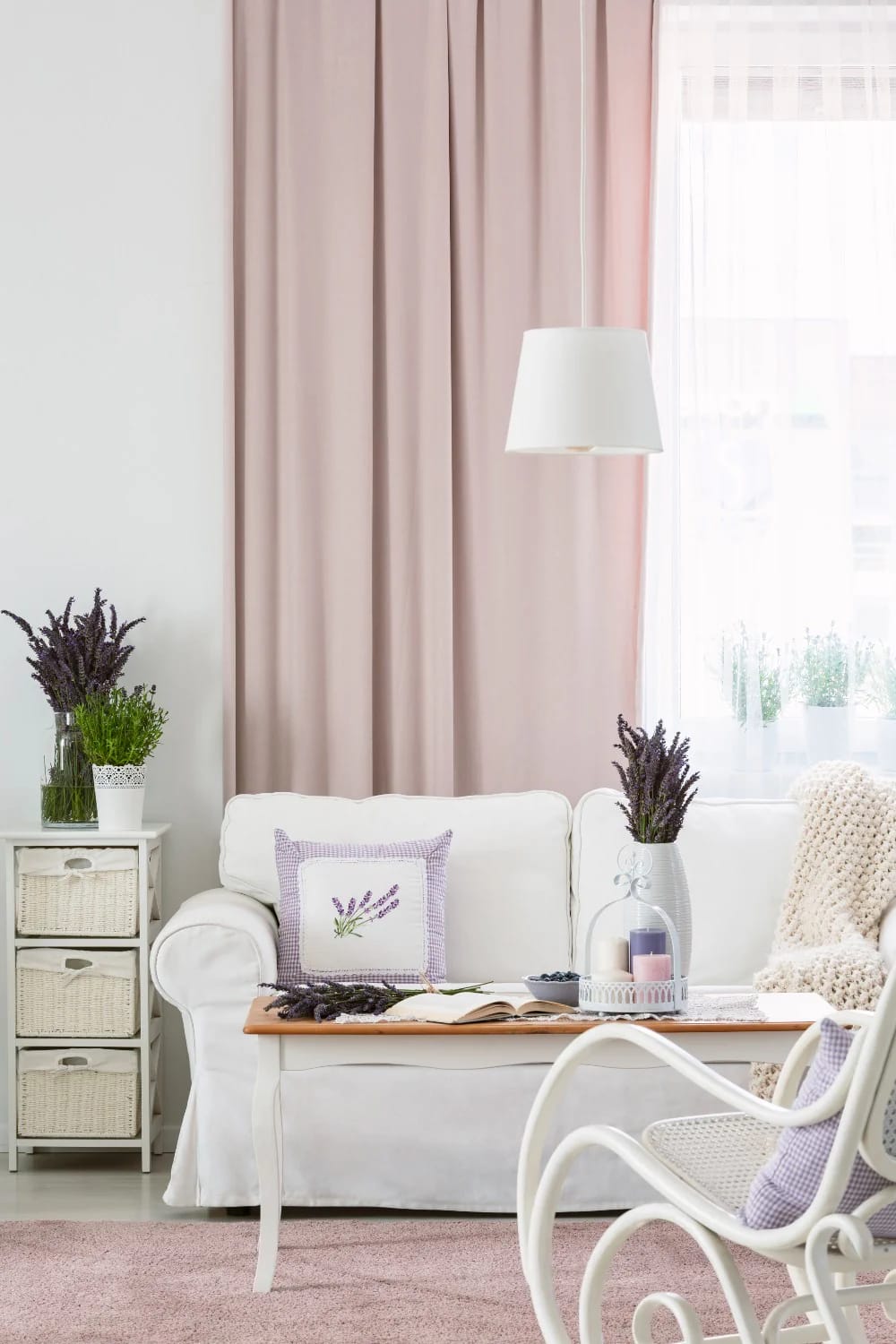
Cottage colour is a value decision before it is a colour decision. Every hard surface goes the same warm off-white and one accent repeats three times in the room; the moment a second accent arrives, the walls start competing with the furniture instead of holding it. The mistake that sinks the most rooms is a cool grey-white, which drags a cottage straight into rental territory. Farrow & Ball's Pointing and Benjamin Moore's White Dove sit on the warm side and stay there under lamplight.
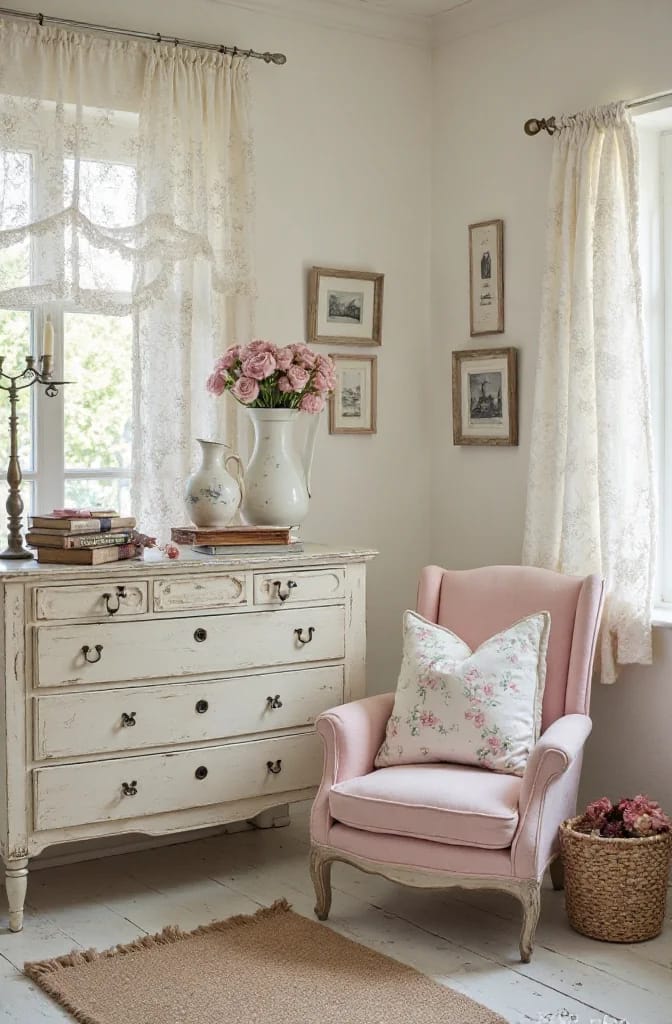
Do this
- Repeat the blush on three surfaces at three heights, so the eye keeps finding it around the room.
- Same white on skirting, doors and window frames as on the walls. A white that stops at the skirting line makes the floor look borrowed.
- One dark piece, and make it wood.
- Keep the ceiling white.
Avoid
- Mint and pink in the same room. Sweet in five minutes, dated in two years.
- Cool grey-white walls.
- Blush on more than one fabric; two pink textiles read as a matched set, which is the opposite of the look.
That said, warm white is the least forgiving paint in a north-facing room. In a room that never sees direct sun, an off-white with a yellow base goes grey by mid-afternoon, and that is the one case where a slightly cooler white is the better call. Once the walls are settled, the same colour on the furniture is what pulls the room together.
One-coat coverage in a warm white, so a dresser lands the same colour as the wall and stops reading as a separate object.
Rust-Oleum Chalked Ultra Matte Paint in Linen White, 30 ozThe dresser that quits the bedroom and becomes a sideboard
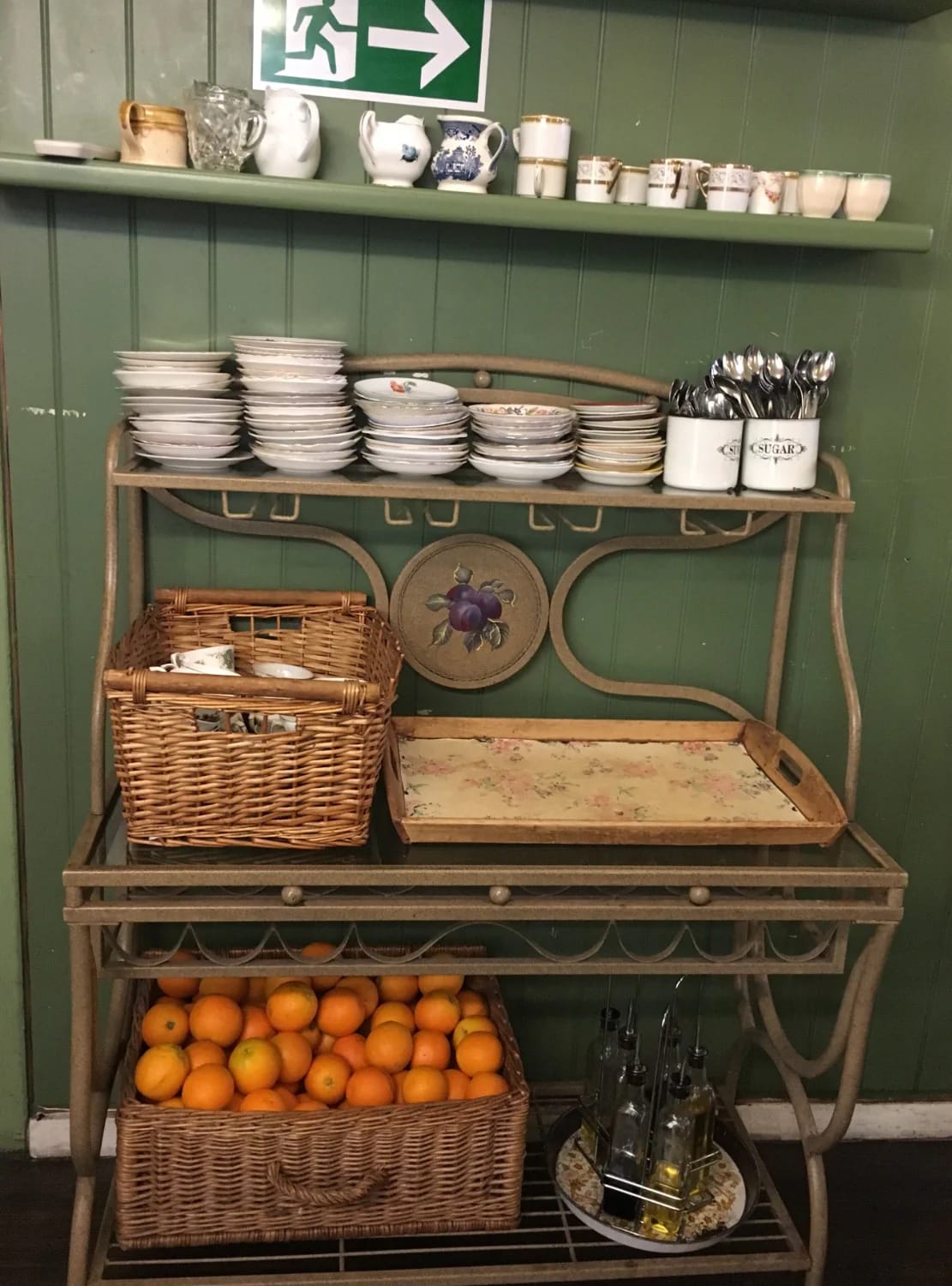
A bedroom dresser is the cheapest sideboard you will ever buy, and the swap is a height change rather than a rebuild. Bedroom pieces sit at 30 to 34 inches and a dining server wants 34 to 36, so a pair of taller legs, a plinth, or a butcher-block top on a low dresser closes the gap. Measure the drawers before you commit it to the kitchen: a dresser's drawers are usually around 16 inches deep, which is generous for linen and tight for a dinner plate.
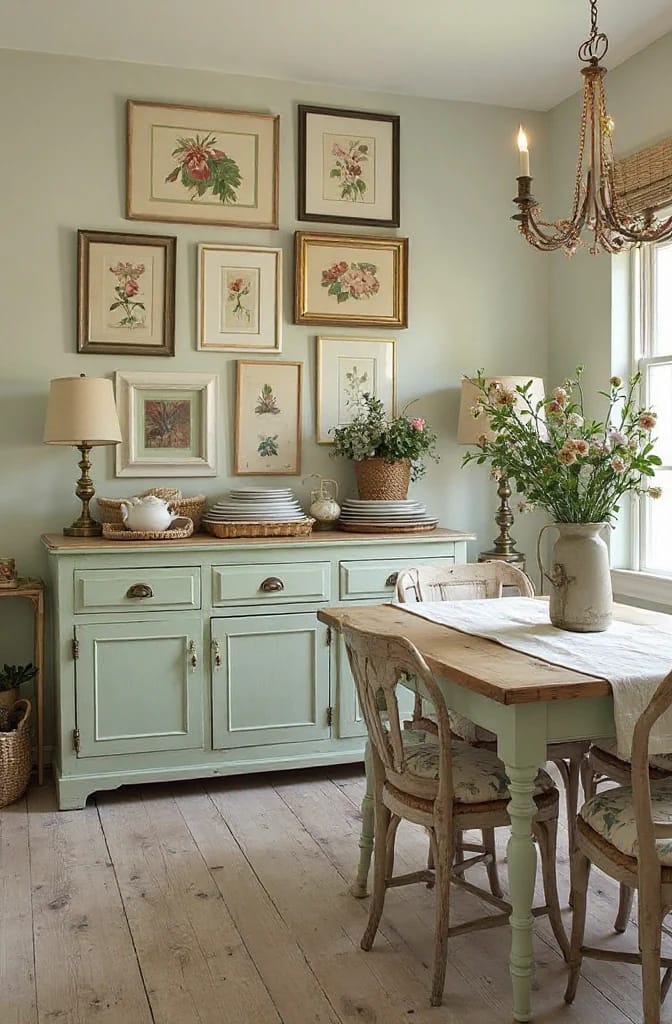
Assume paint on furniture made before 1978 contains lead until a swab says otherwise. Sanding or dry-scraping it turns that lead into airborne dust, and the dust is what turns a weekend flip into a health problem, particularly in a house with small children. Test the painted surface before you touch it, work wet if you strip, and keep a respirator on for the whole job. A positive result does not condemn the piece, it rules out sanding, which leaves chemical strippers and encapsulation.
Testing costs less than the paint and takes about a minute per surface: you crush the two ampoules inside the swab, shake it, and rub the tip on the paint for thirty seconds, and a pink or red tip means lead. A pack of 3M LeadCheck swabs covers a dresser, a chair and a chest of drawers with room to spare. The second pre-paint check is veneer. Run a fingernail along the edge banding on a drawer front; if a corner lifts, the veneer is already loose and paint will lift it further, so glue and clamp it before the first coat rather than after.
Slipcovers do the work upholstery can't
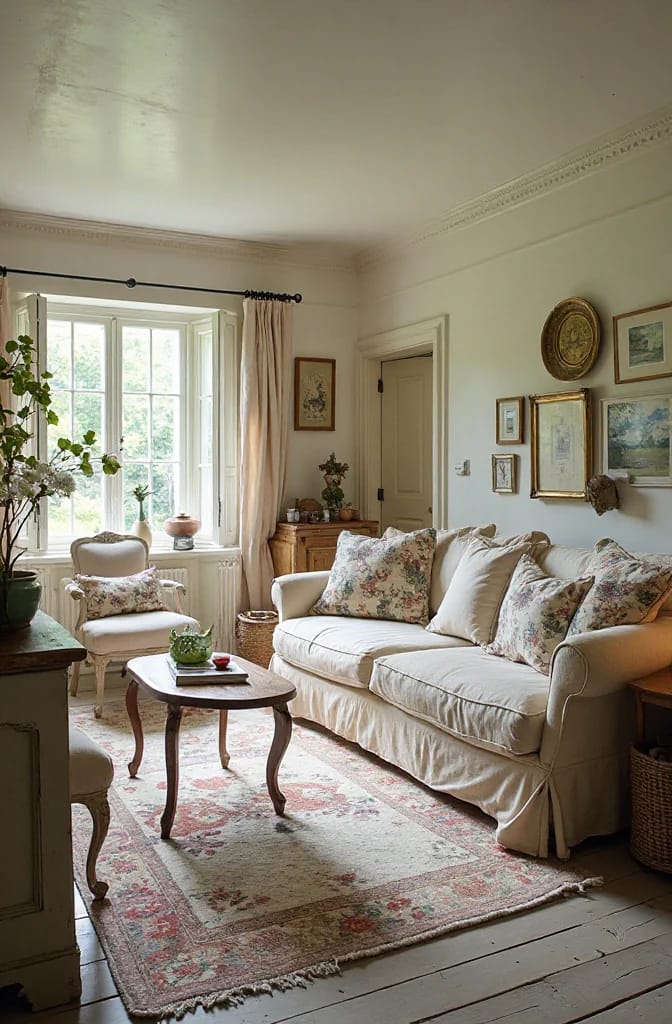
A cottage room is a ratio before it is a palette. For every hard surface in view, a table, a dresser, a floor of bare boards, there should be roughly one soft one: a slip, a quilt, a curtain, a rug with a pile you can see. Rooms that feel thin are almost always missing soft surfaces rather than colour.
The most useful upholstery decision in a cottage is a slipcover you can put in a washing machine, and the second is a frame worth covering. Loose covers only work if the fabric is heavy enough to hang with some weight of its own: a 10 to 12 oz cotton canvas or a mid-weight washed linen holds a fold, while a thin cotton poplin shows every wrinkle and the shape of everyone who ever sat on it. Linen is the material that improves with the washing, which is why the seasonal soft-furnishing swaps that rotate through a cottage are nearly all cut from it.
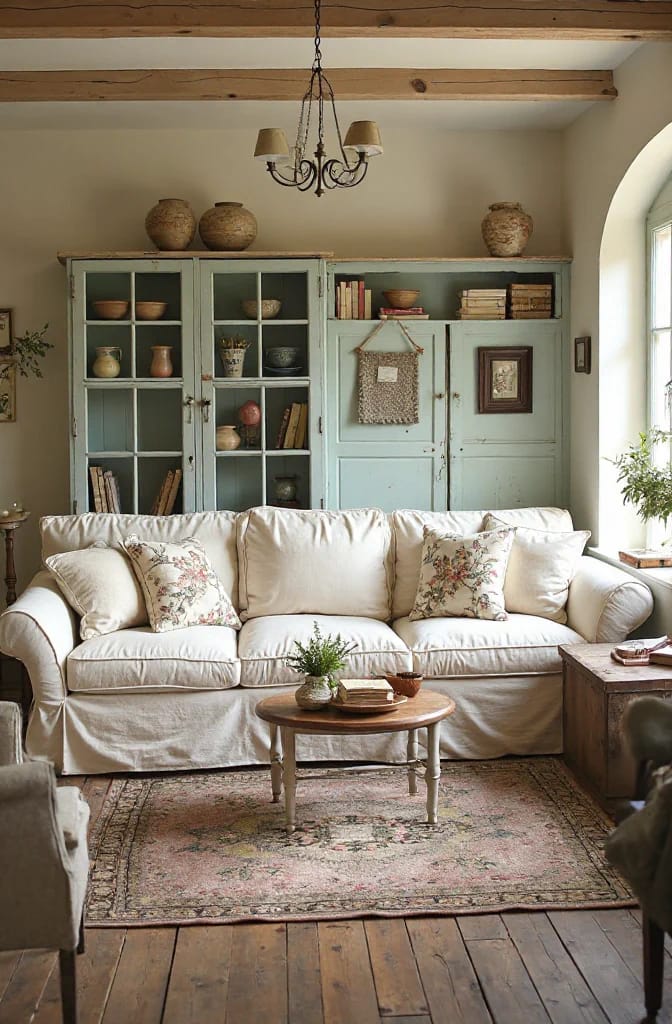
That said, a slipcover on a cheap frame looks like a bedsheet over a cardboard box within a month, because the cushions are the first thing to collapse and no cover hides a sag. If the sofa is not worth re-covering, the money is better spent on a secondhand frame with a hardwood rail and screw-in legs. Ready-made covers exist for the standard IKEA frames, and Bemz cuts them in washed linen, which takes a re-cover from the price of a new sofa down to the price of a good armchair.
Green cabinets, but the cottage kind of green
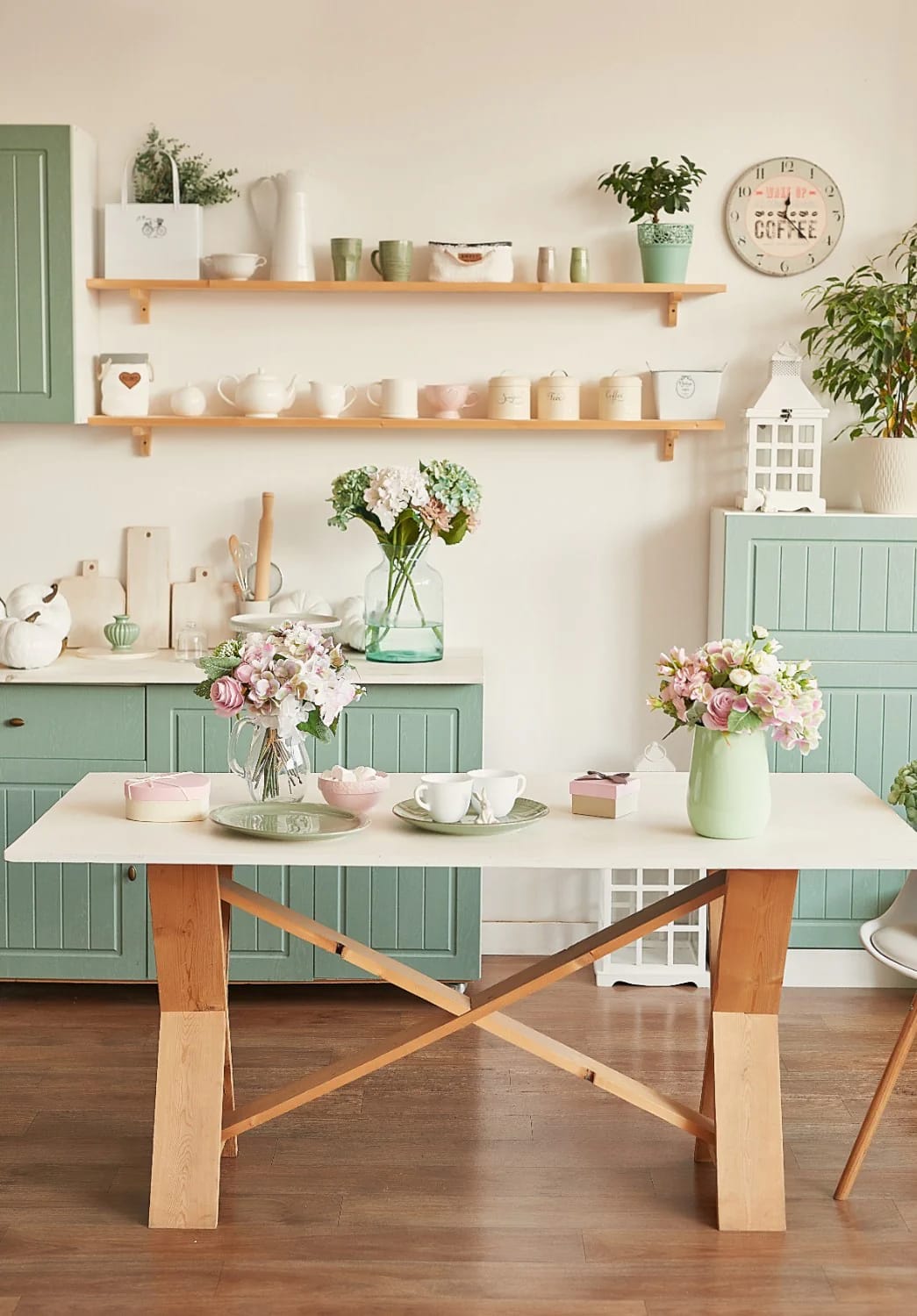
The green that works in a cottage is a greyed, olive-leaning one with more black in it than blue. Farrow & Ball's Calke Green sits in that family: mid-depth, dusty, and it reads older than it is. The greens that fight a cottage kitchen are the saturated ones. Emerald pulls the room toward a hotel bar and mint pulls it toward a nursery, and neither survives a change of tenant.
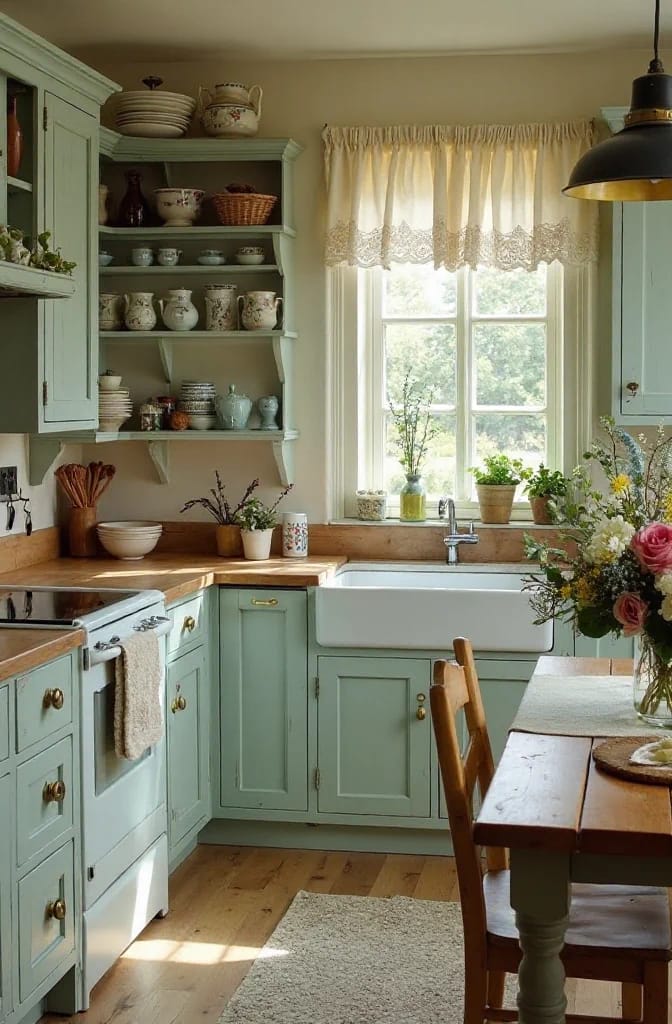
Paint the base cabinets and leave the uppers in the wall colour. A run of full-height green cabinets closes a small kitchen in, and the two-tone version puts the colour where your eye actually lands, at the worktop, while the wall stays light. Do the doors flat and the frames in the same finish, because a sheen on the frame and a matte on the panel makes the joinery look repainted in a hurry. The wall space that the uppers leave bare is where repurposed kitchen utensils hung as wall decor earn their place in a cottage.
A guest room is the one place mismatched is free
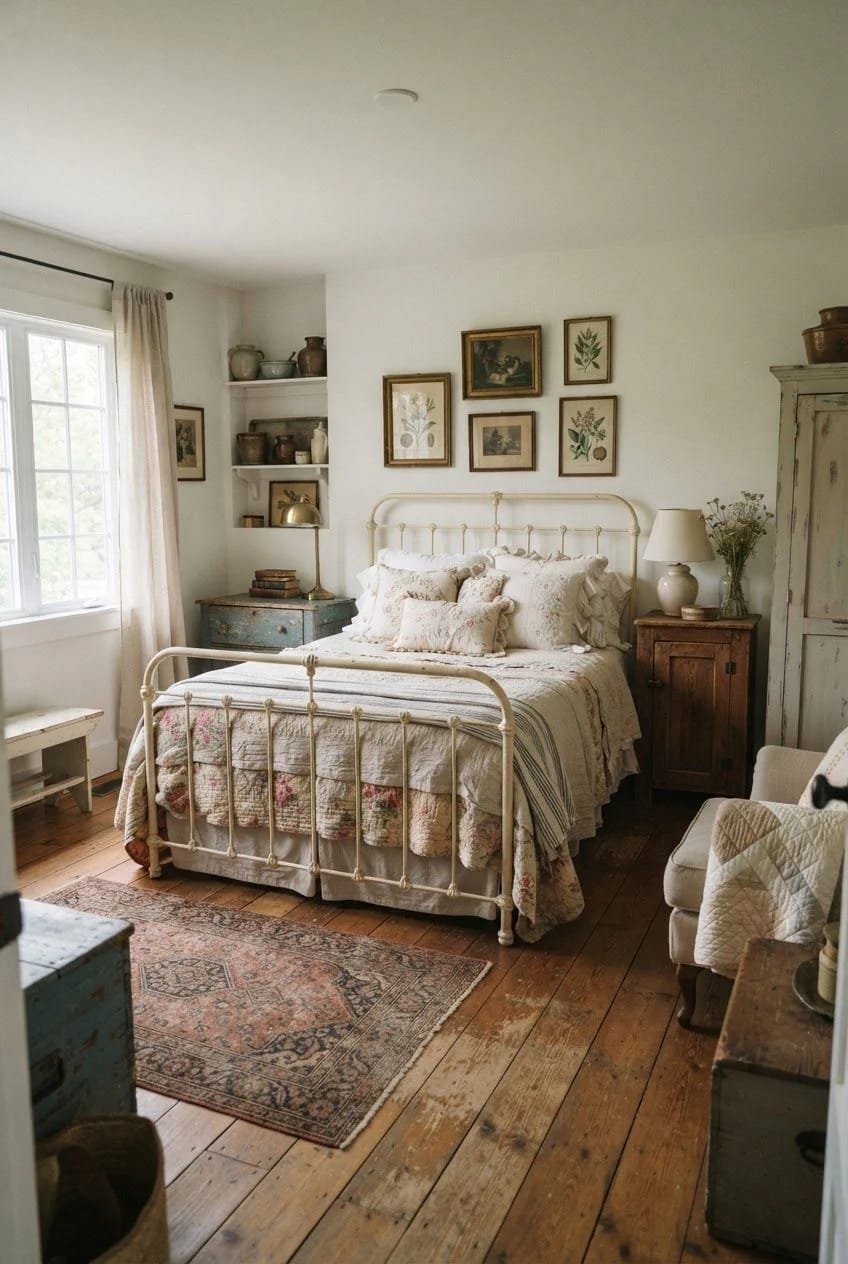
Guest rooms get the leftovers, and in a cottage the leftovers are the look. Nobody sleeps there nightly, which means the room can carry more pattern than the one you live in: a patchwork quilt in five prints, an iron bed, a pair of nightstands that do not match each other but do match the wall.
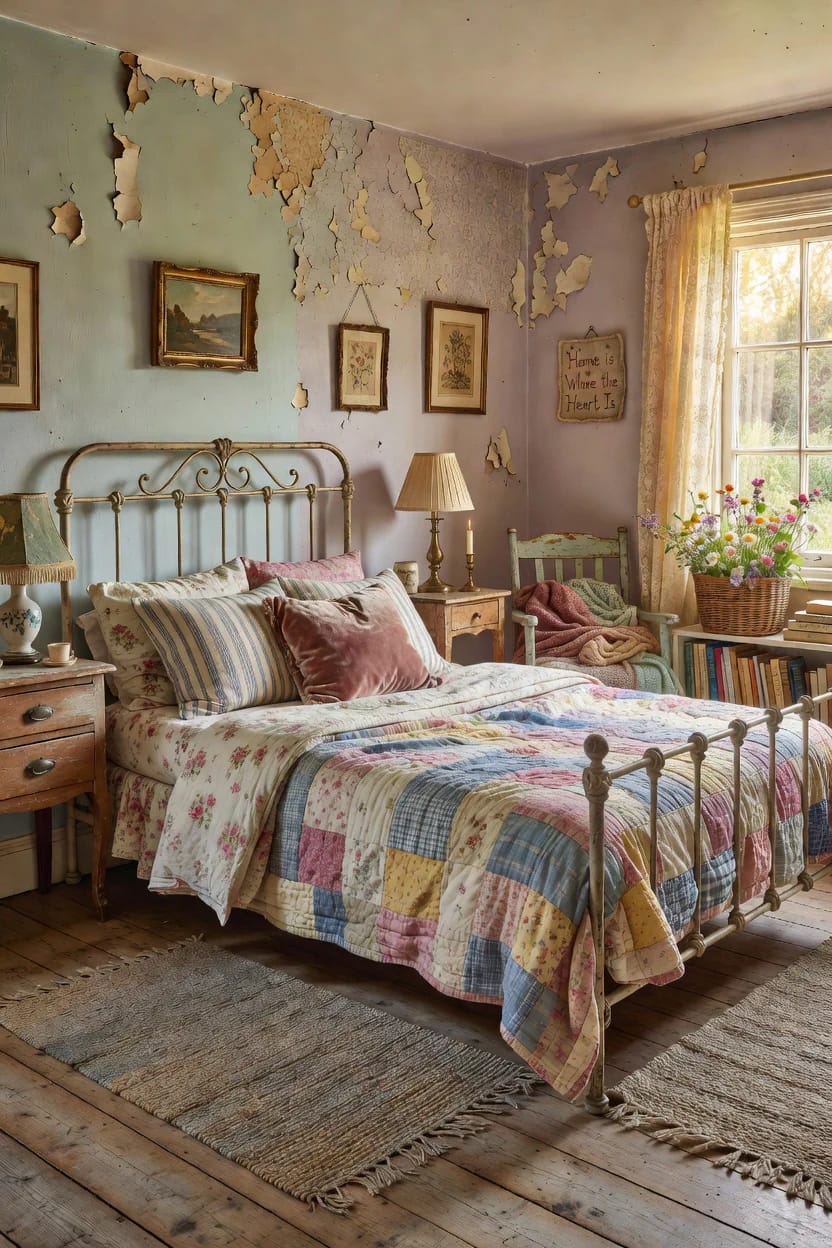
Buy twin-size even for a double bed and let the quilt sit as a topper with the sheets showing below. A full-size quilt pulls to the floor on a double and the bed starts looking upholstered, while a twin topper over a white sheet looks like a bed somebody made quickly, which is the register the whole room is going for. A cotton coverlet such as this reversible patchwork quilt in twin does the job at a price that leaves the budget for the curtains.
The one measurement that matters in a mismatched pair is seat height. Two nightstands more than an inch apart in height put the lamp bases at different levels, and the eye catches that from the doorway before it registers anything else in the room.
Lace at the window, lamps at three heights
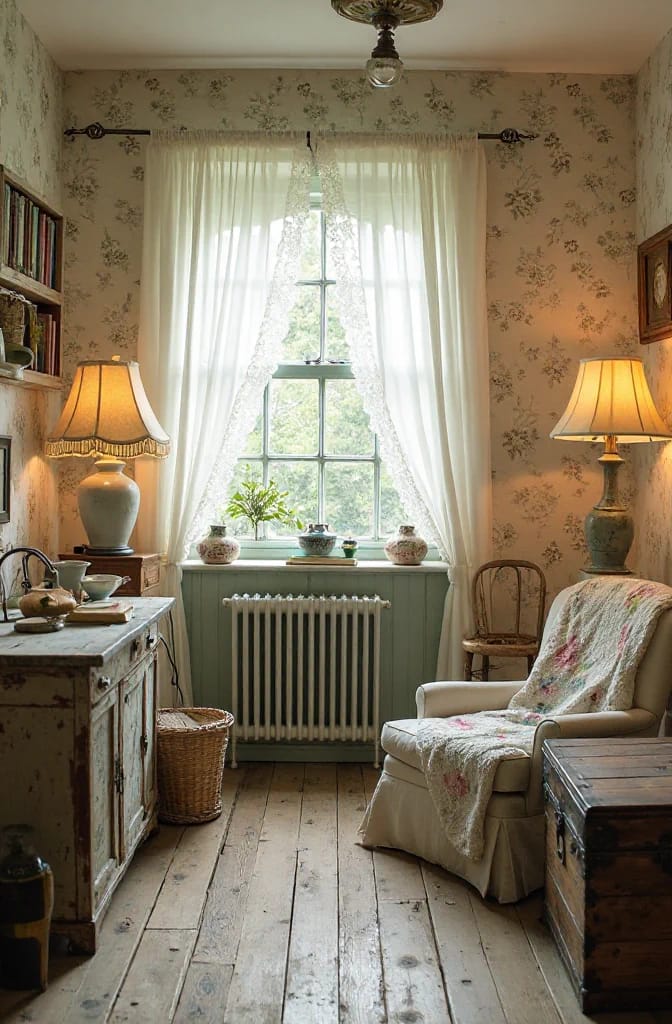
Cottage rooms are lit from the middle of the room and down, never from above. An overhead fixture in a room with a low ceiling flattens the space and drops a hard shadow under every object on a surface, which is the opposite of what the look wants. Three sources at three heights does the work: a table lamp with the shade around 24 to 28 inches off the floor, a floor lamp whose shade sits near 55 inches, and one low source below knee height. Bulbs around 2700K keep the cast warm, and a dimmer on the floor lamp matters more than the price of the lamp.
Lace at the window is the other half. An unlined cotton lace panel filters roughly a third of the daylight and gives daytime privacy without cutting the room off from the garden the way a blind does, and it hangs best with the rod above the frame and the hem at the sill or just past it. A lace panel that stops short of the sill looks cut down. The same panel logic applies to salvaged window frames brought indoors, which are the cheapest way to repeat the shape on a wall that has no window in it.
Unlined cotton crochet in off-white with a rod pocket, light enough that it filters the daylight instead of blocking it.
JOOJA crochet lace sheer curtain panels, 2 pack, whiteAn unrestored tub and a plain white room
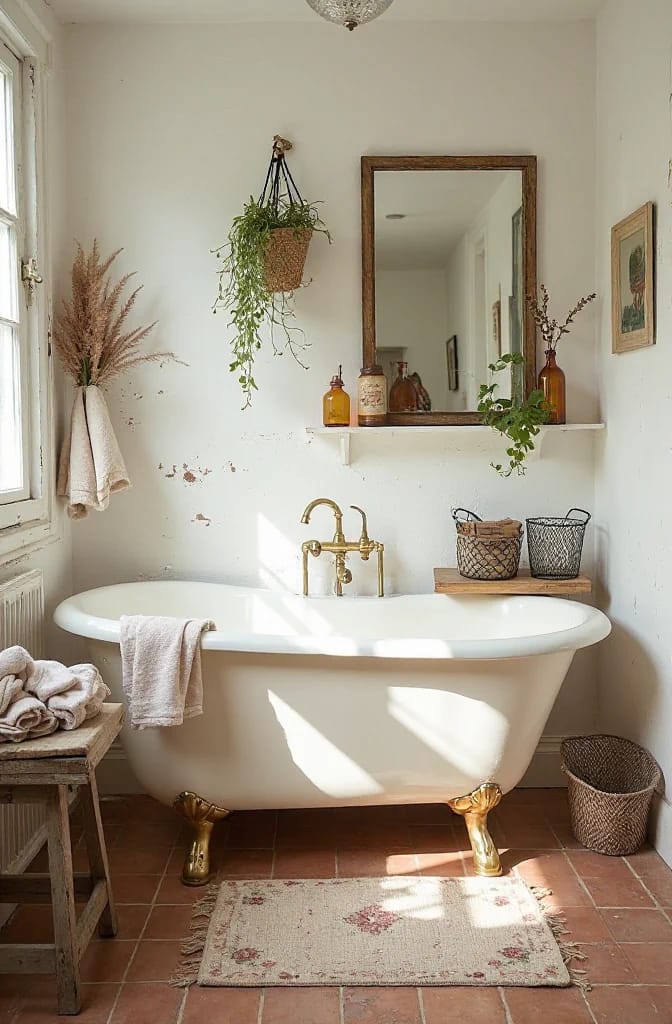
Cottage bathrooms go wrong when they are asked to be vintage. The rooms that work are plain: white beadboard or tile, a white floor, and one old object carrying all the age in the room. A cast iron roll-top with worn enamel and a chip or two on the rim does more than a wall of reproduction fittings, and a used one costs less than a new acrylic tub of the same length.
Beadboard is the cheapest way to get the wall right: 1-1/2 or 2 inch v-groove panelling run to about 44 inches, a plain capping rail on top, and the wall above it flat and light. That height clears the splash zone without cutting a small room in half. Weigh the floor before you buy the tub, though. A cast iron tub runs 300 to 500 pounds empty, and a cottage floor of hundred-year-old boards may need a sistered joist underneath, which is a carpenter's job rather than a Saturday's. Refinishing a tub you already own typically lands somewhere between $400 and $700, against $300 to $900 for a new acrylic one.
The sewing corner that earns its square footage
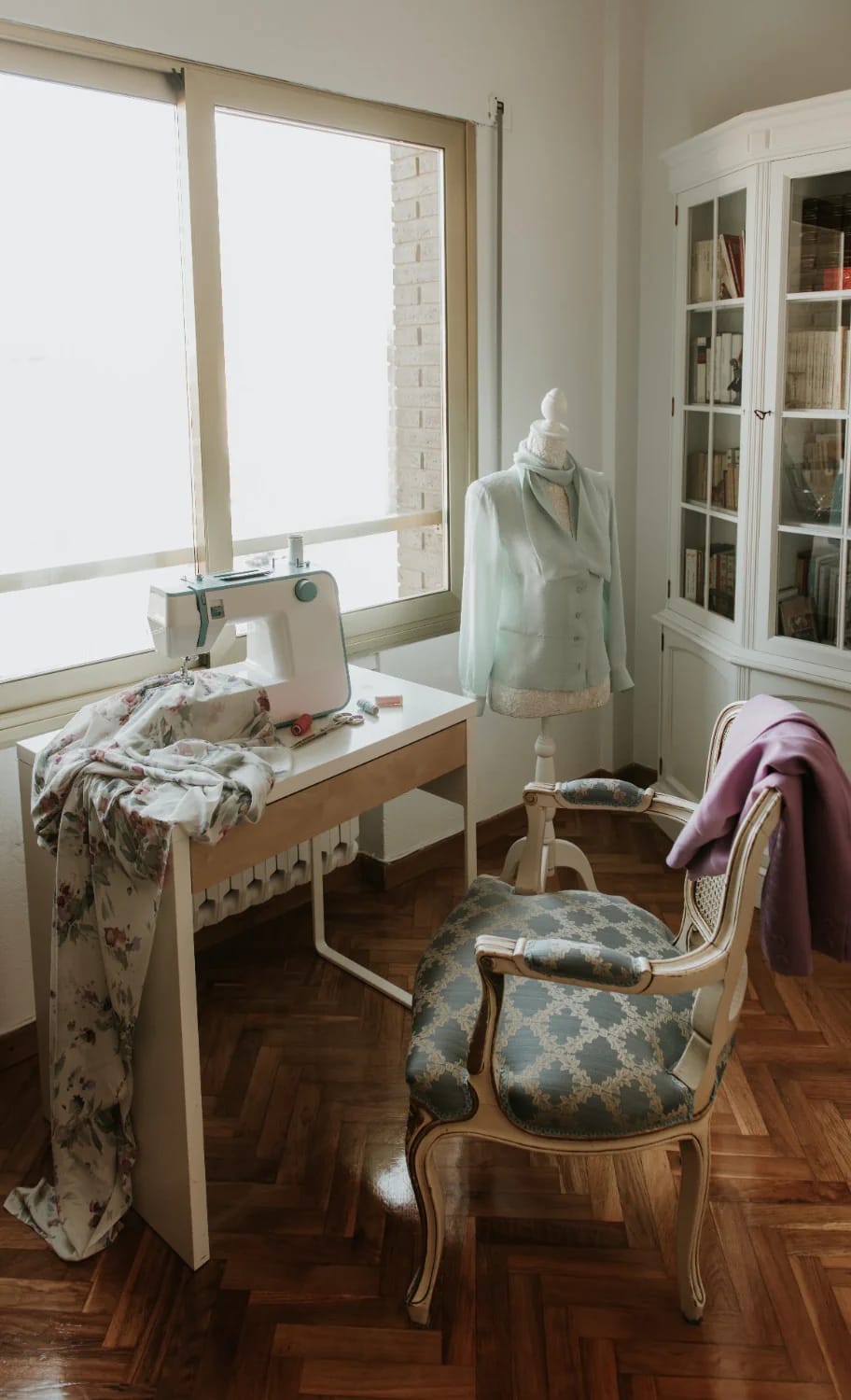
A sewing setup in a cottage has to occupy a wall rather than a room, and the measurement that decides whether it works is depth. A machine needs 4 to 5 feet of clearance behind the chair for fabric to fall into, which puts the table against a wall with open floor in front of it instead of into the corner everyone reaches for first. A three-foot alcove is enough for a machine, a basket of fabric and a pin board above it.
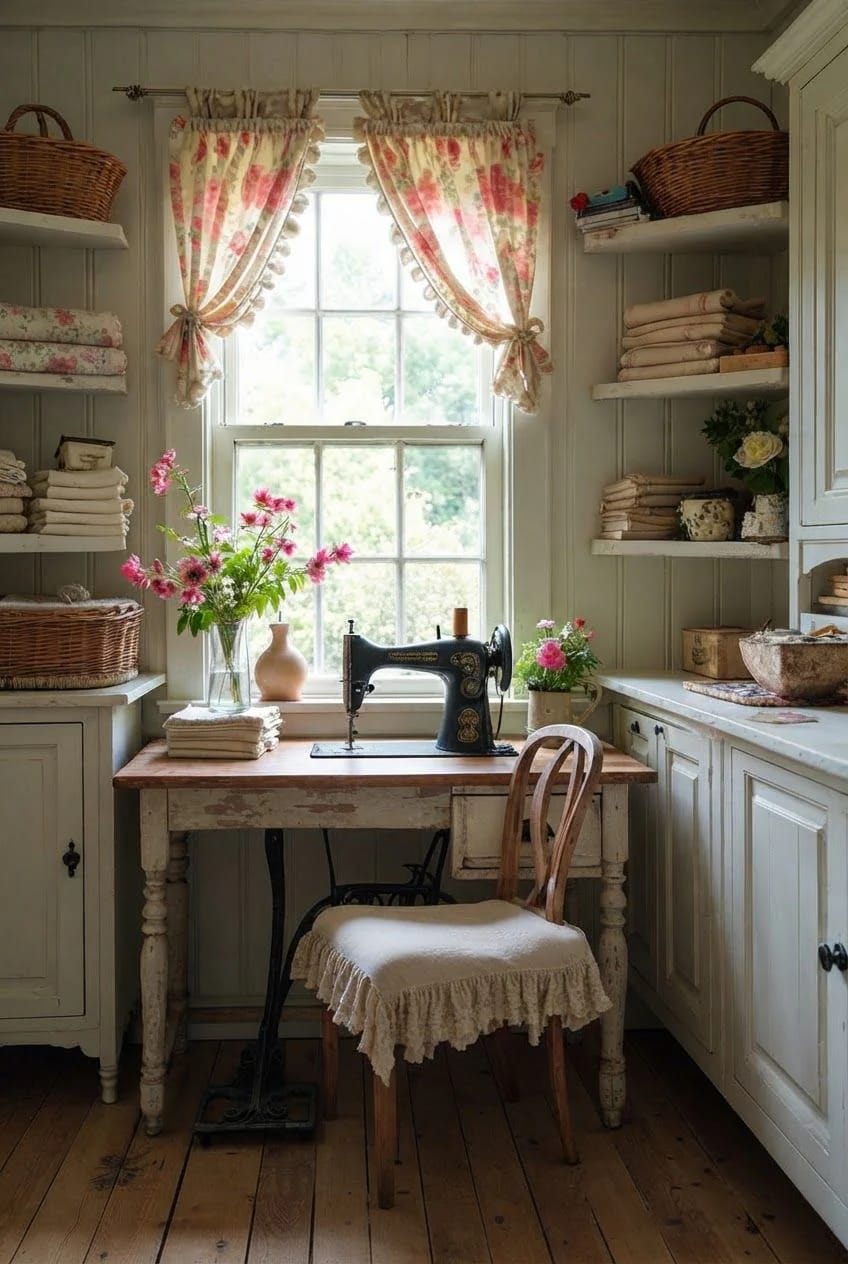
Store the fabric where you can see the weave. A dowel on brackets inside a closet turns a hanging length of floral cotton into a curtain while keeping it reachable, and a jar of lace trim on the table does the same job on a smaller scale. The look comes from materials being visible, which is why a craft corner lined with lidded plastic boxes reads as storage no matter what is inside them.
French farm table, one long one
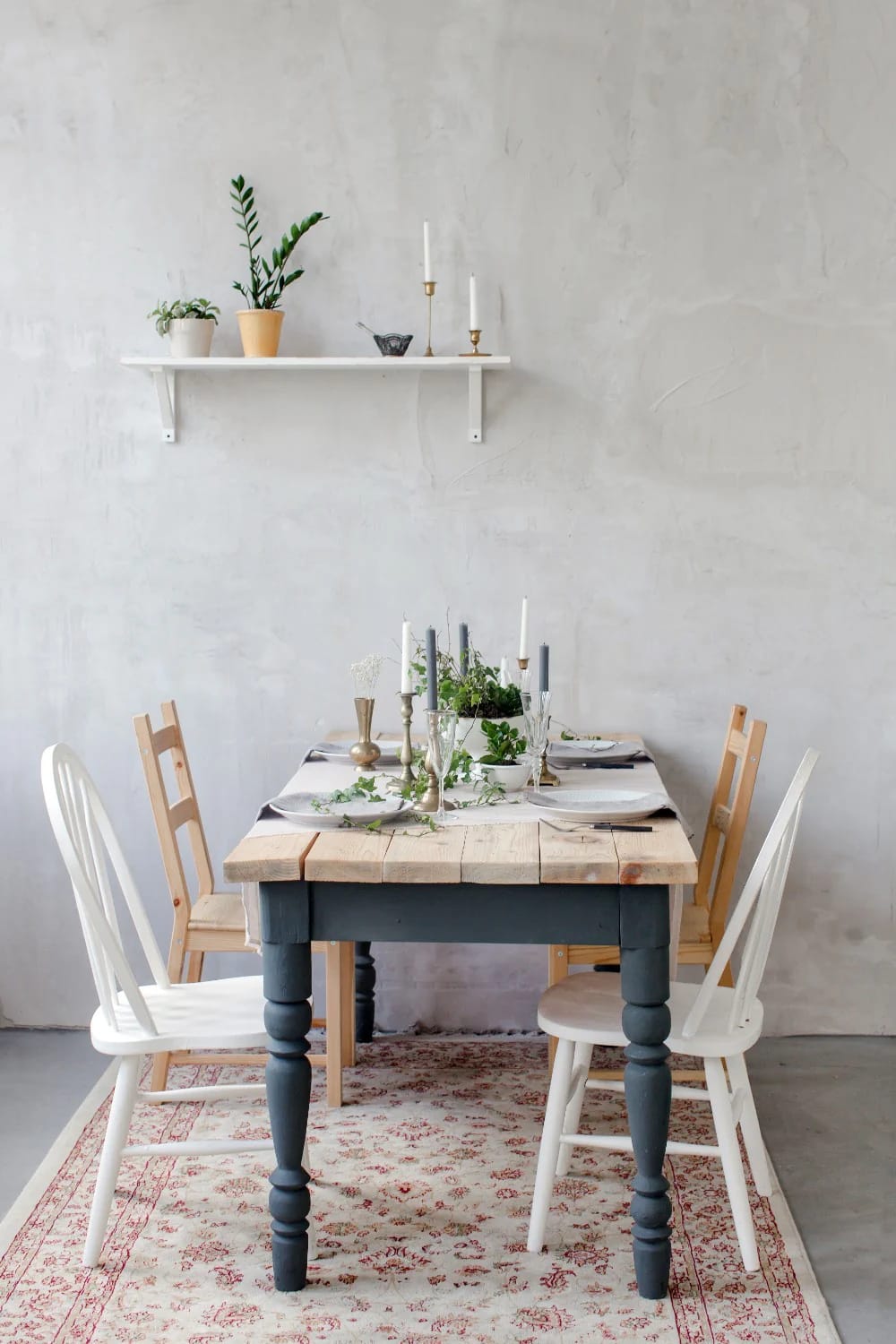
Buy one long table rather than a dining set, and let the chairs arrive one at a time. A six to eight foot scrubbed pine farm table takes mismatched seating in a way a matched set never does, and the scratches that would count as damage on a new table are the finish on an old one.
The constraint that decides whether mismatched chairs read as a collection is seat height. Chairs more than an inch apart in seat height put shoulders at different levels around the table and the arrangement looks improvised, so measure the seats rather than the backs and reject anything outside an 18 inch band. Table height is a fixed 30 inches, and a farm table's apron should leave at least 24 inches of knee room if you want to seat anyone at the end.
Do not sand the top back to bare pale pine. The grey-black patina is the thing you paid for, and once it is gone you have a new table carrying a story you cannot tell. Feed it with a beeswax and oil mix instead and accept the trade: an oiled top marks if you leave a wet glass on it, so it wants a fresh coat twice a year.
Enamelware on the porch, chipped and outside
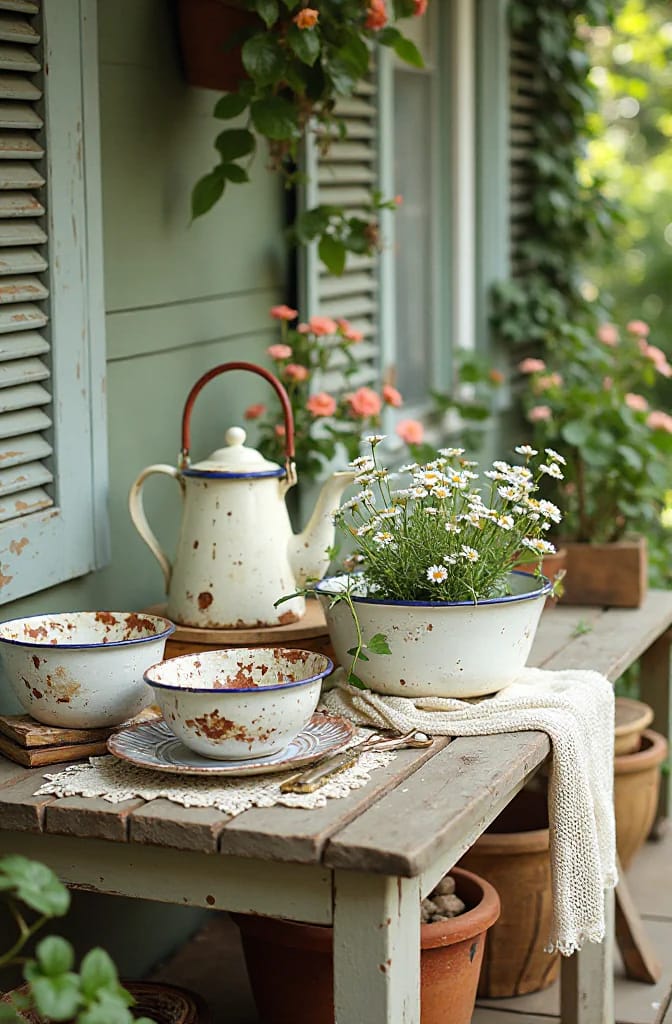
The porch is where the look has the most licence, because nothing out there is precious. Chipped enamelware belongs outside and mostly belongs dry: once the enamel is broken, the steel underneath rusts from the chip outward, and a jug that spent a winter holding rainwater will not come back from it. Keep chipped pieces for dry display and put the sound ones where they will actually hold water.
Paint the floor before you style it. A porch floor in a porch-and-floor enamel stands up to weather and scrubbing in a way wall paint does not, and a pale grey-green under a chipped white chair does more for the look than any object you could set on it. The chair is the piece to leave chipped, and once the seat has rotted through, planting it out is the standard second life.
 15 Charming Old Chair Planter Ideas for Your Outdoor Space What to do with a chipped porch chair once the seat is gone, from a planted spindle frame to a tier of hanging terracotta pots.
Spend on textiles, scavenge the hard surfaces
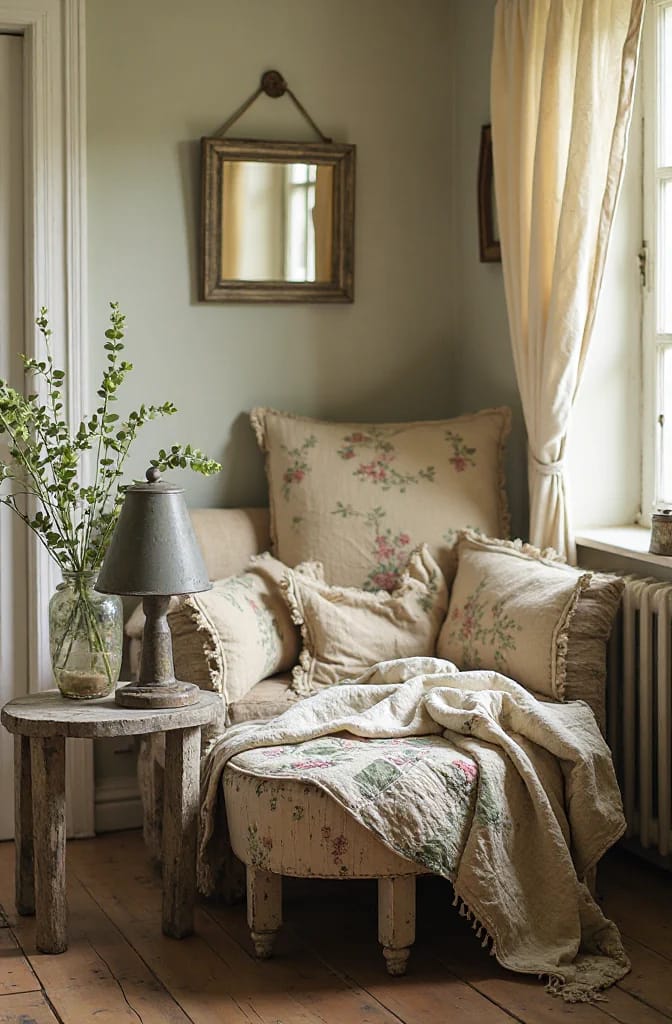
The money in a junk chic room belongs in the things your hands touch. Linens, quilts, curtains, lampshades and cushions are worth real money and they are the objects that carry the room, while tables, dressers, boxes, frames and mirrors are worth thrift money, because a pine table and an oak table do the same job under a cloth.
Put the budget where the fabric is, and the allocation does more than the total. A cheap table under good washed linen beats a good table under a cheap synthetic runner, and the gap is wider than the price difference suggests, because linen creases in a way that reads as used and polyester creases in a way that reads as new. Buy the quilt, the curtains and the lampshades in good condition, and buy the table, the dresser and the mirror at the cheapest place you can find them, which is usually a house clearance rather than a thrift store.
A wardrobe, a chest and a bookshelf are all surface, so all three are thrift money; the bed you sleep in and the chair you sit in every night are not, because a bad mattress and a sagging seat cannot be dressed up by anything you put on them. Where a scavenged surface is too far gone to leave bare, paper is the cheapest cover, and decoupage projects for tired furniture handle the scratched top and the water ring that paint only advertises.
Edit in threes, or the look tips into clutter
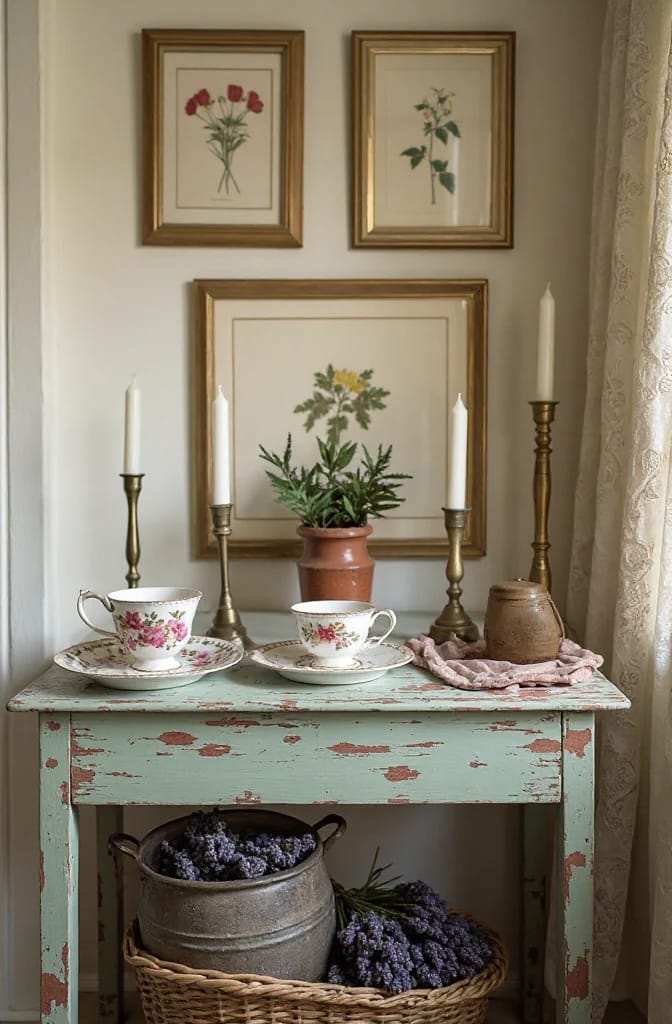
The line between collected and cluttered is a count. Give every horizontal surface three objects at three different heights and the surface is finished; give it five and the eye stops separating them. A dresser top with a tall jug, a mid-height object and something low and wide has a shape, while the same dresser with a jar, a second jar, a candle and two books has a pile.
The same count governs texture. Chippy paint, floral print, rust and peeling wallpaper are four textures competing in one view, and two of them read as a scheme while four read as decay. Decide which two the room runs on before you buy anything else, and let whatever does not fit one of them go back out to the car.
Paint first, buy the linen last
Sequence it and the rest gets easier: test and stabilise the paint on anything you rescue, since the shellac and the swabs come before the tin; paint the walls and the cabinets; and only then start buying fabric, because the quilt and the curtains are what decide which of the warm whites you actually needed. The room will look wrong for a week in the middle, with the furniture bare and the walls fresh, and that week is normal. If the budget only stretches to one more thing this month, make it the lamps, because light at three heights changes an unfinished room more than any object you can carry through the door.
Related Posts
- 15 Sustainable Cottage Decor Ideas For Spring
- 15 Modern Decoration for a Chic Coastal Bedroom
- 15 Natural Cottage Garden Design Ideas That Look Classy
- 15 Upcycled Spring Home Decor for a Refreshing Look
- 15 Vintage Upcycled Easter Wreaths For Front Door That Feel Cozy, Nostalgic & Fresh
- 12 Decoupage Projects That Transform Tired Furniture and Decor