
Most birdseed ornaments fail for reasons that have nothing to do with the recipe. The seed mix is half milo and cracked corn, which the birds kick to the ground; the binder is corn syrup or honey; and the ornament dangles from a twig with nothing underneath it for a cardinal to stand on. Get those three right and the tree is picked clean inside a fortnight, which is the only review that counts. The thirteen below are grouped by what holds them together, because that, more than the cookie cutter, decides whether they last past the first thaw.
Temperature is the constraint nobody mentions. Gelatin shapes and rendered fat are cold-weather objects, and above roughly 50°F both start to sweat, sag, and mold. Two entries on this list exist purely because of that.
Everything here assumes a live conifer, shrub, or bare-branched tree outside a window, and it assumes you keep salt, bread, bacon grease, honey, and anything dyed red out of the mix. Those last four turn a generous project into a slow one.

1. Cookie-cutter birdseed ornaments, made thick and dried hard
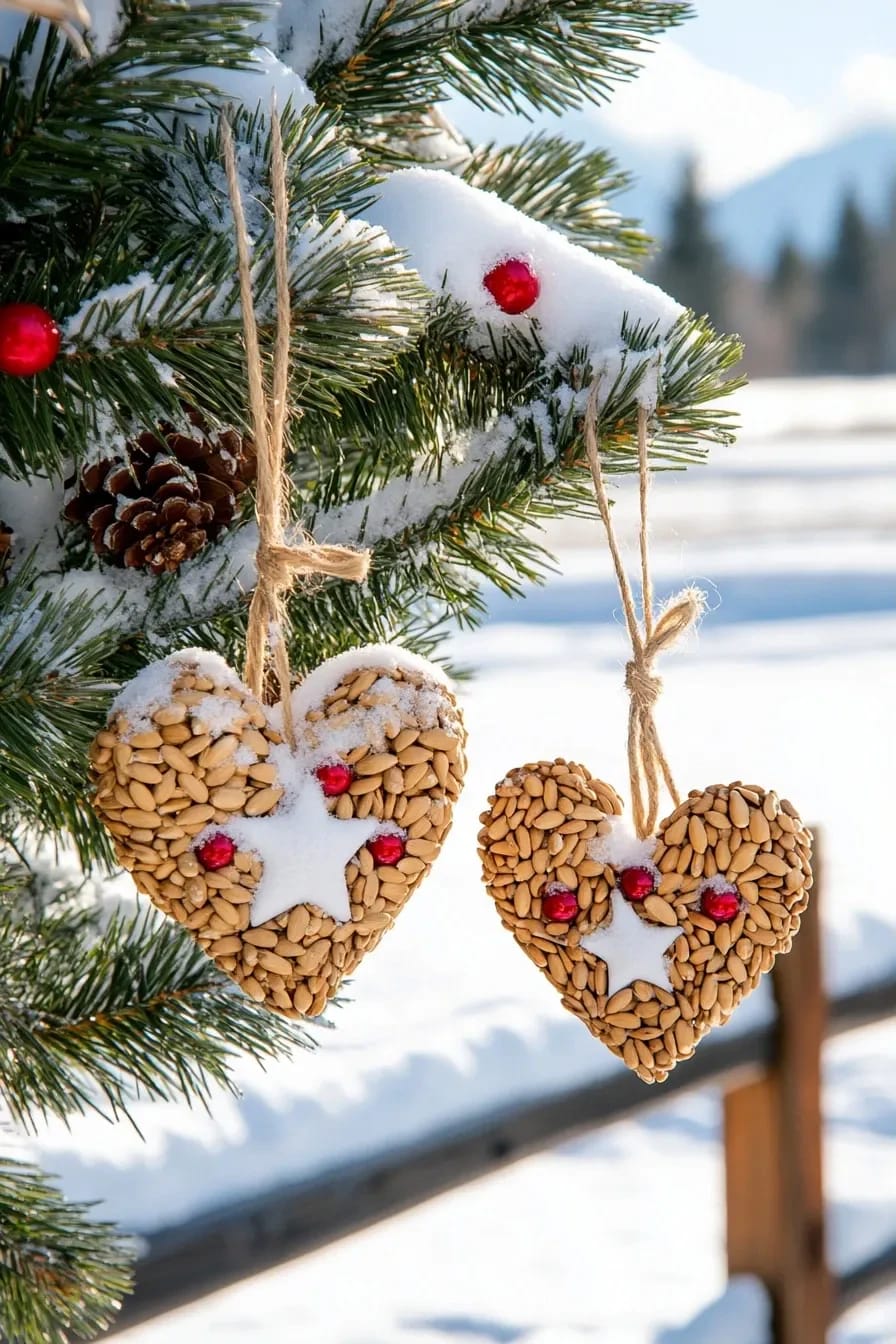
Make them thick and give them time. Anything under an inch snaps off the twine in the first hard rain, and a shape pulled from the cutter after twelve hours is still soft in the middle. Roughly three tablespoons of unflavored gelatin per two cups of seed is the working ratio: bloom the gelatin in cold water, dissolve it in a half cup of boiling water, stir the seed in until every hull is coated, then press it into cookie cutters set on parchment and leave it for two to three days. Pack it with the back of a spoon until it stops giving. What goes in the bowl matters more than the shape:
- Black oil sunflower is the workhorse. Cornell reckons it draws more than forty North American species, and the thin hull means small beaks can crack it.
- Hulled sunflower chips and white proso millet knit into the corners of a cutter far better than whole striped seed, which leaves air pockets.
- Milo, red millet, wheat, and cracked corn are ballast. State wildlife agencies are blunt about it: Virginia’s guidance on avoiding filler seed in backyard feeding notes most species simply will not eat them, and the waste on the ground draws rats.
- Nothing dyed red. That seed is treated for planting and coated with fungicide.
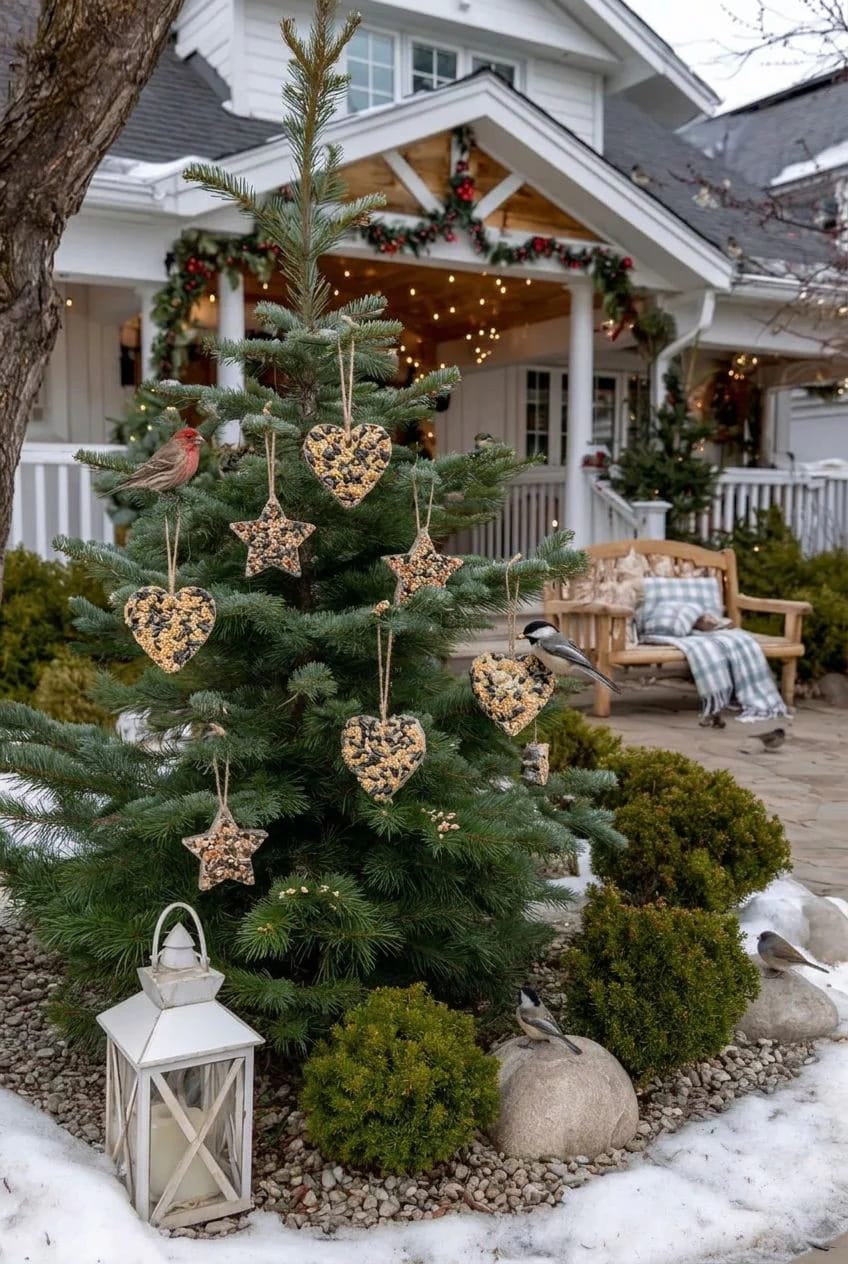
Where it hangs decides whether it gets eaten. Birds need somewhere to stand while they work at a hard surface, so tie each ornament close to a branch rather than out at the drooping tip of one, and put the tree itself either right up against the house or well clear of it. Audubon’s guidance on bird-friendly yards and window strikes is that a feeding station a few feet from the glass is safer than one parked at the middle distance where a startled bird can build up speed. If there is no conifer out there to work with, a porch tree built from pallet slats takes the twine and the weight without complaint.
| Binder | Sets by | Holds above 50°F? | What it costs you |
|---|---|---|---|
| Unflavored gelatin | Chilling, then 48 to 72 hours of air drying | No | Molds within days if stored indoors; make and hang, do not stockpile |
| Agar agar | Boiling two minutes, then cooling | Yes | Crumbles if under-boiled; needs a test batch |
| Rendered suet or lard | Refrigeration | No | Goes soft and greasy well before it looks spoiled |
| Water, frozen | A freezer or a cold night | Absolutely not | Feeds nothing until it thaws |
| Peanut butter and cornmeal | Nothing; it stays a stiff paste | No | Cannot be molded into a hanging shape on its own |
2. Pine cone feeders, and why the peanut butter panic is nonsense
Peanut butter is fine, and the story that birds choke on it is folklore with no case behind it. Kenn and Kimberly Kaufman have said as much in Birds & Blooms, and the Cornell Lab’s own rundown of suet, peanut butter and other bird foods treats it as a straightforwardly good cold-weather food, with the real cautions being mold and rancidity rather than throats. What is worth doing is cutting the stickiness: Audubon’s warm-weather suet substitute runs about one part peanut butter to five parts cornmeal, and something in that neighborhood turns a smear into a crumb that a chickadee can peck apart.
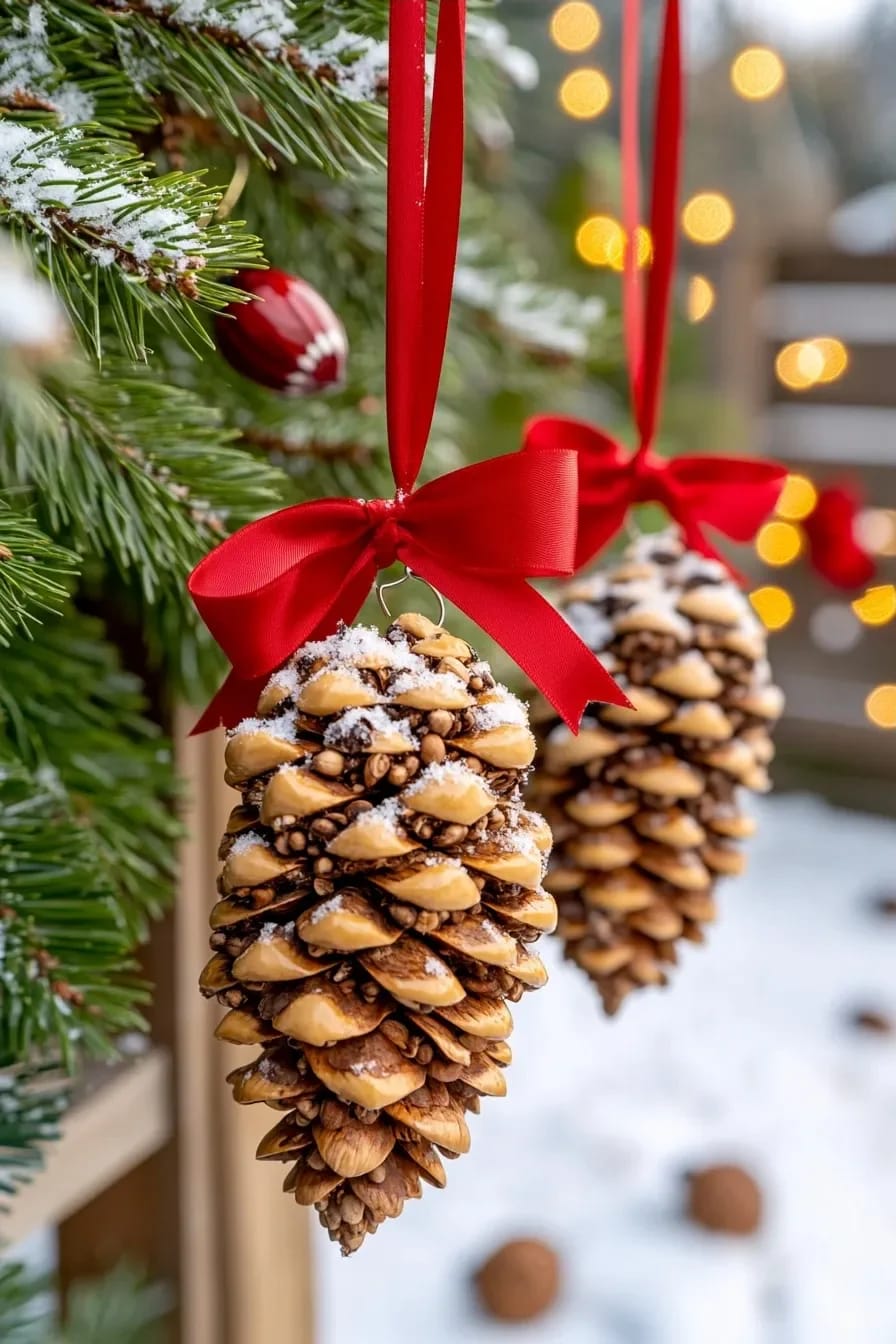
Use cones that have already opened and dried; a wet cone closes up and locks the food inside where nothing can reach it. Bake damp ones at a low oven temperature for half an hour and they will splay open again. Granted, the version scouts have been making for sixty years, a naked cone dunked in a jar and rolled in whatever seed was on sale, still outperforms most of what circulates online, and it takes about ninety seconds.
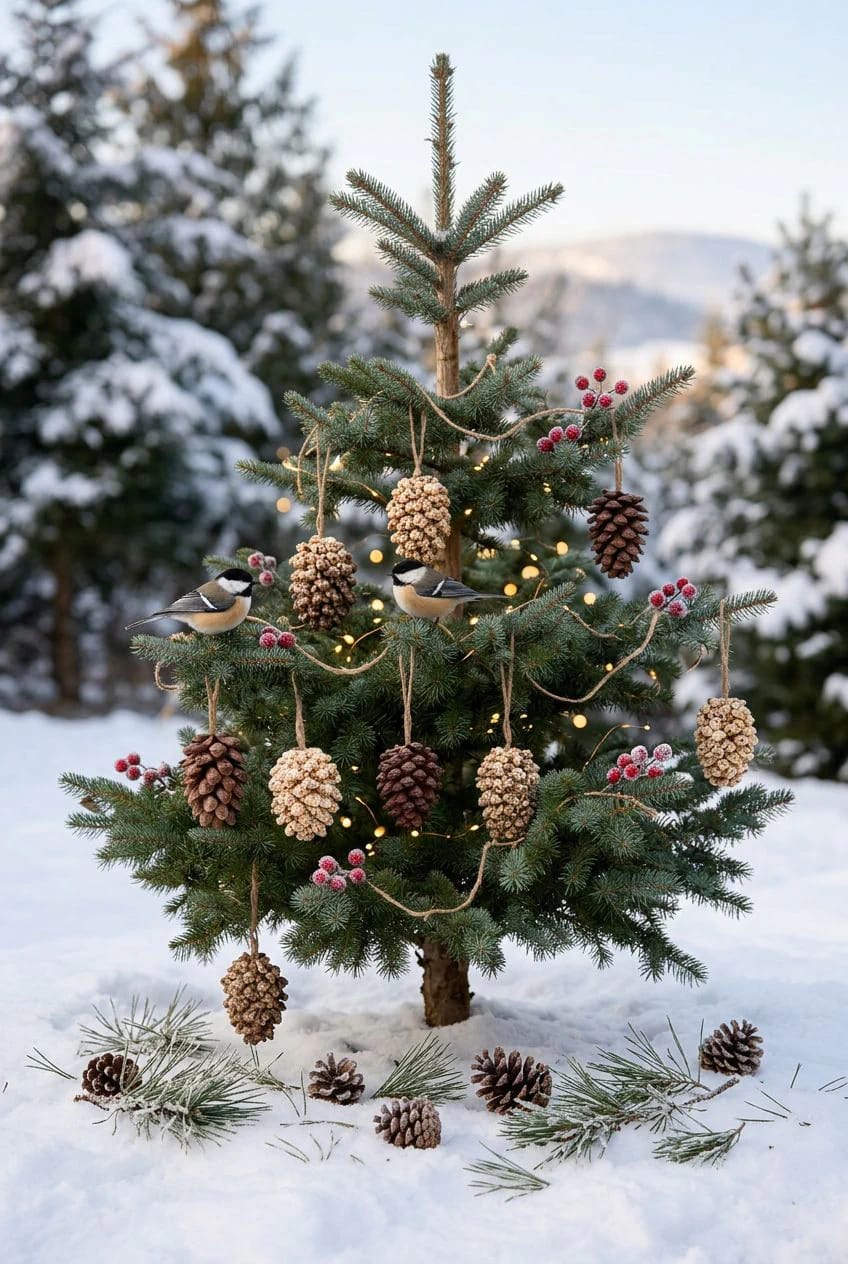
3. Rendered suet ornaments in silicone molds
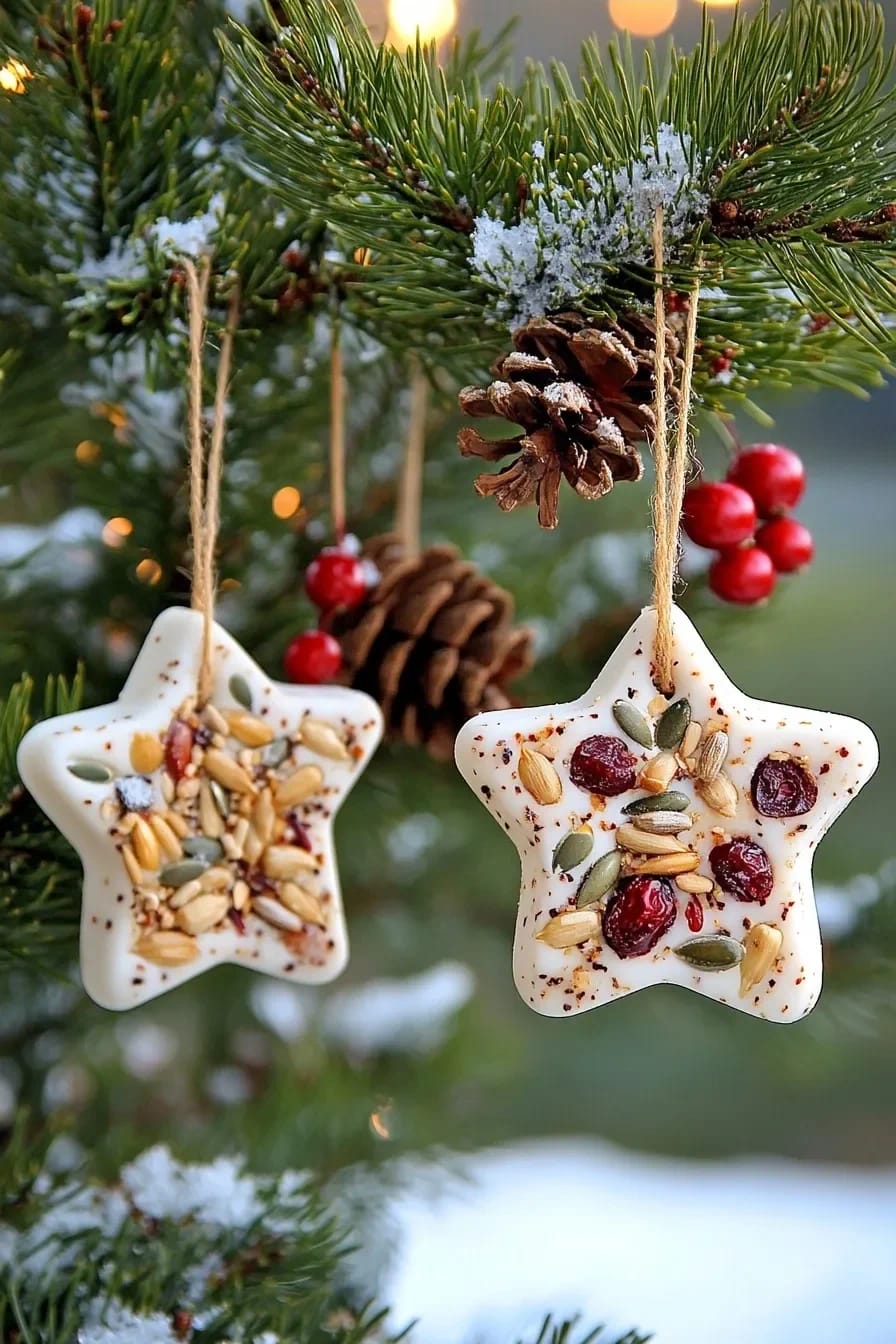
Render the fat before you mold it. Raw suet from the butcher turns rancid quickly once temperatures climb above freezing, and rendering, melting it slowly and straining out the solids, is what makes it keep. The simplest working mix is equal parts lard and peanut butter melted together over low heat, then stiffened with cornmeal, rolled oats, and seed until a spoon stands up in it. Press that into silicone molds, drop a loop of jute into each before it sets, and refrigerate overnight.
Silicone matters here because a set fat cake will not come out of a metal cutter without breaking. Small molds also beat one large block: a two-inch disc gets emptied in a day or two, which means less chance of a cake sitting out long enough to spoil. Cut evergreen trimmings and prop them around the base of the tree while you are at it, since birds want cover within a short hop of any food; the pile of offcuts every tree lot throws away is free and does the job.
Bacon grease carries nitrosamines from the curing and the frying, and the Cornell Lab recommends against it outright. Household cooking grease and drippings behave the same way, going soft and clinging to feathers. Raw, unrendered suet melts around 70°F and mats the plumage of anything that lands on it, and matted feathers in January are a death sentence, not a mess. If your winter regularly runs above 50°F, skip this entry entirely and go to number 12.
4. Popcorn and cranberry garland, strung on cotton
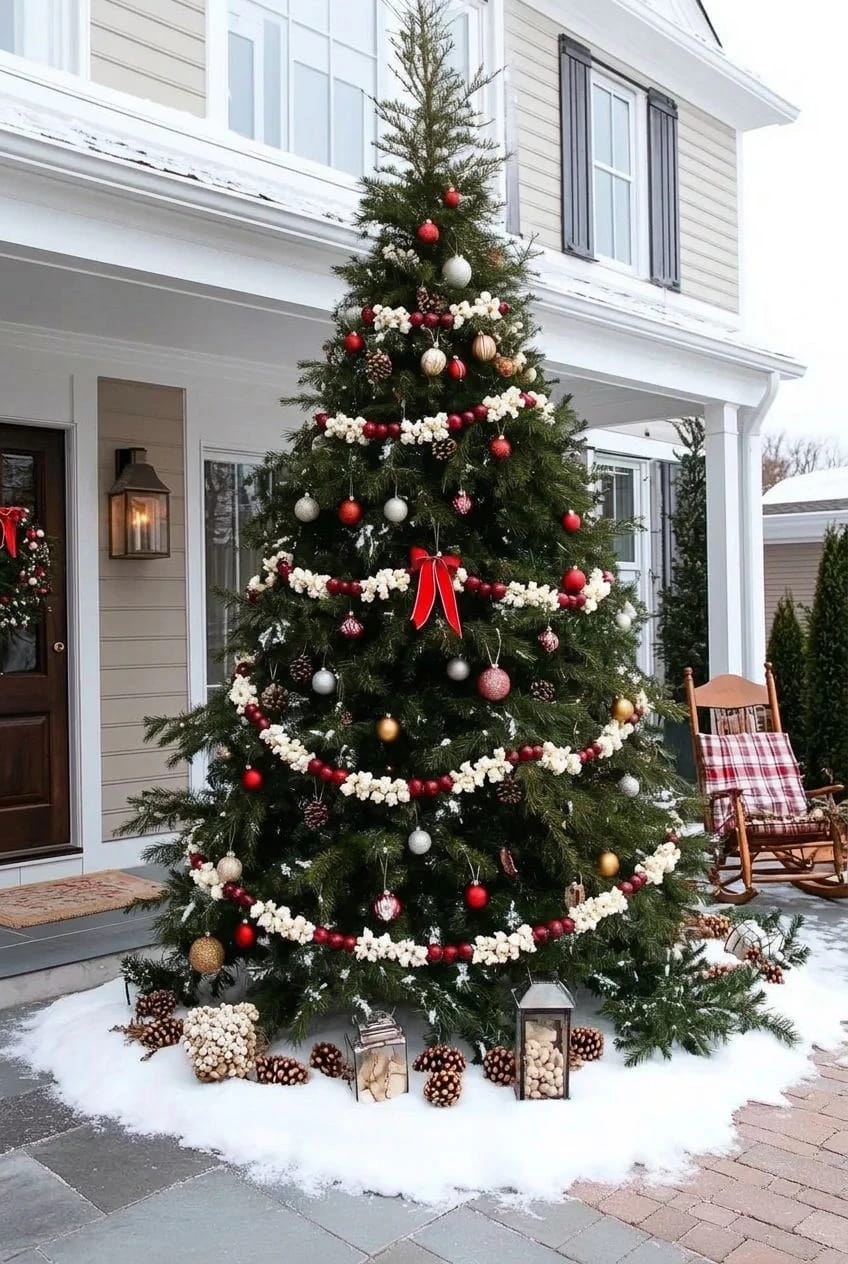
Pop it plain, air-popped, no butter and no salt, and let it sit out overnight before you thread it. Fresh popcorn shatters on the needle; day-old popcorn has toughened just enough to take the point. Cranberries go on straight from the bag. Thread everything on plain cotton thread or fine jute, never nylon, never fishing line, and never the wired tinsel garland that gets sold beside it, because a bird that gets a foot into synthetic thread does not get it out again.
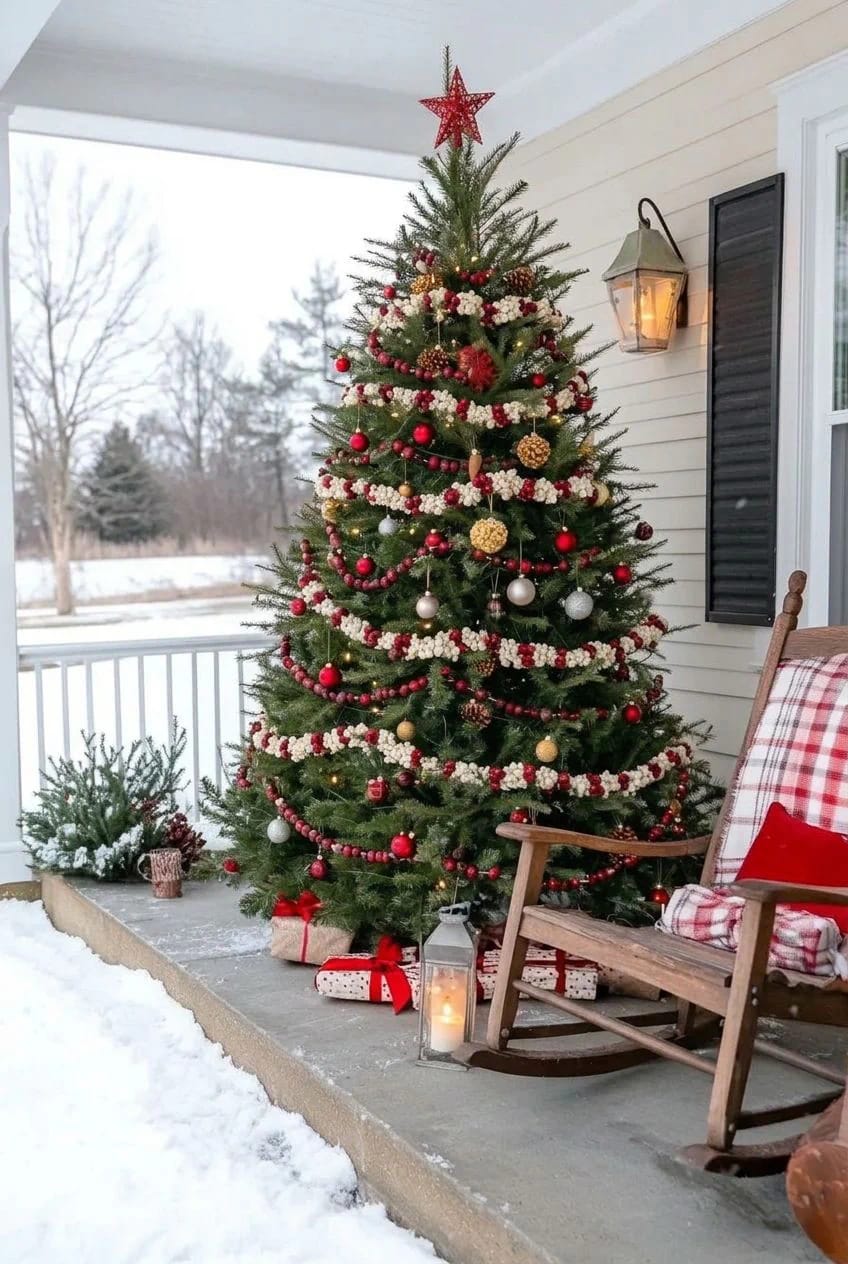
Hang it in short runs of three or four feet rather than one long rope, and take it down when the fruit blackens. Popcorn is close to nutritionally empty and does little more than hold the shape; the cranberries are what a robin or a mockingbird comes back for. That is a fair trade for something that costs almost nothing and composts, so long as you are honest with yourself about which part is food and which part is decoration.
 Foraged Christmas Garland From Your Backyard: 13 Ways to Make One From What’s Already Out There Thirteen garlands built from clippings, rosehips, and whatever the yard is already growing, at a cost of nothing.
5. Orange-cup feeders that hang like baubles
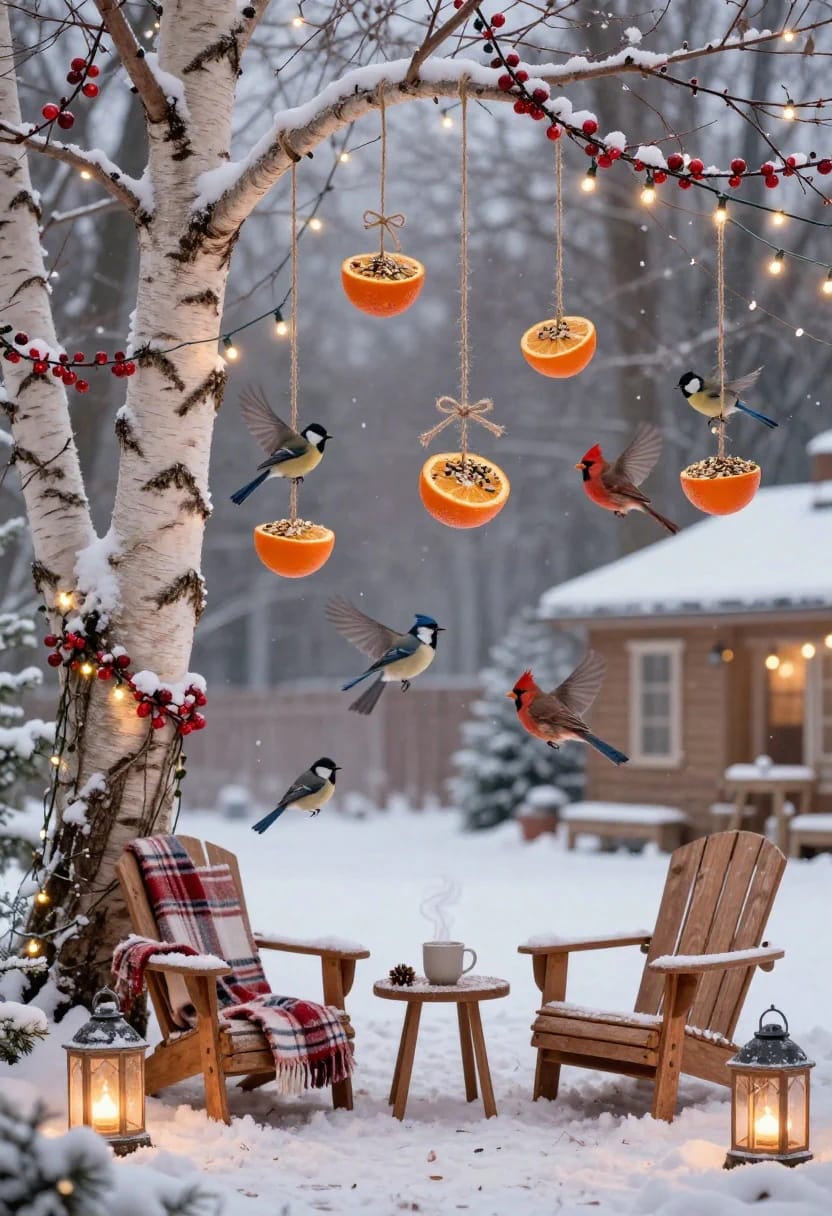
Scoop out a halved orange, poke three holes around the rim, and thread twine through them so the cup hangs level. Fill it with seed pressed into a little melted lard, which keeps the mix from tipping out in wind. The rind softens and the whole thing drops within a week or two in wet weather, and that is fine; it goes on the compost heap and you hang another one. Nobody should be trying to make these last.
6. Whole dried sunflower heads as ready-made seed discs
This is the least work on the list and it does not involve a recipe. If you grew sunflowers, cut the heads once the backs go brown, hang them face-down somewhere dry for a fortnight, then run a wire loop through the back of each and hang it on the tree.
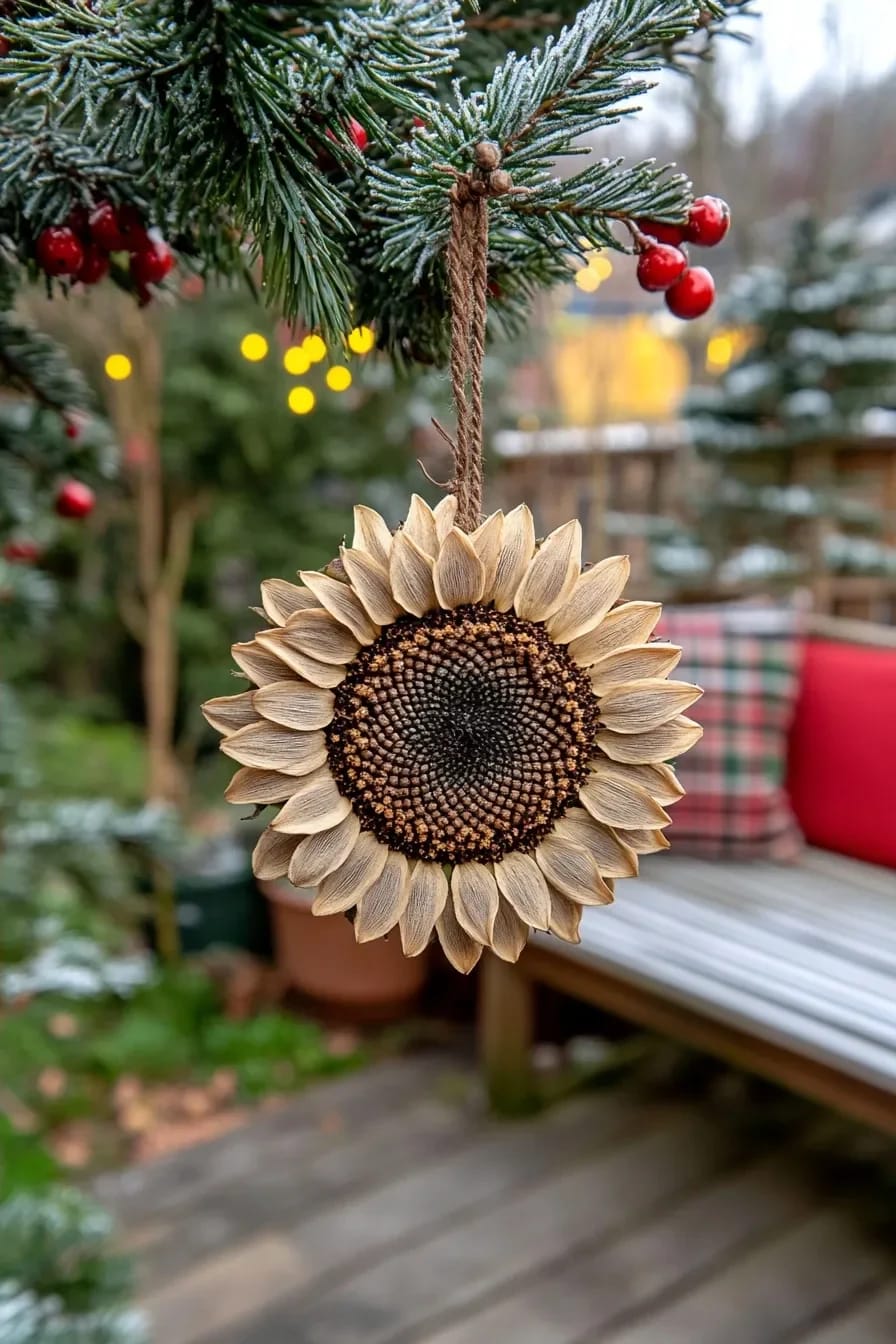
Chickadees and finches will work the spiral out from the middle, which takes them weeks and looks, throughout, like it was styled. If you want more of that on the tree, most of the ingredients for natural Christmas decorating are already growing within fifty feet of your door.
7. Millet and sorghum sprays as edible icicles
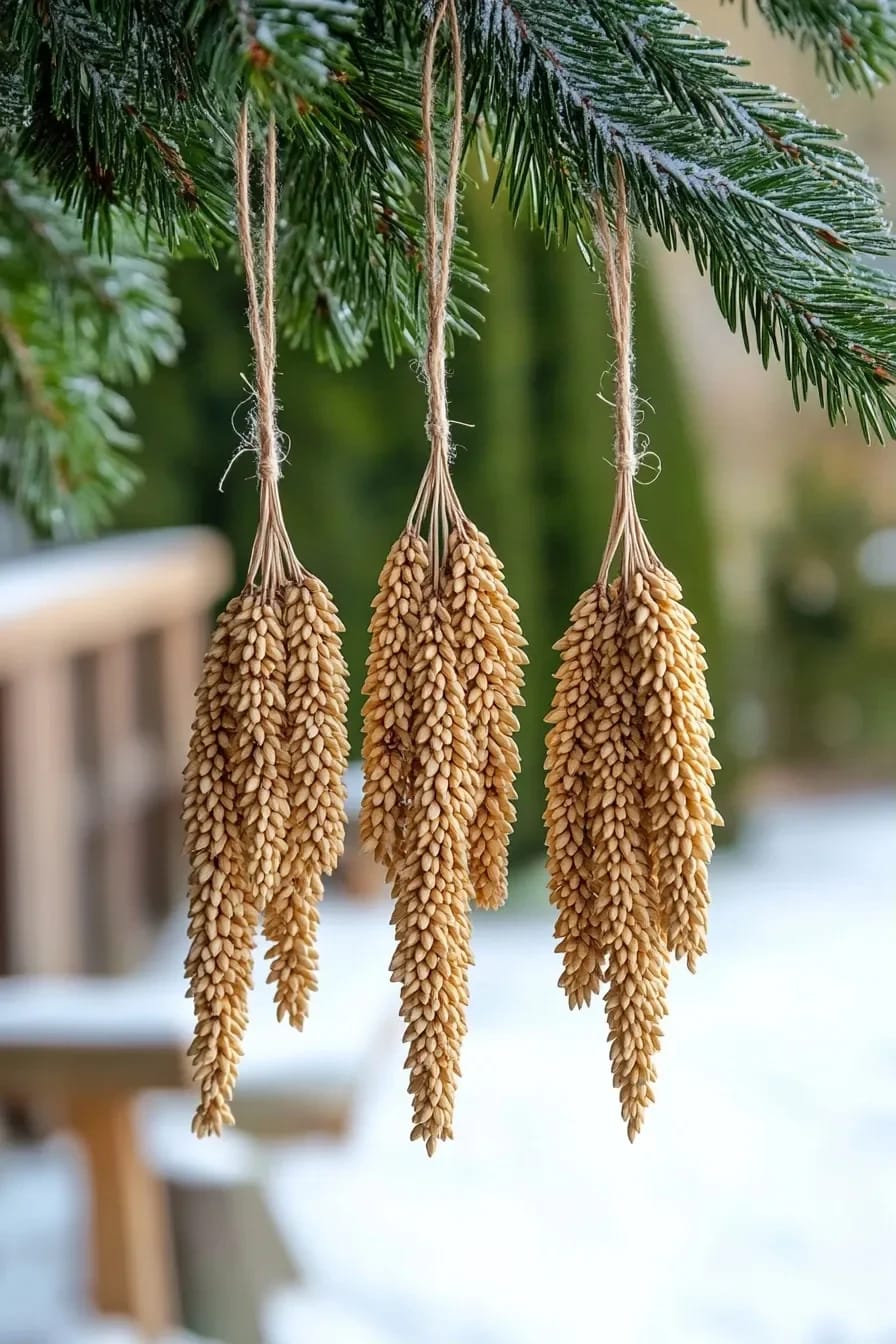
A spray of white proso millet, tied at the stem and hung stem-up, needs no preparation whatsoever and reads on the tree like a golden icicle. Juncos, sparrows, and finches strip them from the bottom. Buy the plain sprays sold for caged birds, unsalted and unsprayed, and note the distinction that trips people up: white proso millet is genuinely eaten, whereas milo and red millet, the two things most cheap "wild bird mix" is padded with, are pushed aside and left to rot.
8. Frozen seed and berry ice ornaments (below freezing only)
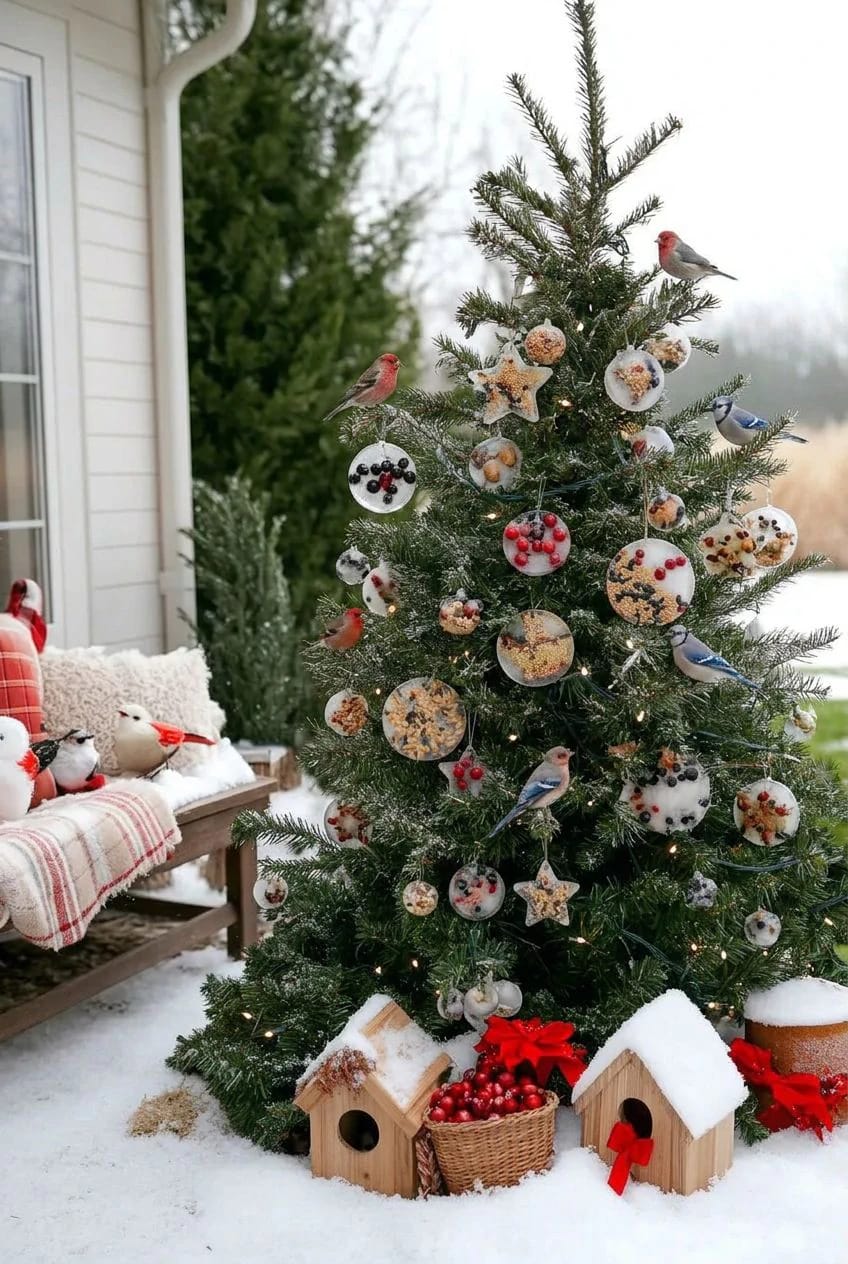
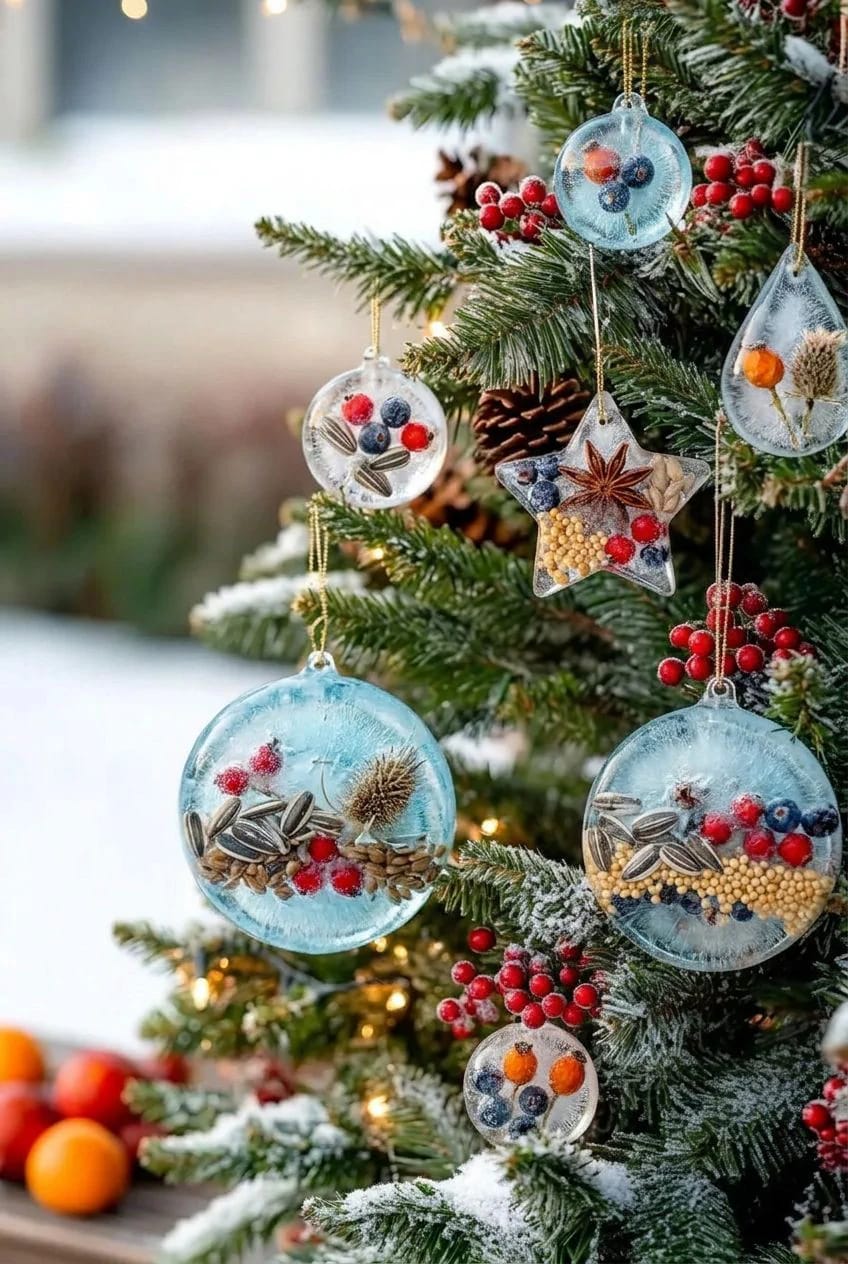
Only worth doing if your daytime highs stay below freezing, and only if you accept what it actually is. Fill a silicone mold with water, drop in seed, cranberries, and a rosehip or two, lay a loop of jute across the top, and freeze it overnight. The result is one of the more beautiful things you can hang outdoors, and it also feeds nothing until it starts to thaw, at which point it delivers everything at once onto the ground. Treat it as a decoration with a delayed food release rather than a feeder, and hang it where the drop zone is somewhere you do not mind.
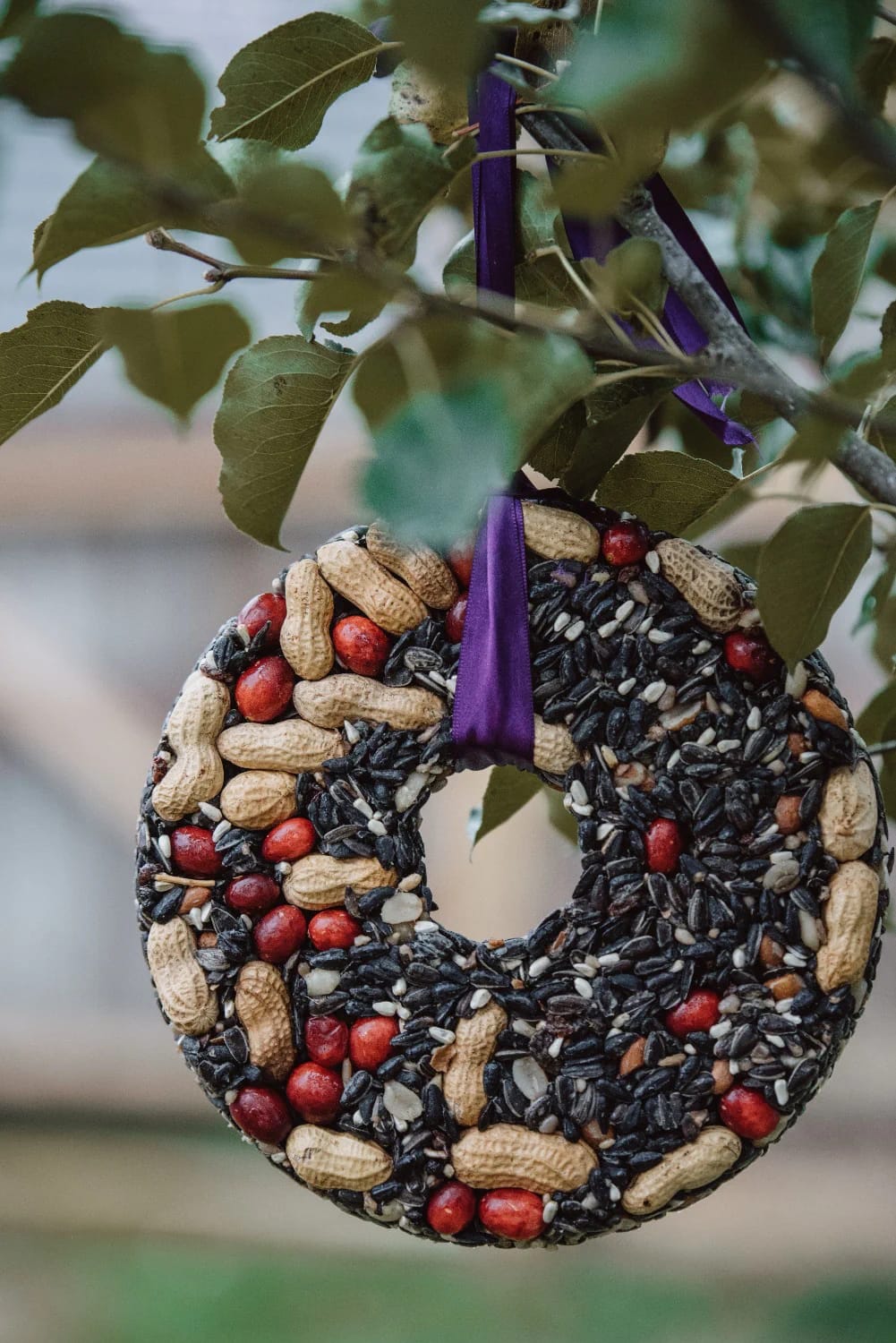
9. Birdseed wreath ornaments from a doughnut mold
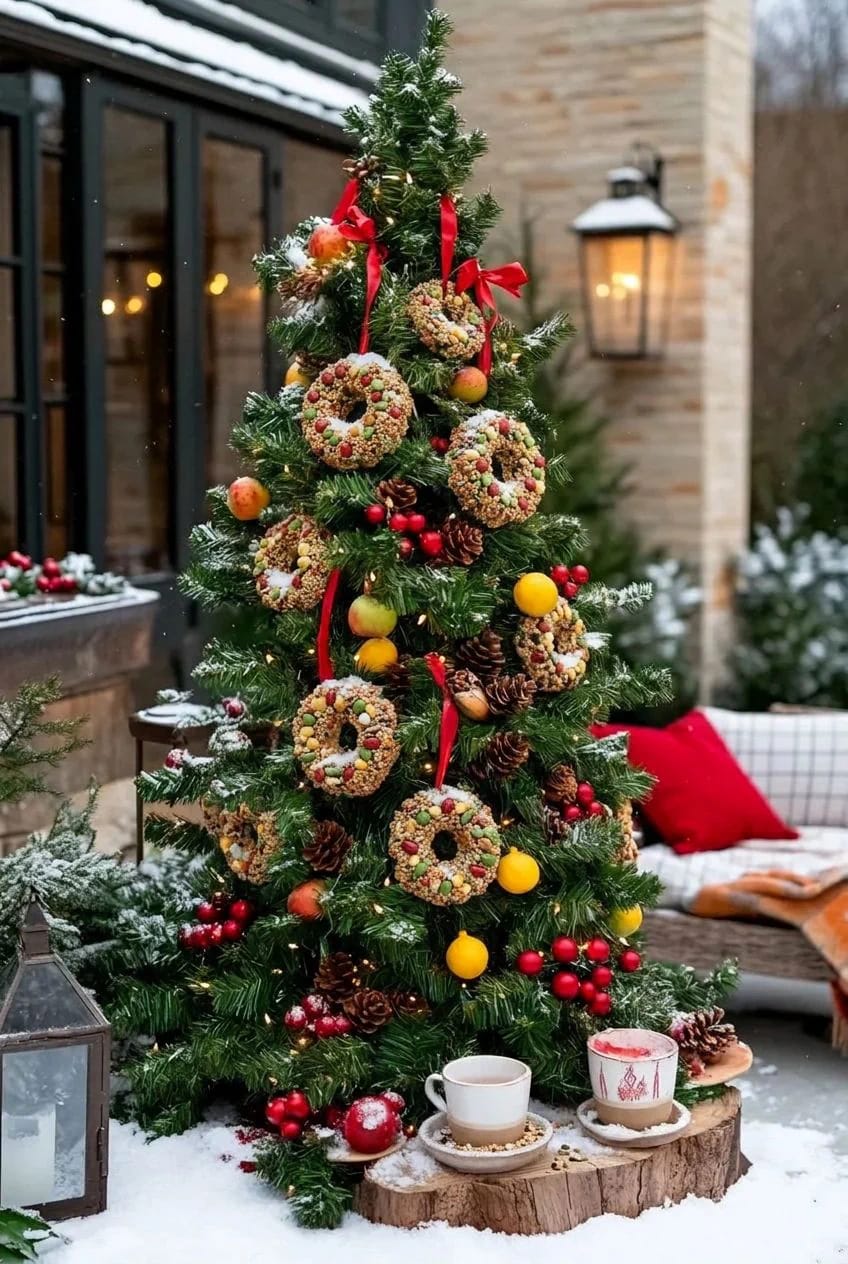
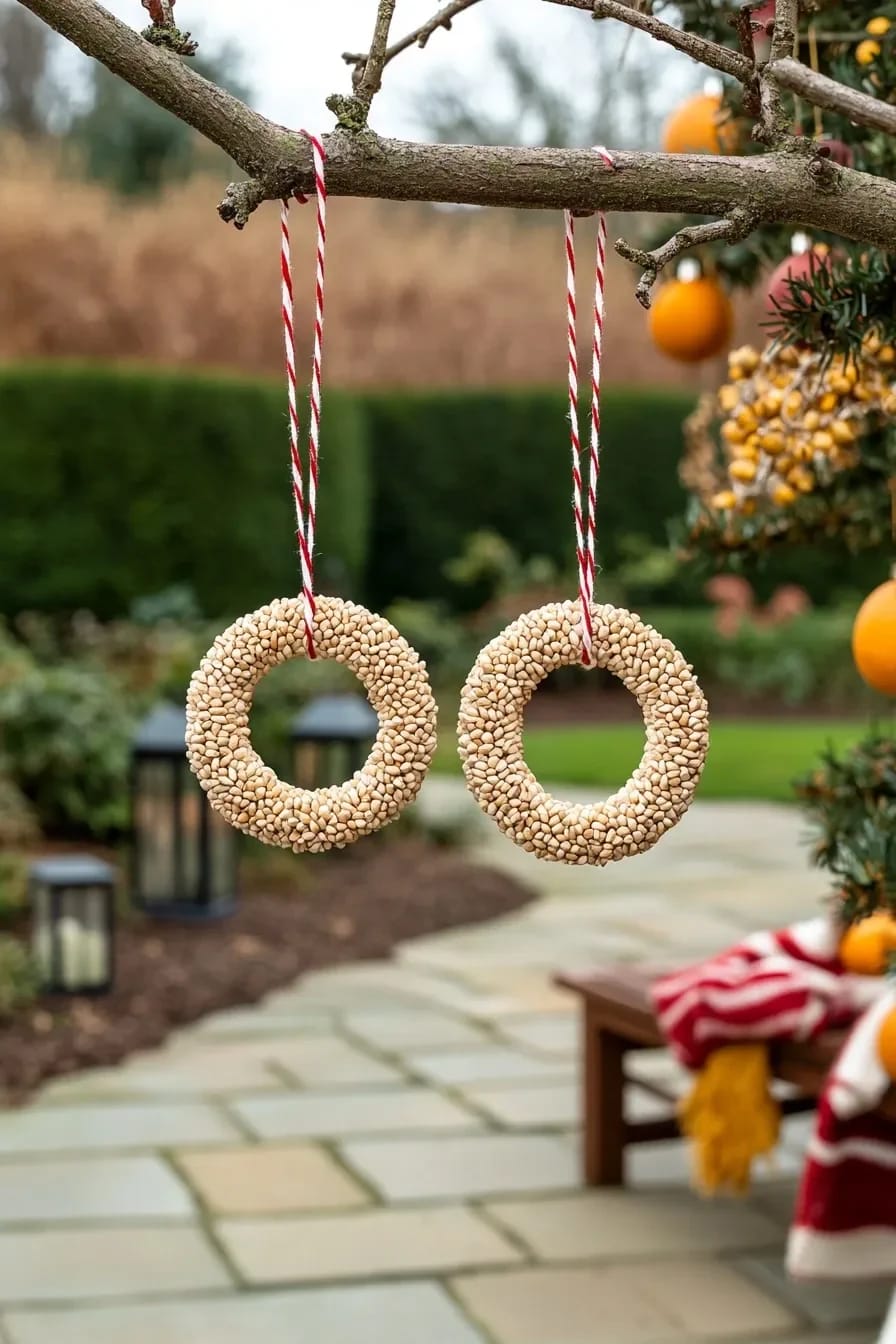
The mold does the shaping, which is why a silicone doughnut tray beats a cookie cutter for anything you plan to give away. Press the gelatin-and-seed mixture into the ring, chill it, and dry it hard, and it comes out with a clean center hole that takes twine without a straw or a skewer. Store them in the freezer, not a cupboard: gelatin ornaments left in a warm kitchen grow mold within a few days, and a bag of furred wreaths is a poor gift. If a wreath is the shape you want on the door rather than the tree, the same logic applies to wreaths built from dried material, which last considerably longer than anything a bird would want to eat.
10. Dried orange slices strung with cranberries
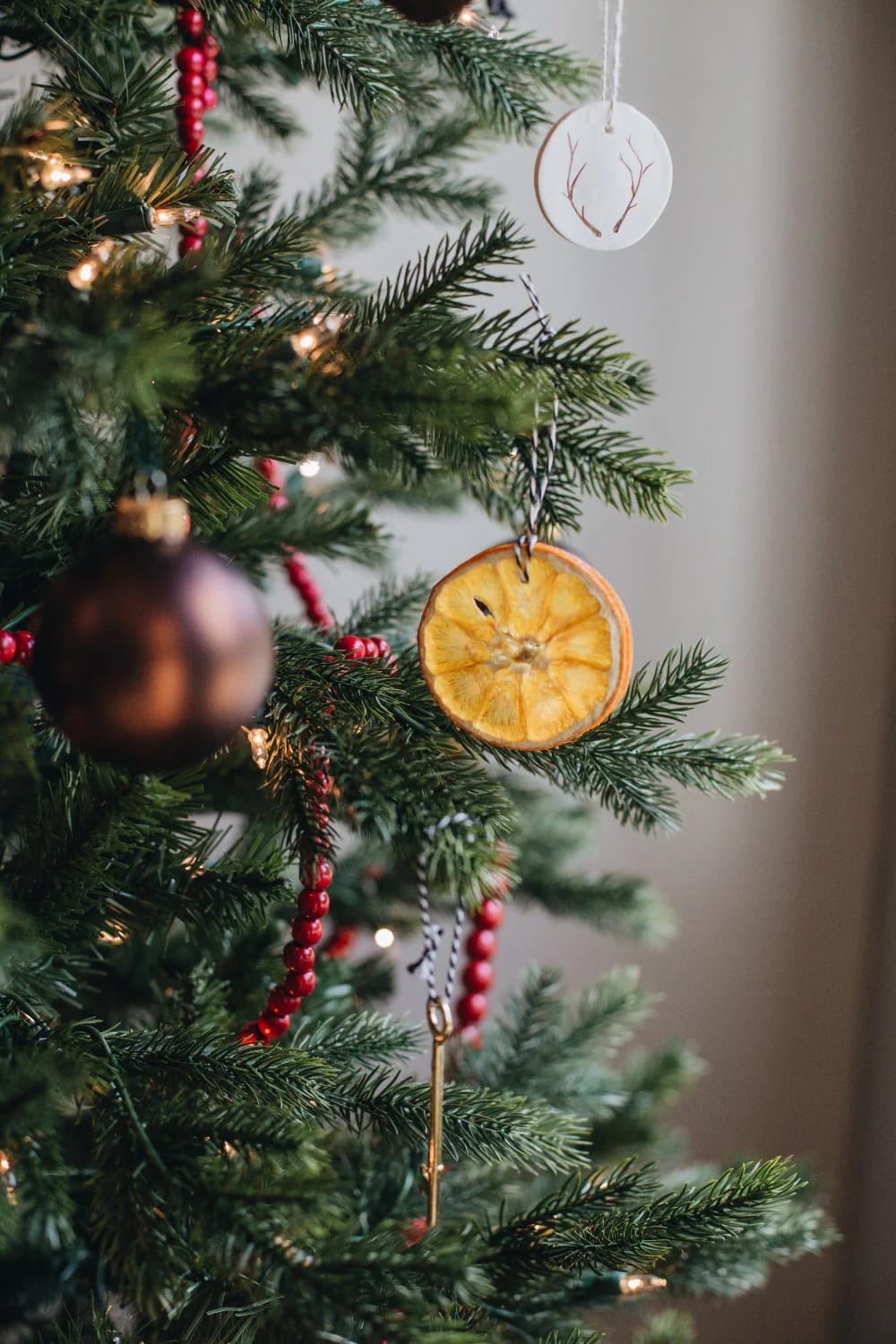
This is where the color on the tree comes from, and it is the one entry that is frankly more for you than for the birds. Slice oranges a quarter-inch thick, blot them, and dry them at around 200°F for two to three hours until the flesh goes translucent and leathery. Thread them onto jute with a cranberry between each slice.
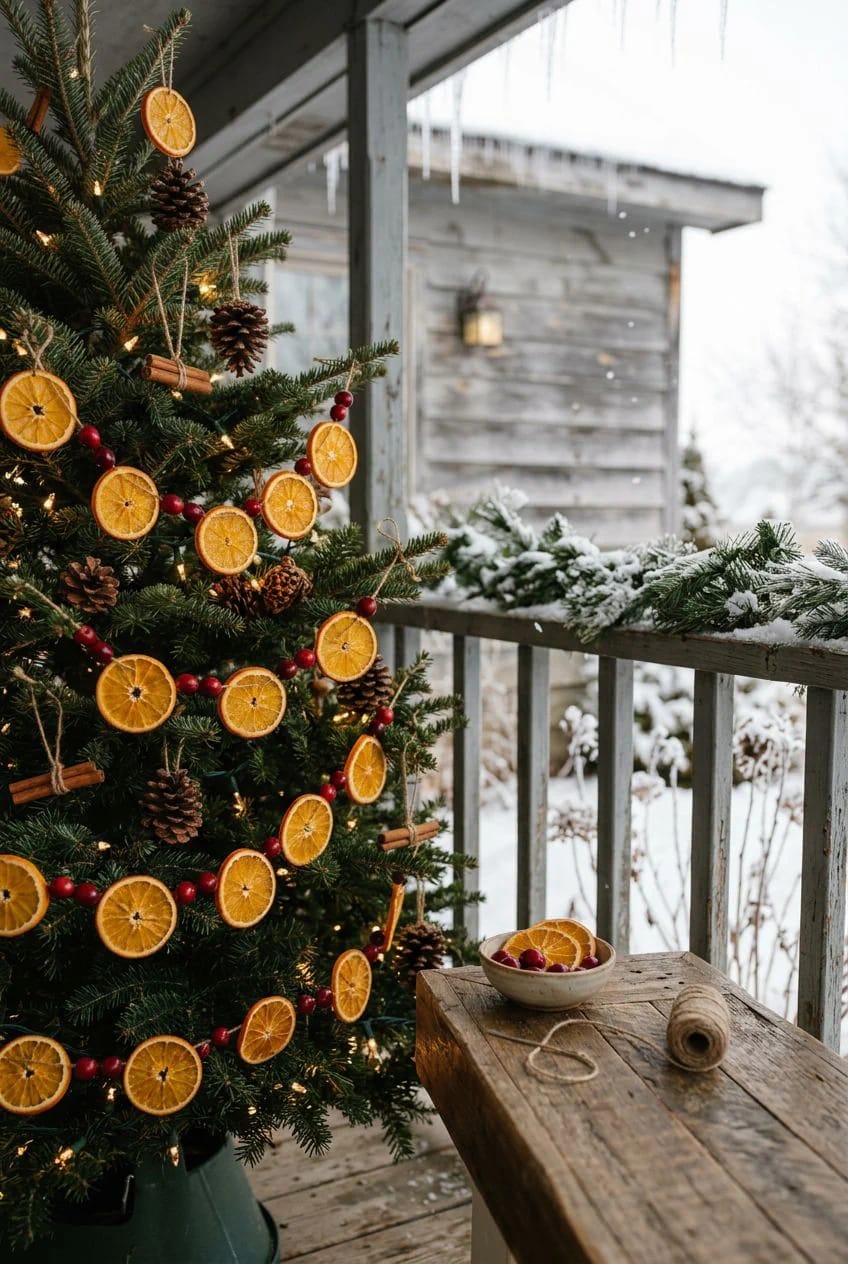
Be clear-eyed about it: dried citrus is close to inedible for most feeder birds, and the slices will still be hanging there in March, faded to a dull rust. Pair each one with something a bird actually wants, alternating slices with suet discs along the same branch, so the strand pulls its weight instead of just photographing well.
 23 Elegant Dried Orange Christmas Decorations for a Cozy Home Twenty-three ways to use the rest of the tray indoors, from garlands to wreaths to place settings.
11. Drilled birch log ornaments for the trunk
Woodpeckers and nuthatches want to work a vertical surface, not a disc that swings away from them, which is why nothing on the outer branches gets touched by a downy. Take a six-inch section of birch or any hardwood limb, drill four or five one-inch holes about an inch deep around it, and pack them with the lard-and-peanut-butter mix from number three.
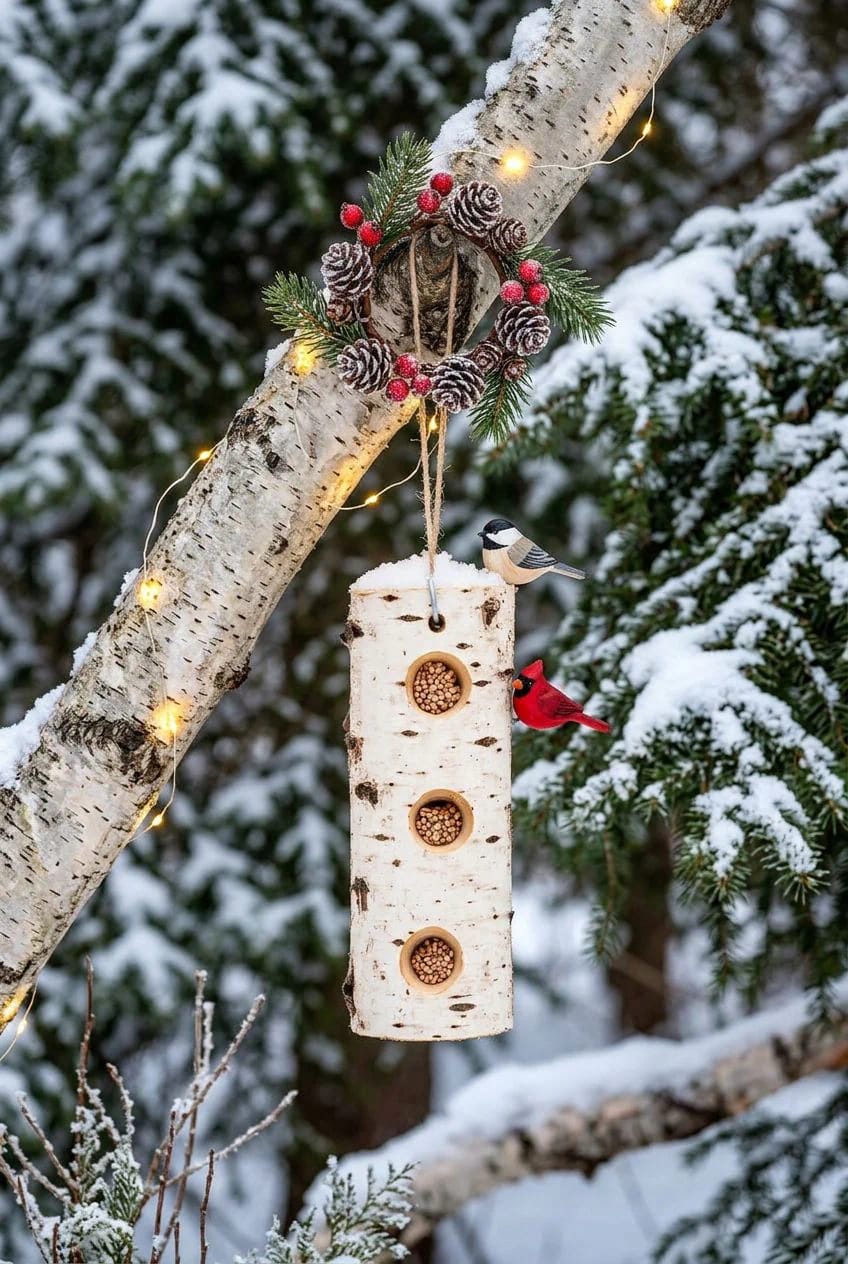
Screw an eye hook into the top and hang it flat against the trunk rather than out among the ornaments. It looks deliberate, and it is the only item here that reliably brings in the birds everyone actually wants to see from the kitchen window.
12. Agar-agar seed shapes for mild winters
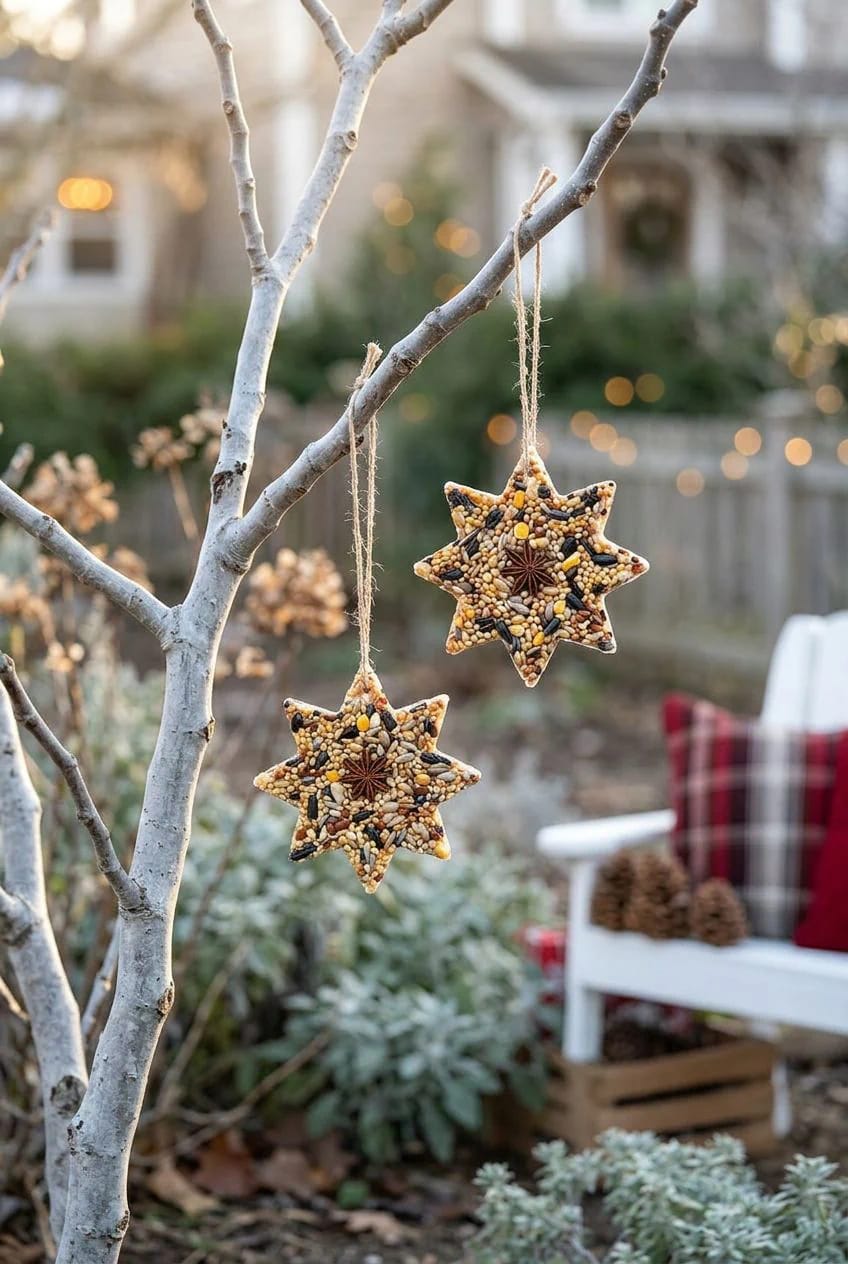
Agar agar is the answer for a winter that never really arrives. It sets at room temperature and stays firm where gelatin turns to sludge, which makes it the practical choice for the Pacific Northwest, the coastal South, and most of California. Whisk a teaspoon of agar powder into a quarter cup of cold water, bring it to a boil, simmer for two minutes until it thickens, then stir in the seed and pack it into your cutters fast, because it sets in the bowl if you dawdle. Make a small test batch first; under-boiled agar crumbles. While you are at it, swap the plastic straw everyone uses for punching the hanging hole for a bamboo skewer, which is one small piece of the same argument as keeping plastic out of winter decorating generally.
13. In-shell peanut garlands for jays and woodpeckers
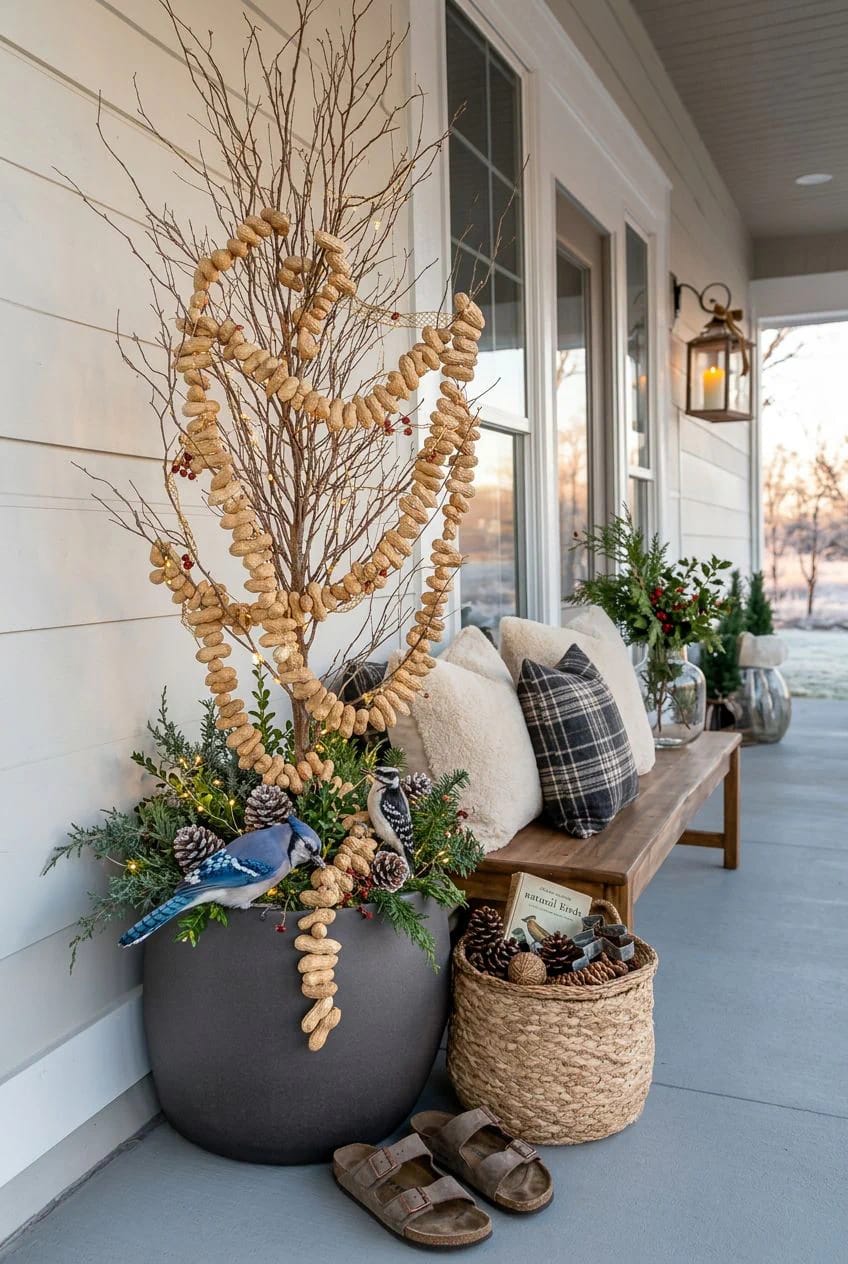
Push a large needle through the middle of raw, unsalted, in-shell peanuts and string them on heavy jute. Blue jays, titmice, and woodpeckers take them off the strand one at a time, and a chickadee will hang upside down to get at one. Two cautions worth taking seriously: peanuts can carry aflatoxins once they are stale or damp, so use fresh nuts and pull the strand down if it gets rained on for days, and squirrels will clear the whole thing overnight if the branch is reachable. Hang it at the tip of a slim outer limb where a squirrel has nothing to brace against, the same principle behind most of the outdoor decorating that survives a whole season.
Taking it down is part of the project
Pull the cotton thread and jute before spring, all of it, including the frayed ends still knotted around branches. Rake the hull litter under the tree every few weeks rather than letting a wet mat of shells and uneaten filler build up, because that is where feeder-borne disease incubates, and move the ornaments to a different branch or a neighboring shrub as the season goes rather than concentrating everything in one spot. The gelatin shapes will disappear first, usually within ten days. The dried orange slices will still be hanging there at Easter.
If the tree is picked clean by mid-January, the seed was right and the ornaments hung where birds could stand. If it looks much the same in February as it did the day you decorated it, read the label on the seed bag before you blame the birds; there is a good chance the first ingredient is milo.
Related Posts
- 11 DIY Cork Reindeer Christmas Ornaments for a Rustic Tree
- 7 Free Christmas Decorations You Can Make From Evergreen Branches
- 23 Natural Outdoor Christmas Decorations that Wow
- 10 Outdoor Pallet Christmas Decorations for the Yard That Last the Whole Season
- 25 Stunning Wooden Christmas Ornaments to Inspire Your Holiday Decor
- 11 Mason Jar Christmas Centerpieces That Let the Greenery Do the Work