
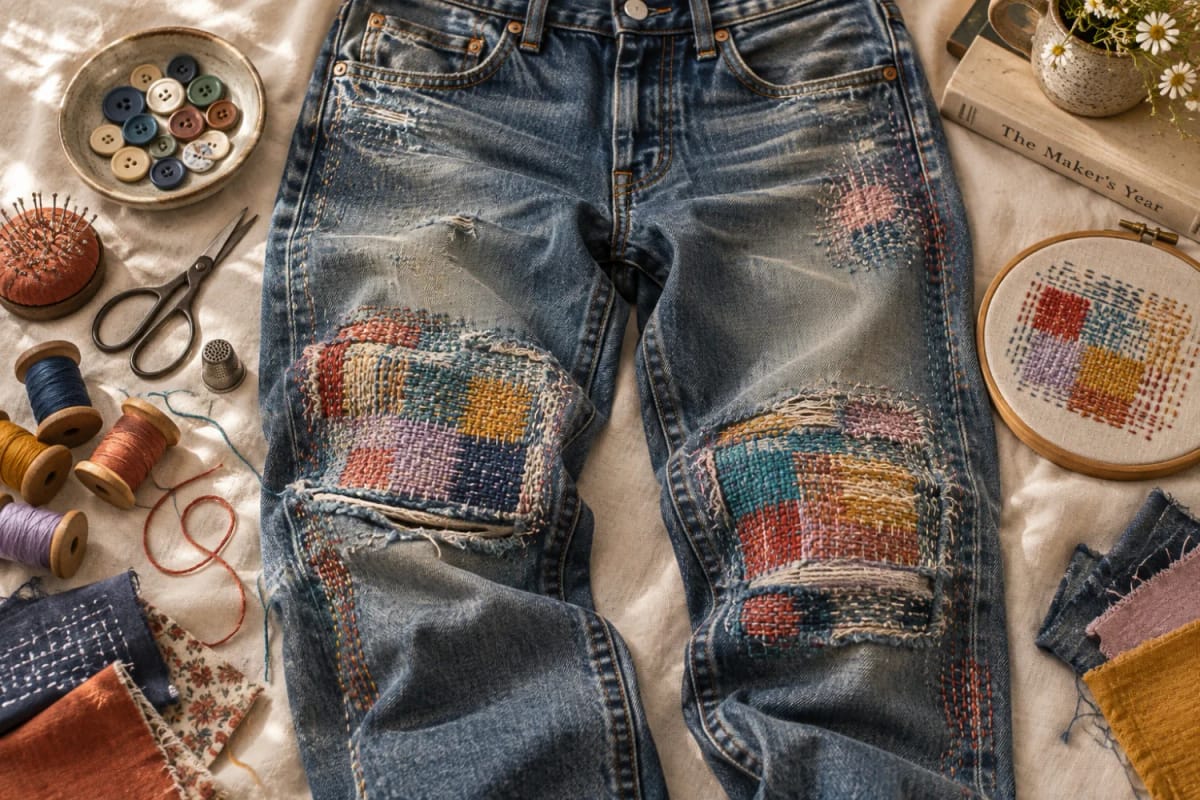
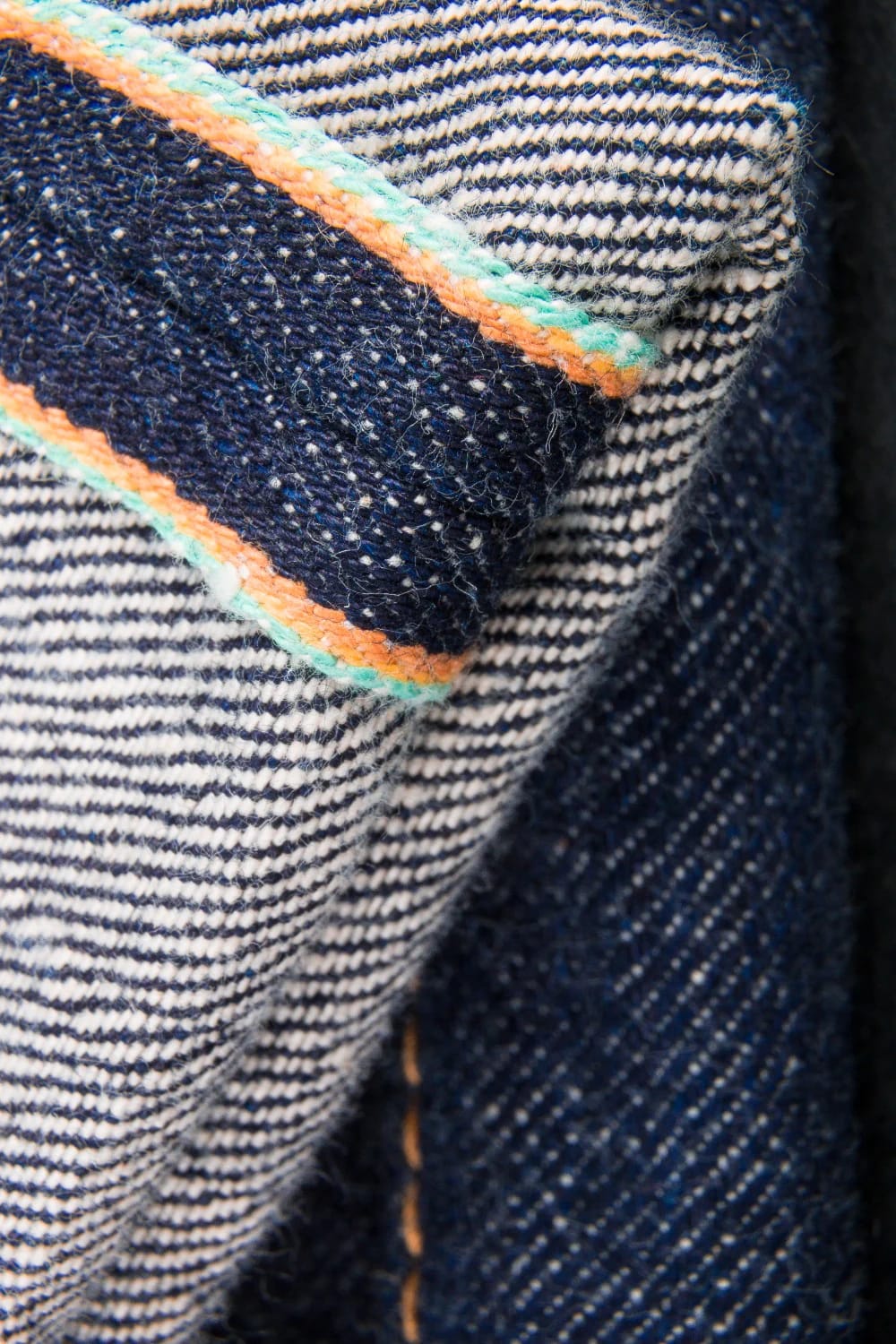
Denim goes pale at the knee long before it goes through, and the reason is structural: indigo sits on the warp threads only, so every pass of abrasion shaves dye off the surface and lets the undyed weft underneath show as white haze. By the time there is a hole, the fabric around it has been thinning for a year. That is the case for colorful thread darning on jeans rather than a patch slapped over the gap, because bright thread lets you cover the hole and reinforce the whole weak zone in the same pass, and the eight mends below are sorted by where the denim actually fails.
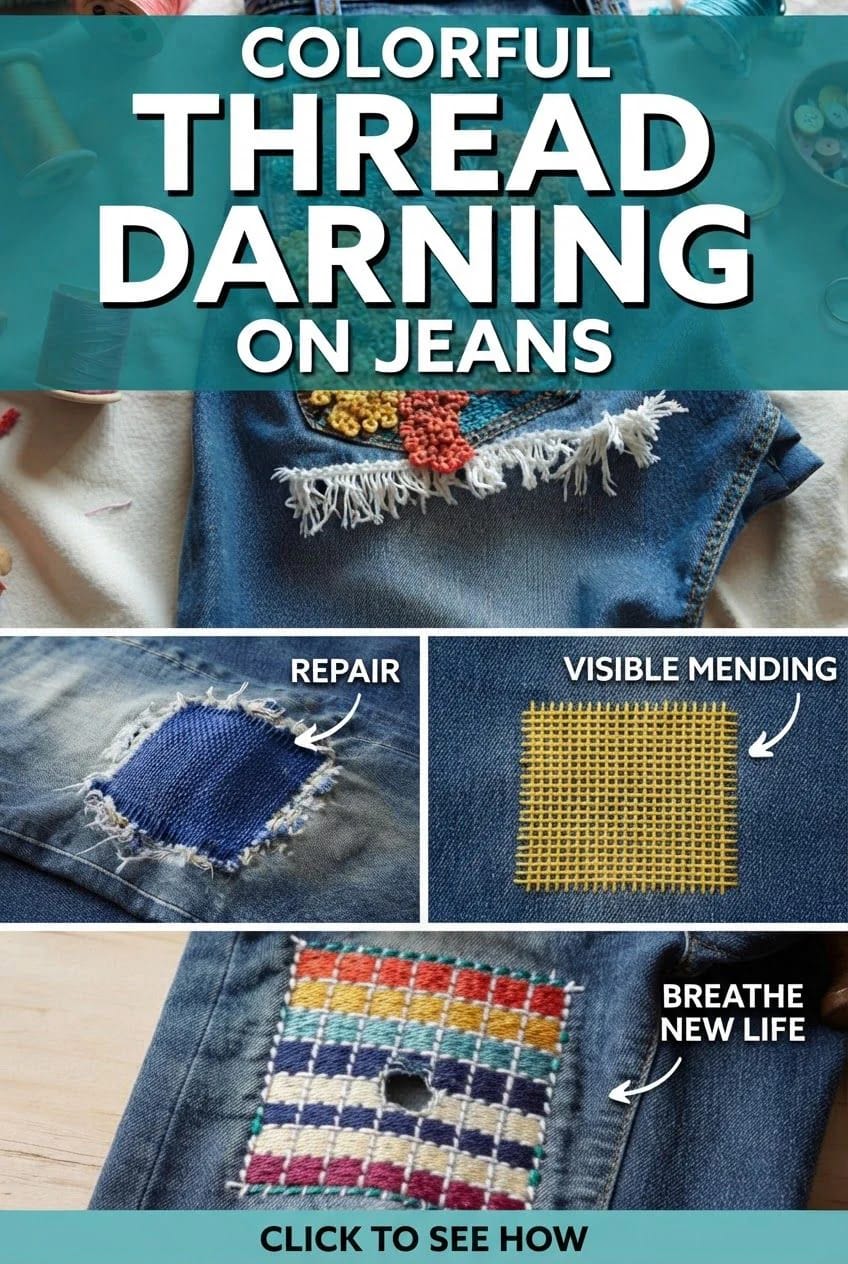
1. The single-color woven darn on a blown knee
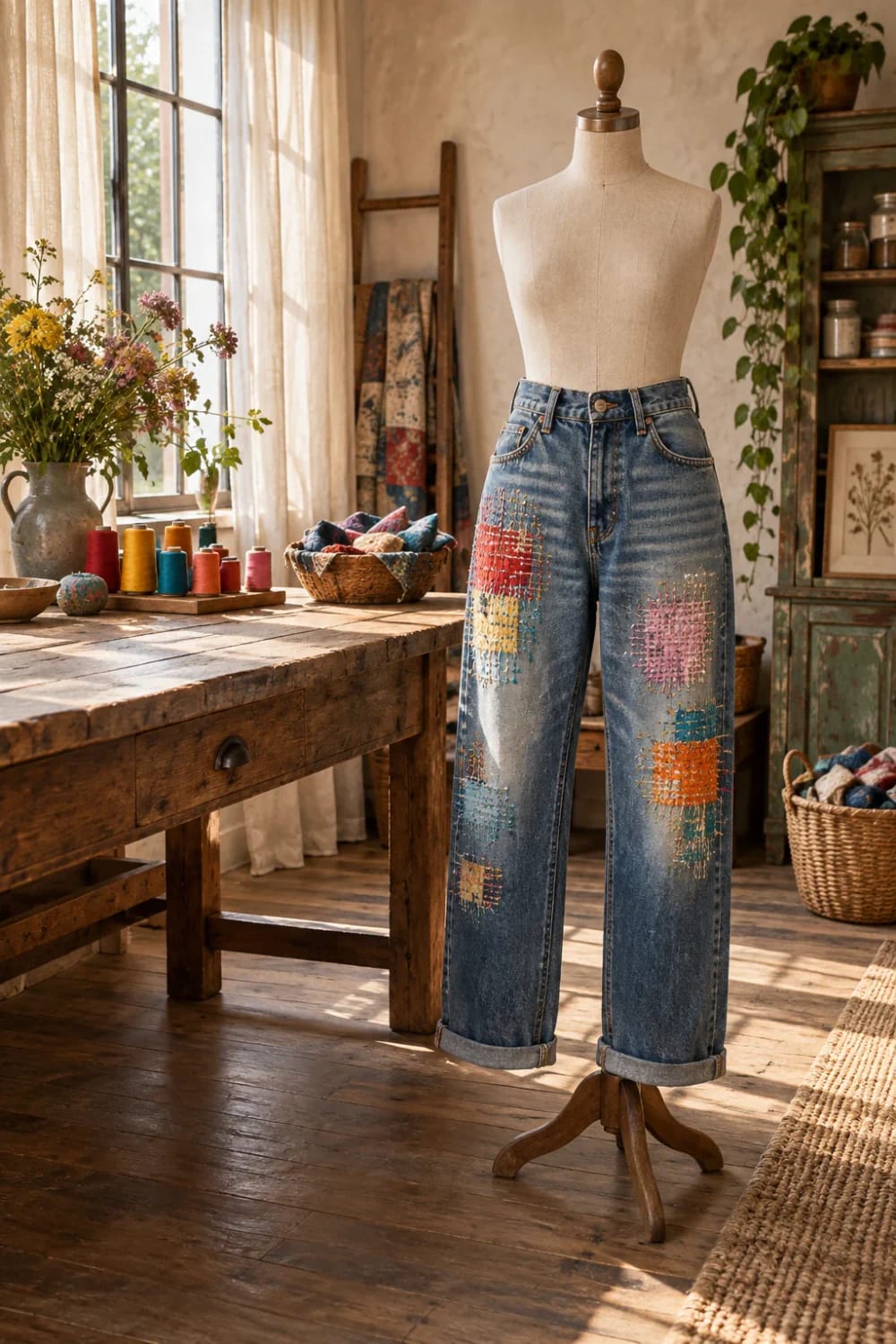
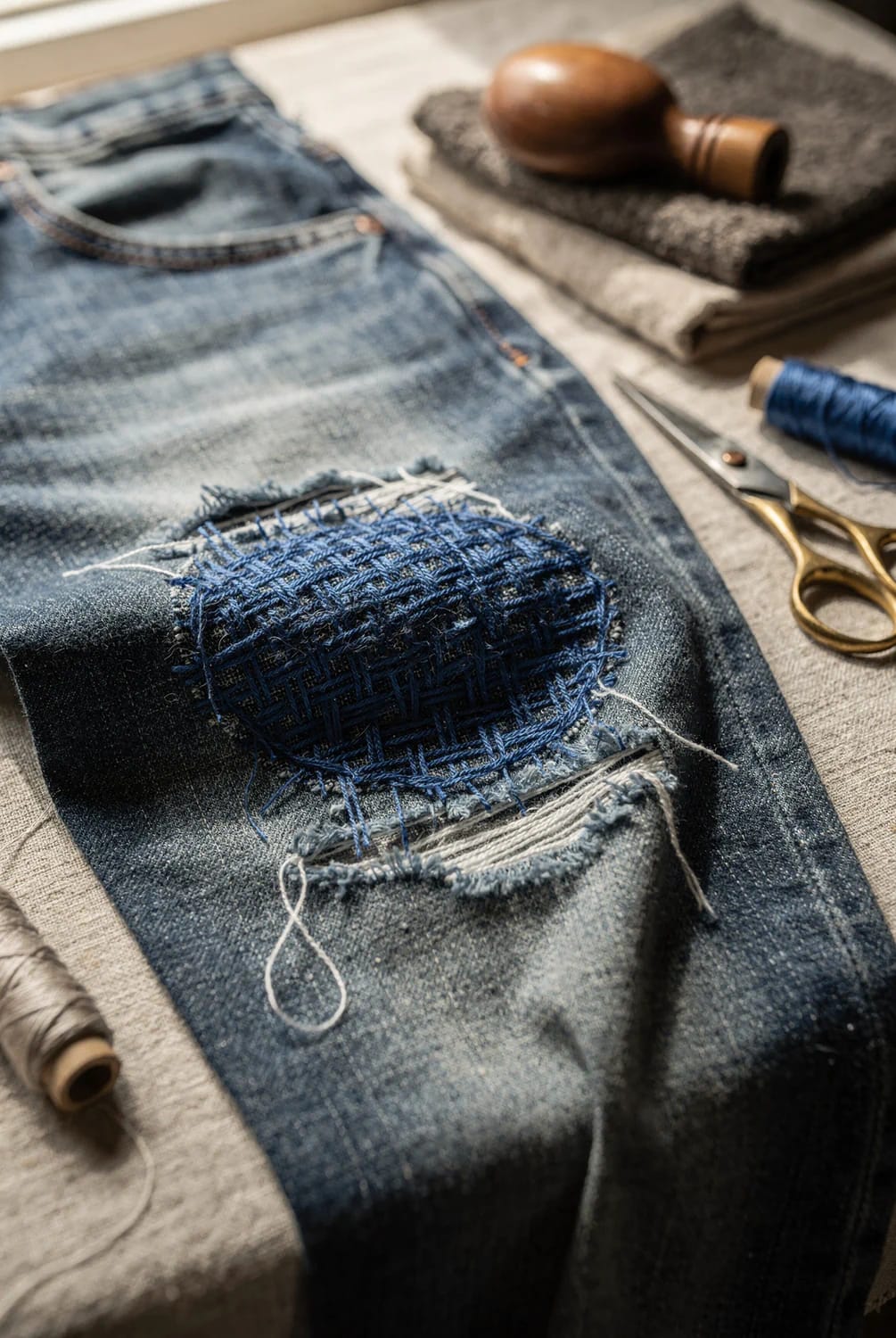
Granted, this only works if you stop thinking of the hole as the job. The woven darn that survives is the one anchored about half an inch into sound denim on all four sides, which is the standard instruction across darning guides for a reason: the fabric at the edge of a knee hole is already half gone, and stitching into it is stitching into nothing. Mark a rectangle well outside the damage, in chalk if you need to see it, and work to those lines.
Lay the warp first, and make it wider than you think
Run your first pass as straight lines across the hole, parallel to the leg seam, spaced roughly two or three millimetres apart, each one starting and ending in good fabric. Those are the threads that carry the load. Then weave the second pass over and under them at right angles, packing the rows tight enough that no light comes through the middle. A wooden darning mushroom gives you a curved surface to work against inside the trouser leg, which matters more on jeans than on socks because you cannot get an embroidery hoop into a narrow leg without fighting it.
Thread weight decides whether it reads as repair or as decoration
A size 8 perle cotton makes a round, slightly shiny line that holds its shape on 12 oz denim. Size 5 sits noticeably higher and fills a hole in fewer passes, at the cost of a mend you can feel through the knee when you kneel. Six-strand floss split to three strands is the wrong choice here; it is a good shading thread and a poor structural one, and on a knee it abrades away in a season.
| Thread | How it reads on denim | Where it holds up |
|---|---|---|
| Sashiko thread | Flat matte line, softly fuzzy edge, no sheen | Long running-stitch grids over wide thin areas |
| Perle cotton no. 8 | Round with a low sheen, crisp stitch definition | Woven darns, outline rows, small dense mends |
| Perle cotton no. 5 | Heavier, stands proud of the surface | Single bold rows and bar tacks, not full fills |
| Six-strand floss, split to 3 | Fine, blends at arm’s length, reads as color not texture | Gradients and shading over a reinforced base |
| Fine wool yarn | Soft bloom that fills fast and fuzzes with wear | Seat and thigh haze, never a high-abrasion knee |
If the knee is not holed yet but slit and fraying, treat it as a different problem: the ladder of white threads across a cut is a look people pay for, and there are ways to cut a knee slit so it frays into a clean ladder instead of travelling down the leg, which is worth reading before you cover the damage with thread.
2. Two colors in one darn, one for the warp and one for the weft
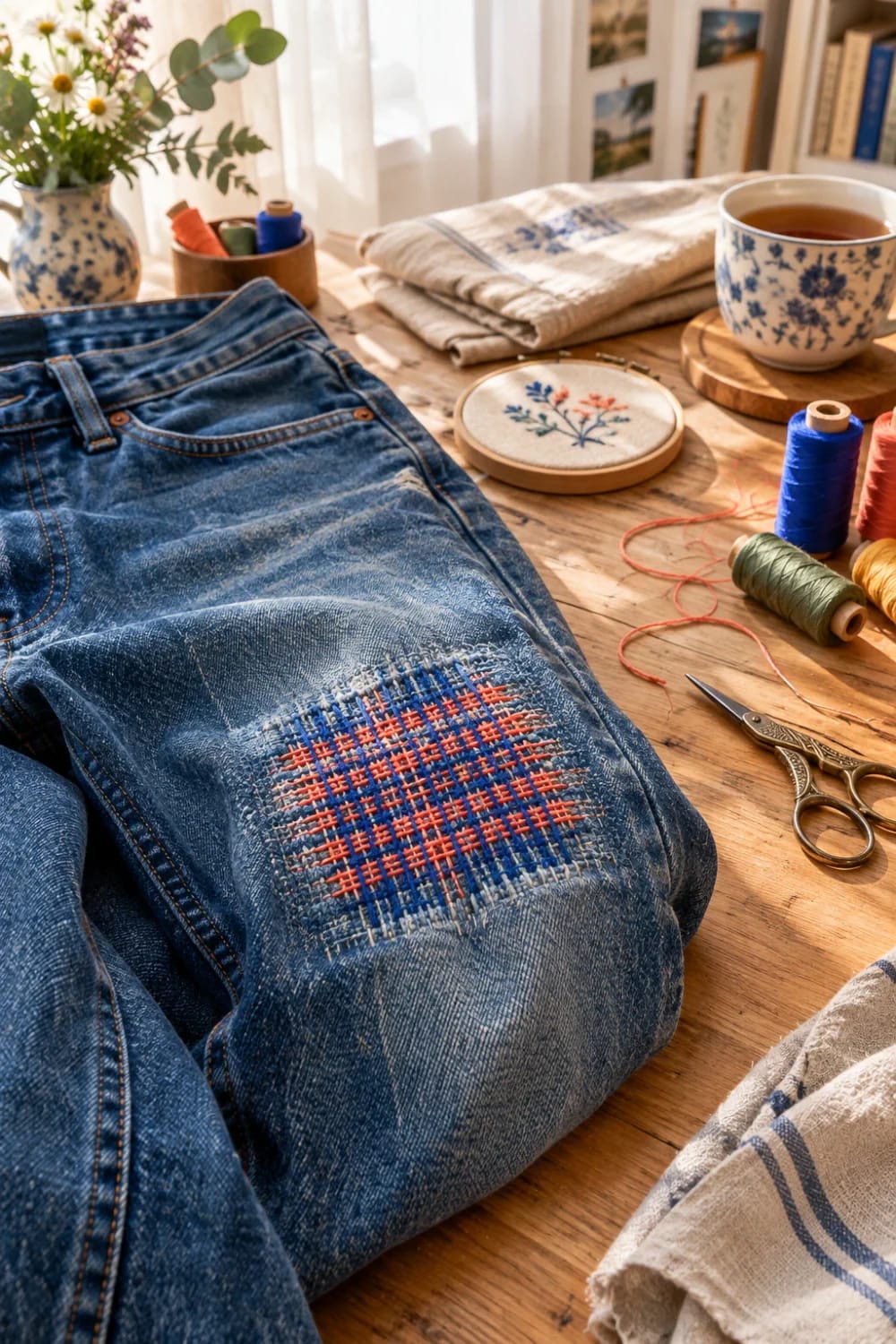
Use one color for the vertical pass and a second for the horizontal, and the crossing does something a single color cannot: the surface reads as a woven cloth of its own rather than a blob of thread. Rust warp with ochre weft gives a warm heather. Chalk white with cobalt gives something close to a tiny chambray. It costs nothing extra, since most mends use only a few metres of each.
The crossing color is the one people see
Whichever color you use for the weft dominates, because the horizontal pass sits on top at every intersection. Put the quieter of your two colors in the warp. A ball of DMC perle cotton size 8 in 321 red runs a few dollars and covers several mends, so a two-color scheme is a question of taste rather than cost.
Match the thread to the wash, not to your favourite color
On a dark rinse wash, saturation is not what carries; lightness is. A deep forest green vanishes at three paces on indigo while a dusty mustard stays legible across a room. On a pale or bleached pair the problem inverts, and this is the same calculation that decides whether bleach marks on denim read as deliberate or as an accident: the mark has to differ from its background in value, not just in hue.
Do this
- On dark indigo, pick threads with real lightness in them: ochre, chalk pink, unbleached cream.
- On a faded or bleached pair, go the other way and use oxblood, navy or charcoal so the stitches keep an edge.
- Two colors per mend. Three becomes a sampler.
Avoid
- Matching the gold topstitching and hoping the mend passes as factory work. It never does, and a failed impersonation looks worse than an honest patch of color.
- Neon polyester machine-embroidery thread, which holds up fine and catches light like plastic.
3. A sashiko grid across the whole knee panel, not just the hole
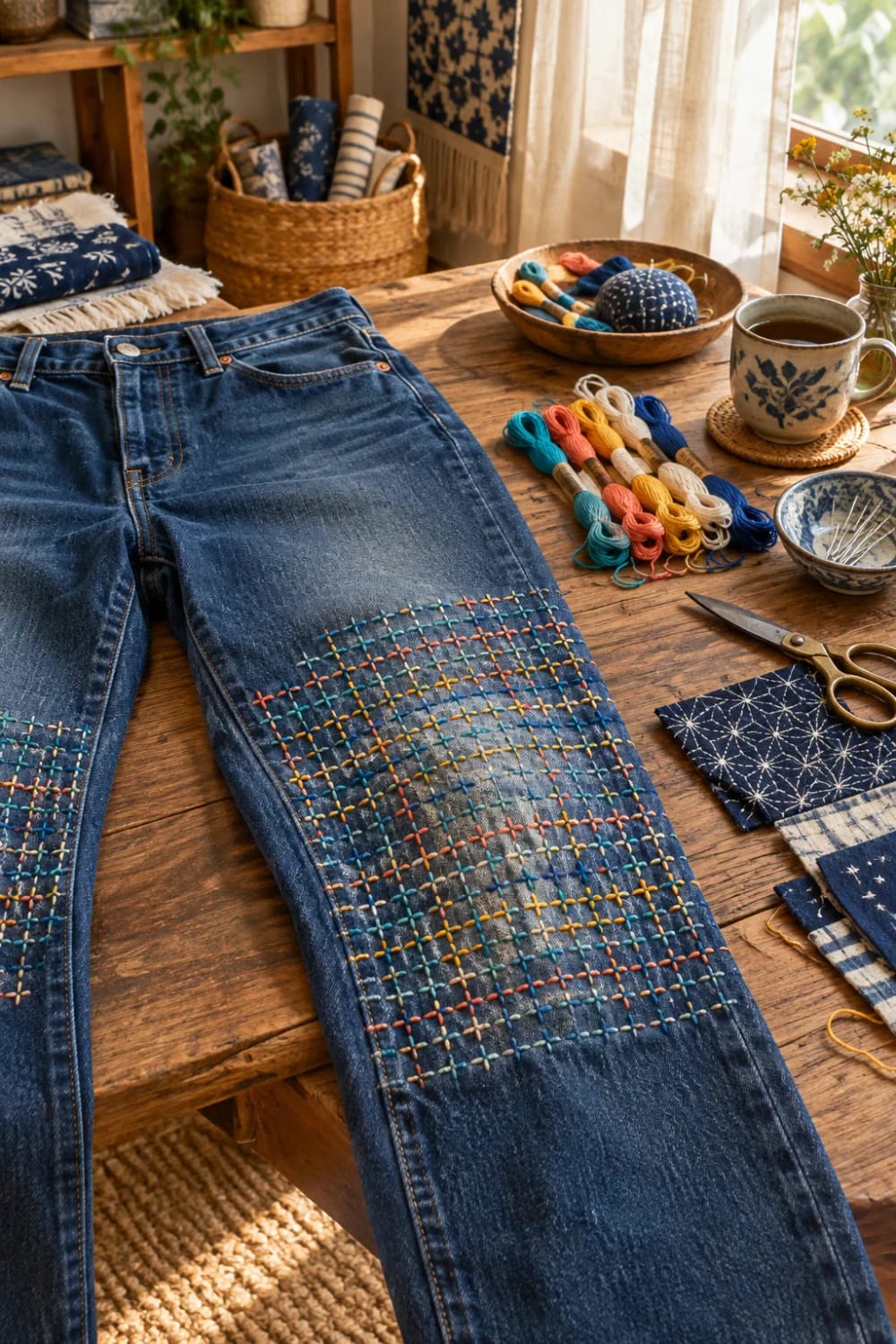
Sashiko was a reinforcement stitch before it was a decorative one, and that is the part worth copying: rows of running stitch spread load across a whole panel instead of concentrating it at the edge of a patch. Cover the full width of the knee, seam to seam, and the thin area stops being a stress point. Most people stop three inches short of the seam because it takes longer, and that is exactly where the next hole opens. I would take a plain grid carried seam to seam over a clever hitomezashi pattern that stops three inches short, every time.
Even stitches matter more than a clever pattern
Keep the stitch on the surface slightly longer than the gap, keep both consistent, and the grid reads as intentional even when the lines wobble. Load four or five stitches onto a long needle before pulling through, which is the whole point of a sashiko needle; a short embroidery needle turns this into a one-stitch-at-a-time job and a three-hour evening.
Four 20 metre skeins in white, cobalt, red and black covers a full knee grid and still leaves thread for the hems. Cotton, matte, and it does not shred when you pull it through heavy denim.
Olympus sashiko thread, 4 skeins of 20 m in white, cobalt, red and blackTwo failures account for most of them. Stitching that stops at the edge of the hole pulls out on the first wash and takes a ring of weakened denim with it, so every row ends in fabric that is still strong. And thread bleeds: colorfast claims belong to the named brands that make them, not to the bargain multipack, so wash the pair inside out on cold for the first few cycles and test a red or deep purple thread on a scrap first if you are stitching onto a pale wash.
4. Darn the thin spot before it becomes a hole
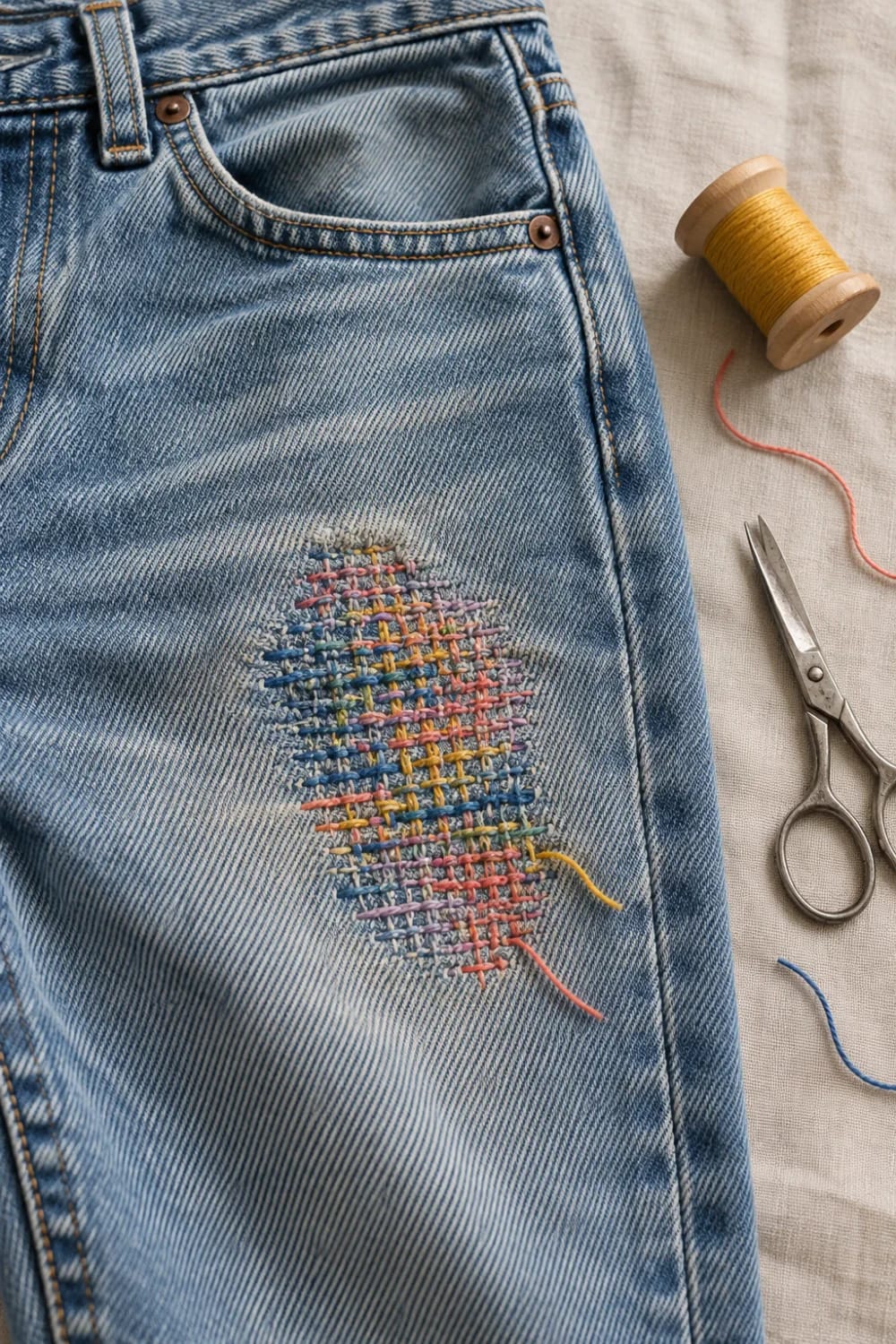
Stitch the pale patch while it is still fabric. A few rows of running stitch across a whitened knee or the fan of whiskers at the hip takes twenty minutes, uses a metre of thread, and means you never have to bridge a gap at all. It is also the only version of this that looks tidy by accident, because you are decorating an intact surface rather than rebuilding a missing one.
The sustainability arithmetic backs it up: WRAP’s Valuing Our Clothes research put the gain from nine extra months of active wear at roughly 20 to 30 percent off a garment’s carbon, water and waste footprints. Nine months is about what a reinforced knee buys you, and the alternative is another pair on the pile you keep meaning to turn into something useful for the house.
5. The stacked boro patch, where the under-patch does the work
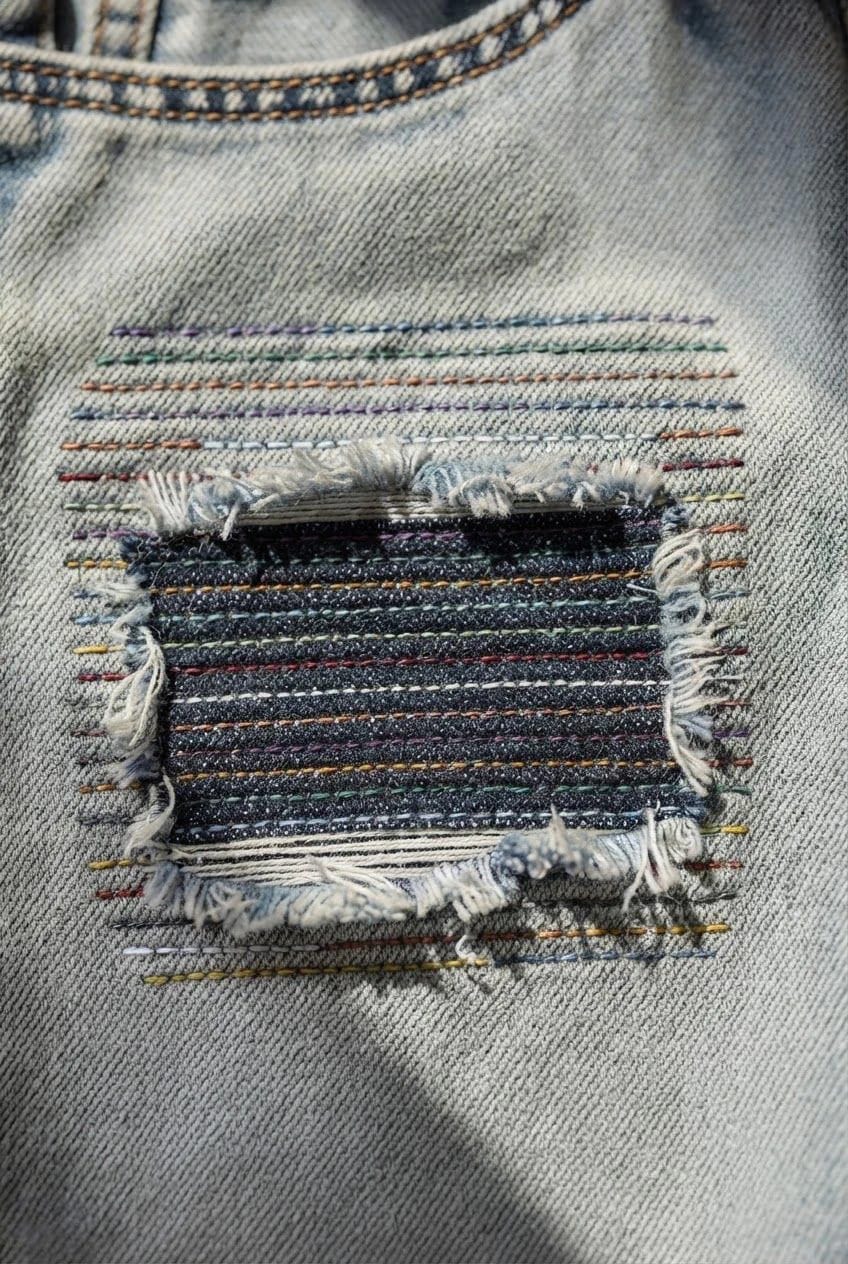
Worth the extra hour only once the hole is bigger than a coin, and at that size nothing else holds. Slide a scrap of old denim inside the leg, pin it under the damage, and stitch through both layers in rows across the whole area. The colorful thread is not holding the hole closed here; it is quilting two layers together, and the patch underneath carries the load. A plain woven darn at that size is a bridge with nothing under it.
Cut the under-patch from the part of the jeans that never failed
The calf of a dead pair is usually untouched, and denim that has already shrunk and softened behaves better under the needle than stiff new yardage. Vary the wash on purpose if you like the look; a paler patch under a dark leg reads as a deliberate layer rather than an attempted match.
Stitch beyond the patch, always
Rows that end at the patch edge create a hard line where the stiff double layer meets single-layer denim, and that line is where the fabric folds every time you sit down. Run the stitching an inch or two past it in every direction so the transition is gradual. A long needle helps here too; the FREEBLOSS sashiko needle and leather thimble set costs less than a takeaway coffee run and saves your fingertip on the third hour of a double-layer mend.
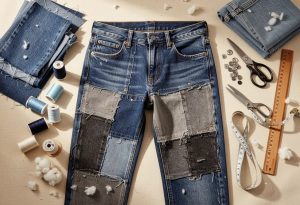 Multi Wash Patchwork Jeans From Old Denim Scraps: The Decisions That Make the Pair How to combine light and dark denim scraps so the seams look chosen rather than salvaged.
6. The crotch blowout, where I would put the bright thread away
This is the unpopular call: the inner thigh is the one failure on a pair of jeans where colorful darning is the wrong tool. The fabric there does not tear, it abrades over a wide area from thigh contact, so you are repairing a zone rather than a hole, and a thick hand-darn in perle cotton adds a raised seam exactly where two legs rub. It will chafe and it will fail again in a month.
What works instead
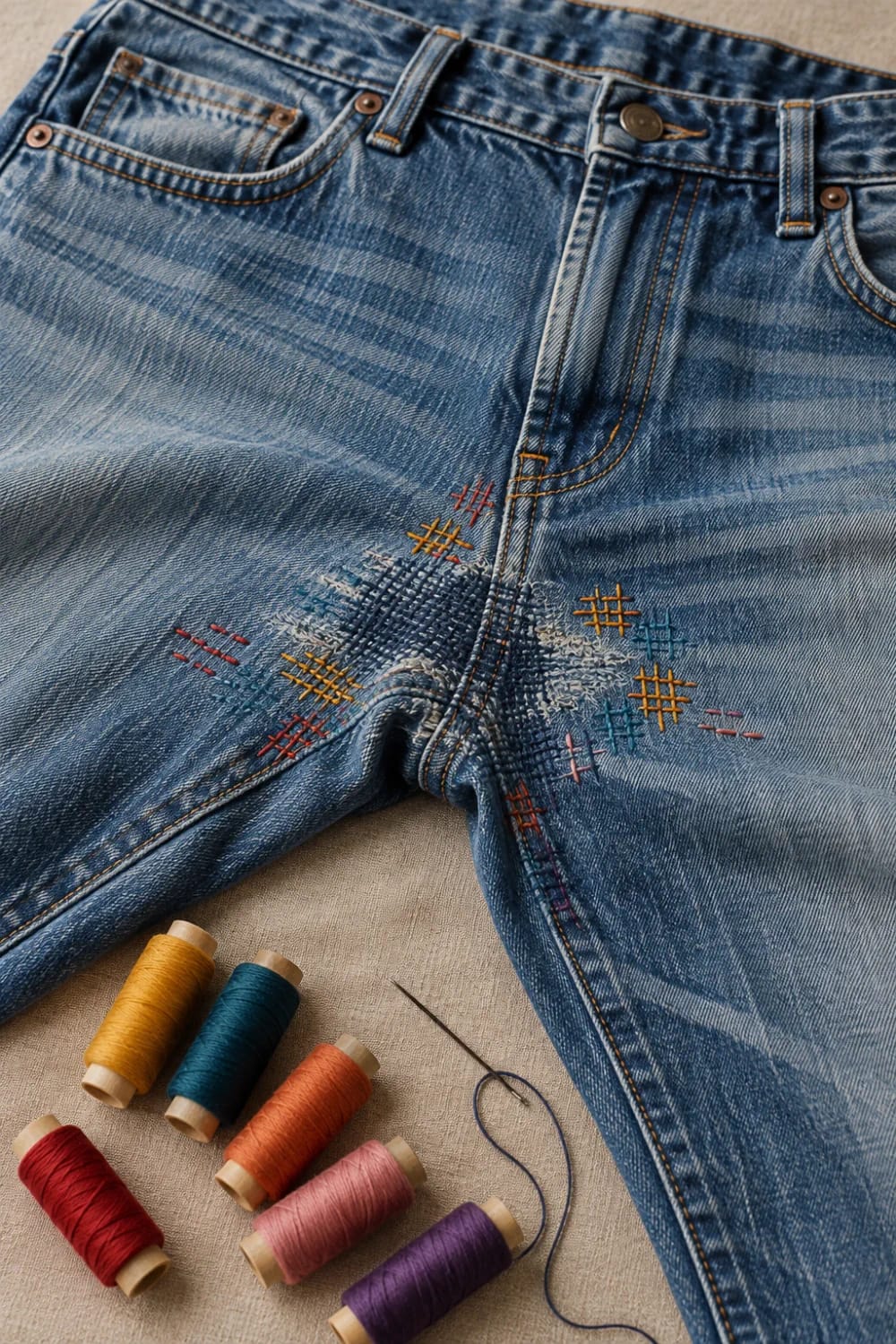
Back the whole thin area with lightweight fusible interfacing or a soft denim patch, drop the feed dogs or fit a walking foot, and run dense rows of straight machine stitch back and forth across the zone in a thread close to the denim color. A 90/14 denim needle handles the double layer; a universal needle skips stitches and snaps. Nudie Jeans, which repairs its jeans free at its own shops, put more than 68,000 pairs through that service in 2024, so machine repair of this kind is ordinary practice rather than a compromise.
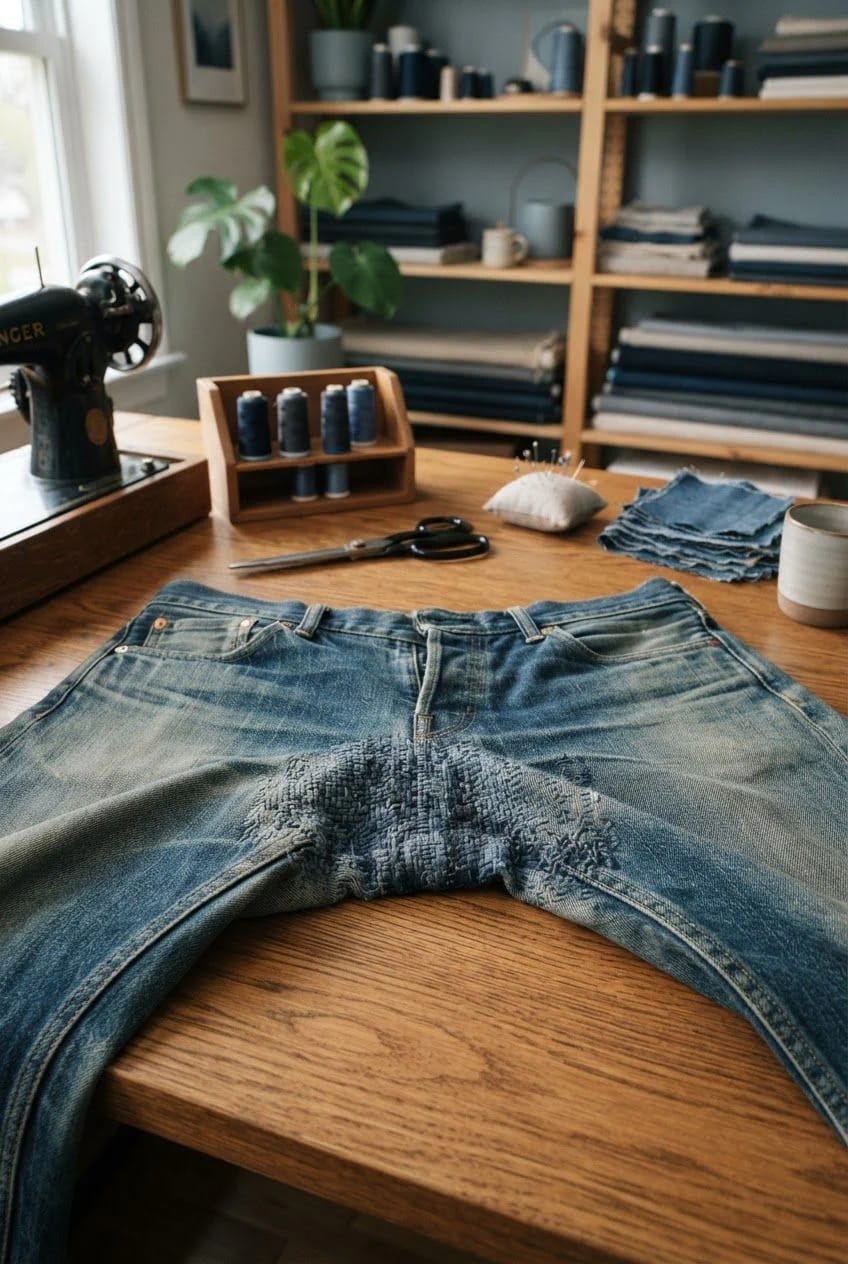
 How to Make a Braided Denim Rag Rug From Old Jeans The lower legs almost never wear out, which is exactly the part a braided rug needs.
7. A gradient darn from one variegated skein
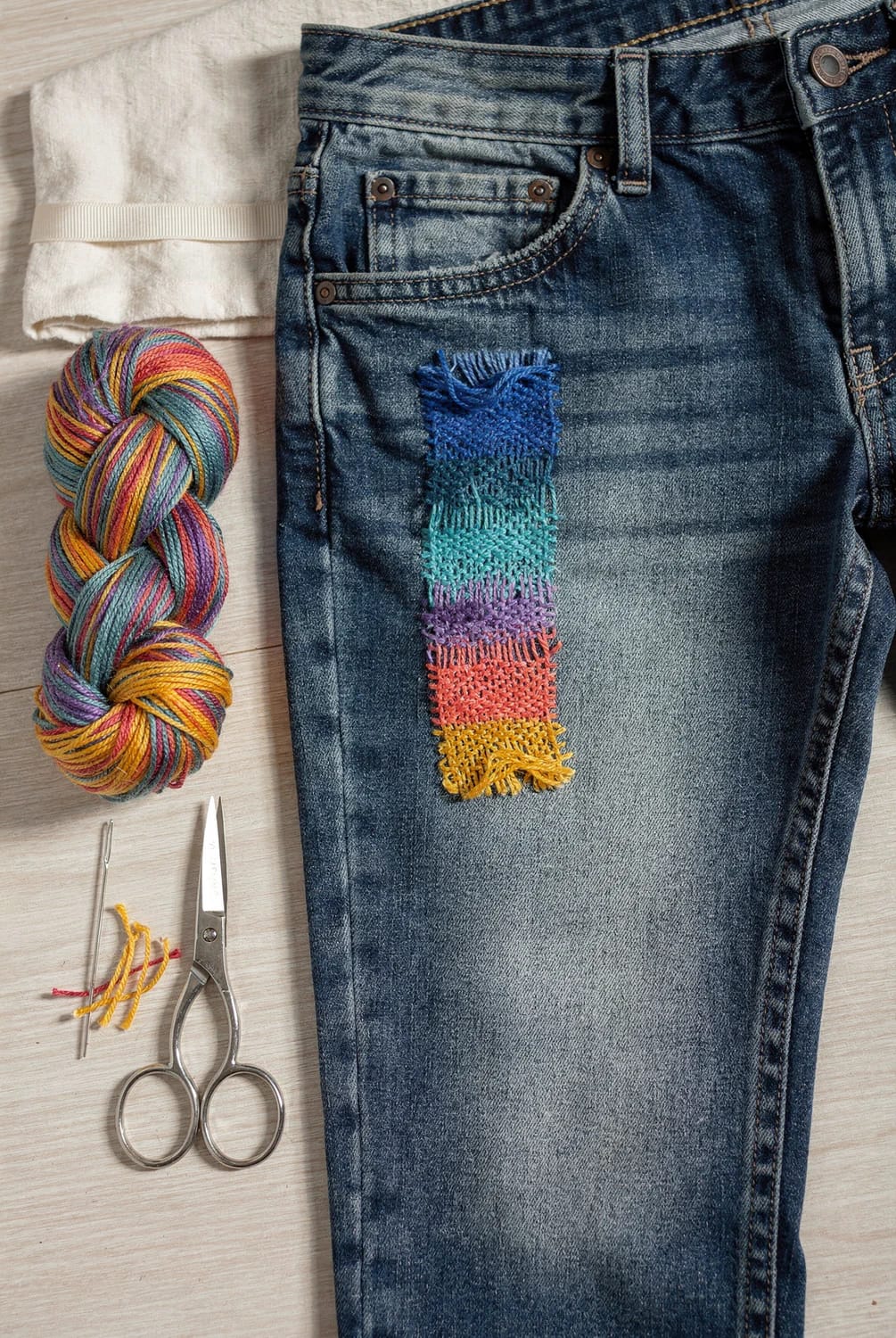
Provided you are mending somewhere that takes little abrasion, this is the cheapest way to get depth into a mend. Variegated thread shifts color along its own length, so a darn worked from a single skein moves from teal to indigo to pale blue without you changing needles once. It suits a wide shallow mend on the seat or upper thigh, where a solid block of one color would look like a sticker. Work the rows in order and let the shift happen where it lands.
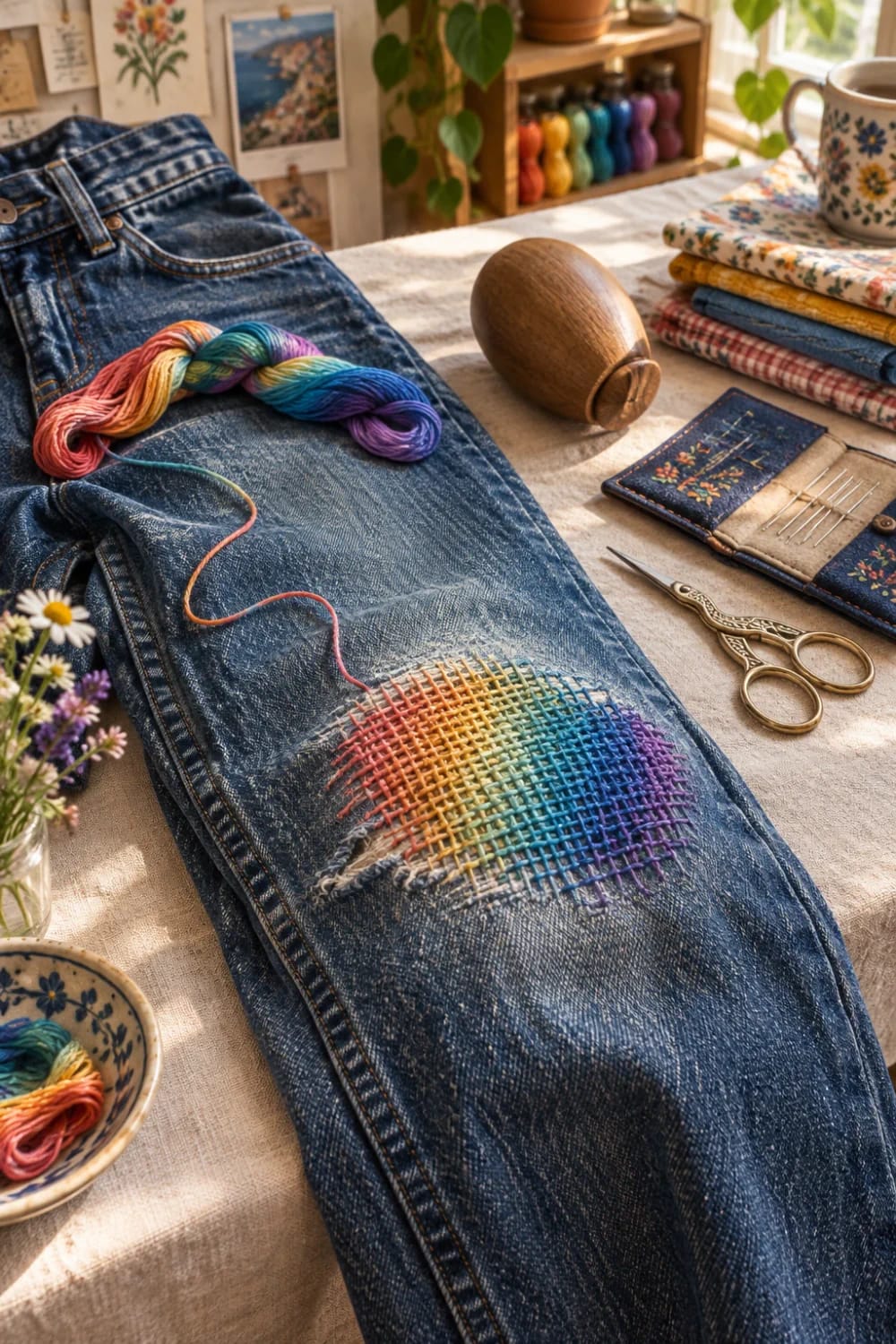
Split six-strand floss gets you the same effect with more control and less durability, three strands at a time, changing shade every few rows. Keep that version for places that do not take abrasion.
8. Bar tacks, pocket corners and a band at the hem
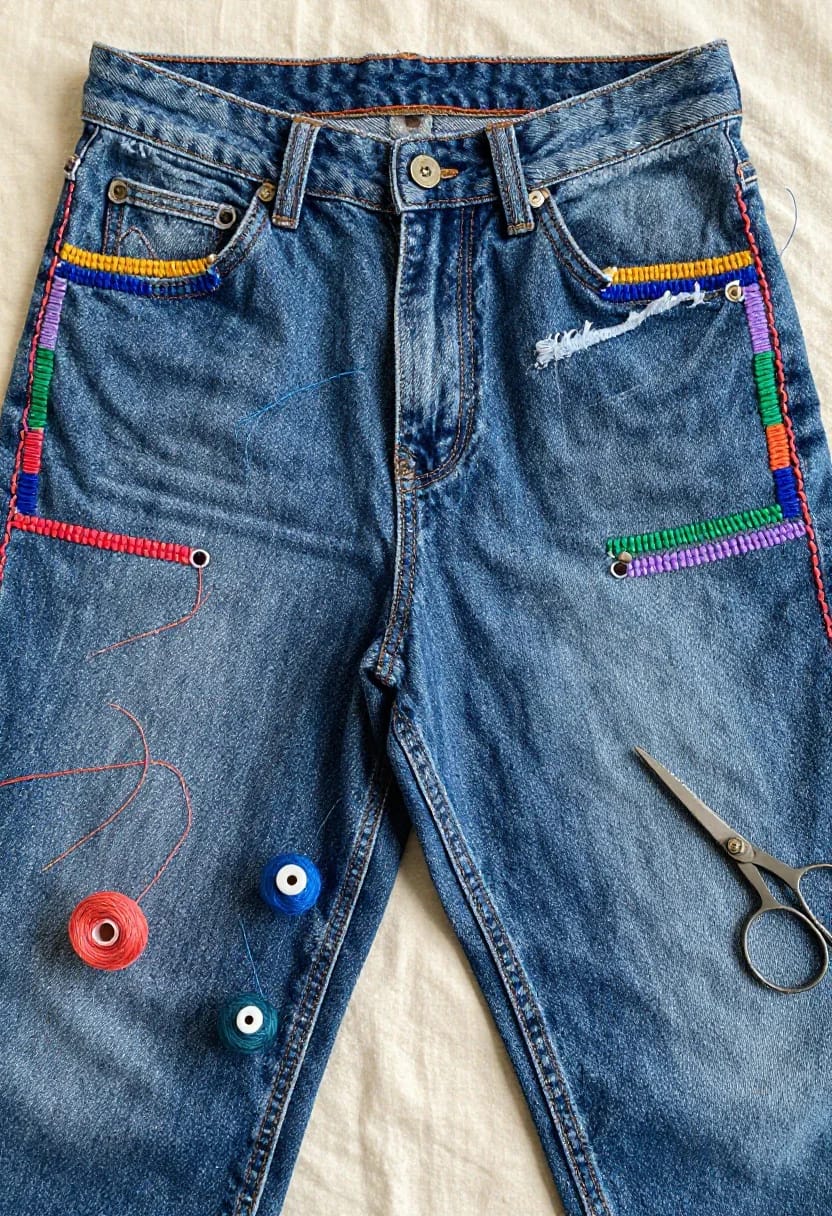
Small mends, and the ones most likely to still be there in five years. A pocket corner fails first on almost every pair, because that is where a hand pulls against two layers and a rivet; six or seven tight parallel stitches in bright perle cotton, worked across the corner and whipped over at each end, stops the tear before it starts and takes four minutes.
The hem band, for jeans that are otherwise intact
Granted, this one is maintenance rather than repair. Two rows of running stitch a quarter inch above the hem fold, all the way around, catches the spot where the back of the hem drags on the ground and wears through first. It also ties the mend at the knee to something at the ankle, which is what stops one bright patch looking like a lone accident.
Pocket edges follow lines the jeans already have
Stitching that runs along a felled seam, a pocket edge or a hem looks like part of the garment; stitching dropped into an open field of denim looks applied. That is the same placement logic behind putting embroidered motifs on the seams and edges a pair already has, and it applies to repair just as squarely as to decoration.
Sequence matters more than any single stitch here. Do the structural mends first, the knee and the seat, then decide what colors the small stuff gets, because the small mends are what make the big one look chosen.
Thread quantities are worth a warning: a full knee grid eats more than people expect, somewhere around eight to twelve metres depending on spacing, so buy two skeins of your main color rather than one. Reliable figures on how long a hand-darned knee lasts before it needs rework do not really exist, and anyone quoting you a number is guessing.
If you only take one thing: anchor every row in fabric that is still strong. Everything else on this page is a preference.
Related Posts
- Butterfly Embroidery Jeans: Ideas Worth Stitching Onto Denim You Already Own
- Multi Wash Patchwork Jeans From Old Denim Scraps: The Decisions That Make the Pair
- How to Make a Braided Denim Rag Rug From Old Jeans
- 13 DIY Denim Christmas Stockings From Old Jeans
- 57 Innovative Upcycled Jeans Ideas: Transform Your Old Denim into Chic Fashion and Home Decor
- How to Make Stunning Angel Wings from Old Jeans for Your Home