
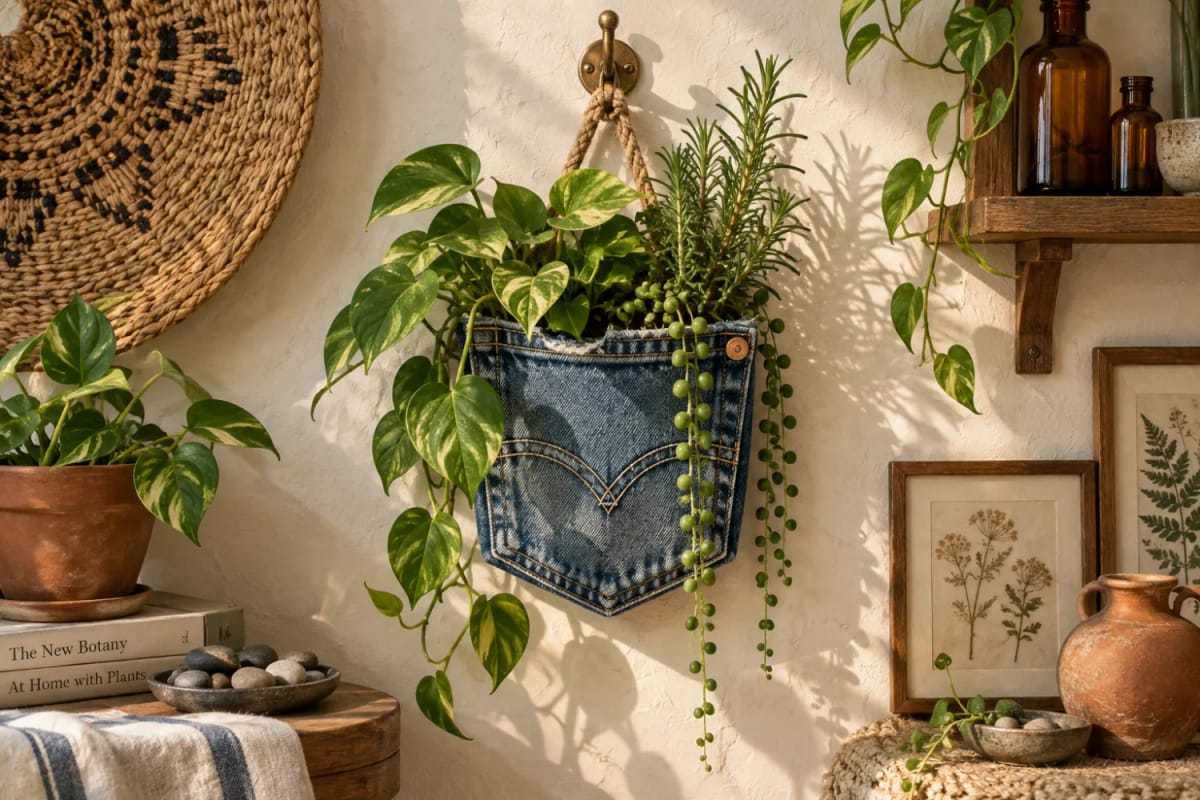
Most hanging jean pocket planters fail the same way, and they fail in about three weeks: someone packs potting mix straight into the denim, waters it, and the cotton starts rotting from the inside while a brown tide line spreads down the wall behind it. Denim is breathable, which is exactly why fabric grow bags work and exactly why a pocket packed with wet soil does not. Every idea below is built around that one fact. Some keep the soil in a pot and let the pocket be a holder, one uses no soil at all, and two of them accept a single season outdoors and build the replacement into the plan.

1. One back pocket, one cedar offcut, and a nursery pot doing the dirty work
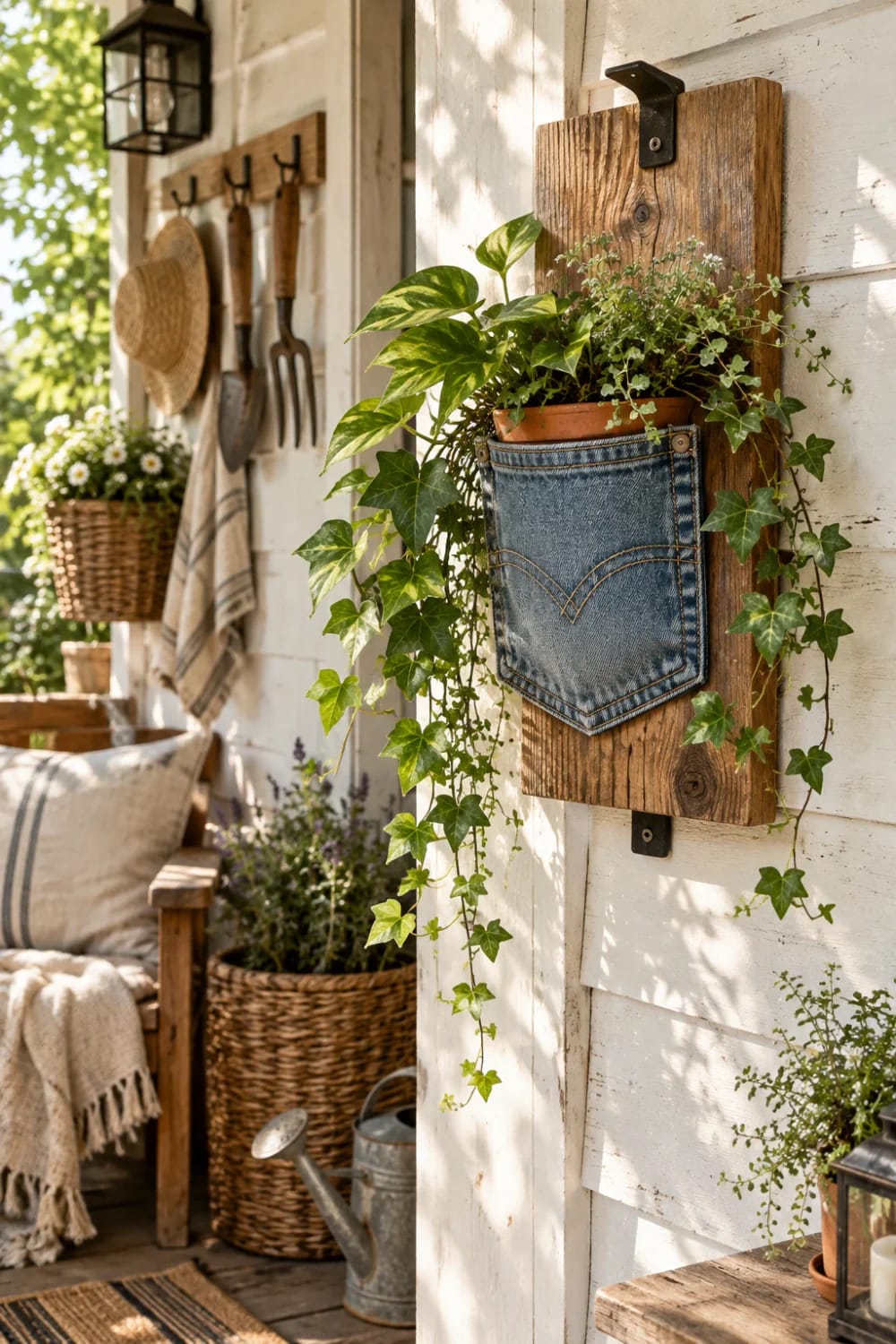
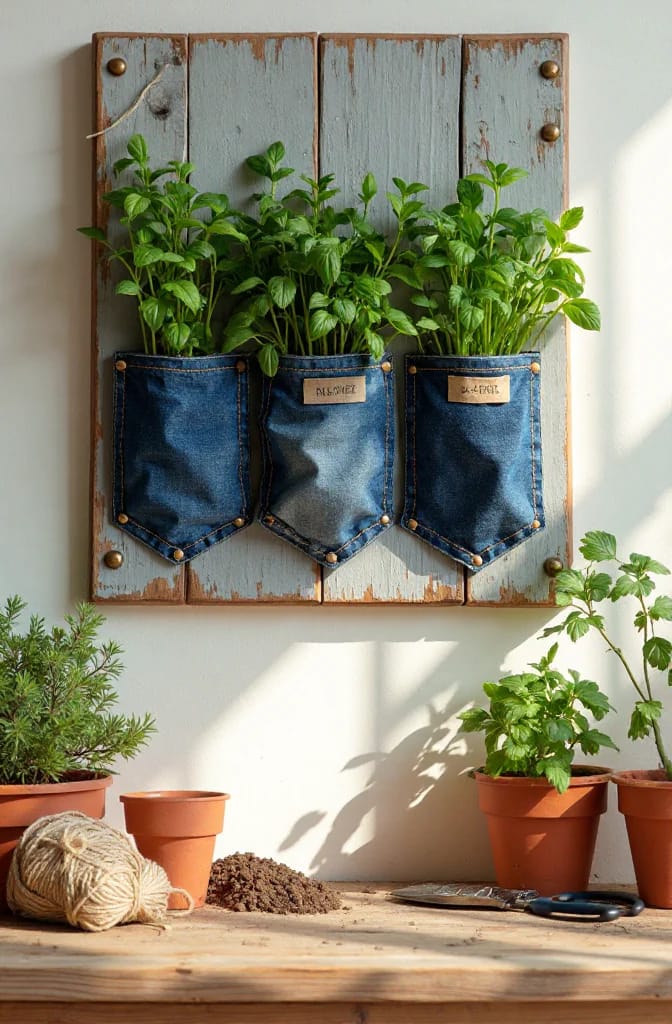
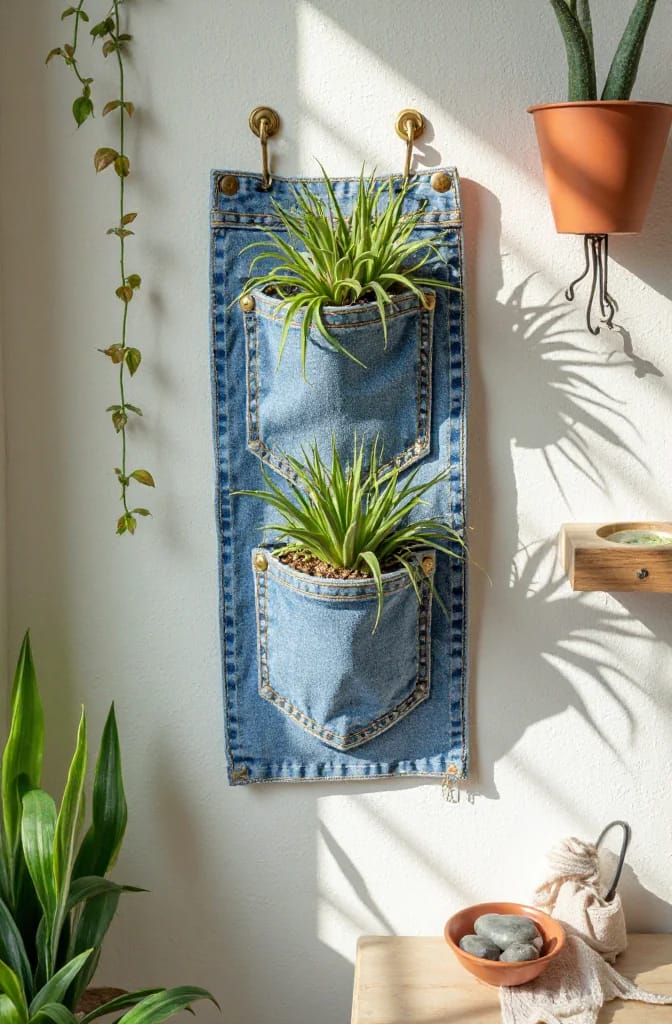
Put a pot inside the pocket rather than soil inside the pocket, and the whole project stops being a maintenance problem. A standard adult back pocket runs about six inches across and six deep, which takes a four inch nursery pot with the rim sitting just under the hem, out of sight. Staple or glue the pocket through its own seam allowance onto a cedar offcut around seven by ten inches, hang the board on one screw with a D-ring, and the pot lifts straight out for watering at the sink. The wall stays dry because nothing ever drains onto it.
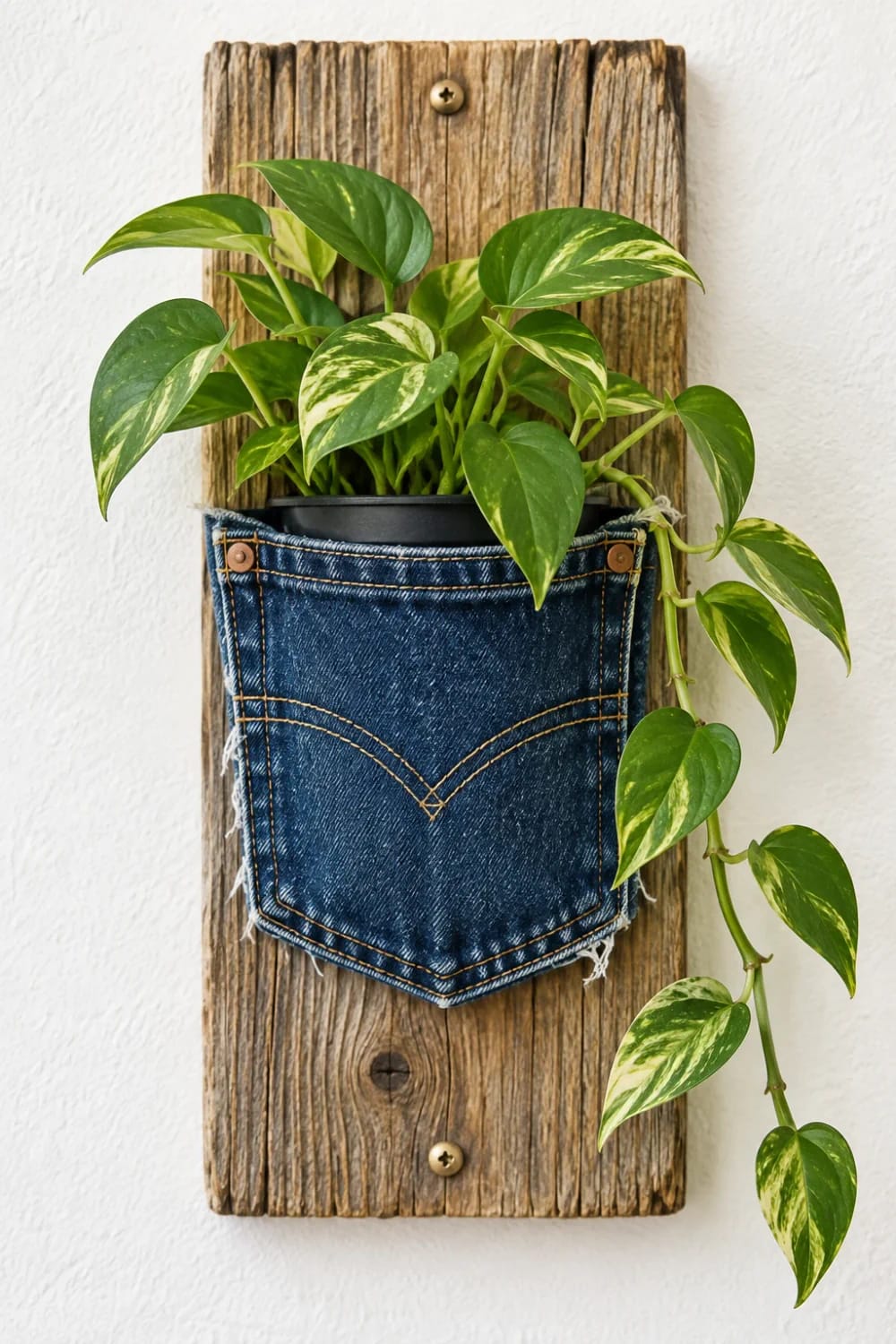
Sewing people will tell you to stitch the pocket down properly, and on an indoor piece that is the neater answer. That said, staples through the seam allowance hold a wet four inch pot without complaint, and they take four minutes instead of forty. Worth knowing before you cut: the two seat pockets and the small watch pocket are the only ones that come off a pair of jeans cleanly, a point the jean pocket ornament build covers in more anatomical detail than there is room for here. The front slash pockets are stitched into the fly and the waistband and you will be holding a limp bag of lining by the time you free one.
Thin-walled four inch pots slide into a pocket without stretching the seam, and a twenty pack costs less than two thrifted pairs of jeans.
DUNPUTE 4 inch plastic nursery pots with drainage holes, 20 pack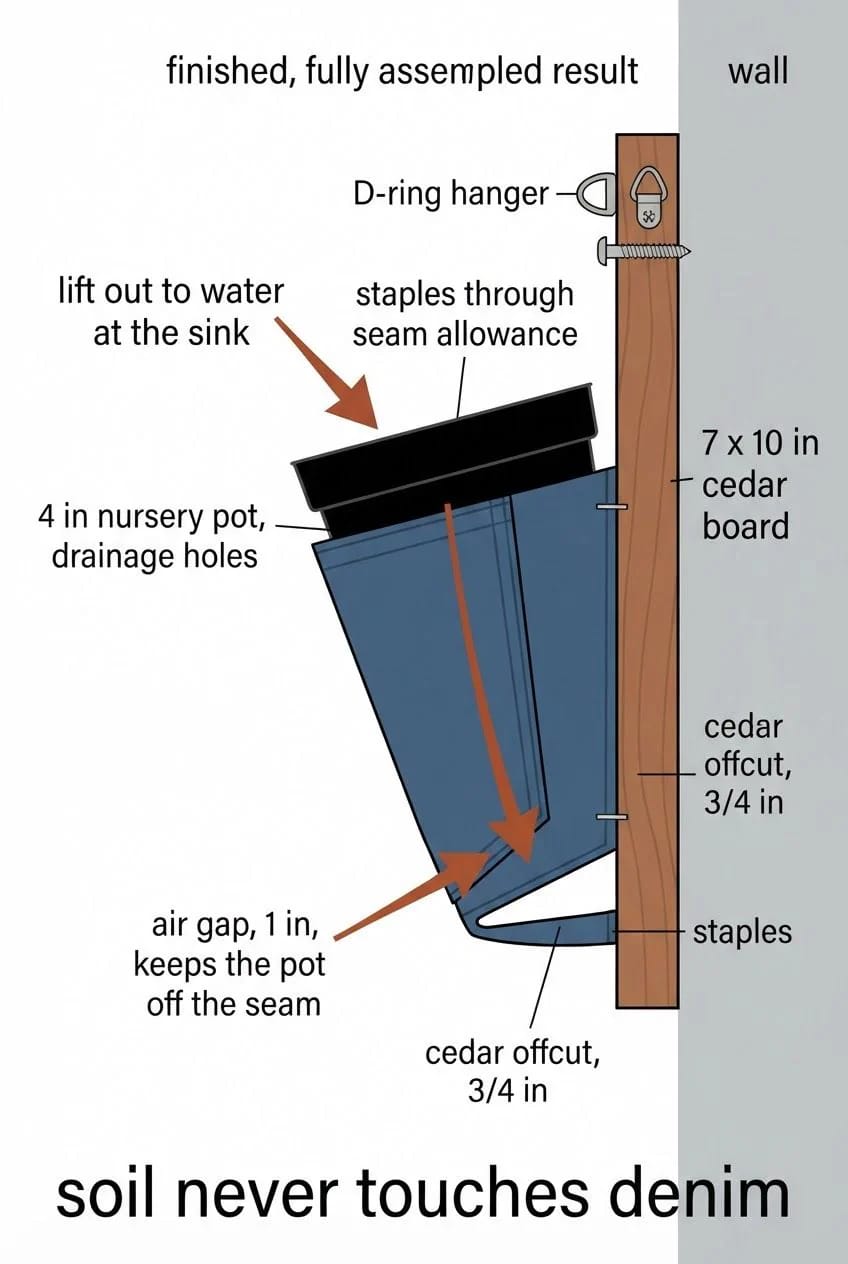
2. A five-pocket herb strip on a reclaimed board
Five pockets in a row on a single 1×6 reads as a made object; one pocket on its own reads as a craft. Space them on seven inch centers so the foliage of one does not sit on the hem of the next, and keep the gold topstitching running in the same direction across all five, because mismatched stitch angles are the detail that makes denim projects look scrappy.
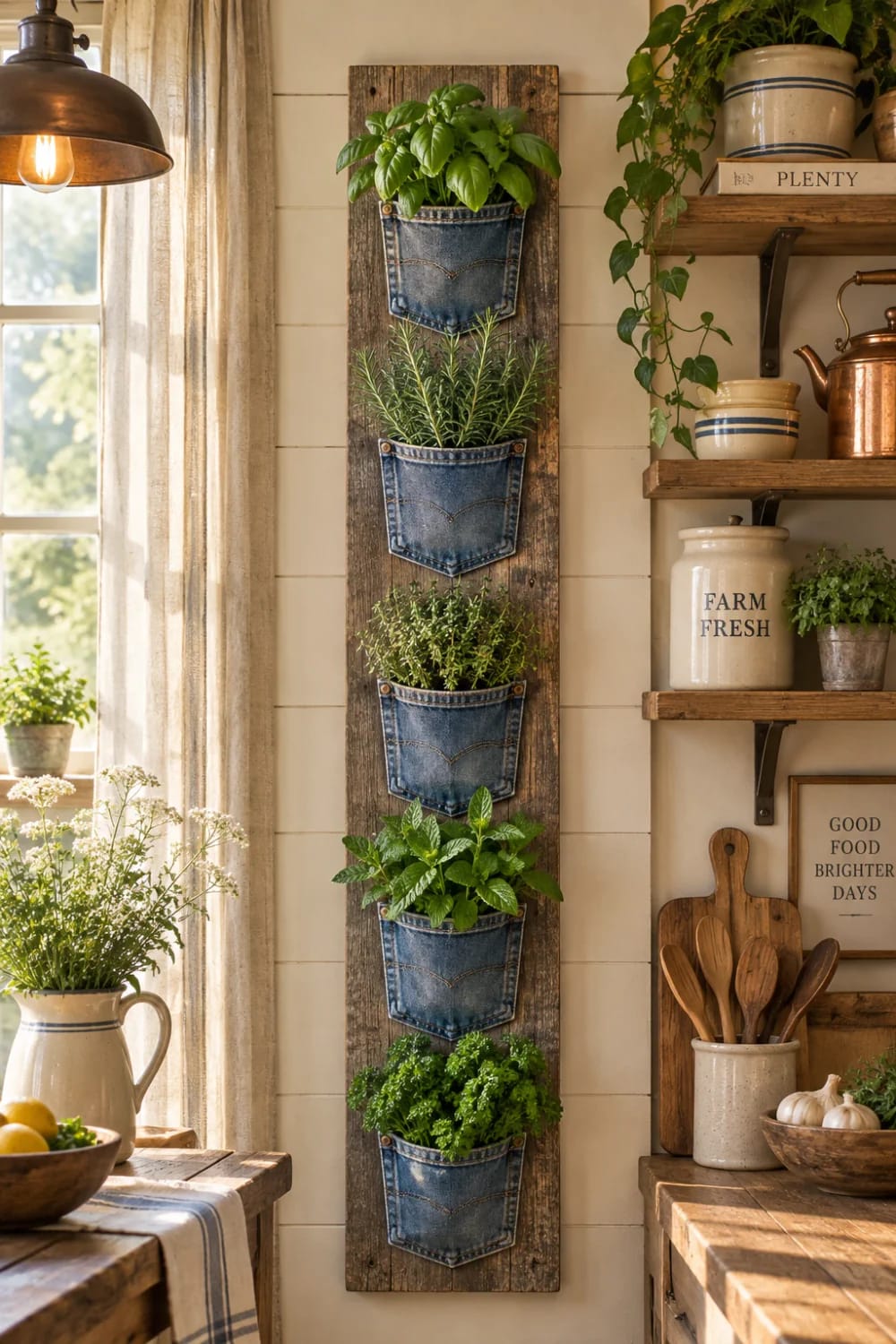
Heavier denim holds the shape better. Jeans in the 12 to 14 ounce range keep a squared pocket mouth when loaded; stretch denim with elastane sags into a pouch and stays that way. If you want the planted look without a visible plastic rim, line each pocket with a scrap of natural coco coir liner cut from a roll and set the pot inside that, so what shows above the hem is brown fiber rather than black polypropylene. For the plants themselves, thyme and oregano are happy in three to five inches of mix, which is all a four inch pot gives them, while basil wants closer to six and will need pinching hard to stay in scale; there are more small-space herb setups worth stealing ideas from if the board turns into a habit.
3. A waistband wrap that hangs pockets off a balcony rail with no screws
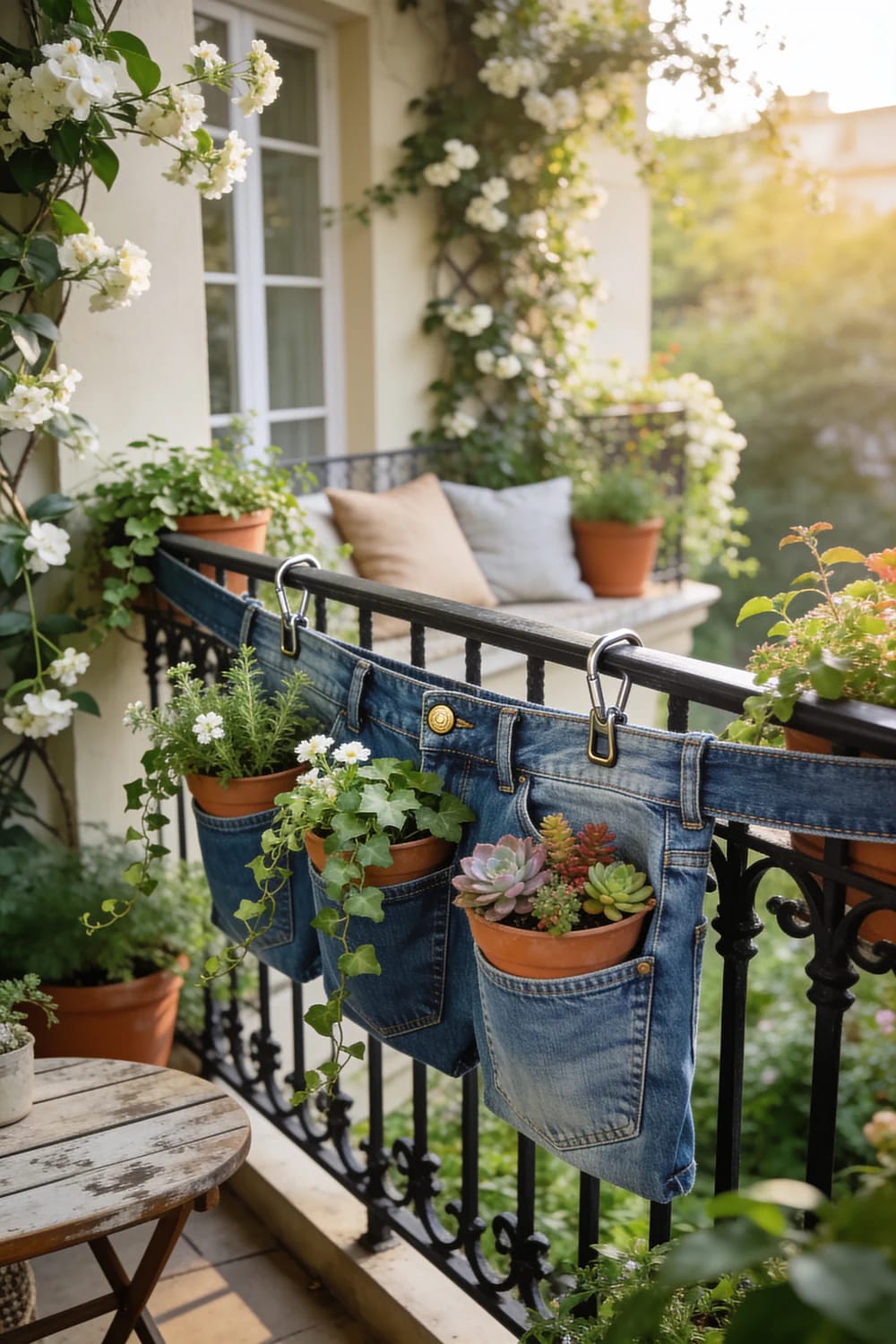
Cut the waistband off whole, with its belt loops and button intact, and you have a ready-made strap rated for years of being yanked on. Sew or glue three pockets along it, wrap it around the top rail, button it, then clip two carabiners through opposing belt loops so wind cannot lift the strip off. Nothing gets drilled, which is the whole point on a rental balcony where the security deposit is real money.
 15 Eco-Friendly Small Balcony Garden Ideas That Maximize Tiny Spaces Fifteen more ways to plant a balcony without putting a single hole in it.
4. Watch-pocket air plants, the version with no soil at all
The little fifth pocket riveted inside the right hip is too small for any pot, which makes it the one pocket that solves the drainage problem outright: put a tillandsia in it and there is nothing to drain. Tack a row of watch pockets onto a scrap board, drop an air plant in each, and once a week take them down and dunk them in a bowl of water for twenty minutes, shaking them out before they go back.
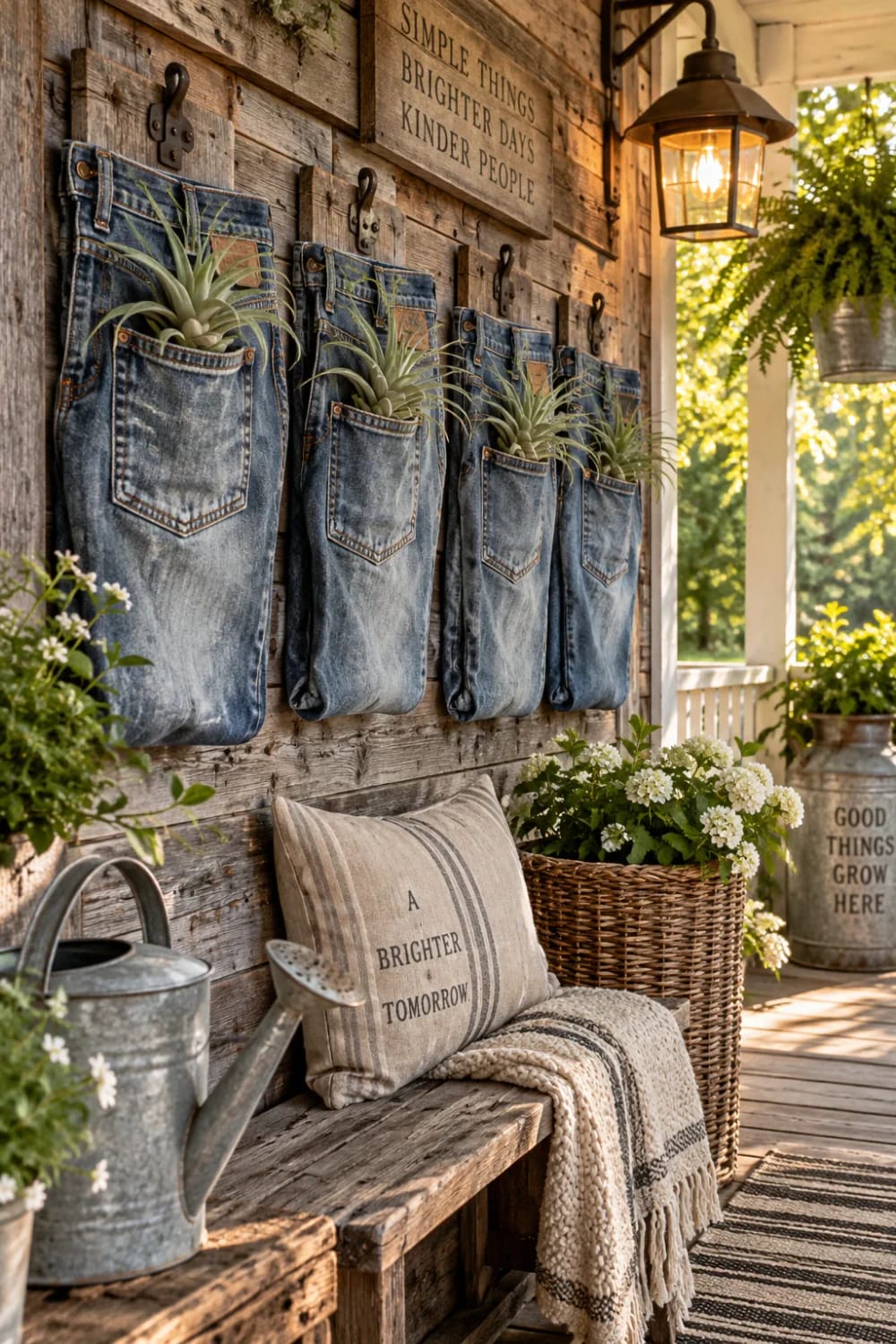
Return them damp and they rot at the base, which is the only real failure mode here, and it takes about a month to show.
5. Propagation pockets over the kitchen sink
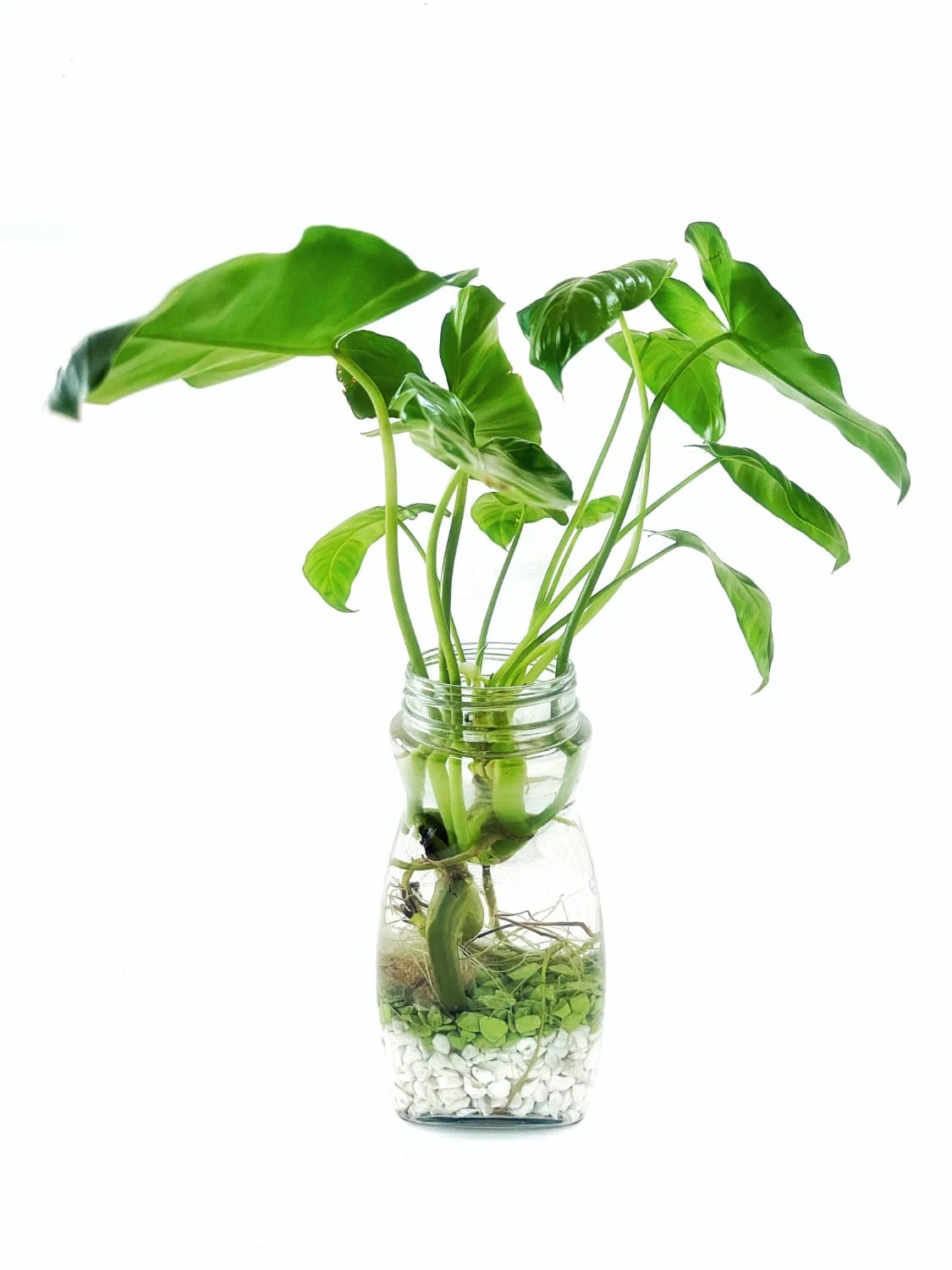
Slip a narrow glass jar or a test tube into a pocket and the denim becomes a rack for cuttings instead of a planter, which is the version that actually earns wall space in a kitchen. Pothos, philodendron, tradescantia and mint all root in water in two to three weeks, so the display changes constantly rather than sitting static, and the jar comes out for a rinse when the water goes cloudy. Straight-sided jars work better than tapered ones; a tapered jar sits low in the pocket and disappears.
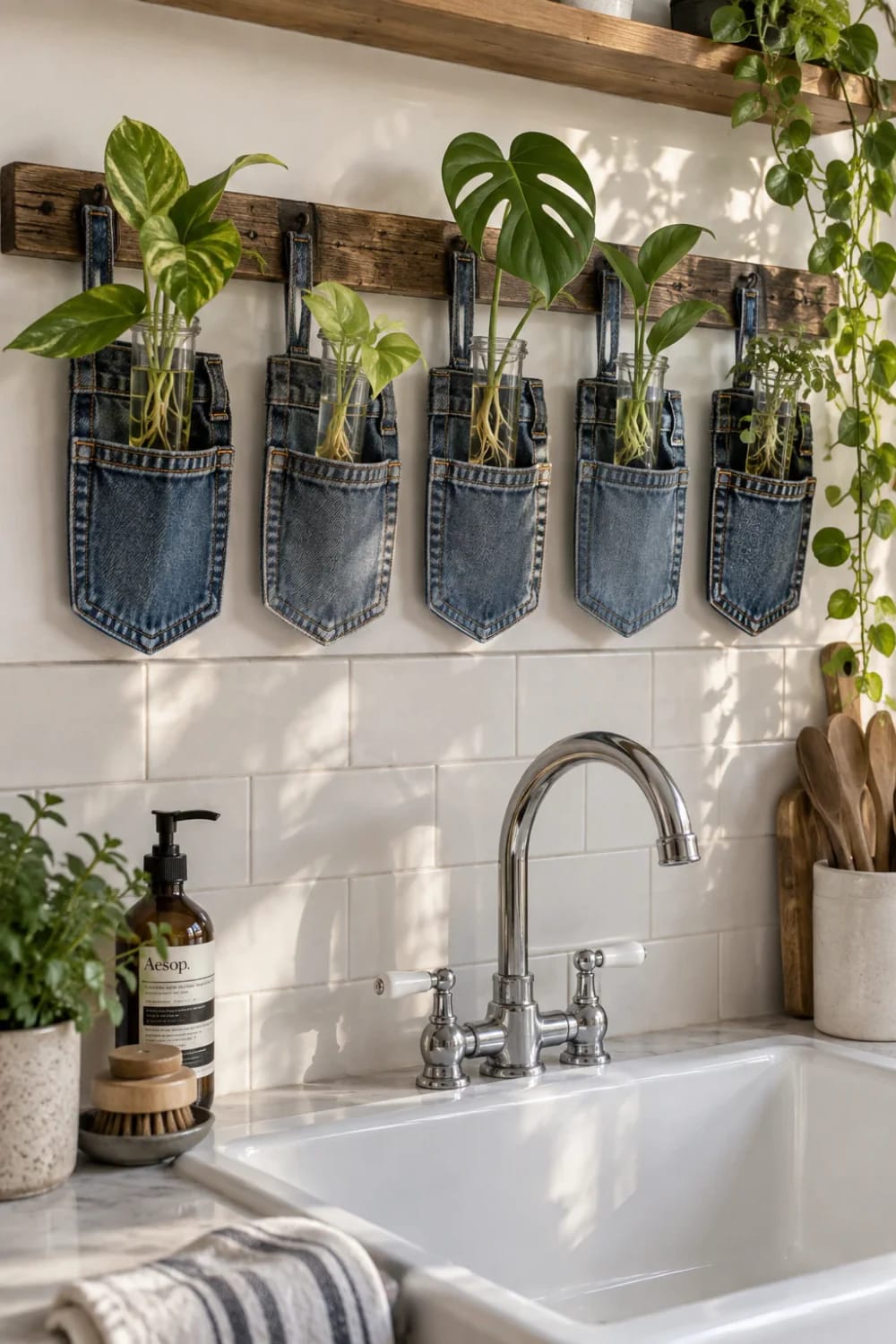
Light is the thing people get wrong, not the jars. A wall to the side of a north-facing window gives cuttings enough to root but not enough to grow on, so they stall at four inches and sit there looking half dead; a spot within three feet of an east window, or anywhere the sink itself is bright at midday, keeps them moving. Skip direct afternoon sun altogether, because water in a clear jar on a hot wall grows algae within days and the roots follow it down.
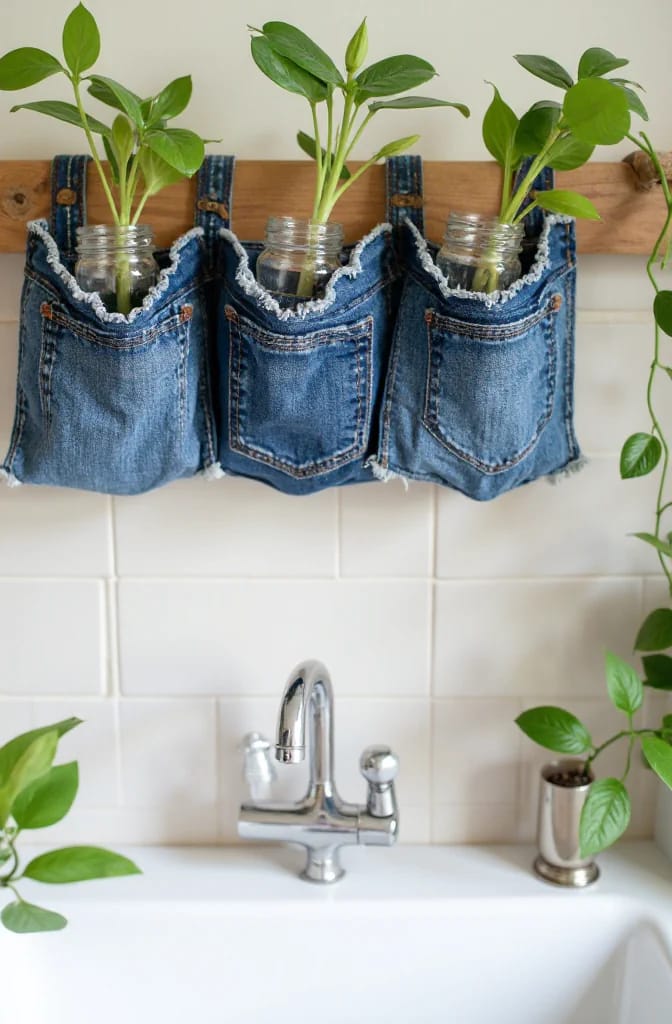
Jam jars, spice jars and the small bottles from a bar cart all fit a back pocket. There are more glass jar upcycles here if the pile in the cupboard has outgrown the pocket board.
6. The whole-jeans hanger planter, with the legs cut to ten inches
This is the version everyone pins and most people build badly. Full-length legs dangling off a wall look like a scarecrow lost a fight, and the weight of two loaded back pockets pulls the whole thing into a sag. Cut the legs off ten inches below the crotch seam, fray the raw edges by a half inch, and the jeans read as a deliberate object rather than laundry.
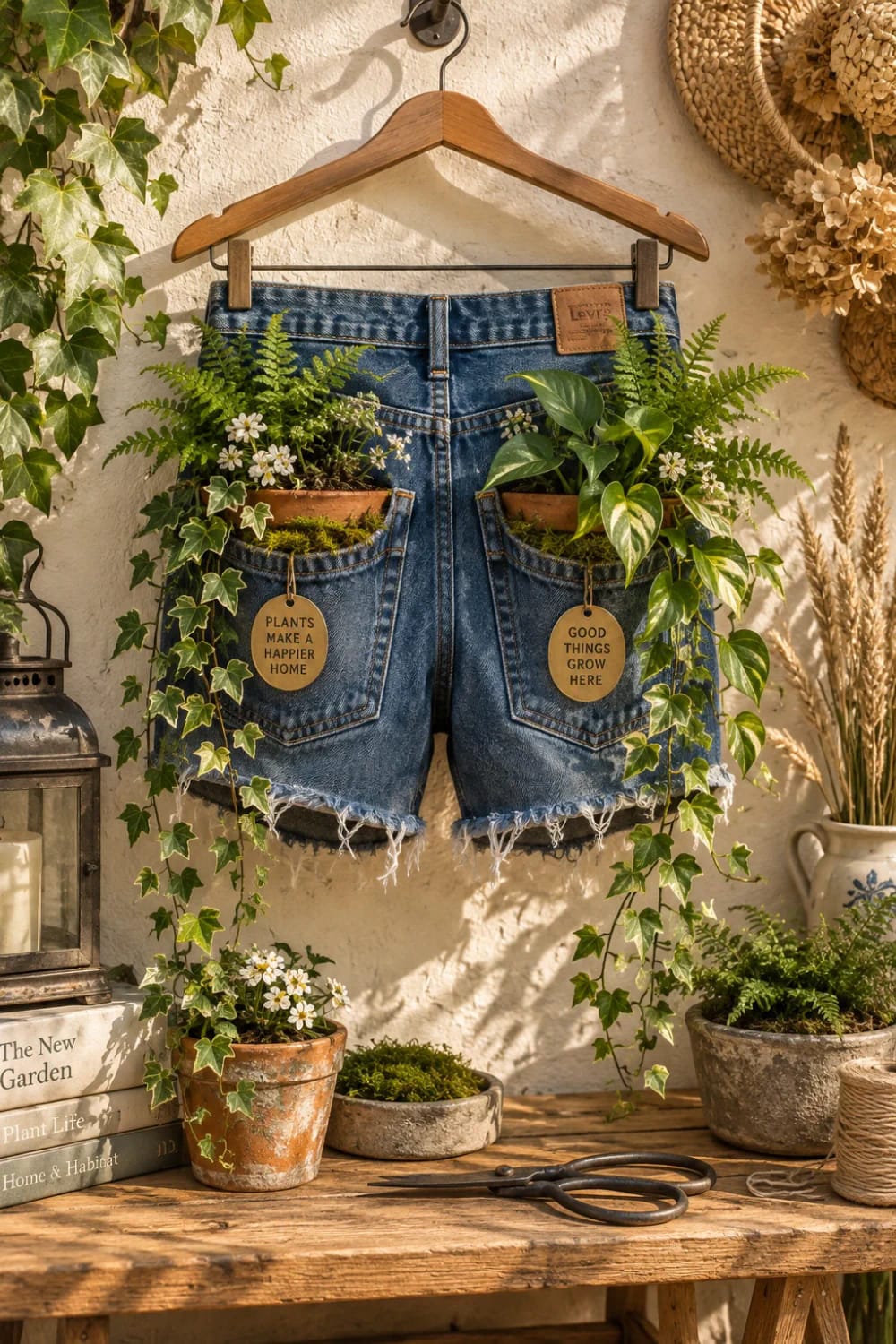
Hang it on a wooden hanger through the waistband rather than a wire one, which bends under a wet load, and reinforce the top of each pocket with a strip of denim glued behind it. Aleene’s Fabric Fusion permanent fabric adhesive handles this without a machine; it wants a full 48 hours to cure before anything heavy goes in, and people who load it at hour six are the ones who report it failing. The legs you just cut off are the most useful denim on the pair, all of it below the knee and usually unworn, which is the raw material for a braided denim rag rug.
7. A strawberry column of denim pockets on a fence, treated and expected to fail
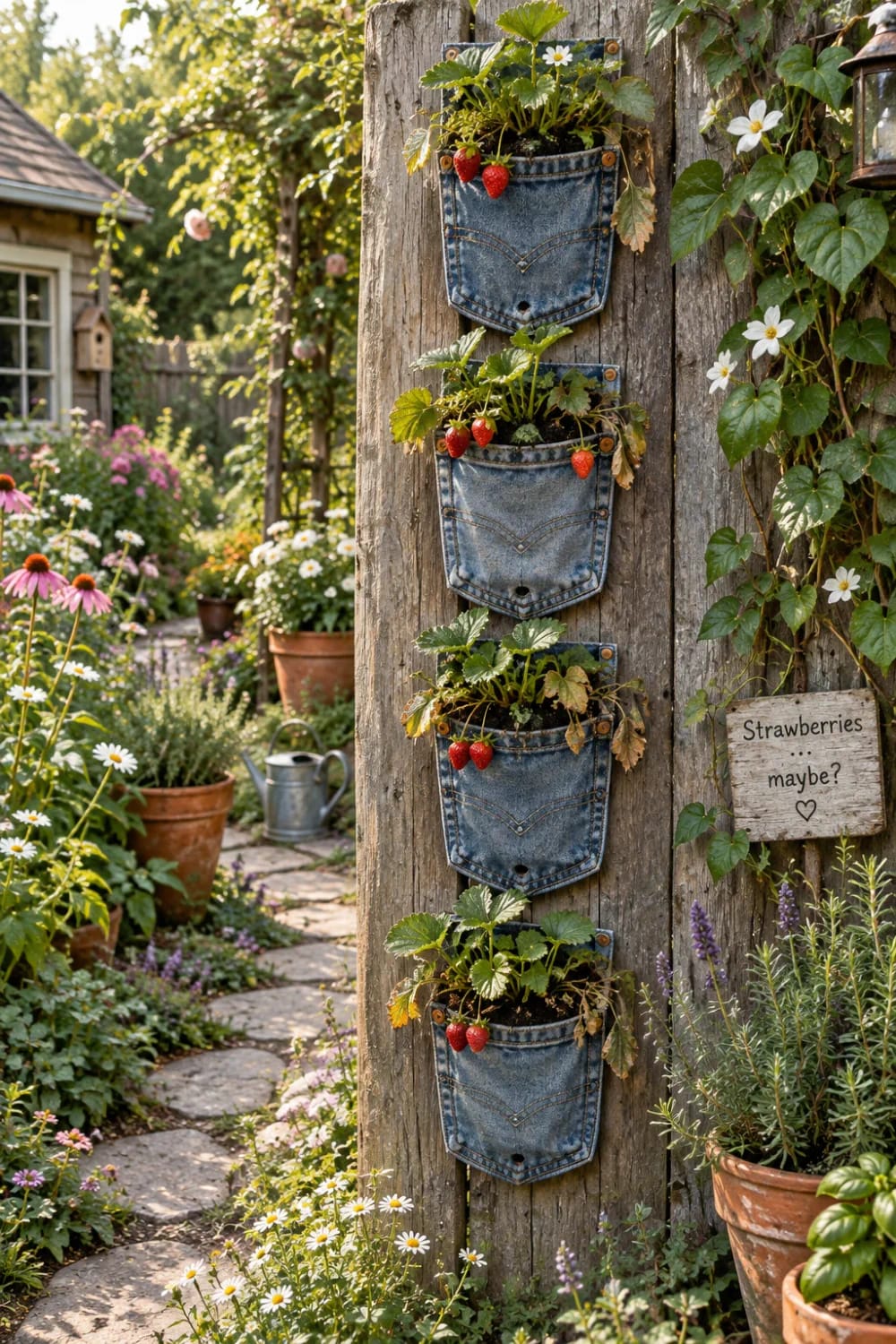
Strawberries are the right crop for a fence panel because they want shallow root room and they send runners downward, so a staggered column of six pockets turns into a cascade by July. Wash the denim first with no softener, let it dry, then treat it with Nikwax Cotton Proof wash-in waterproofing, which is water based and PFAS-free, so nothing fluorinated ends up in the soil you are growing food in. Staple the pockets to the boards with stainless steel, set four inch pots inside, and water into the pots rather than over the denim.
Cotton photodegrades in sunlight, the effect the outdoor textile trade calls sun rot, and published guidance on cotton in harsh exposure puts the onset of degradation at around three months rather than years. Mildew finishes the job in a humid climate. A treated panel on a shaded east fence can make two summers; the same panel on an unshaded west wall in Florida will go soft and tear at the staples inside one. I could not find any controlled test data on treated denim specifically, so take that as field experience from fabric planters generally, not a number to plan a budget around.
One 300ml bottle treats several pairs of jeans, and the wash-in version reaches the seam allowances where rot actually starts.
Nikwax Cotton Proof 300ml wash-in waterproofing for cotton and canvas8. A pocket facade over an ugly plastic window box
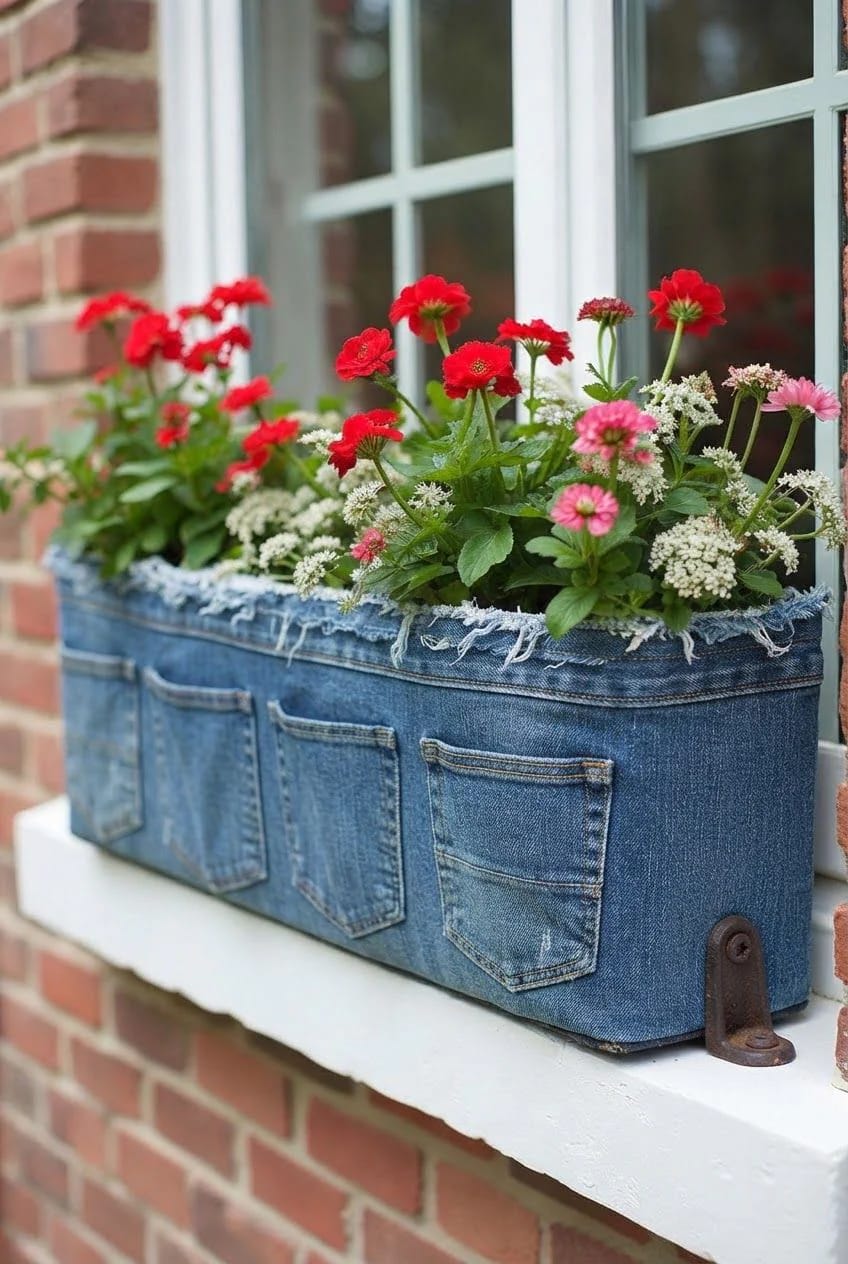
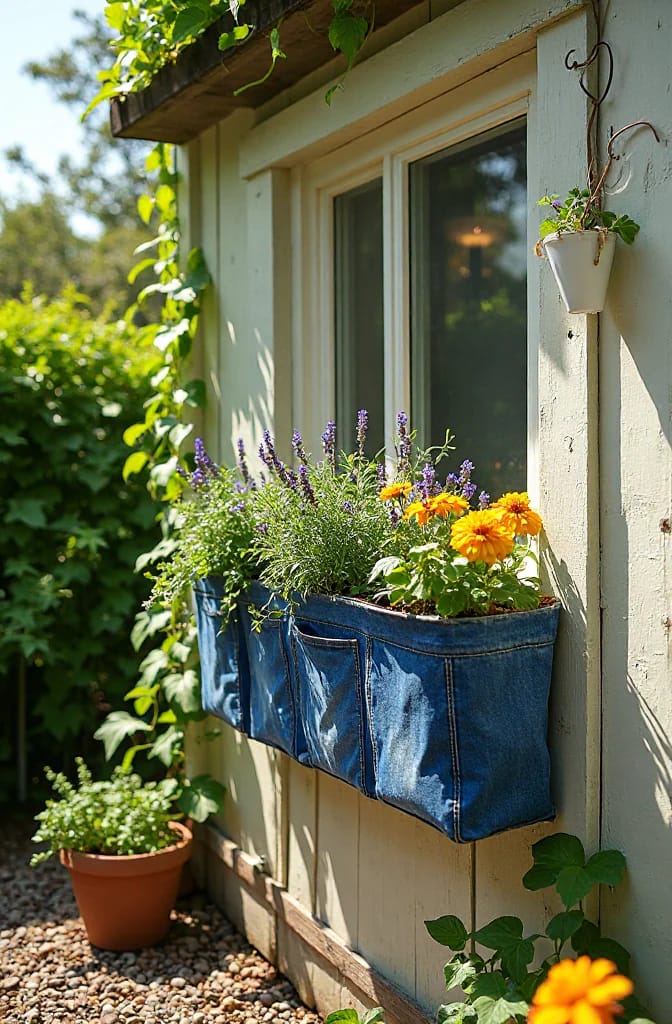
The pockets do not have to grow anything. A denim panel with four pockets sewn on, wrapped around the front face of a white plastic trough, hides the cheapest-looking thing on the windowsill while the trough keeps doing the actual gardening underneath. It is the one idea here that works in a wet climate, because the denim never gets watered.
Do this
- Cut the panel an inch shorter than the trough so the hem never stands in water.
- Staple into the plastic lip with stainless steel. Iron staples bleed rust into cotton inside a month, and the stain spreads with every rain.
- Take the panel off in November, wash it, store it dry.
Avoid
- Soil in the facade pockets. The trough behind is doing the growing.
- Pocket bottoms resting on the sill. That contact line is where the mildew always starts.
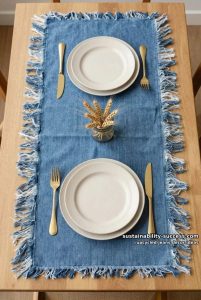 11 Upcycled Jeans Decor Ideas for the Pile You Can’t Toss What to do with the legs, waistbands and seams once the pockets are gone.
9. A seed-starting pocket chart for a classroom wall
A panel of eight pockets, a white chalk marker for the sowing dates written straight on the denim, and twenty cheap pots turns a wall into a germination record that thirty kids can check daily without touching anything. Total outlay is one thrifted pair of jeans, so nobody has to ask the school for money.
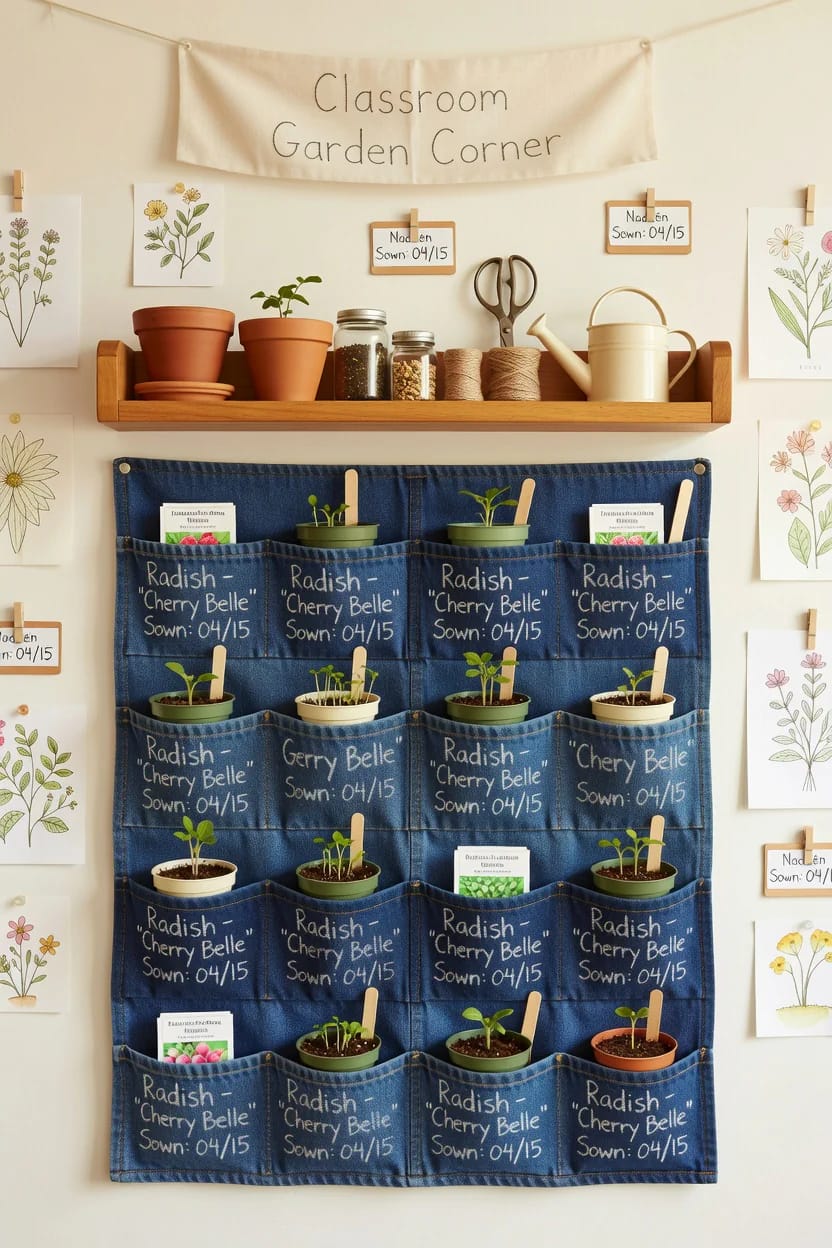
What you sow matters more than the chart. A four inch pot inside a pocket is a starter cell, not a growing container, so pick things that either finish shallow or move out early.
| Seed | Root depth it wants | In a pocket pot | Watering |
|---|---|---|---|
| Thyme, oregano | 3 to 5 in | Stays on the panel all season | Twice a week |
| Basil | About 6 in | Holds if you pinch it hard and often | Daily in heat |
| Radish | About 6 in | Sow to sprout, then move to a deeper pot | Every other day |
| Lettuce, cut and come again | 8 in and up | Baby leaf only, three or four cuts | Daily |
| Cilantro, dill | 12 in, taproot | Seedlings only, transplant by week three | Every other day |
10. A wicking pocket for a south wall that dries out by noon
Pockets on a hot wall dry faster than pots on the ground, for the same reason fabric grow bags do: air moves through the fabric on all sides, so the top of a vertical run can need water daily in a heat wave while the bottom row stays damp for three days. A wick fixes the top row without a timer or a pump. Run a nylon cord from a hidden bottle reservoir into each pot and the mix pulls water up as it dries.
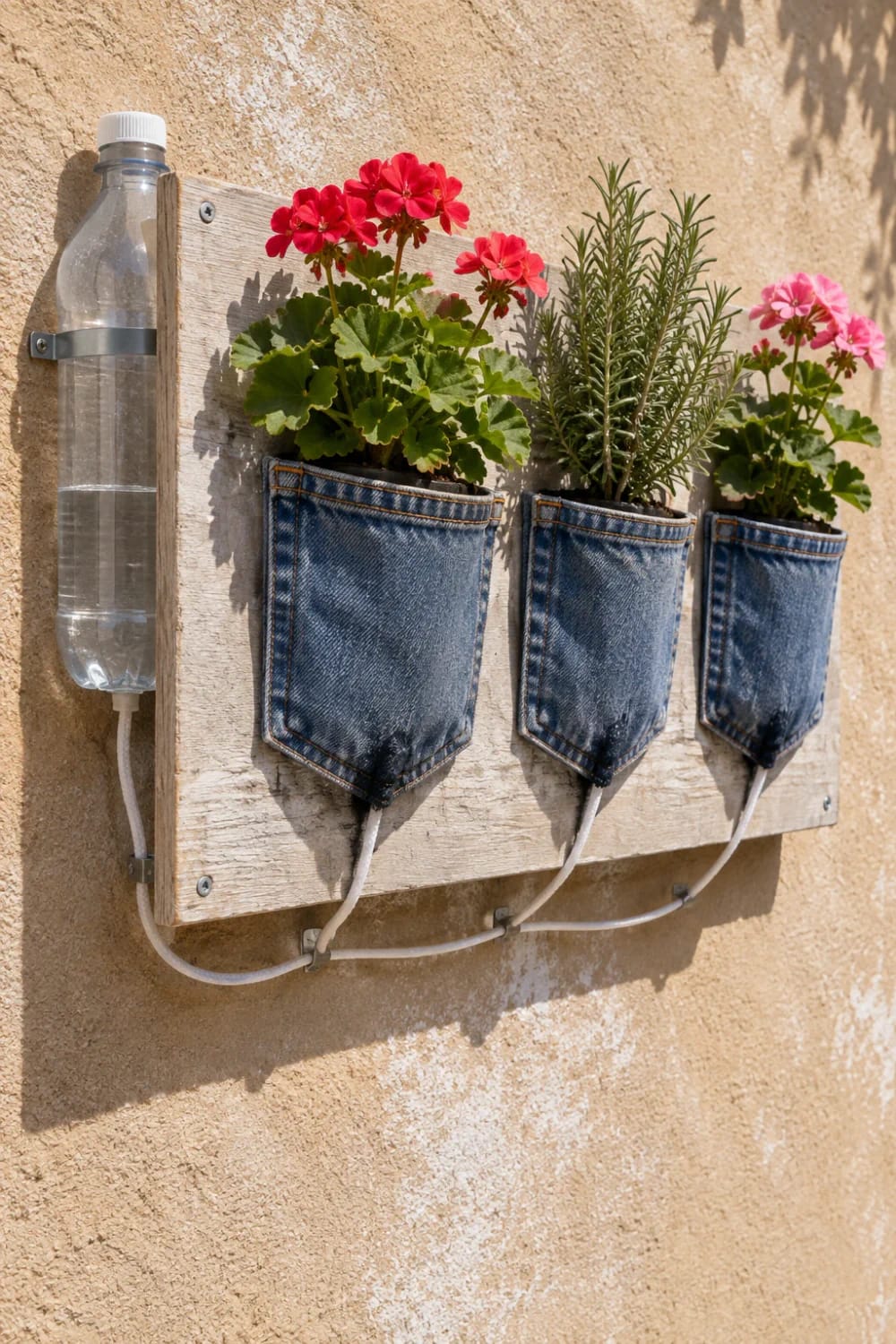
Reservoir: a 1.5 liter plastic bottle with the top cut off, cable tied to the back of the board below pocket level.
Wick: quarter inch nylon cord, one per pocket, dropped to the bottom of the bottle and run up behind the denim.
Entry: the cord passes through a hole punched in the pot’s side wall, not through the drainage hole, so the pot still drains after rain.
Contact: the last two inches of cord sit buried in the mix against the root ball.
Cotton cord works for about a season and then rots through, which is a worse trade than it sounds when the reservoir is behind the board and you cannot see it fail. Nylon lasts. If the bottle bothers you visually, the same trick built around bottles used openly as planters stops pretending and looks better for it.
11. A bleached-to-raw indigo run with silver foliage
Seven pockets graded from raw dark indigo at one end to bleached near-white at the other, hung at slightly uneven heights, is the arrangement that stops a denim wall from reading as a scrap project. One pair of jeans gives you two or three of those shades already, since the seat and knees go pale years before the fabric fails and the denim tucked inside the hem stays close to the shade it left the mill. Household bleach at about one part to ten, thirty seconds at a time with a rinse between dips, takes you the rest of the way.
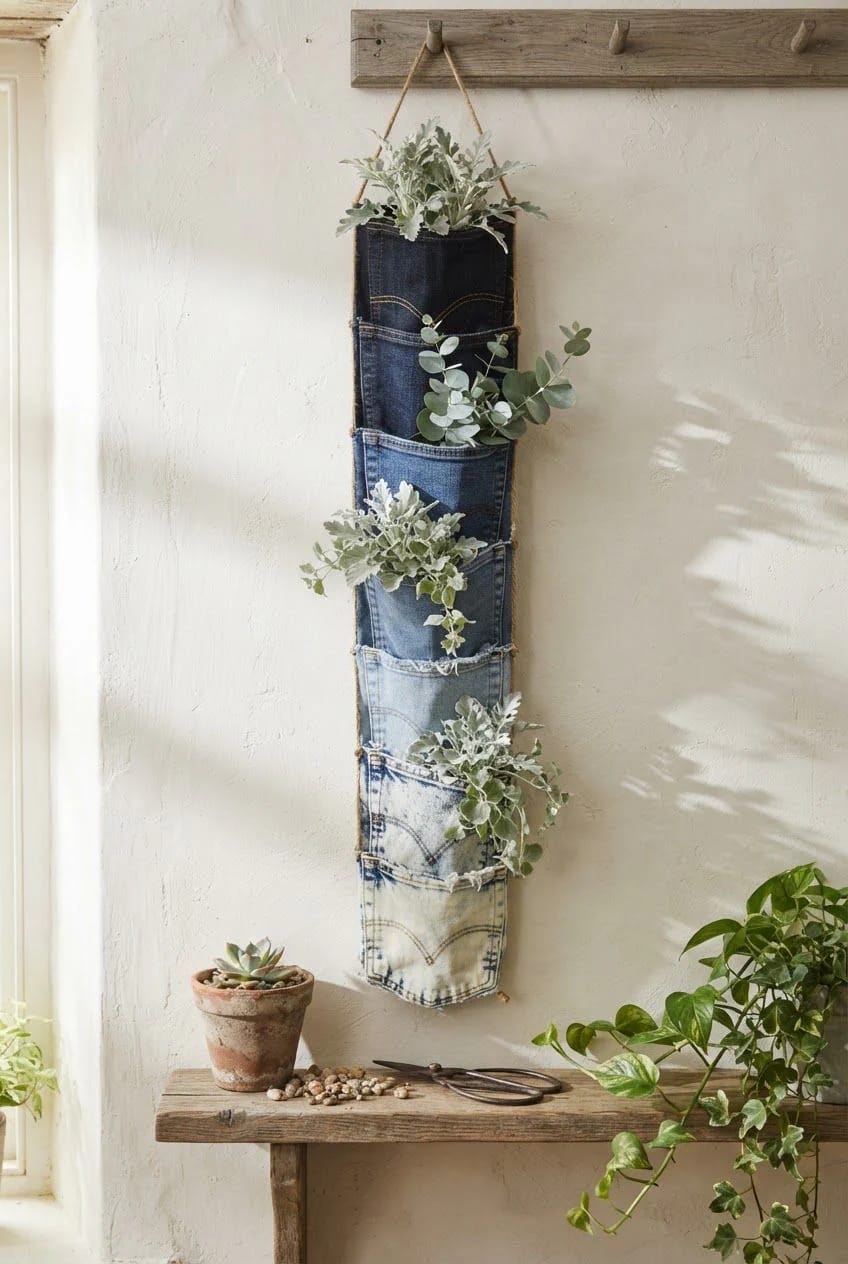
Then plant to the gradient rather than against it. Dark green ivy at the indigo end, grey green sedum through the middle, silver dusty miller and variegated ivy where the denim goes pale, so the foliage carries the same fade the fabric does. Skip flowering annuals in bright pink and red here; they fight the indigo and the whole thing turns into a craft fair table. If you want color that works with blue denim rather than against it, the hot air balloon planter build makes the case for keeping the blooms in one contained spot and letting the denim stay quiet everywhere else.
Related Posts
- How to Make a Decorative Hot Air Balloon Planter from Old Jeans
- 15 Innovative Rainwater Harvesting Garden Ideas
- 18 Upcycled Garden Decor and Planter Ideas, From Boot Planters to a Watering-Can Fountain
- 15 Inspiring Tire Planter Designs for Outdoor Spaces
- 11 Upcycled Jeans Decor Ideas for the Pile You Can’t Toss
- 15 Recycled Bottle Garden Planter Ideas to Brighten Your Space