
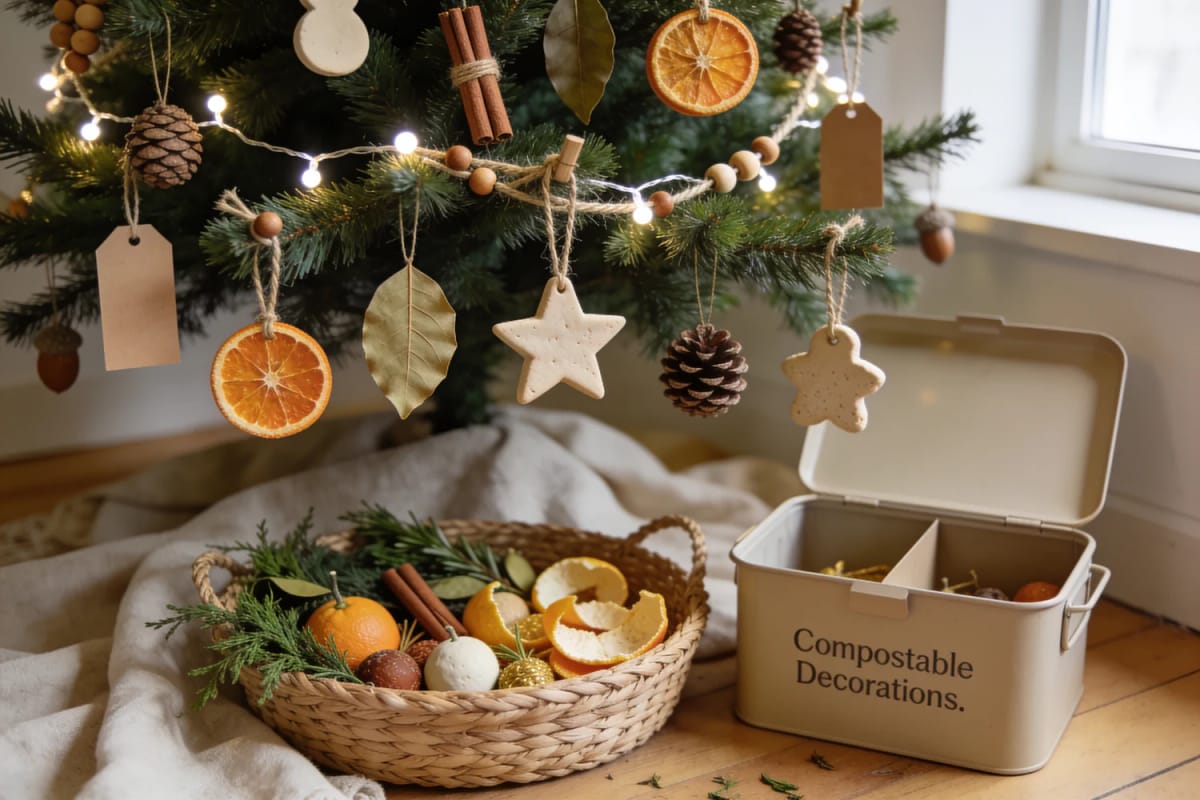
Most decorations sold as compostable are not. The ornament body might be dried fruit or wool, but the wire hook, the polyester ribbon and the dab of hot glue holding it together will still be in the pile next winter, and the winter after that. What follows is twelve decorations that break down whole, with the drying temperatures, fibre labels and adhesive swaps that decide whether a thing goes into the compost or gets picked back out of it in March.
Dried citrus slices are the decoration that composts in a single season
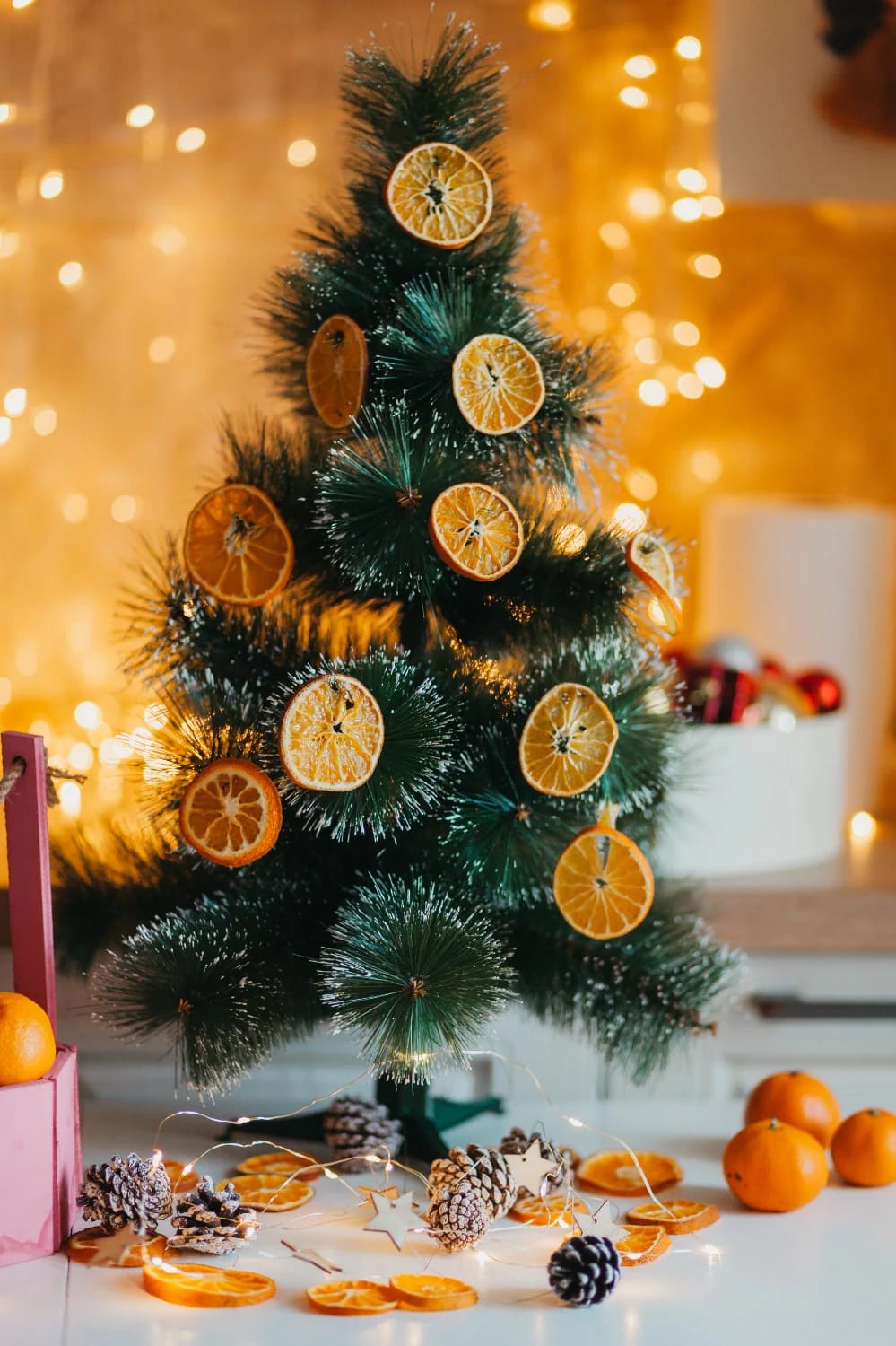
Cut them thin, at about a quarter inch, and the whole slice dries translucent instead of going leathery in the middle. Thickness is the only variable that reliably separates a slice that lasts three seasons in a paper bag from one that grows a bloom of grey mould by New Year. Blot the cut faces with a tea towel before they go in the oven, because the surface water is what extends the drying time past four hours and starts to caramelise the sugars in the pith.
Slice thickness: 5 to 7 mm, roughly a quarter inch. Thinner curls, thicker moulds.
Oven: lowest setting, 170 to 200°F (75 to 95°C), door propped with a wooden spoon so moisture escapes.
Time: 3 to 4 hours, turning every hour. A wire rack beats parchment, which traps steam under the fruit.
Done when: the pith is stiff and the flesh has gone amber and see-through against a window. Any softness at the centre means another 30 minutes.
In a working pile they are gone in a month or two, faster if you tear them in half first. The old advice about keeping citrus out of compost applies to worm bins in quantity, not to a dozen dried slices going into an outdoor heap with leaves and coffee grounds.
Seed paper ornaments end the year in a seed tray, not the bin
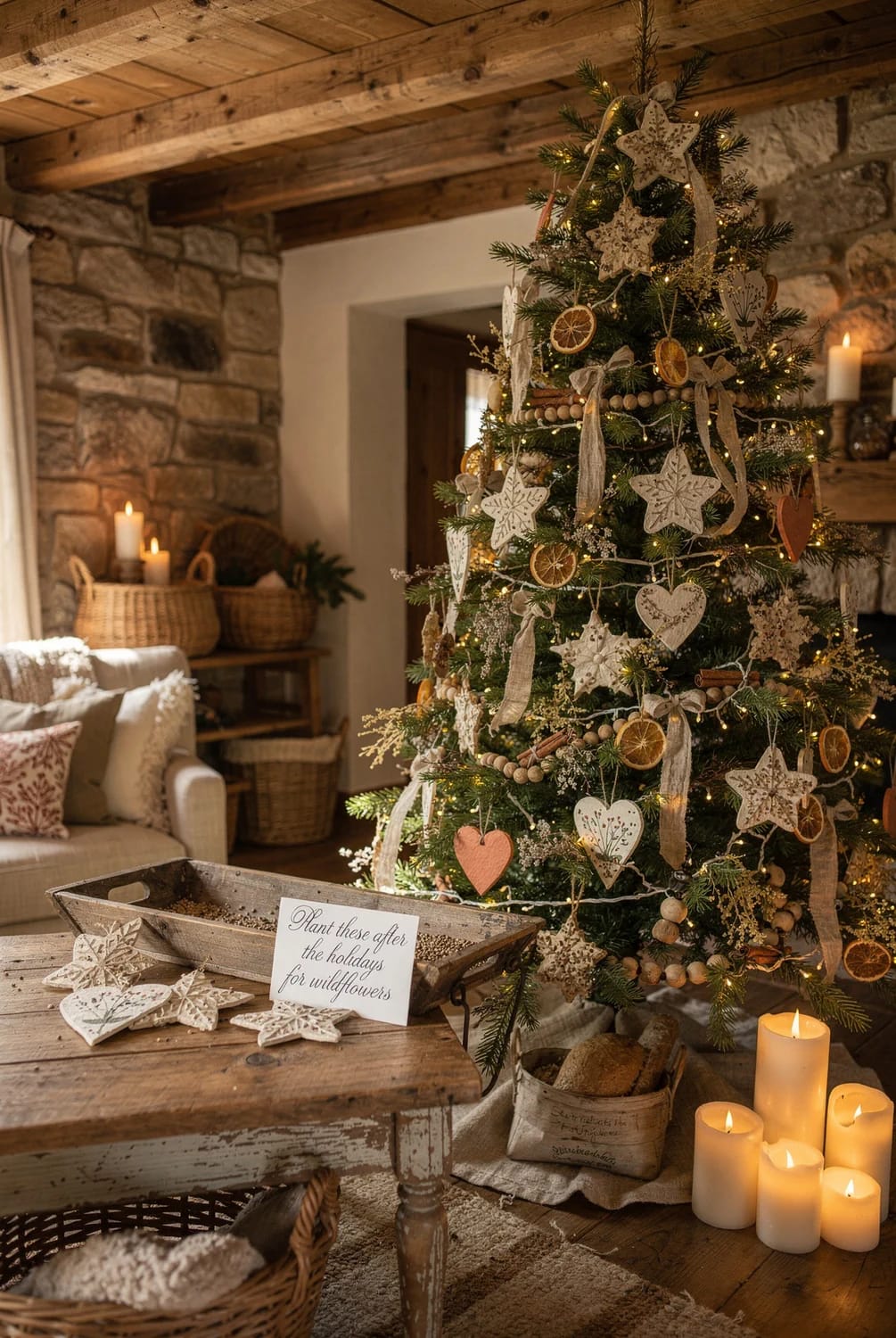
These are the only decoration here that produces something in April, which is why they keep showing up on Pinterest under variations on plantable and biodegradable Christmas tree decorations. Blend torn scrap paper with warm water to a porridge consistency, drain it on a mesh screen, then press the seeds into the surface of the wet pulp rather than blending them in. Seeds put through the blender get shredded, which is the single most common reason homemade seed paper never sprouts.
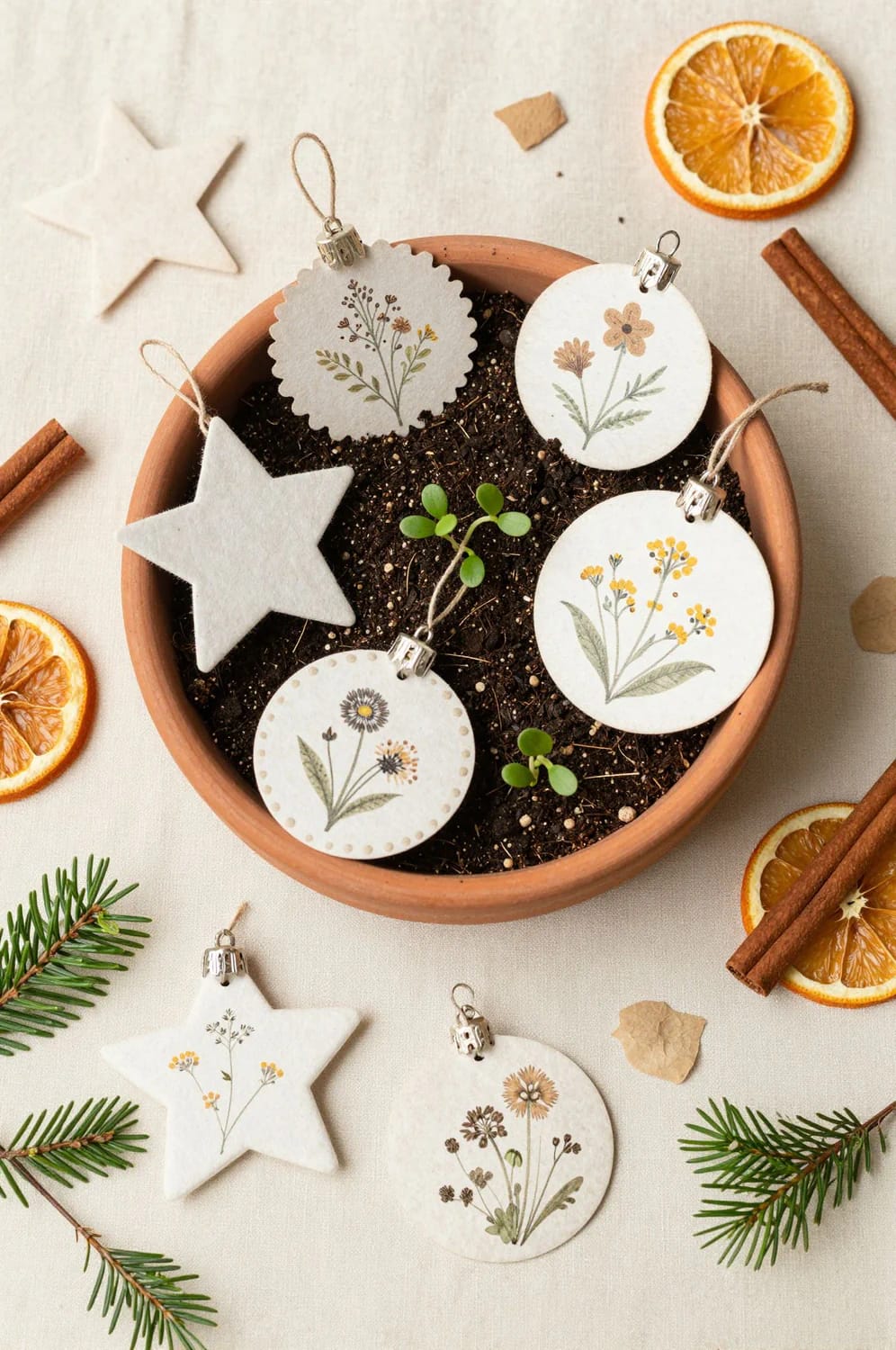
Dry them flat between two tea towels under a chopping board, somewhere cool. A radiator will cook the embryos. And use a species that belongs where the reader lives: those national wildflower mixes posted to every state are the reason plantable paper has a mixed reputation among people who actually garden.
Do this
- Flour paste (2 tbsp flour simmered into 1 cup water for three minutes) for any paper join
- Unwaxed cotton or jute thread for hanging loops
- Wool yarn for stitching, since it composts on the same clock as the felt it holds together
- Hemp cord where a piece is heavy enough to need real strength
Avoid
- Hot glue. It is polyethylene or EVA, and it survives the pile intact.
- PVA white glue
- Fishing line, invisible thread, and anything labelled “raffia” that turns out to be paper-wrapped polypropylene
- Wire ornament hooks. They are the number one thing found in finished compost.
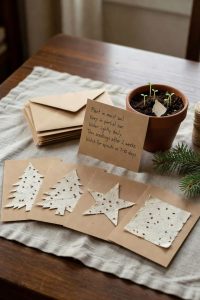 How to Make Plantable Seed Paper Christmas Cards That Actually Grow The same pulp, scaled up to card stock, with the germination problems solved properly.
Salt dough ornaments compost, but the salt is a genuine problem
The standard recipe is two cups of flour to one cup of salt, and a batch of thirty ornaments therefore carries something close to 300 grams of sodium chloride. That is not a rounding error going into a domestic heap. Sodium raises the soluble salt load of the finished compost, and while salty food scraps in moderation are a non-issue, tipping in a bowl of concentrated salt is a different act.
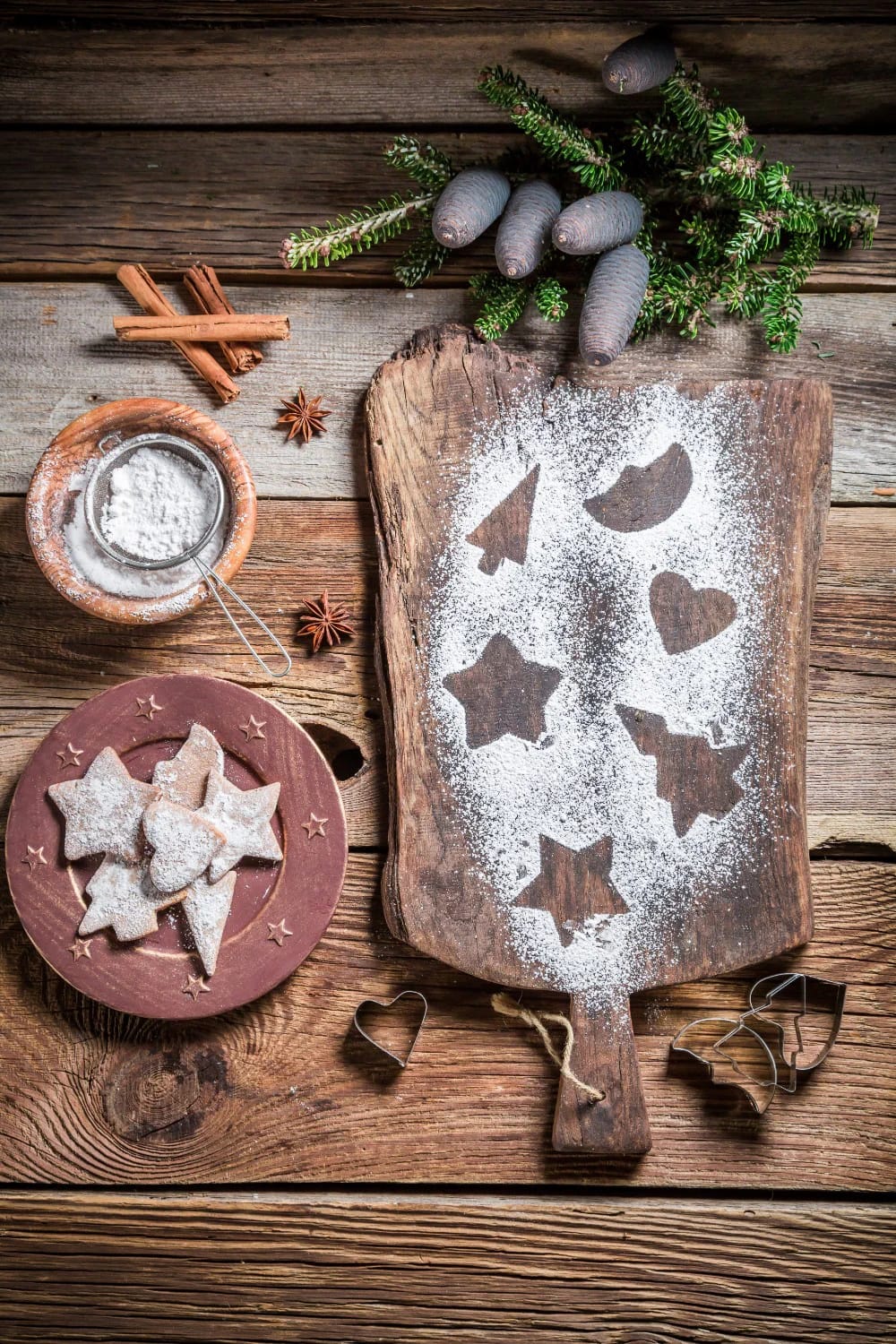
Two fixes, and I prefer the second. Break the ornaments up small and scatter them across the widest possible area of an active aerobic pile rather than burying the lot in one corner, so the sodium disperses instead of concentrating in a pocket where seedlings will later notice it. Or skip salt entirely and make the applesauce and cinnamon dough instead: equal parts by volume, no baking, four days of air drying, and the result is a dark reddish brown that reads far more like a nineteenth century ornament than white salt dough ever does.
| Material | Chopped, in an active home pile | What slows it down |
|---|---|---|
| Dried citrus slices | 1 to 3 months | Whole slices left intact |
| Salt dough | 2 to 6 months | The sodium load, not the dough |
| Popcorn and cranberry | Weeks | Nothing, this is the fastest thing here |
| Kraft paper and flour paste | 1 to 3 months | Clay-coated or glossy stock |
| Wheat straw | One season | Long uncut stems that mat together |
| 100% wool felt | 6 to 12 months | Any polyester in the blend |
| Pinecones and seed heads | 1 to 3 years | Lignin, and they are worth reusing anyway |
| Beeswax | Years | Remelt it instead |

Popcorn and cranberry garlands are the cheapest thing on the tree and the fastest to break down
Pop the corn plain and then leave it uncovered overnight. Fresh popcorn shatters the moment a needle goes through it, and every guide that skips this step produces a bowl of broken kernels and a frustrated maker. Stale popcorn threads cleanly.
Use SteadMax unbleached 100% cotton butcher’s twine, 2 mm rather than sewing thread, which cuts through cranberries as they soften. Cranberries hold about three weeks indoors before they wrinkle and go dull, so string these late, and hang the garland outside on a shrub afterwards where birds will strip it in two days. What is left goes in the pile with the tree, which raises the separate question of what kind of tree you put it on in the first place.
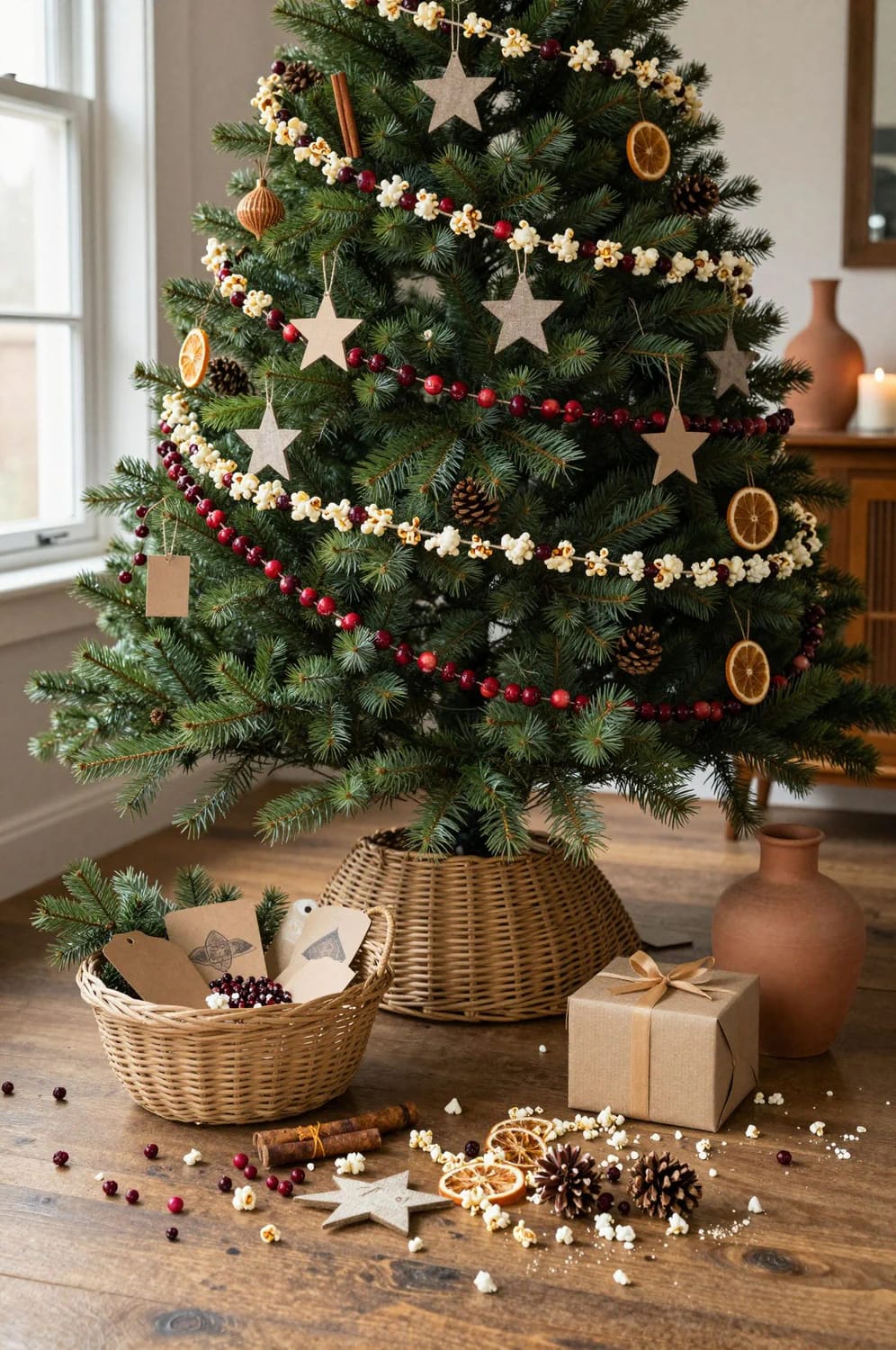
String lights, the metal wire star, the plastic tree stand collar and every one of those little gold ornament caps stay out of the pile permanently, and no amount of natural decoration around them changes that. The second thing to watch: any edible garland left in a room held above 70°F for more than a fortnight will grow mould at the thread holes before it dries out. Cool rooms, or shorter runs replaced halfway through December.
Wool felt shapes, as long as the felt is actually wool
Craft felt sold in big-box stores is almost always 100% polyester, and it will not compost in your lifetime or anybody else's. It is the single biggest false positive in this whole category, because it looks and cuts exactly like the real thing. Read the fibre label, and if there is no fibre label, assume plastic.
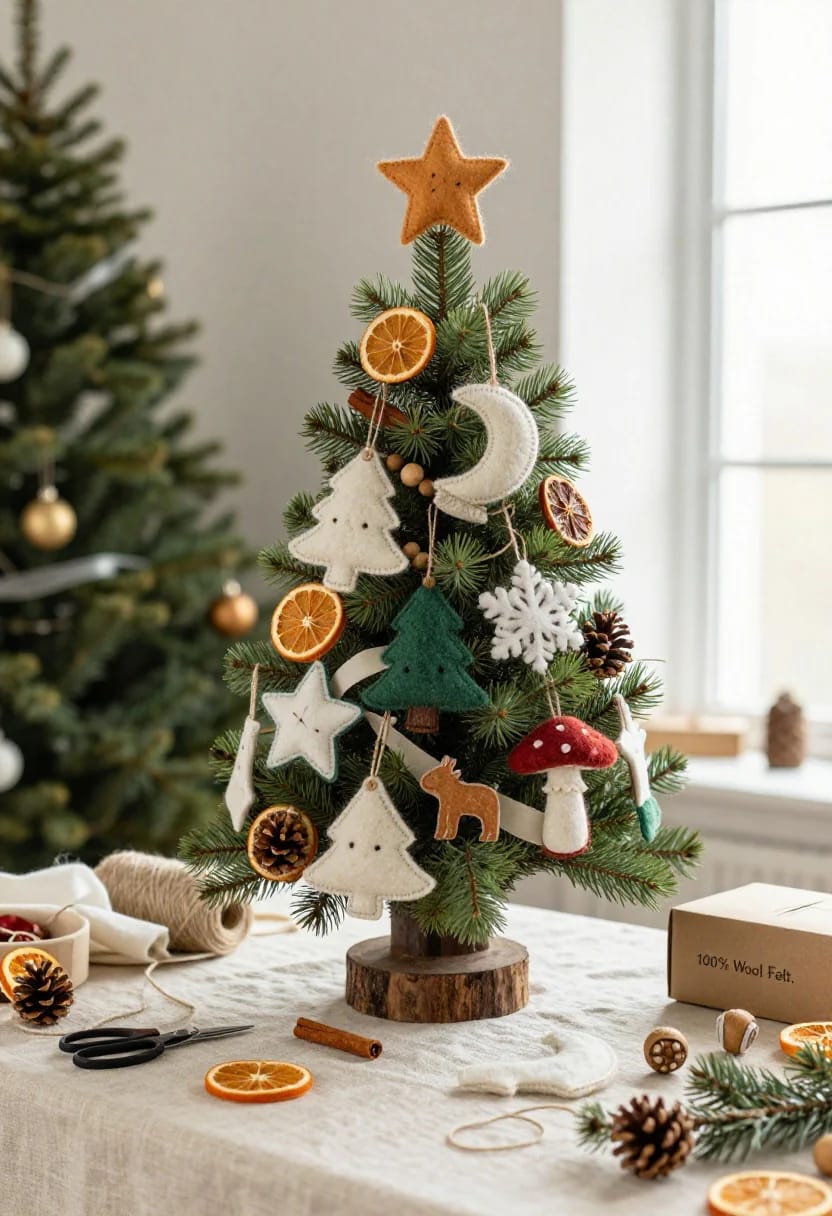
Real wool composts in roughly six to twelve months when buried, and it feeds nitrogen back as the keratin breaks down. Cut it with sharp scissors so the edges stay crisp, stitch with wool yarn rather than polyester thread, and stuff with wool scraps if you want any depth. There are more handmade decorations worth putting your December evenings into if this turns into a habit.
Sold by fibre content rather than by “craft felt”, which is the only way to be sure what you are cutting into. National Nonwovens stock at roughly 3 mm holds a shape without stiffener, and the 14-sheet pack covers a whole tree.
Weir Crafts 100% wool craft felt, 14-sheet pack, approximately 3 mmBeeswax ornaments are reusable rather than fast to compost, and that is the honest claim
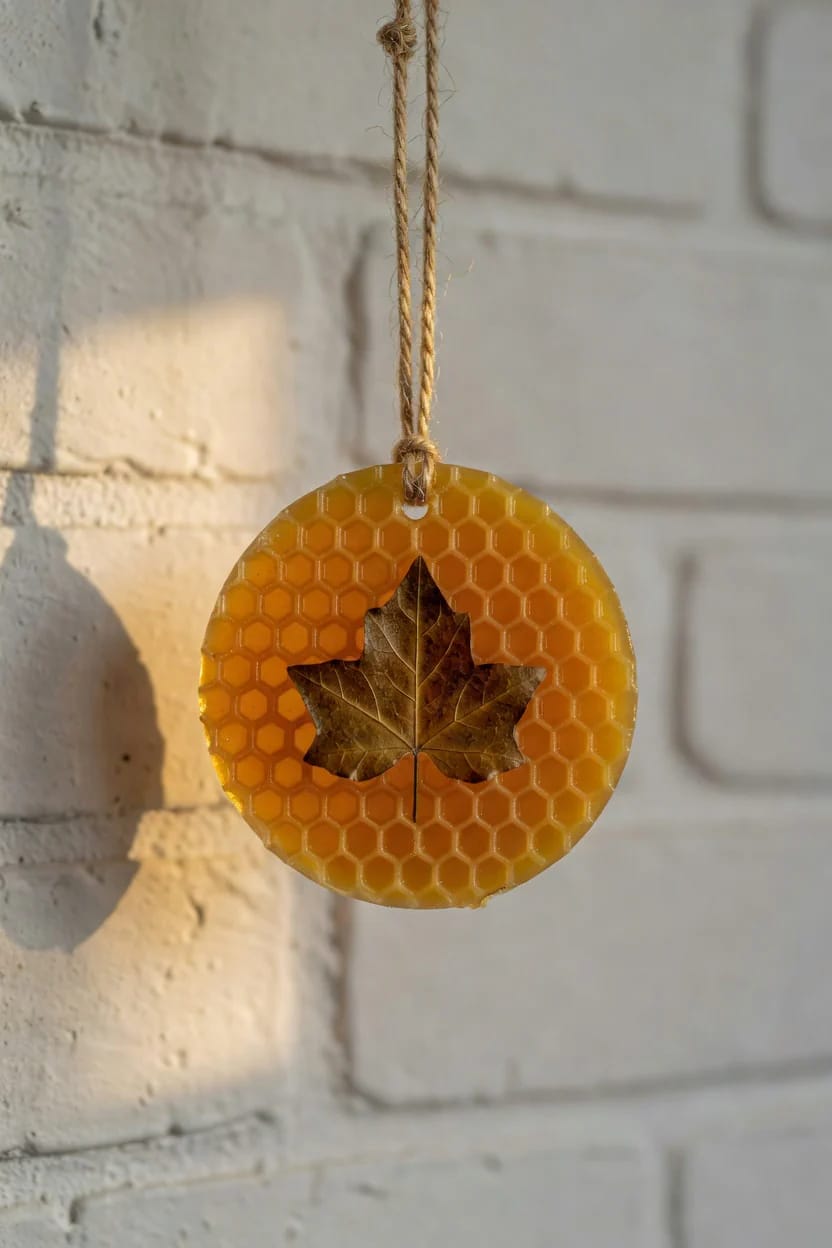
Beeswax will sit in a pile for years. What it will do instead is remelt cleanly, indefinitely, which makes it the one decoration on this list where the right end-of-life is a saucepan rather than the compost heap. Cut shapes straight from sheets of honeycomb foundation with a cookie cutter warmed in hot water, or dip pressed magnolia and ivy leaves in melted wax held at 150 to 160°F for a translucent, slightly amber finish.
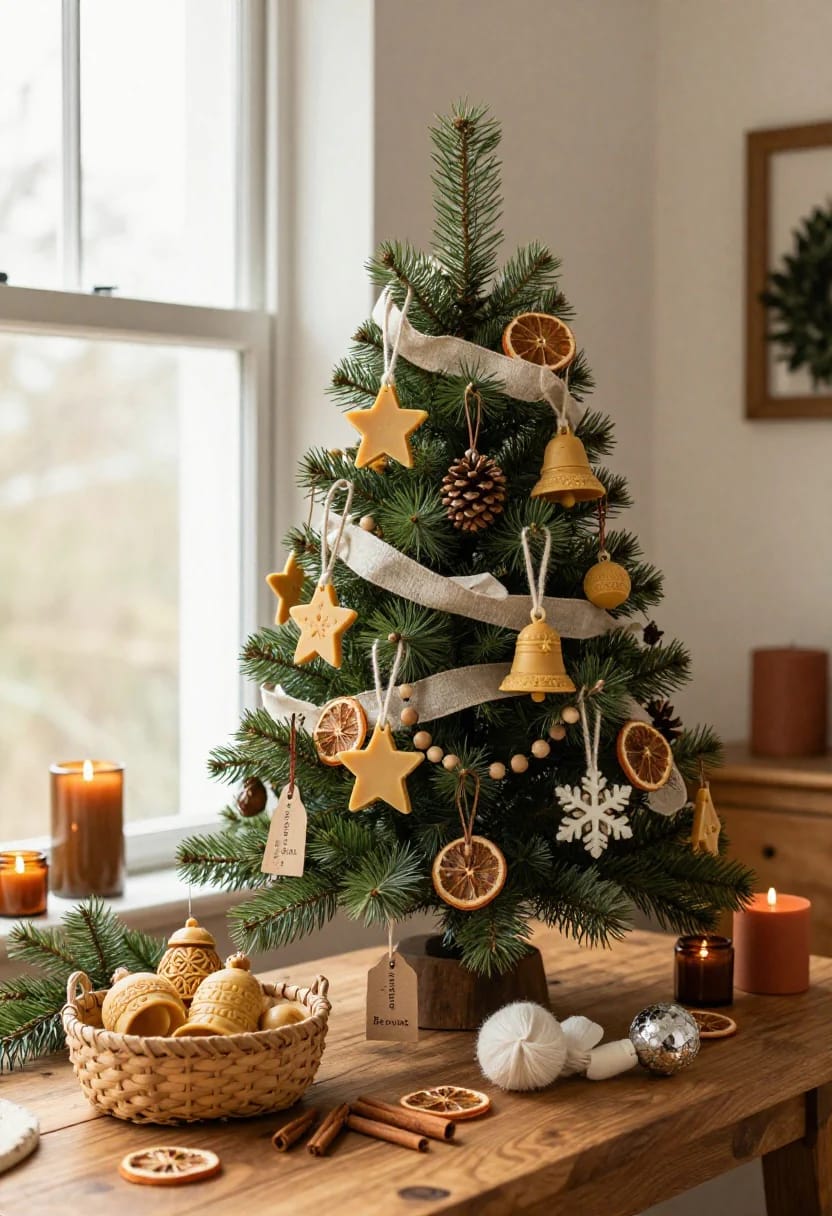
Foundation sheets are cheaper per gram than craft-branded wax and come already embossed, so a cut shape carries the hexagon texture without any tooling. At 16 by 7.5 inches a single sheet gives you eight or nine discs.
Vkinman natural beeswax honeycomb foundation sheets, 30-pack
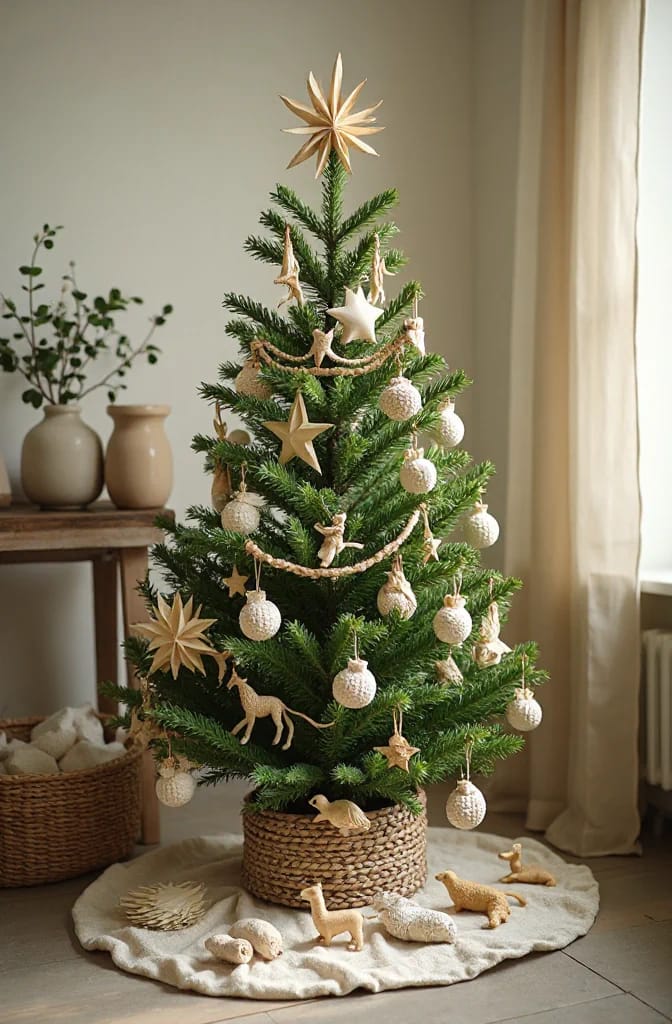
Wheat and straw stars borrow a tradition that was already compostable
Scandinavian and central European straw work has been solving this problem since long before anybody used the word biodegradable. Soak the stems in warm water for twenty to thirty minutes until they bend without splitting, split them open with a thumbnail, and bind the crossed bundles with red cotton thread at the centre.
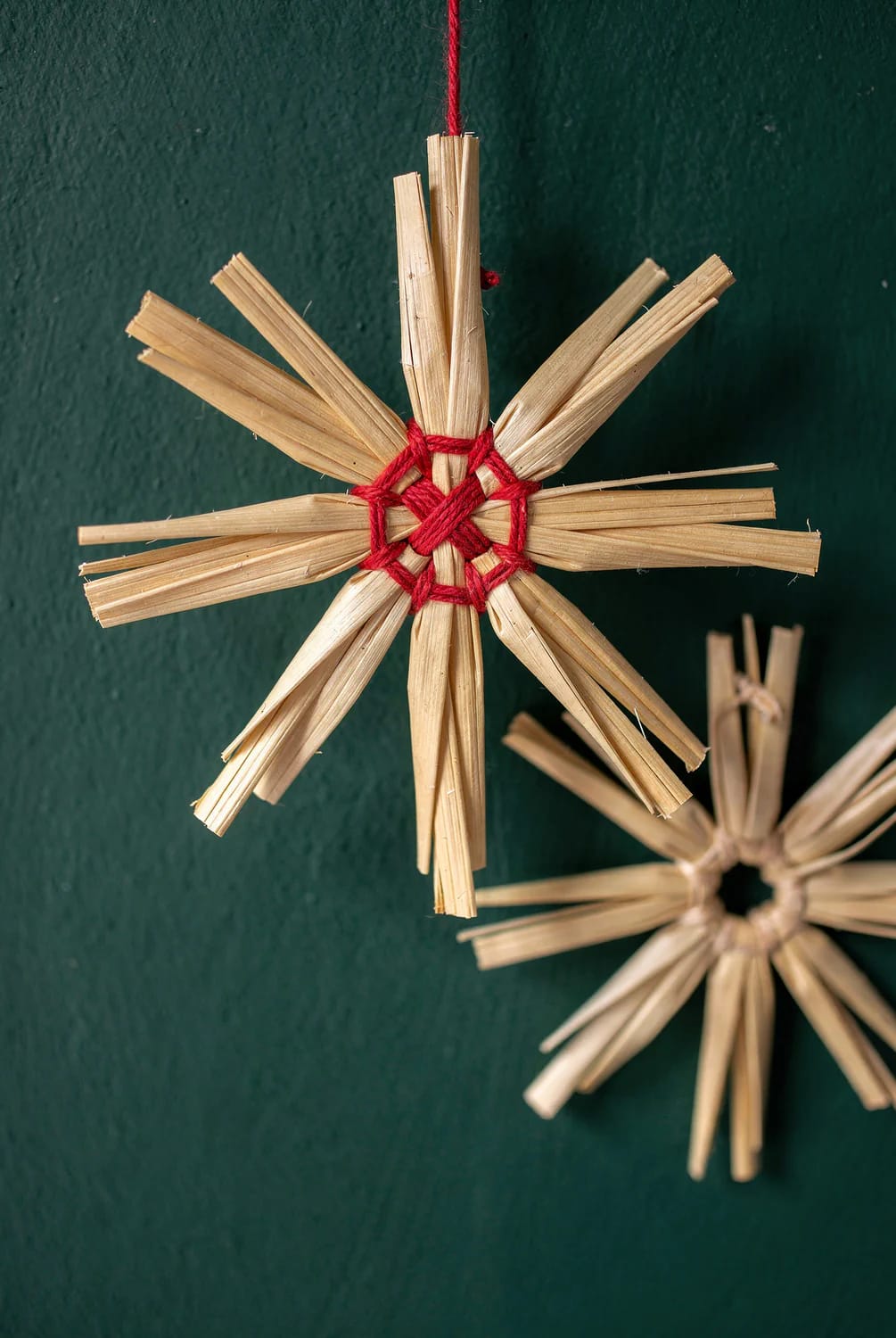
Straw is close to pure cellulose, so chopped into short lengths it disappears within a season. Left as long whole stems it mats into a wet layer that stalls the pile, which is a general rule for anything fibrous going into compost, not a quirk of the craft. Straw stars also cost close to nothing and pack flat, which is more than most of the natural Christmas decor sold as an eco alternative can say.
Corn husk stars and figures cost about four dollars a tree
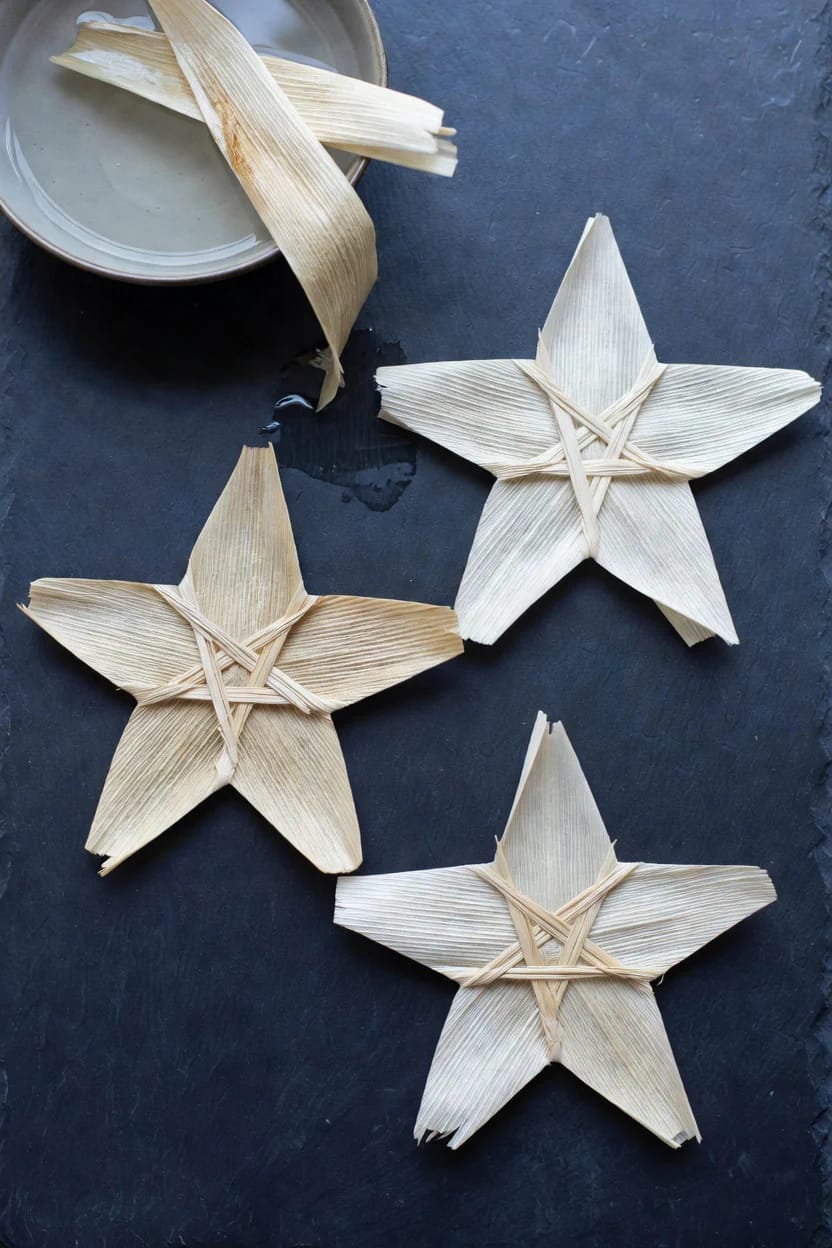
Tamale-grade dried corn husks come in a bag for the price of a coffee and there are enough in one bag to decorate a seven-foot tree twice over. Soak ten minutes, tear into strips along the grain, and either fold flat five point stars or bind the classic corn dolly figures with raffia at the waist and neck.
Cinnamon and whole spice bundles do the scent work that candles usually do
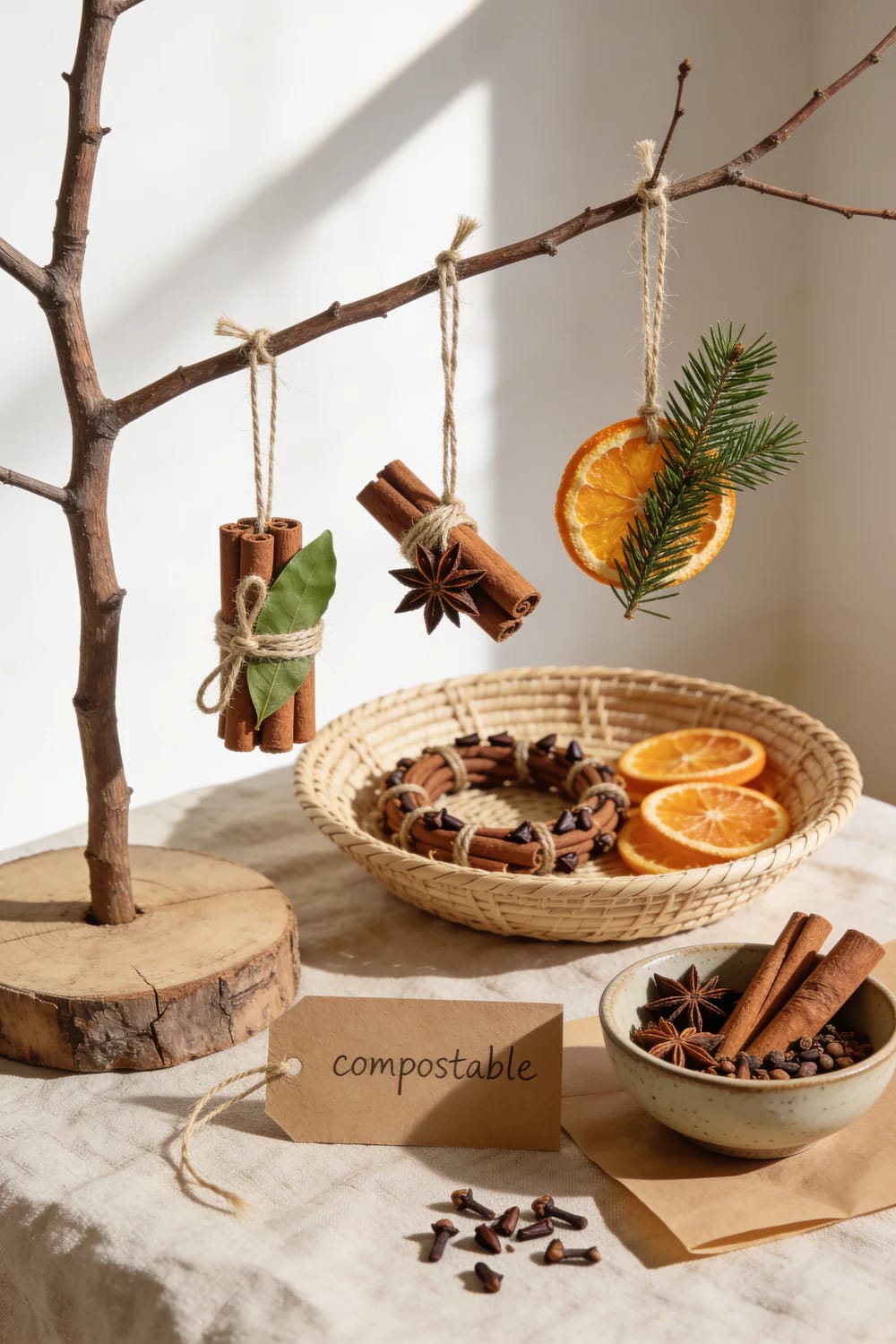
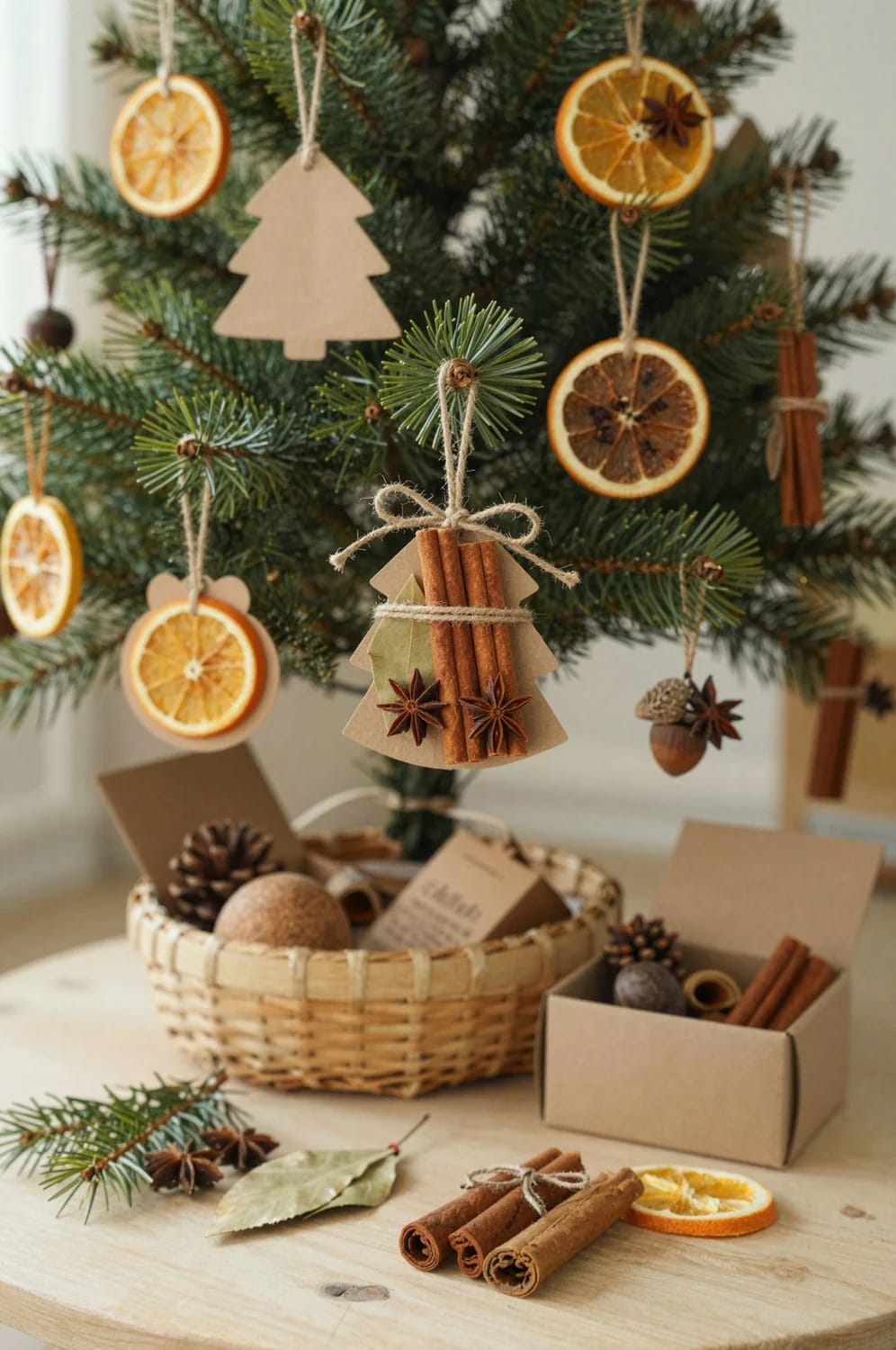
Three quills and two star anise, bound four times with jute, cost less than a dollar per ornament and hold scent through the season. When the smell fades in the second week, scrape the outside of the quill with a knife to open fresh bark. Cinnamon is woody, so it goes into the pile slowly unless you break it up, but it also stores perfectly well in a tin for next year.
Kraft paper and junk mail stars, held together with flour paste
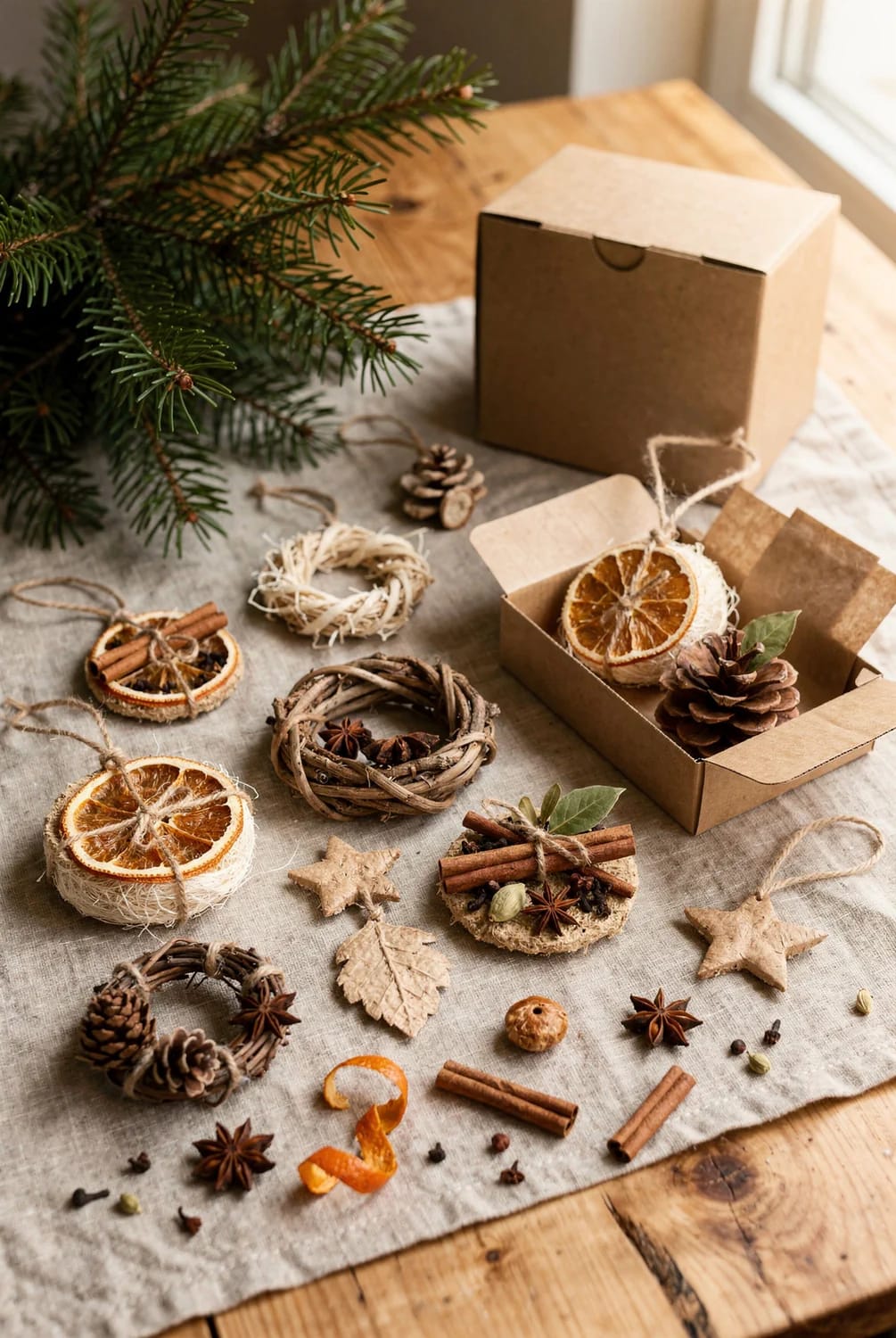
The failure point of every paper ornament is the adhesive, not the paper. Hot glue and PVA both survive composting, so a paper star assembled with either is a plastic-jointed object wearing a paper costume. Flour paste, two tablespoons whisked into a cup of water and simmered for three minutes, holds folded paper fine and breaks down with it.

Skip anything clay-coated or glossy, and keep thermal receipts out entirely, since they carry bisphenols you do not want in soil. Junk mail, brown grocery bags and the packing paper from every parcel that arrived in November are enough material for a whole tree, which puts this alongside the better zero waste projects made from what was already in the house.
Naturally dyed cotton and linen scraps give you colour without glitter
Colour is where compostable decorating usually falls apart, because the shortcut to festive is glitter and glitter is a ready-made microplastic. The biodegradable kind is not the escape route it appears to be either: a 2020 Anglia Ruskin University study published in the Journal of Hazardous Materials ran conventional PET glitter alongside cellulose and mica alternatives in freshwater mesocosms for 36 days, and found duckweed root length and phytoplankton biomass reduced by every type tested, with the cellulose version also doubling the population of an invasive snail. The manufacturers dispute the methodology and point to their own freshwater biodegradation certification, which is a fair argument to read, but it is not a settled question and I would leave glitter off a compostable tree entirely.
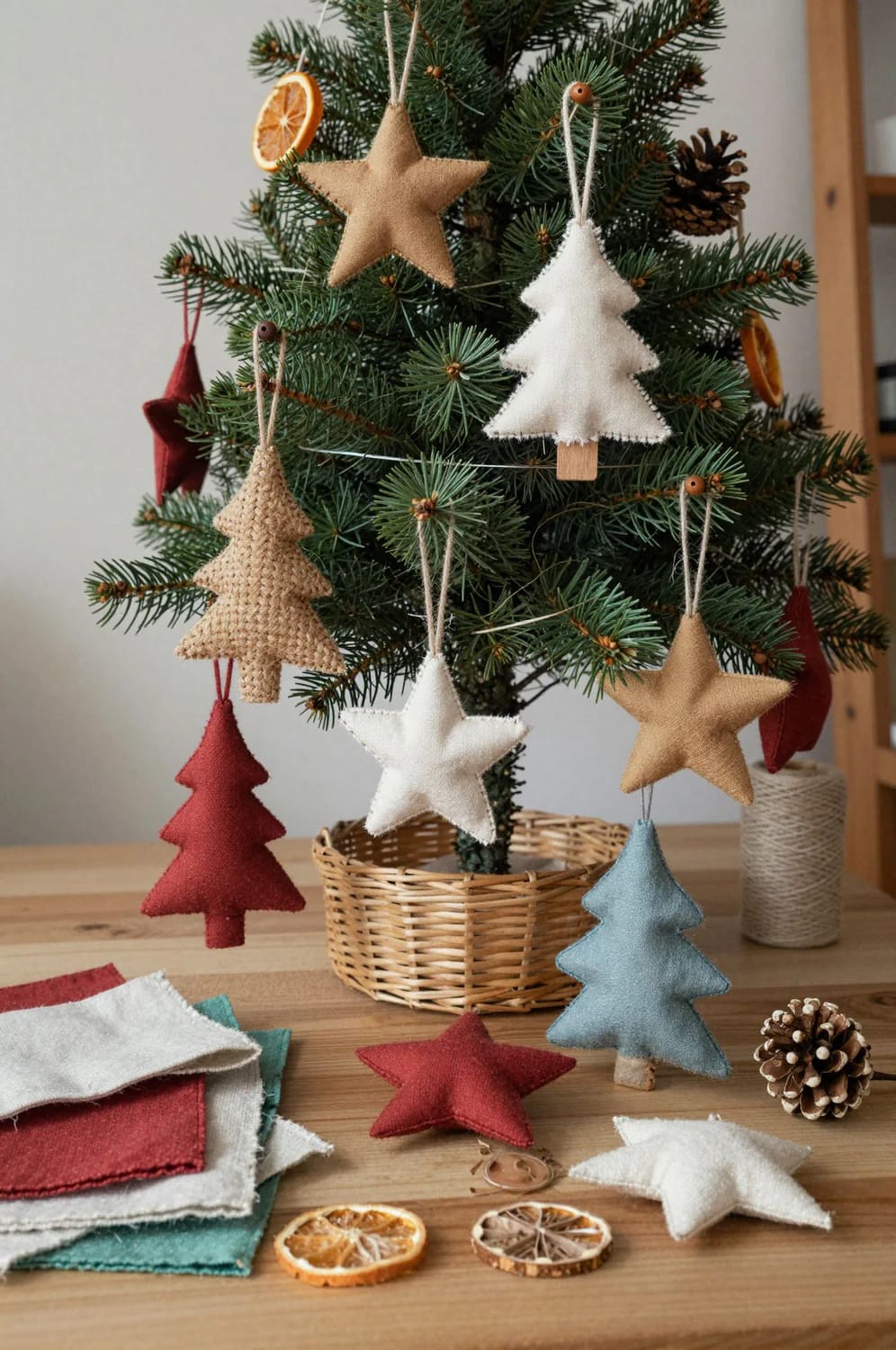
Plant dyes on natural fibre solve the colour problem outright. Yellow onion skins give a rust orange, avocado pits and skins give a dusty pink that surprises everyone the first time, madder root gives brick red, and black beans give a grey blue that shifts toward violet on wool. Mordant first with Organic Cotton Plus alum mordant, 1 pound at 10 to 15% of the dry weight of the fibre. Wool and silk take it directly. Cotton and linen need a tannin bath first, which is the step most beginners skip and the reason their scraps come out of the January wash three shades paler.
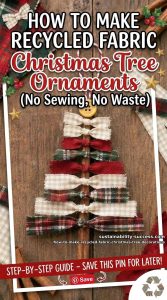 How to Make Recycled Fabric Christmas Tree Ornaments (No Sewing, No Waste) A knotted method that turns worn shirts into ornaments without a single stitch or seam.
Foraged seed heads and cones are the filler that costs nothing
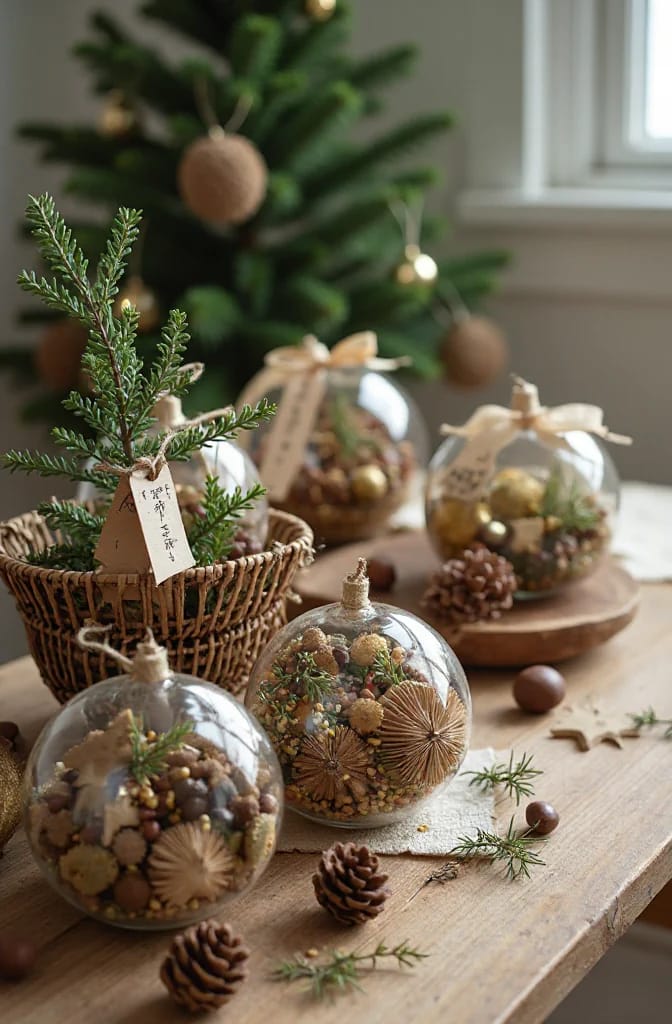
Cut hydrangea heads in September once the petals have gone papery and stiff, not in August when they are still soft, because soft heads shatter into confetti the moment they dry. Teasel, poppy pods, honesty discs and alder cones all hang straight from a loop of twine with no other preparation, and they carry the same woodland look the rest of this list is working toward, gathered in the same walk that produces the twig decorations.
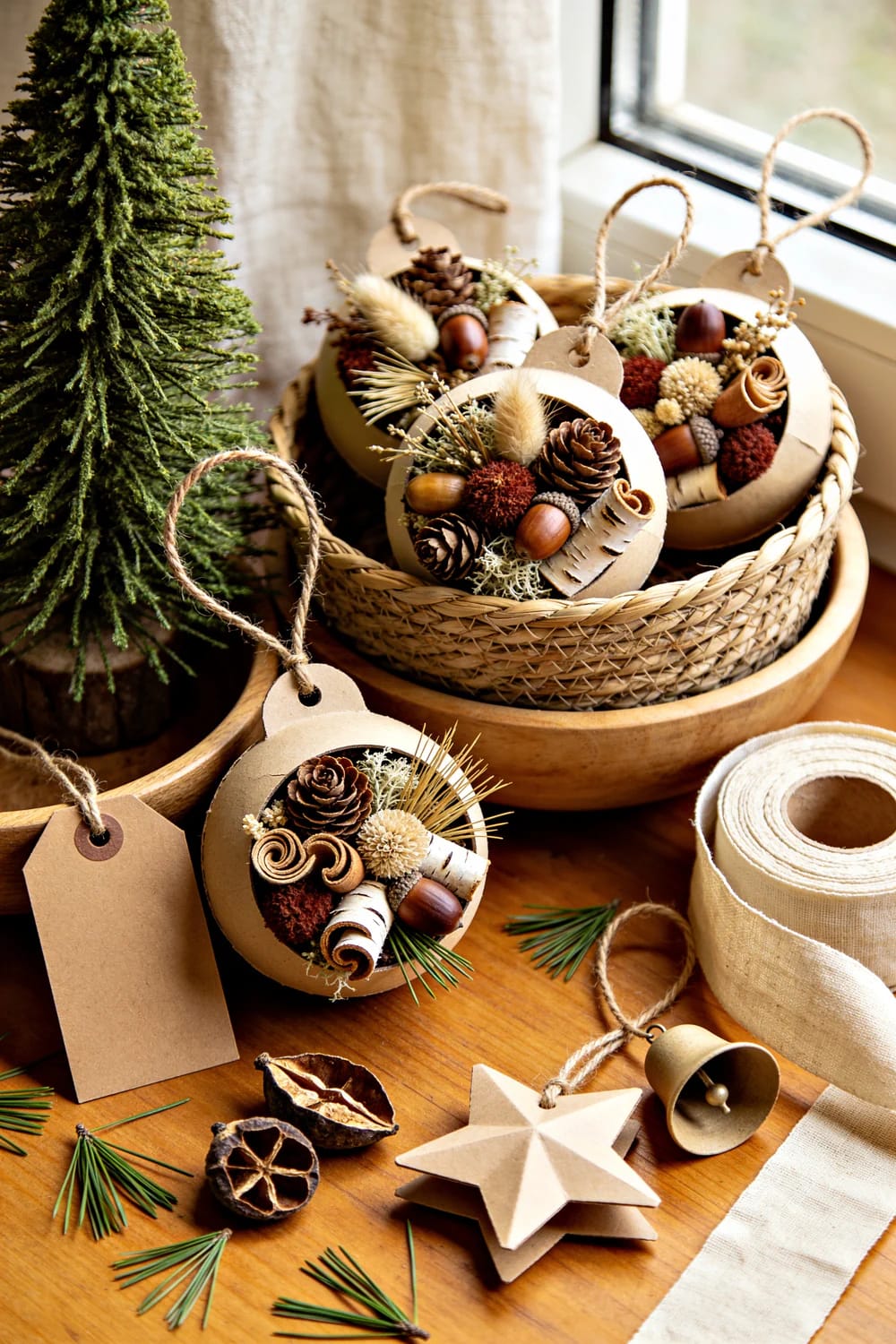
Cones are the exception to the compost logic here, because lignin means a cone will sit in a pile for years and it is the one thing on the tree genuinely worth boxing up for next December. Bake them first, though: 30 minutes at 200°F on a foil-lined tray kills whatever came in with them and opens the scales fully, and there is always something living in a cone brought in from outside.
Related Posts
- 29 Cheap Eco-Friendly Christmas Trees For A Unique Holiday Decor
- 26 Eco-Friendly Natural Christmas Decor Ideas to DIY in 2024
- 31 Eco-Friendly Handmade Christmas Decorations to Try This Season
- Foraged Twig Christmas Decorations From the Garden
- Upcycled Pallet Christmas Tree Ideas for Small Spaces
- Fresh Cedar Garland for a Sustainable Christmas