
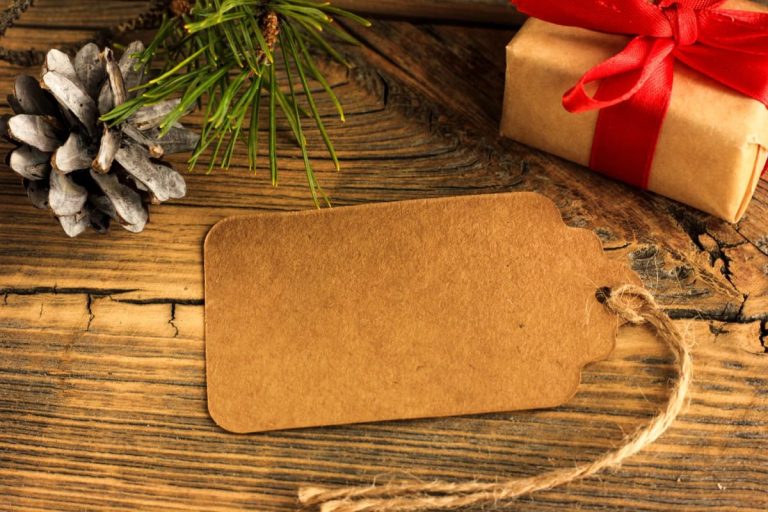
The trouble with brown paper and twine place cards is almost never the brown paper or the twine. It is that most of them are gift tags with a name written on them, and a gift tag says parcel, not dinner. The thirteen below are sorted by how much work the card is actually doing: four are only paper and string, four are tied to something that grew, three take over a job the table already had, and two leave with the guest.
Kraft is a range, not a single material. The rolls sold for wrapping are thin, well under 100 gsm, which is fine for a band or a wrap and hopeless for anything expected to stand upright. Kraft cardstock sold for card making runs roughly 200 to 300 gsm (about 75 to 110 lb cover), and 300 is the weight where a folded tent card stops sagging by the second course.
Almost none of this needs a craft store run. A paper grocery bag, a ball of jute garden twine, and whatever is still green in the yard covers eleven of the thirteen. The two exceptions are the wax seal and the white pen, and both are small enough purchases to be worth arguing for.
Cards made from nothing but paper and twine
These four are the base case. Get the paper edge and the knot right here and everything in the later sections inherits it.
A torn-edge kraft rectangle with one twine wrap
Tear the card, do not cut it. A guillotined edge on kraft looks like packaging because that is exactly what a guillotined kraft edge is; a torn one shows the paler fiber under the brown surface and immediately reads as made by hand. Lay a metal ruler where you want the edge, hold it down hard, and pull the paper toward you rather than away, so the brown skin peels back on the side facing up.
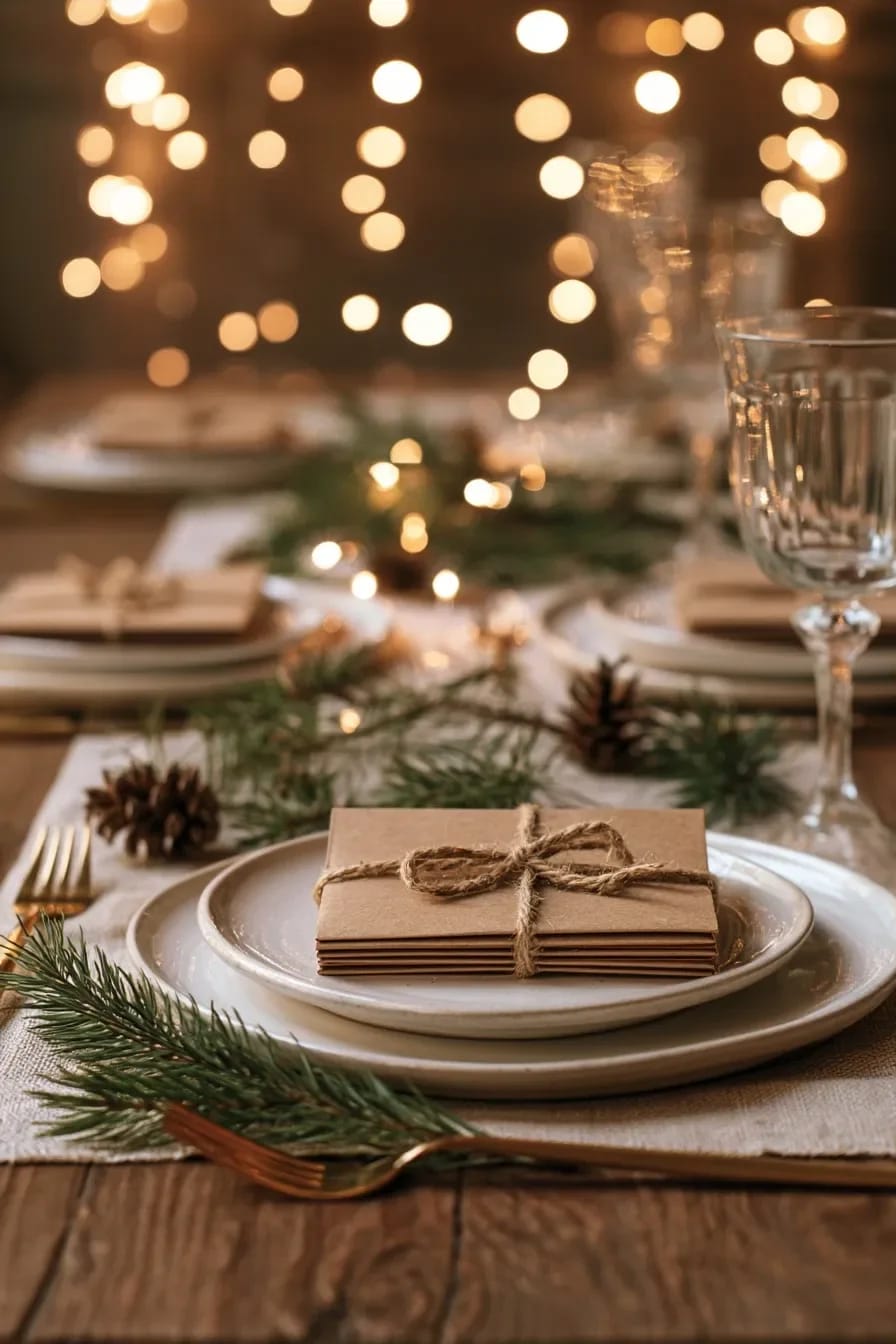
Size matters more than people expect. Anything smaller than about three and a half inches wide disappears next to a dinner plate, and anything past five starts competing with the food. Cut a paper grocery bag flat and you will get six or seven cards out of the plain panels, which is the cheapest version of this entire article and, if your handwriting is good, indistinguishable from the bought version at two feet. Test your pen on a scrap first, because bag paper is soft and some gel inks feather badly on it. The same free-paper logic runs through a lot of cheap paper Christmas decorations worth making from what is already in the recycling, and the tearing technique transfers directly.
Then the twine. One horizontal wrap, knotted slightly off center rather than dead middle, tails cut on a slant at around an inch. Eight inches of jute is enough for a single wrap on a four inch card, and a double wrap needs closer to fourteen.
A tent card with a twine spine
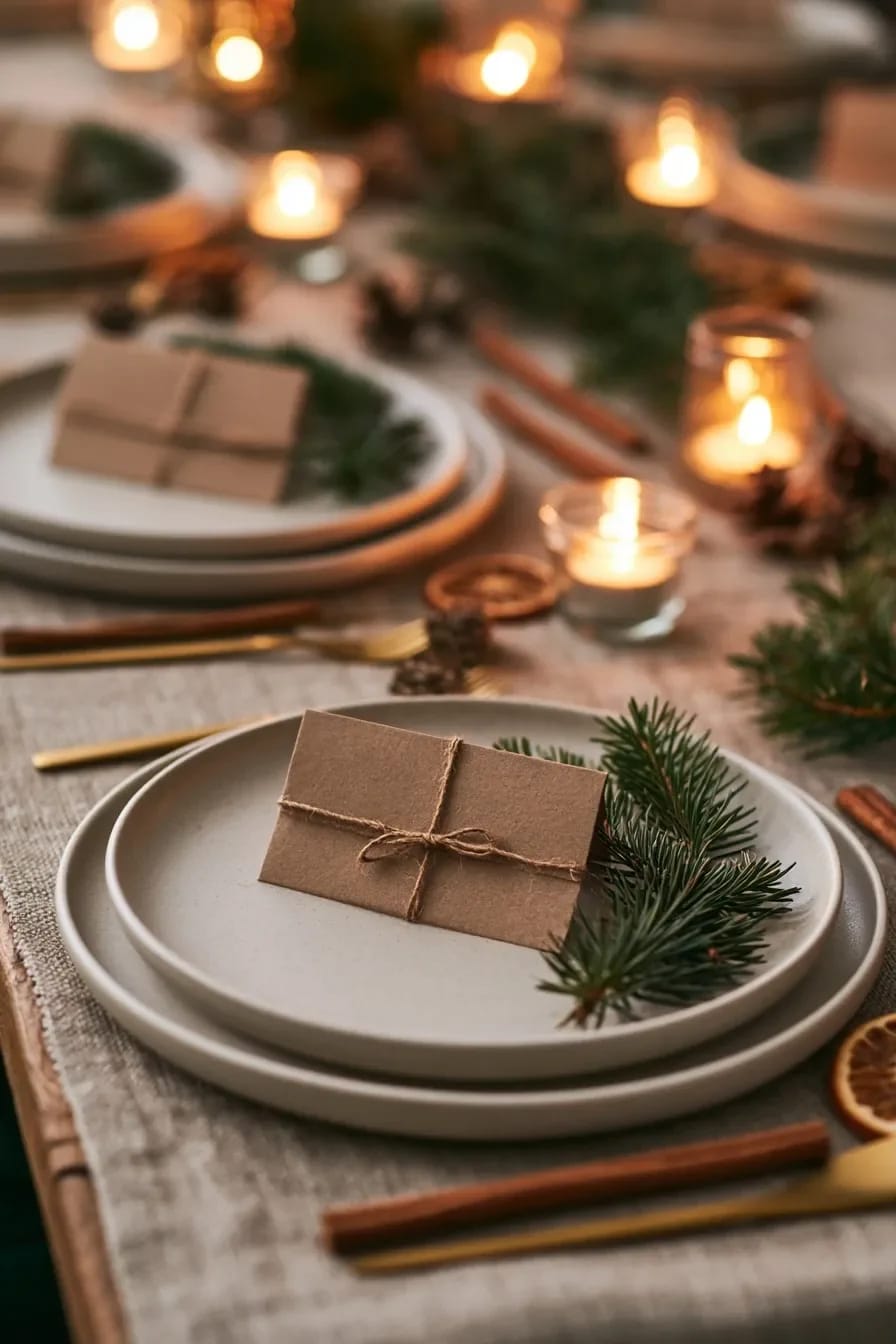
Granted, a folded kraft card is the least original thing on this list, which is exactly why it is worth doing one non-obvious thing to it. Punch two small holes either side of the fold along the top edge, thread a short length of twine up through one and down through the other, and knot it on the outside. The twine now sits along the spine like binding thread, and it stops the two halves splaying open, which is the specific failure that makes tent cards flop face down halfway through a meal.
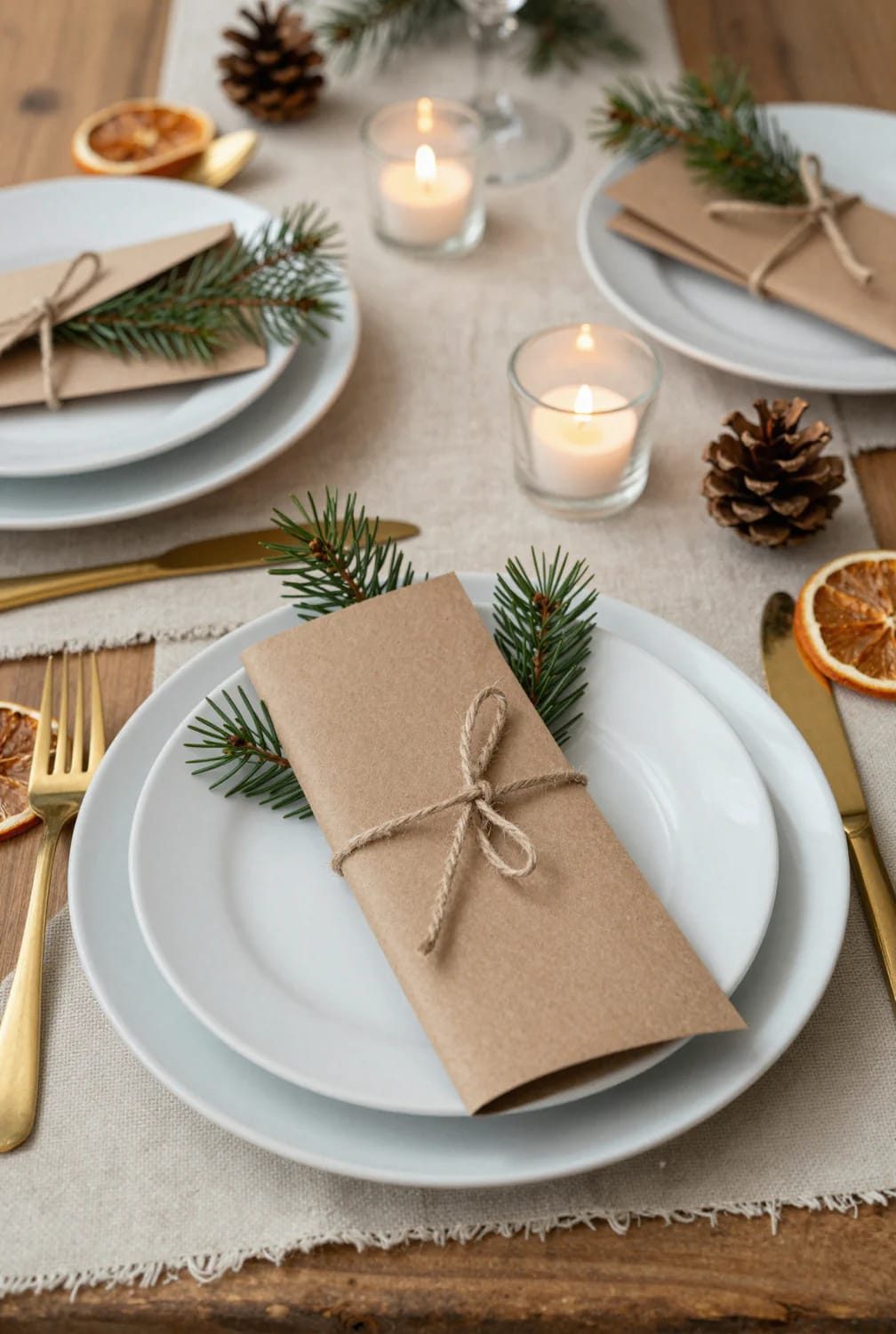
Score the fold before you fold it. Run the back of a butter knife or a bone folder along a ruler, then crease; unscored kraft cracks along the fold and the cracked line shows white, which looks like damage rather than texture. And use the heavy stuff. At 160 gsm a tent card tips the moment someone puts a wine glass down next to it.
White gel pen, not gold marker
Gold ink on brown paper is a waste of money, and Christmas is when people reach for it hardest. Metallic gold pigment relies on reflecting a fairly neutral light; put it under candlelight, which sits somewhere near 1900 kelvin and is heavily orange, and gold on kraft turns into slightly shinier brown at any distance past a plate width. Opaque white does the opposite. It has nowhere to go but bright.
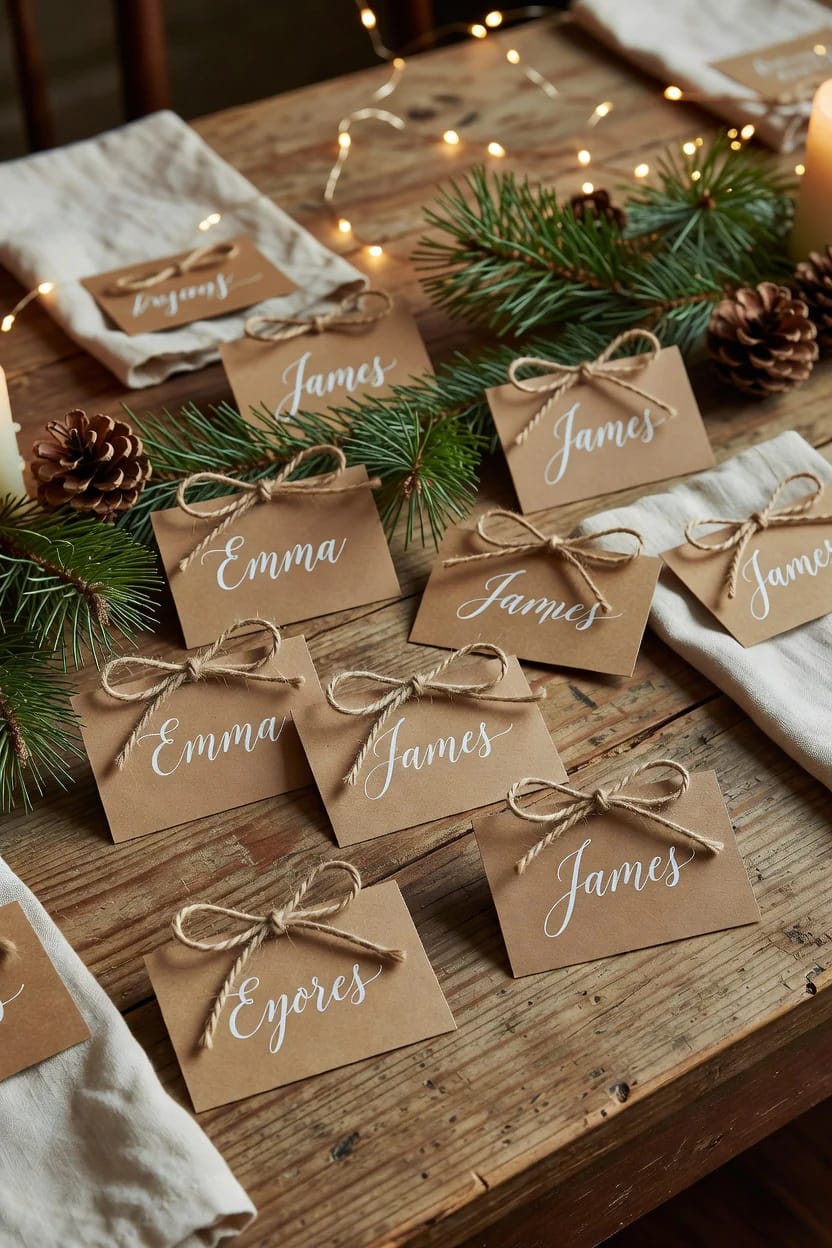
A broad-tip white gel pen such as the Uni-ball Signo is the usual answer, and the one instruction that matters is to leave it alone for a minute before you touch it. White gel ink sits on top of kraft rather than soaking in, so it stays wet longer than it looks, and a smeared name cannot be fixed. Black ink is the quiet alternative and reads fine, particularly if the table is lit by anything electric. Silver, for what it is worth, behaves more like white than like gold.
Kraft over ivory, two layers held by the knot
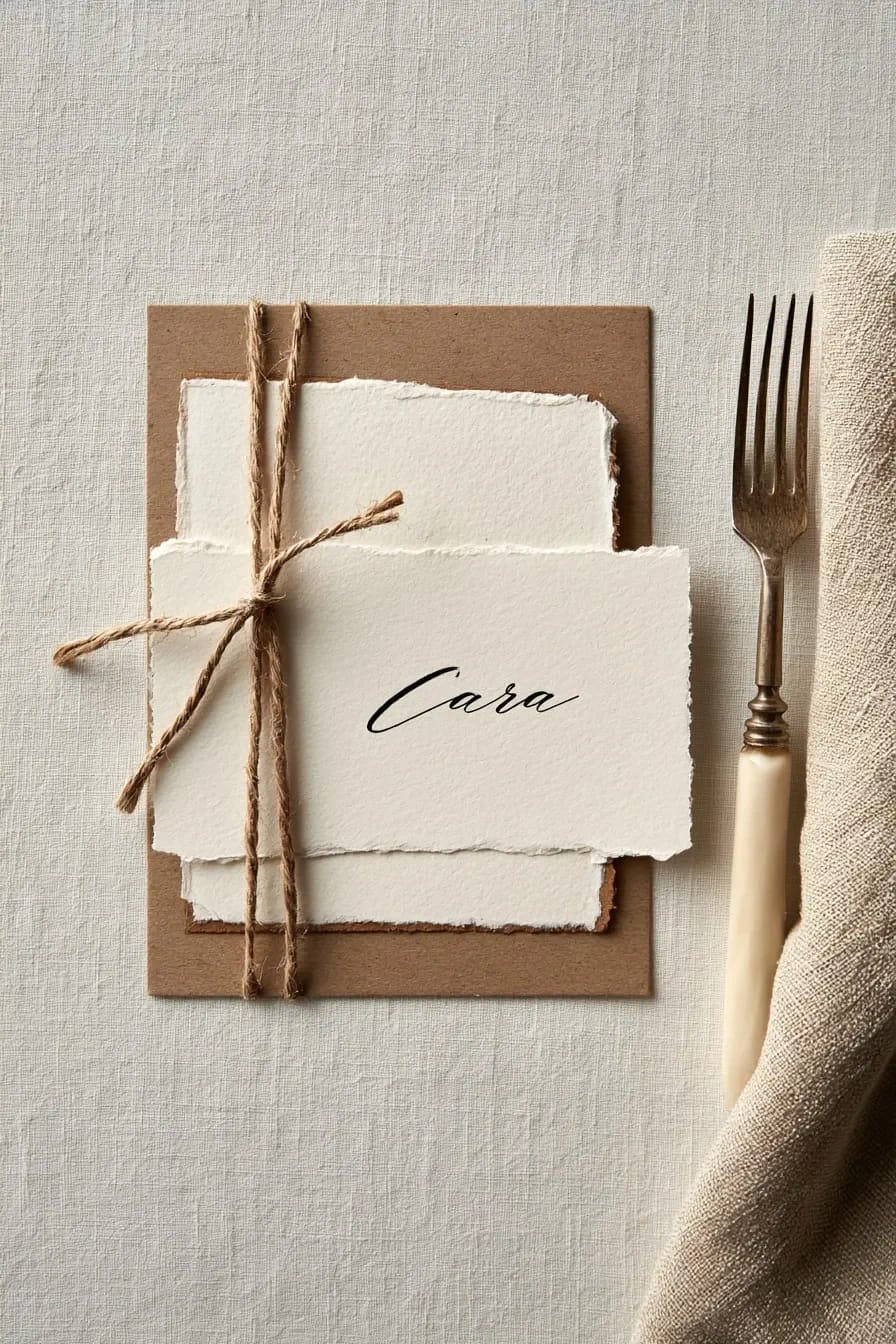
Two layers is what wedding stationers do when a single kraft card looks too plain, and it costs one extra tear. Put a smaller ivory or oatmeal panel on top of the kraft, offset by about a quarter inch on all sides, and let the twine hold them together rather than glue. The eye reads the brown as a border, the name sits on a surface that takes ink cleanly, and the whole thing still comes apart flat for storage.
The contrast only works if the two papers differ in texture as well as color. Smooth ivory on smooth kraft looks like a printing error. Torn ivory on smooth kraft looks deliberate, and the same principle governs why burlap works next to kraft in rustic Christmas decor while two similar-weight fabrics next to each other do not.
Tie the card to something that grew
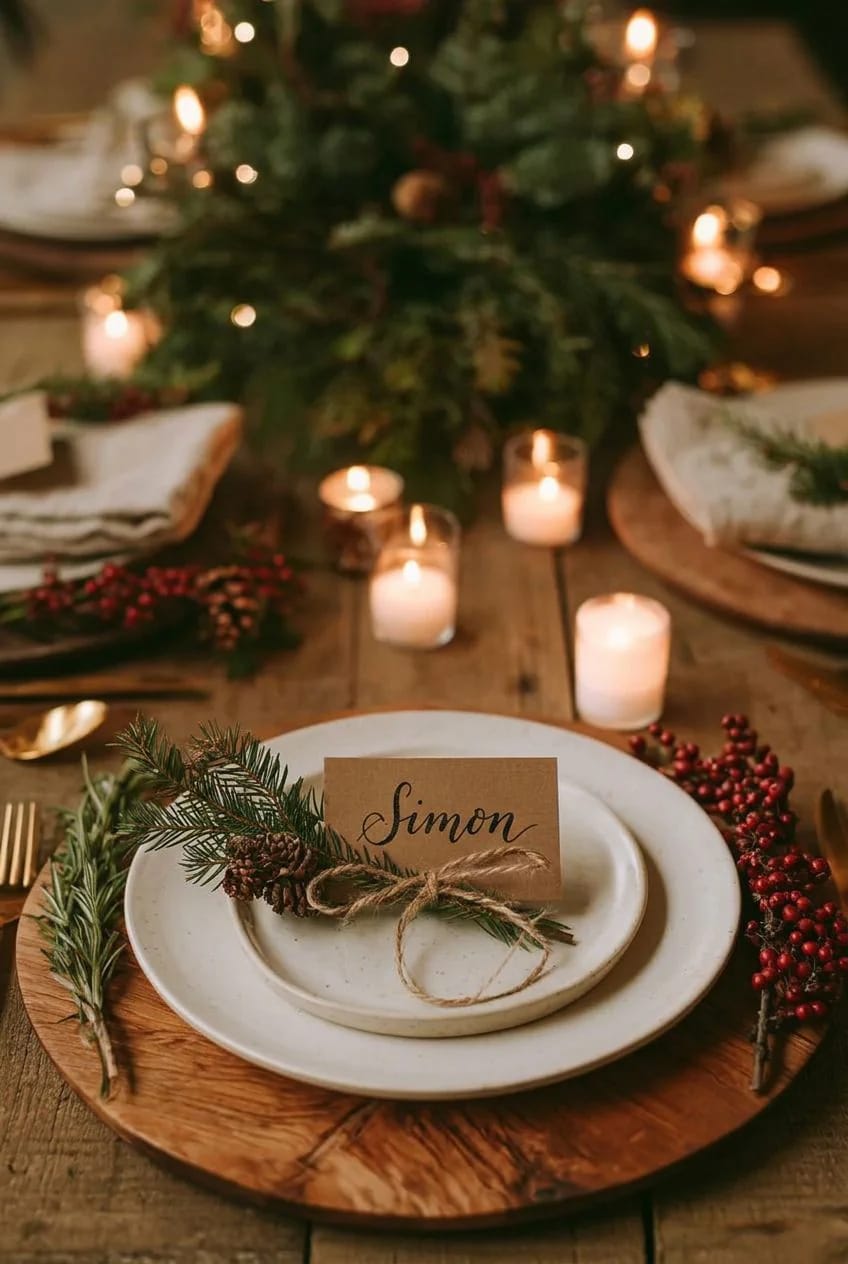
Once the card is tied to a natural object it stops being stationery and starts being part of the setting. All four of these hold the card upright without a holder, which is the practical reason to bother.
Pine cone name tags
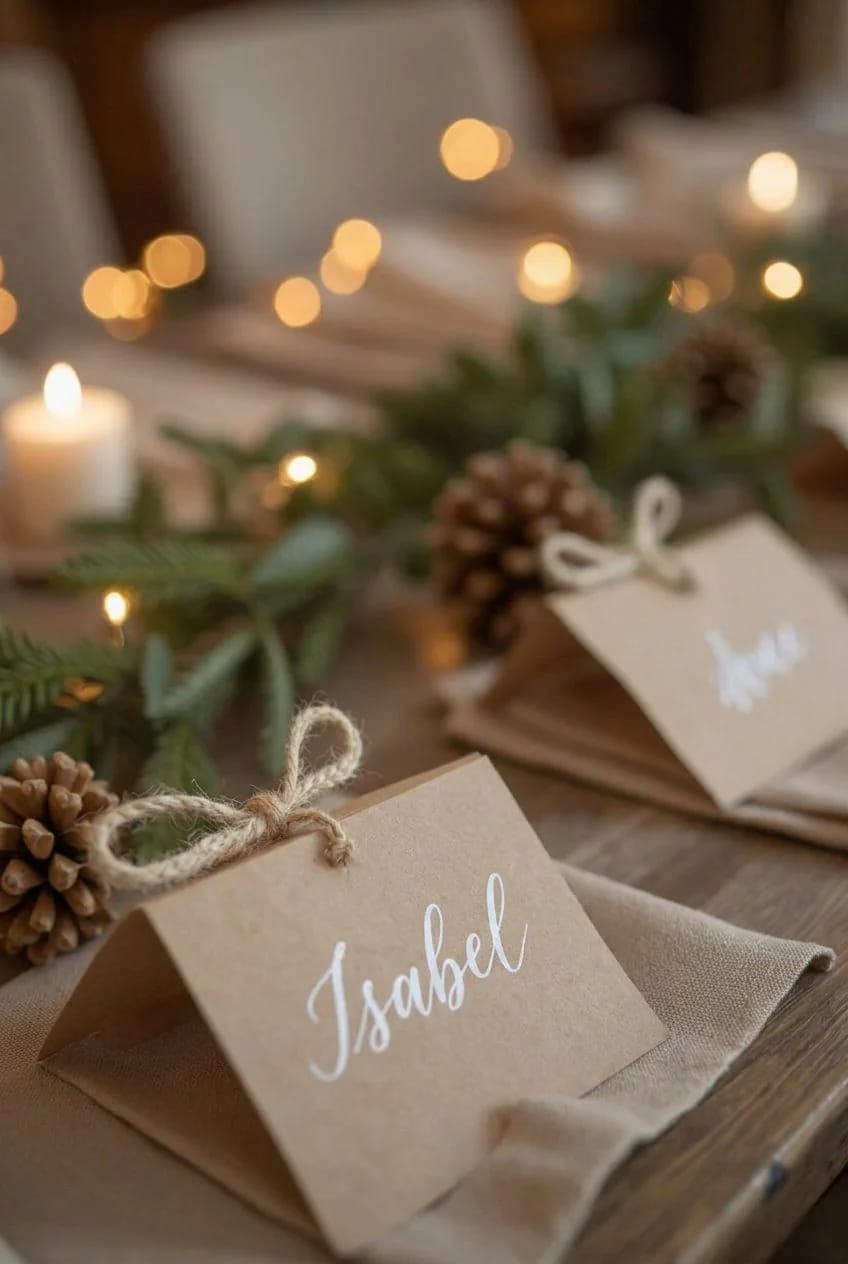
The cone is the stand and the kraft is the card, and no glue is involved. Pick cones with scales already open, then wedge the tag between two scales about two thirds of the way up, pressing until the paper is gripped on both faces. A tag around two by three inches balances a medium cone; anything larger and the cone tips backward under the weight of the paper.

Bake foraged cones before they go anywhere near the table. Half an hour in a low oven, somewhere around 200°F on a foil-lined tray, drives out the insects living in the scales and finishes opening any cone that came in damp and closed. Watch them, because cones carry resin and resin does not need much encouragement.
Cones roll, which is the flaw nobody mentions. Two fixes, both quick: sand or slice a flat facet on one side of the base, or set each cone on a coin-sized disc of felt, which grips a tablecloth and stops the whole assembly wandering when someone reaches across for the gravy. If a cone still leans, turn it so the lean pushes the card toward the guest rather than away.
A cedar or rosemary sprig bound under the twine
Rosemary is the better choice for a card someone will pick up, because the oils release when it is handled and the smell is the point. Cedar is the better choice for a table you set the night before, because it holds its color for weeks while rosemary goes grey-green and limp in about four days.
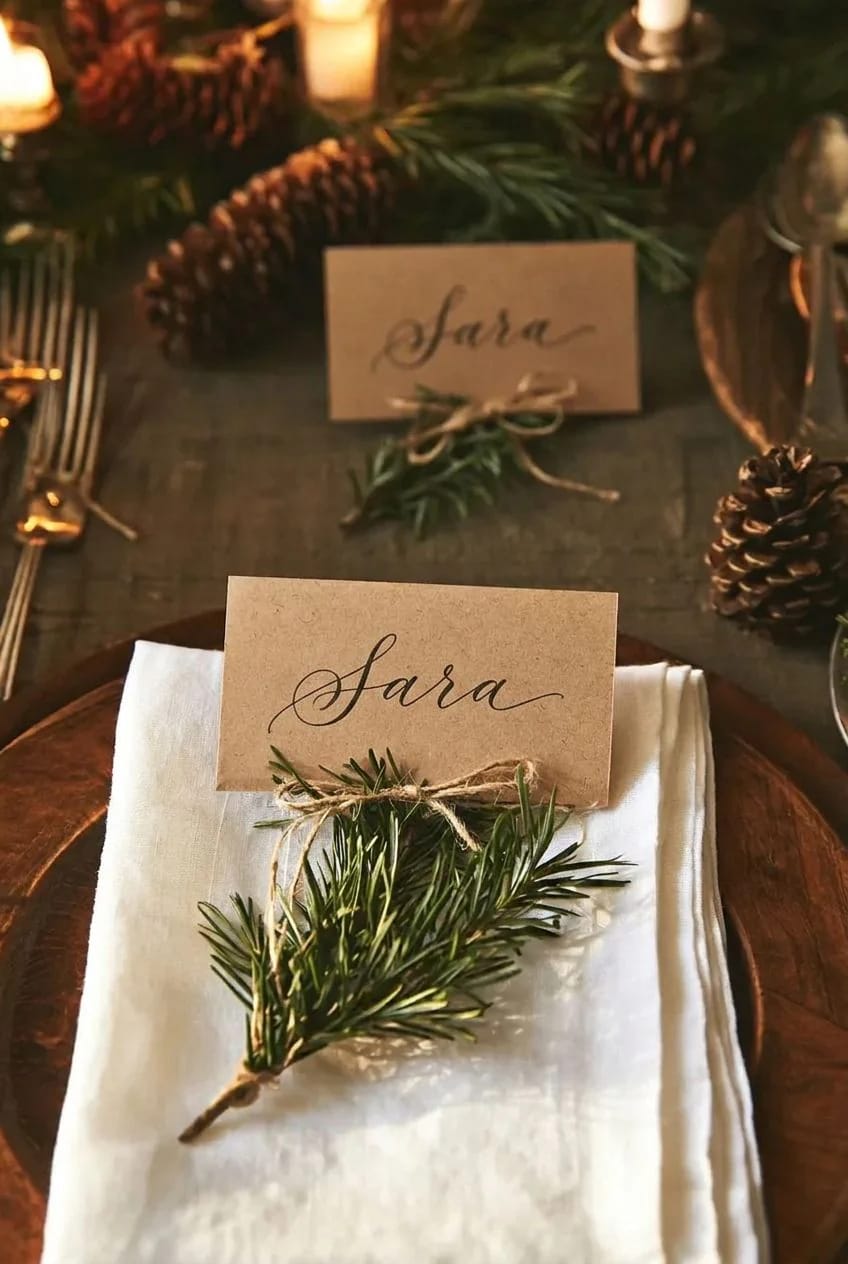
Keep the sprig short, no more than about three inches, and lay it diagonally rather than parallel to the card edge so it does not read as a border. Two passes of twine over the stem, knotted once. A longer piece looks generous in the hand and cluttered on a plate, which is the same mistake people make with cut greenery generally; the restraint that makes a fresh cedar garland look considered rather than heaped applies at this much smaller scale too.
 Natural Christmas Place Settings With Foraged Sprigs: 9 Ways to Set the Table Nine ways to build the whole setting around cuttings you already have outside.
A dried orange slice threaded onto the string
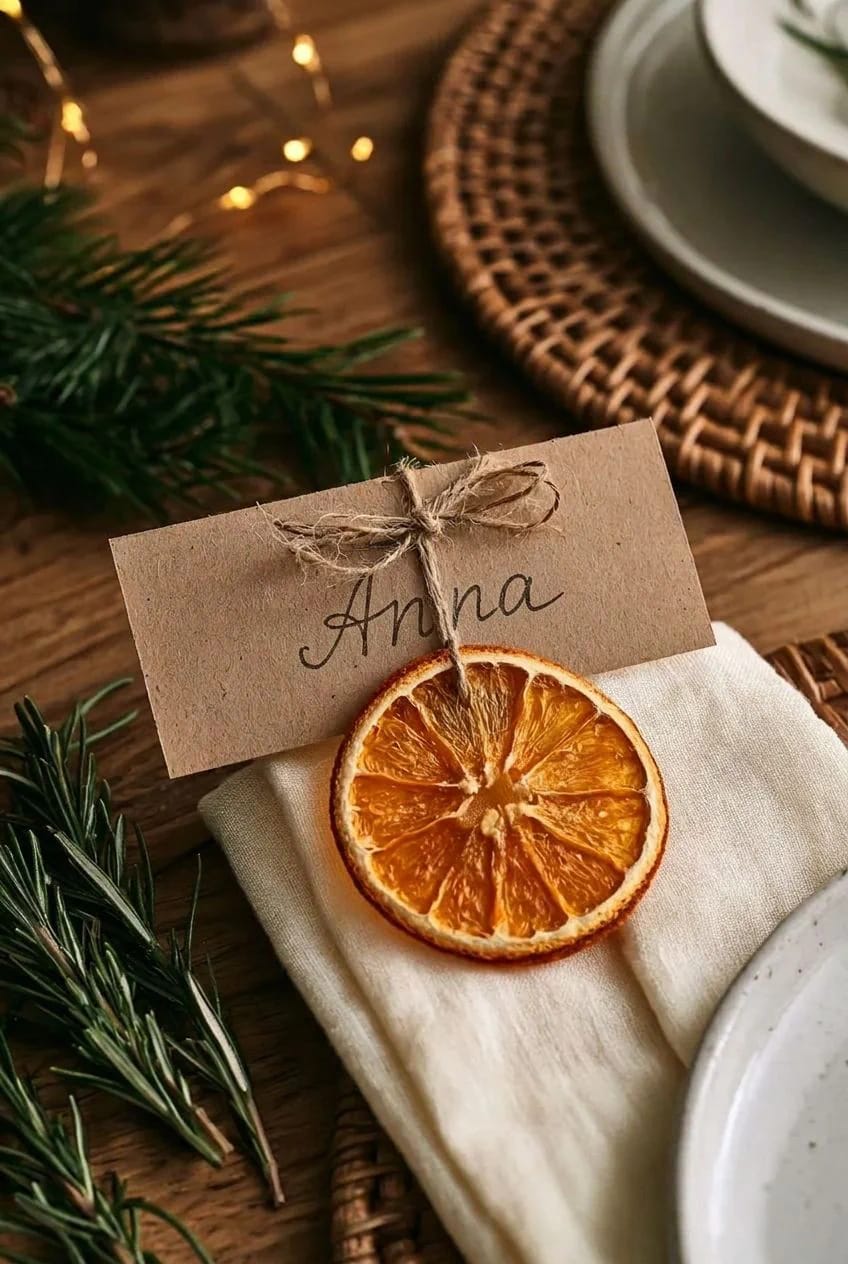
Thread the twine through the pith at the edge of the slice, not through the translucent flesh, which tears under almost no load at all. One slice per card, sitting to the left of the name where it will not be read as decoration on top of the lettering. If you have a batch drying anyway for dried orange Christmas decorations elsewhere in the house, pull out the smallest and least perfect ones for this; the big even slices are wasted at place-setting scale.
A sawn twig that grips the card
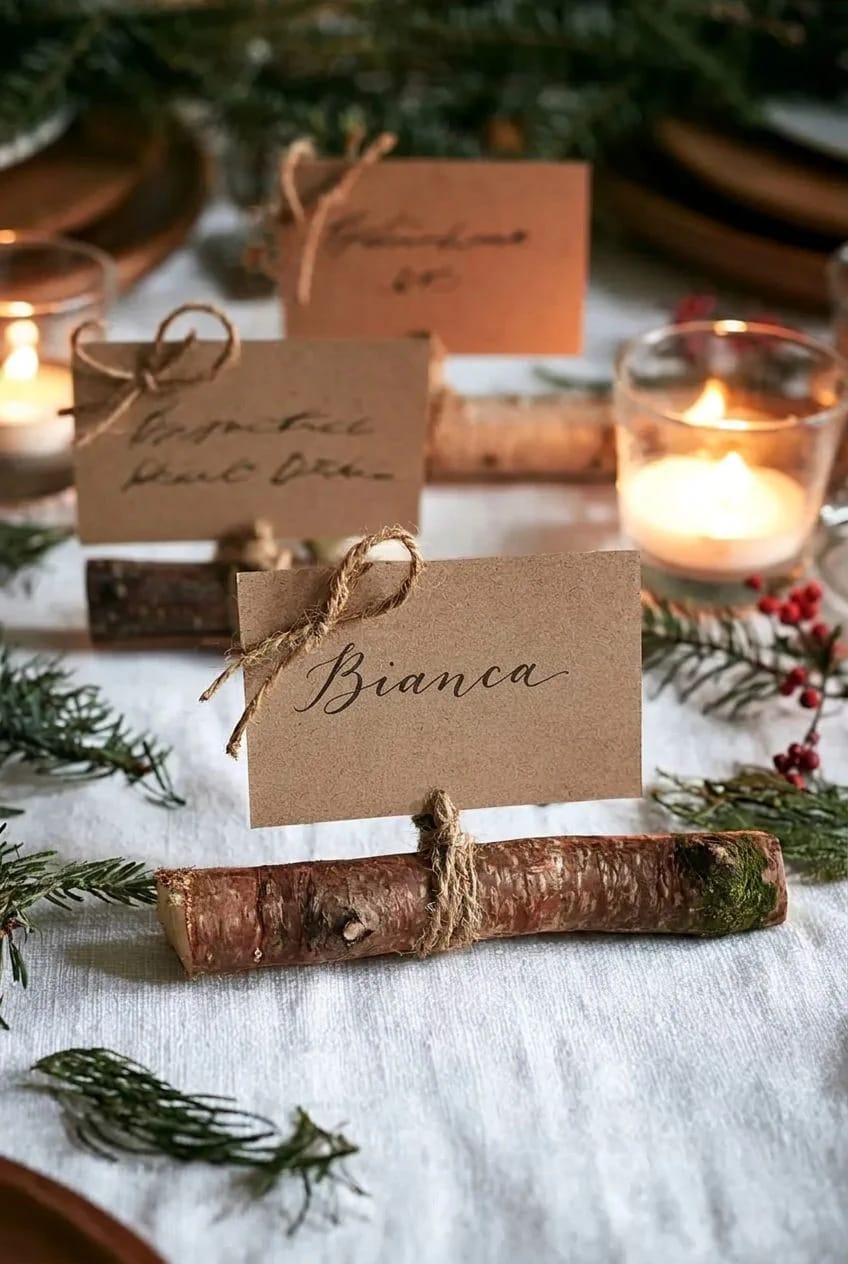
This is the sturdiest holder in the article and takes about ninety seconds per guest. Cut a four inch section from a branch of one to two inches diameter, sit it cut-face down, and run a single saw kerf along the top edge, roughly half an inch deep. The card slots straight in and stays. Birch is worth seeking out for the bark, but any hardwood prunings work, and the fallen stuff from a winter garden is free; the same offcuts feed a whole run of foraged twig Christmas decorations made from garden prunings, so cut more than you need while the saw is out.
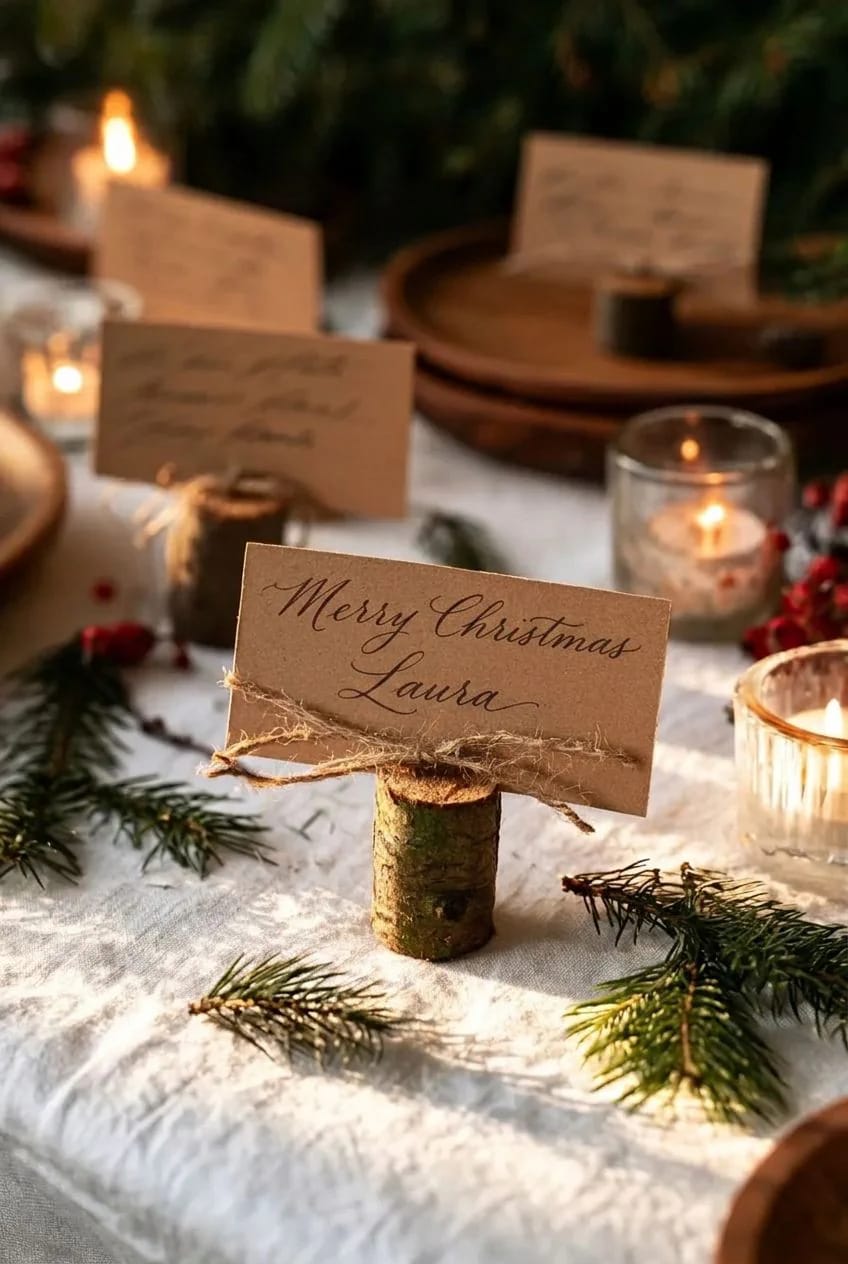
One caution about damp wood. A branch brought in that morning will keep bleeding moisture for a day or two, and a kraft card standing in a wet kerf goes soft along its bottom edge and starts to curl. Cut the holders a week ahead and leave them somewhere warm.
When the place card does the setting's other job
A kraft napkin band with the name across it
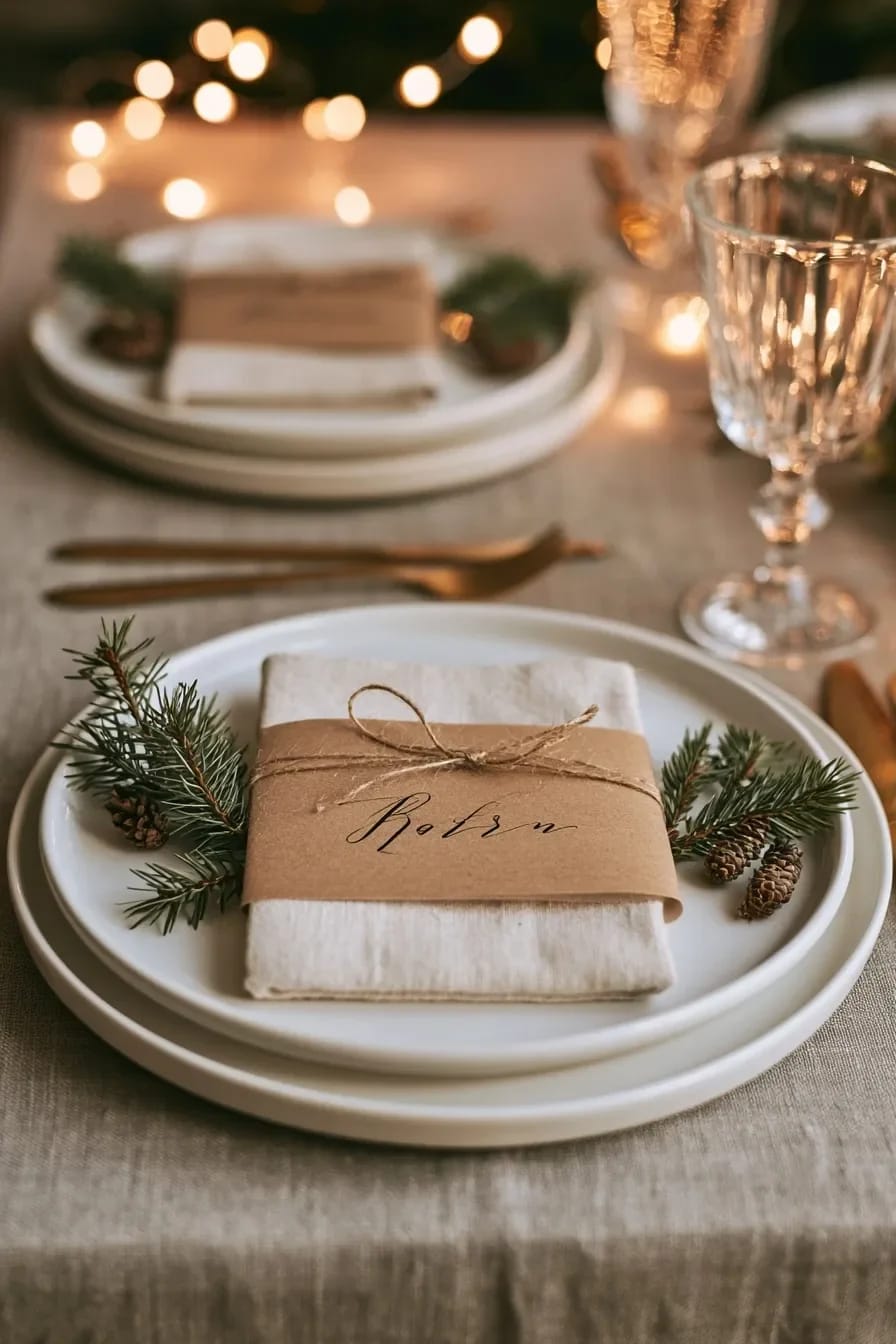
A band removes an object from the table rather than adding one, which on a crowded Christmas setting is worth a great deal. Cut a strip about an inch and a quarter deep and long enough to wrap the folded napkin with a half inch overlap, write the name on the front third of the strip, and close it at the back with twine rather than tape so it comes apart cleanly.
Thin wrapping kraft is correct here, not cardstock. A stiff band will not hug a folded linen napkin and springs open the moment the fold relaxes.
Cutlery bundled in twine with the tag threaded on
Bundle the knife, fork and spoon, wrap twine twice around the middle, and thread a punched kraft tag onto the twine before you tie it off. It suits a buffet or a table where people carry their own setting through, and it dies on a formal table where the cutlery needs to be laid out properly on both sides of the plate.
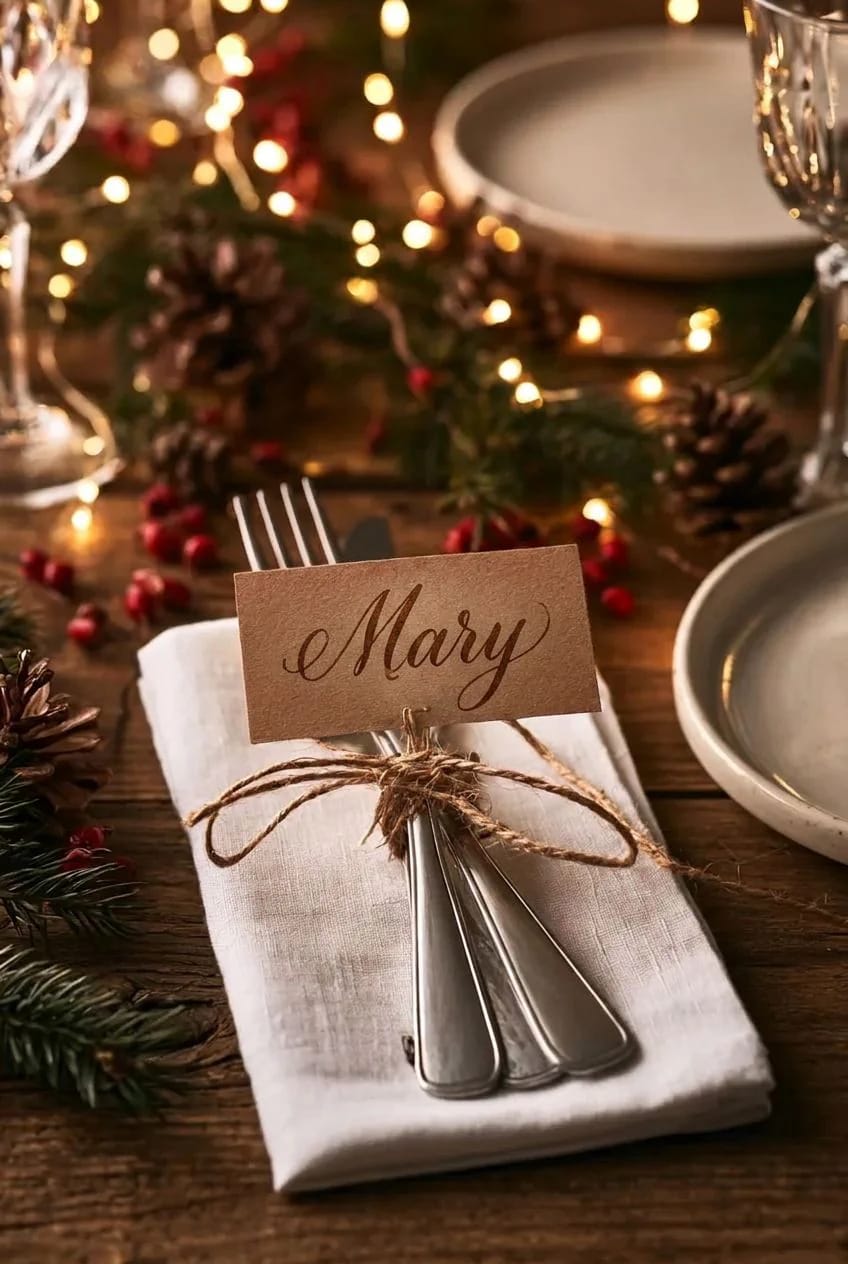
Punch the hole at least a quarter inch in from the edge or the twine will tear out through the kraft while the bundle is being carried. Everything in this section shares a logic with letting a mason jar centerpiece do the greenery’s work instead of stacking more onto the table: subtract an object, do not add one.
One long strip that is the name and the menu
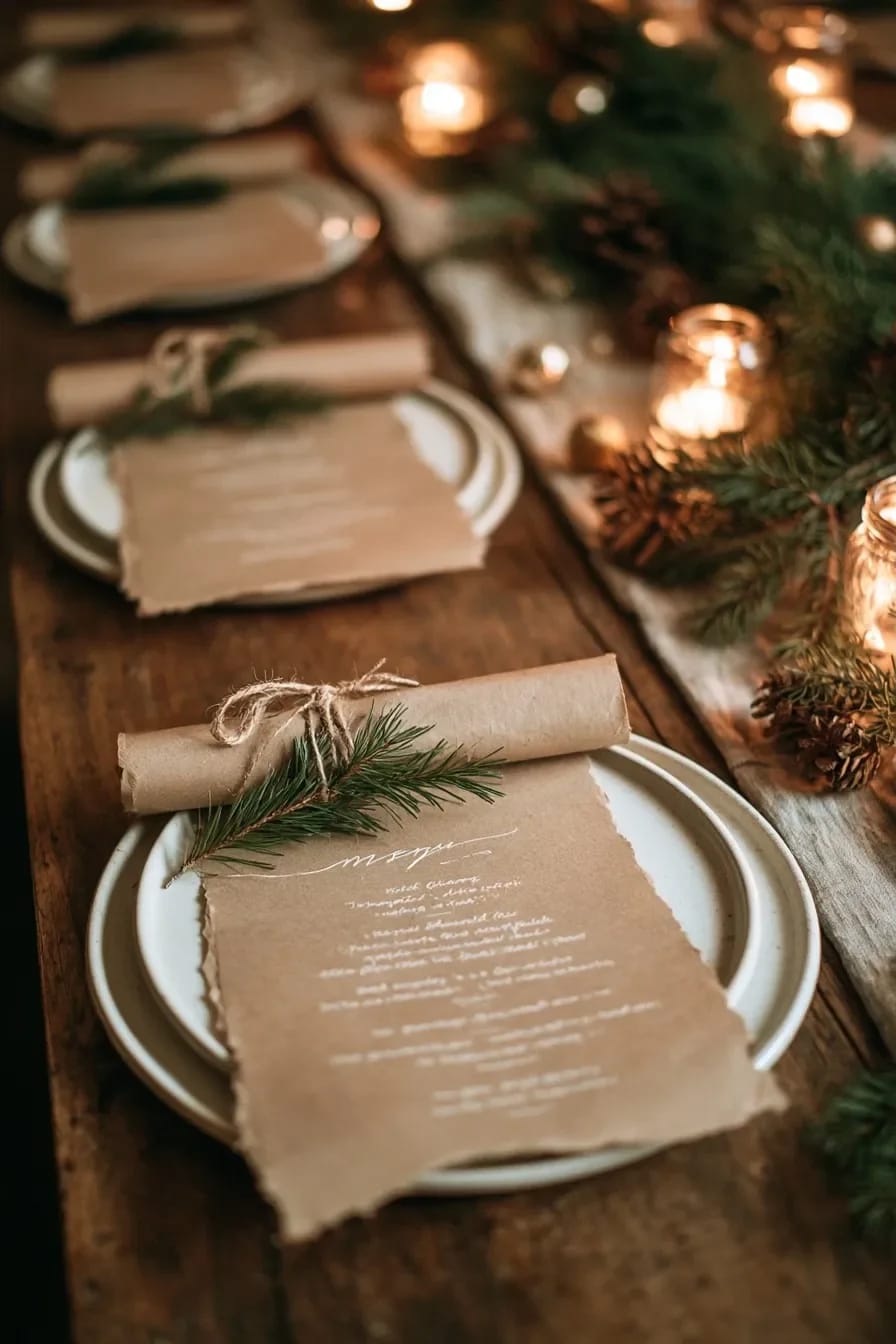
Most people write the menu on a separate card, prop it in the middle of the table, and then watch nobody read it. Put both on one strip of kraft laid down the plate instead: name at the top in large handwriting, a ruled line, then three or four courses in smaller writing underneath. It is the only version of a Christmas menu card that guests reliably look at, because it is directly under their nose while they are waiting.
Nine by two inches is about right on a standard dinner plate. Write the name first and at least twice the size of the course list, since the strip's primary job is still telling somebody where to sit. Course lines should be short enough to fit on one line each; a strip carrying "slow-roast shoulder of pork with cider and quince" wrapping onto a second line looks cramped, and "pork, cider, quince" reads better anyway.
Cards the guest takes home
A wax seal instead of a knot
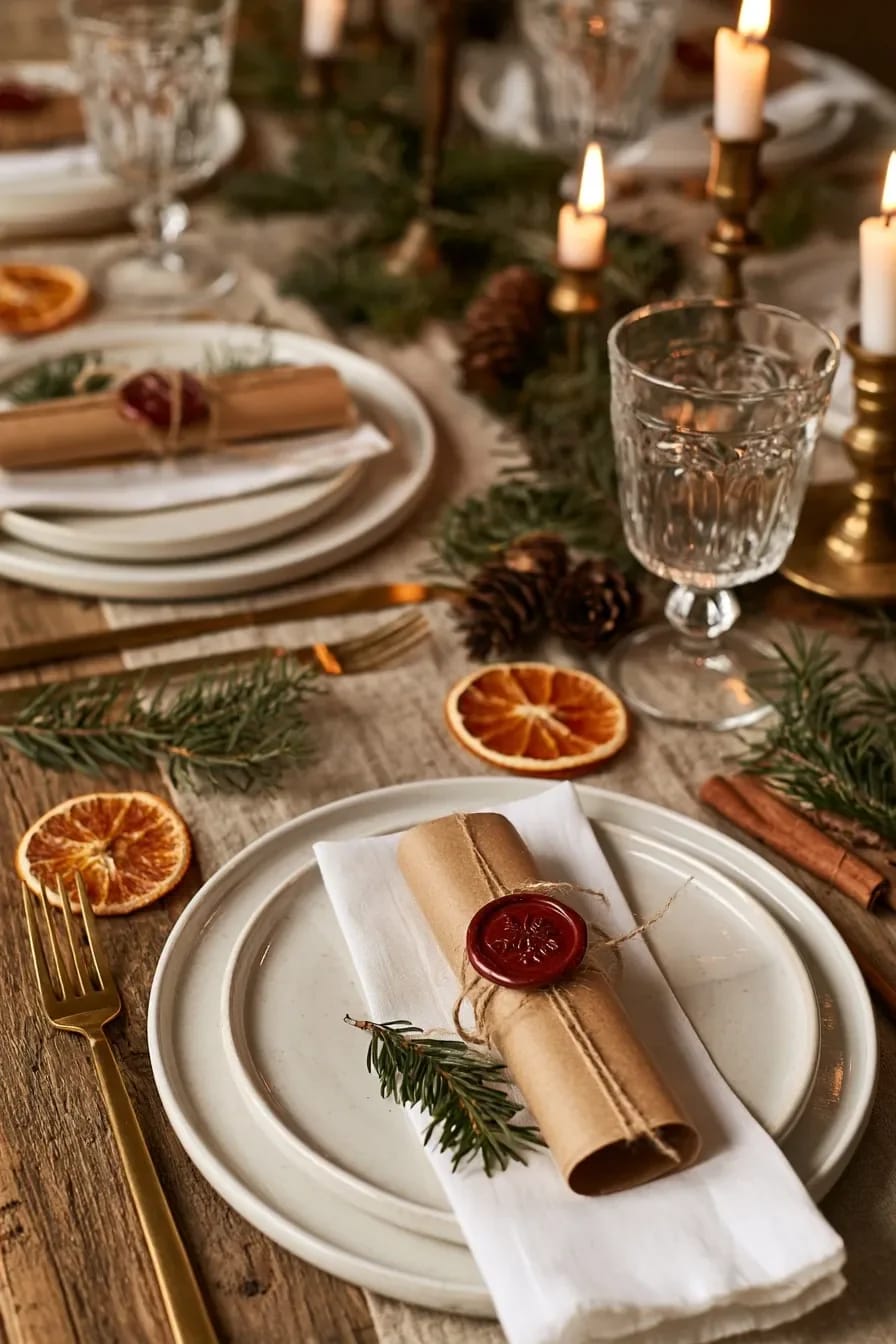
Lay the twine flat across the card and press the wax over it, so the seal is what holds the string rather than a knot. It is the one detail here that makes a torn scrap of grocery bag look expensive, and it is the reason this shape crosses over into gift tags so easily: the same card, sealed, ties onto a small parcel at each place.
Adhesive wax seal stickers exist and are genuinely convenient, but they sit flat and shiny, and next to real wax the difference is visible from across a table. If you are doing eight of these, melt the wax. Deep red and oxblood read as Christmas without saying so; bronze behaves like gold and, like gold, gives most of it back under candlelight.
A twine line by the door instead of cards on the table
Skip the place cards on the plates entirely and string a line of twine across the wall above a console or sideboard, with a numbered or named kraft tag pegged on for each guest. People collect their own tag on the way in, which does two useful things: it takes seating anxiety off you at the door, and it clears the table of thirteen small paper objects that were going to be in the way of the serving dishes anyway.
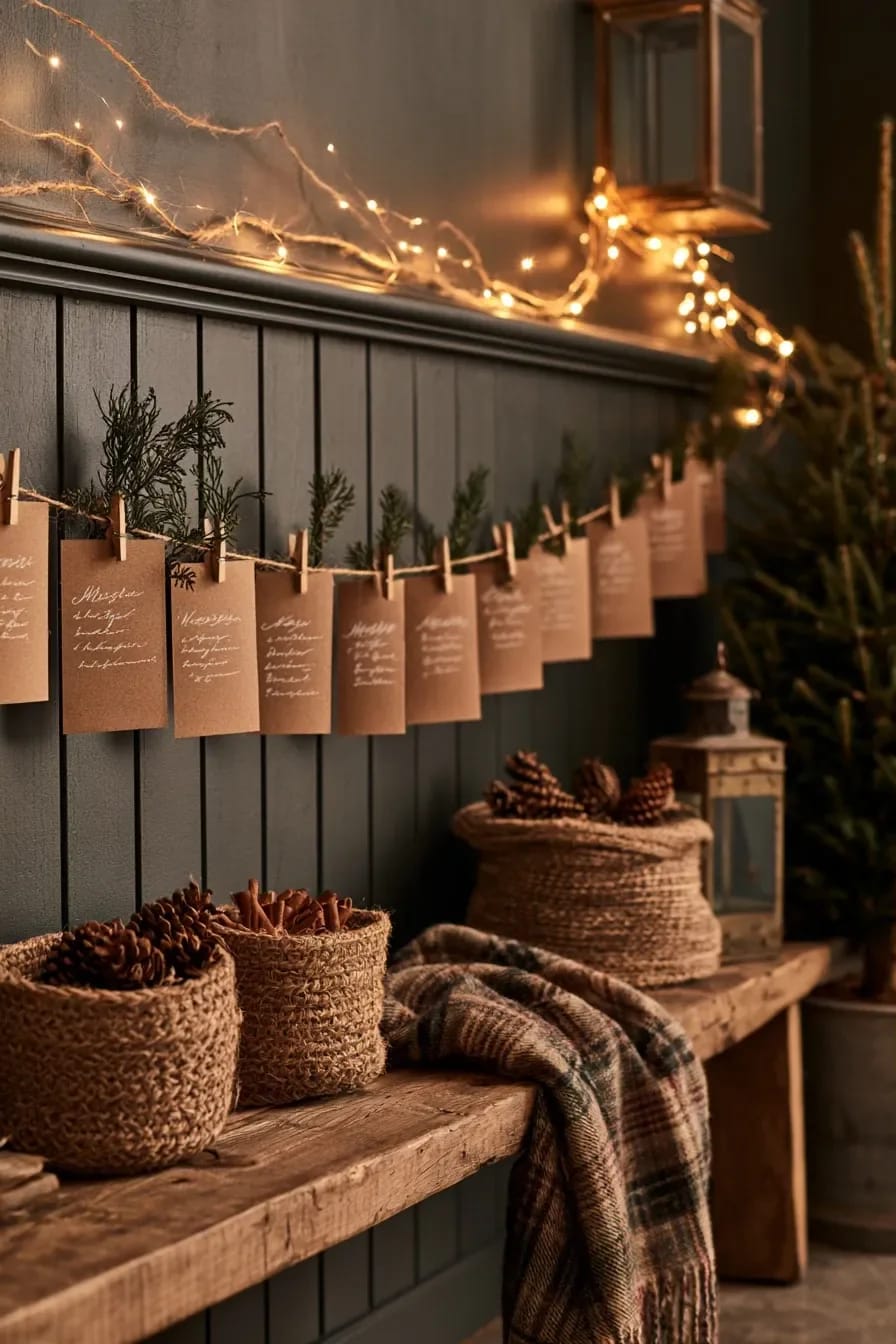
The practical detail is tension. Jute stretches, and a line hung slack in the afternoon will be sagging in the middle by evening with all the tags slid into a clump, so pull it tighter than looks right and space the pegs evenly rather than leaving them where they land. If the tag is going to hold a small favor as well, punch the hole in the short edge rather than the corner so the weight hangs straight.
 11 Zero Waste Christmas Gifts to Make at Home Eleven small gifts made from what was already in the kitchen, most of them place-setting sized.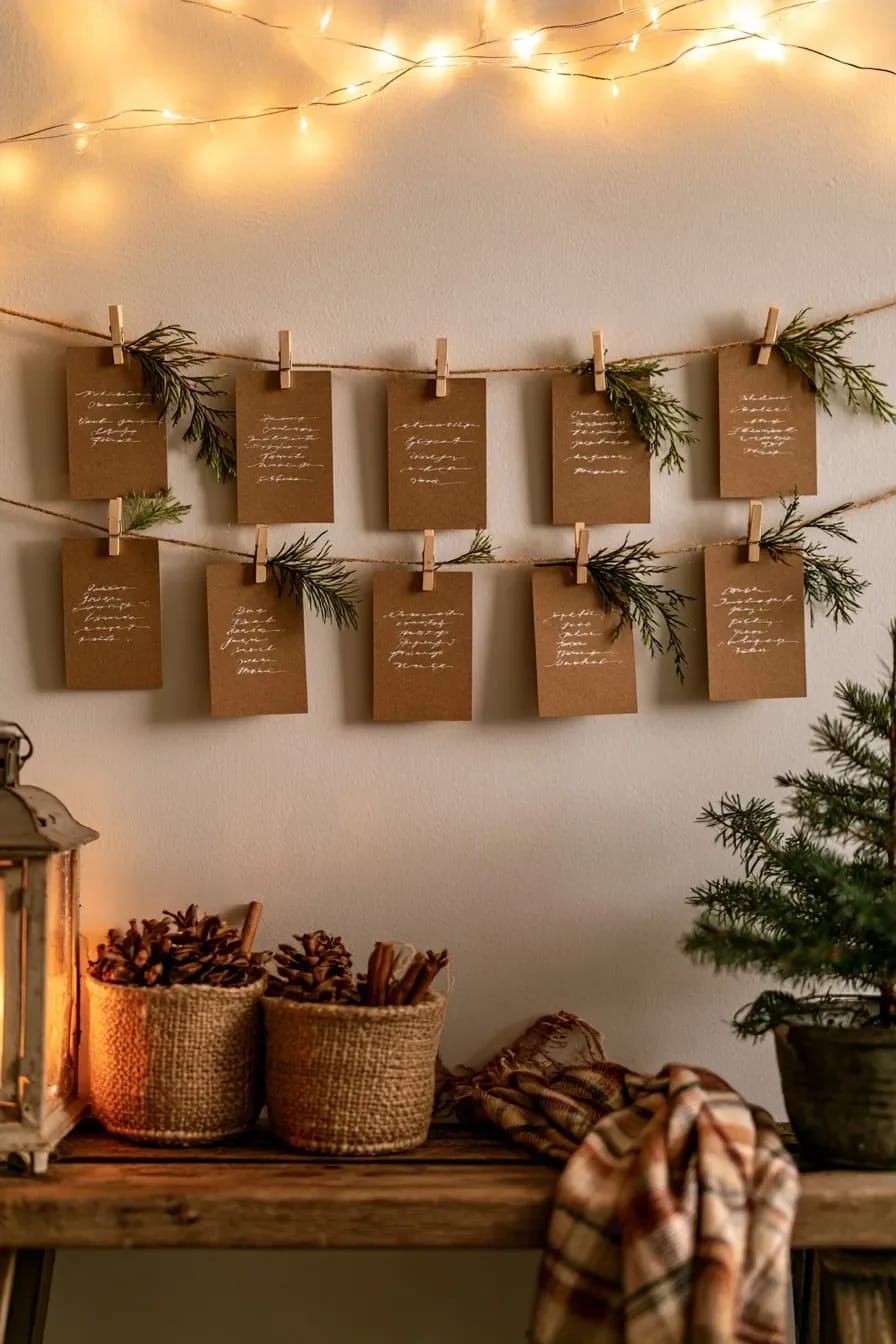
If you only have an hour the night before
Do the paper first and the greenery last, because kraft keeps and rosemary does not. Tear and letter every card in one sitting while your handwriting is consistent, leave the white ink to dry properly, then cut the sprigs on the morning itself and bind them on in about a minute a place. The only jobs that genuinely cannot be left to the last hour are the sawn twig holders, which need a few days to stop being damp, and the pine cones, which need the oven and then need to cool.
Related Posts
- 13 Reclaimed Pallet Christmas Signs for a Farmhouse (That Don’t Look Store-Bought)
- How to Make Plantable Seed Paper Christmas Cards That Actually Grow
- Recycled Glass Jar Christmas Votives That Actually Glow on a Cozy Table
- 11 DIY Cork Reindeer Christmas Ornaments for a Rustic Tree
- Upcycled Christmas Gifts You Can Make From What You Already Own
- Natural Christmas Place Settings With Foraged Sprigs: 9 Ways to Set the Table