
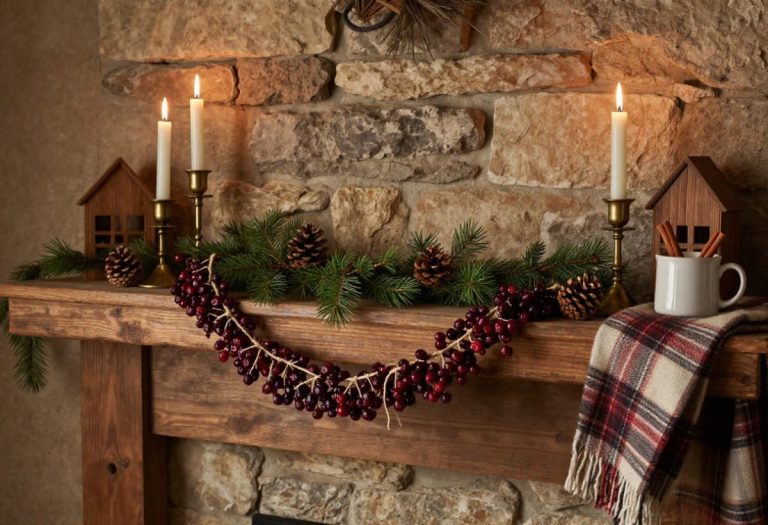
A properly dried cranberry is roughly half the size of the one that went into the oven, matte where it used to be waxy, and hard enough to click against a wooden bead. That is the berry that gets a mantel through to January. The plump one strung straight out of the bag goes soft in the second week and starts to weep onto whatever is underneath it, which on a painted mantel shelf is a problem you notice too late. Everything below assumes the dried version: how long the strand actually needs to be, what to alternate it with so it holds its line, and what to do with the thing in January instead of bagging it.
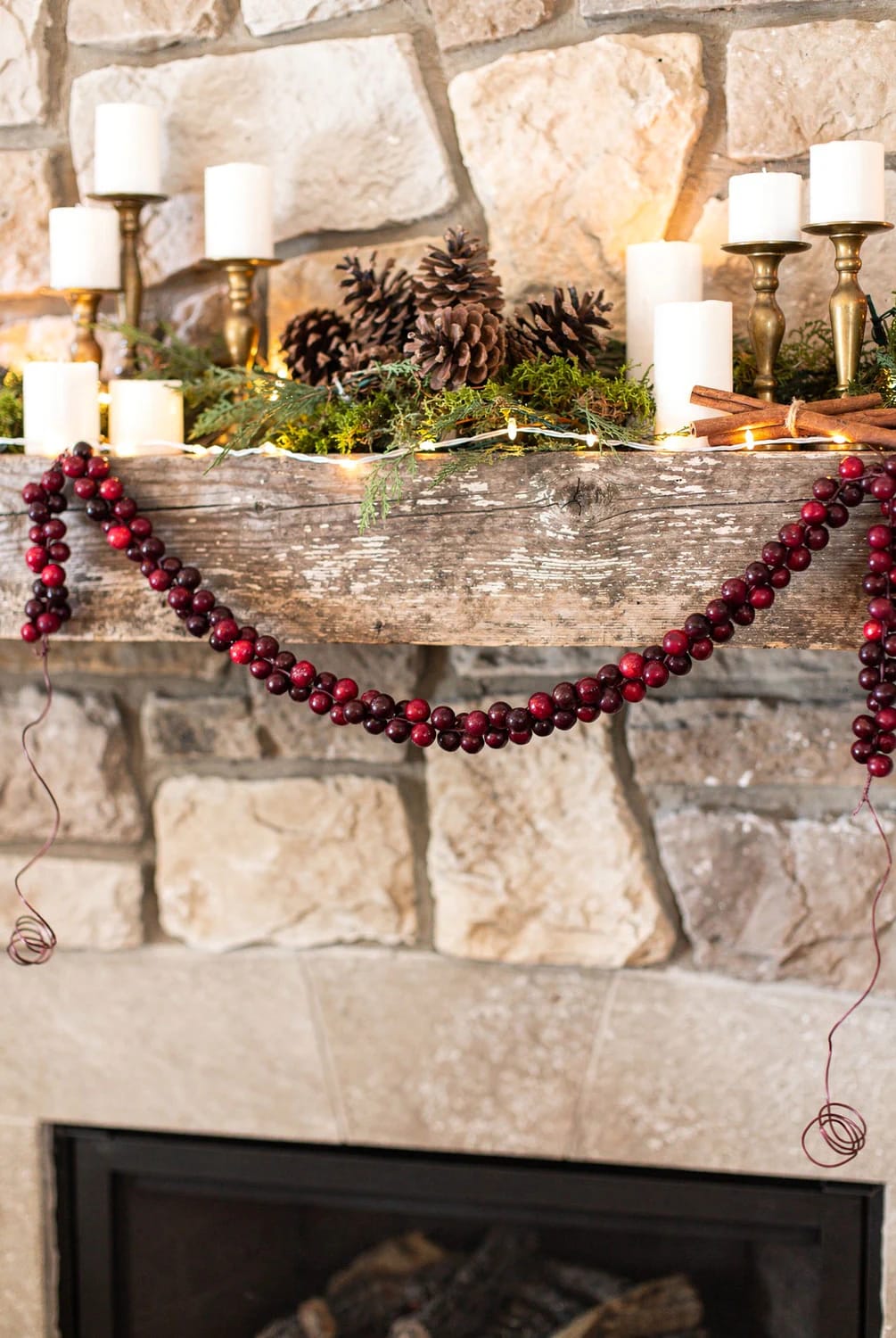
One long cranberry strand, swagged in three uneven dips
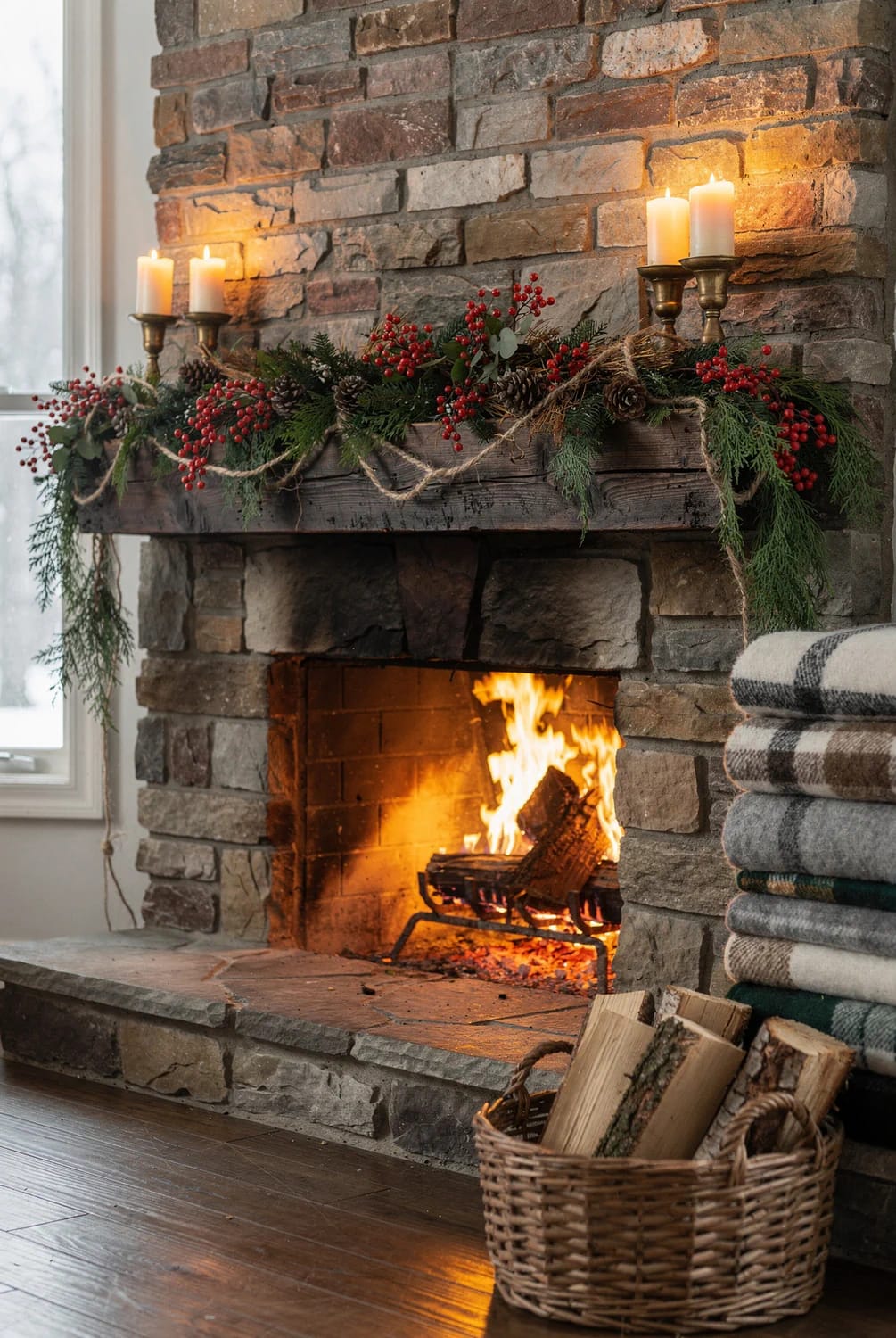
Hang it in three dips of unequal depth. Two matching swags is what a factory does, and a handmade cranberry garland that reads as symmetrical loses the one advantage it has over the $30 plastic version. Make the middle dip the deepest, put the second one about a third of the way along, and let the third be shallow enough that it looks almost accidental.
Audubon’s own edible-garland instructions suggest building in three or four foot sections and knotting them together as you hang, because one long loaded strand is unwieldy to handle. That advice is aimed at outdoor trees, but it solves an indoor problem too: sectioned strands let you adjust one dip without re-hanging the whole thing, and a strand that snaps in February costs you one section instead of nine feet of work. If you want greenery underneath the berries rather than bare wood, the cheapest way to build that base is covered in our guide to layering pine into a plain eucalyptus garland until it stops looking bought.
Cut the thread longer than you think
Measure the mantel and multiply by 1.5 for a shallow drape or 1.8 for a deep one, then add a foot at each end for tying off. Use waxed linen or button thread rather than sewing cotton; a bare cotton thread saws through the berries as they shrink. Thread a long darning needle with a large eye, wear a thimble, and anchor the very first berry with a double knot or a wooden bead so the whole line does not slide off the tail. The Missouri Department of Conservation makes the same point about outdoor garlands, recommending a sturdy nut as the base piece because popcorn and fruit slip off the end.
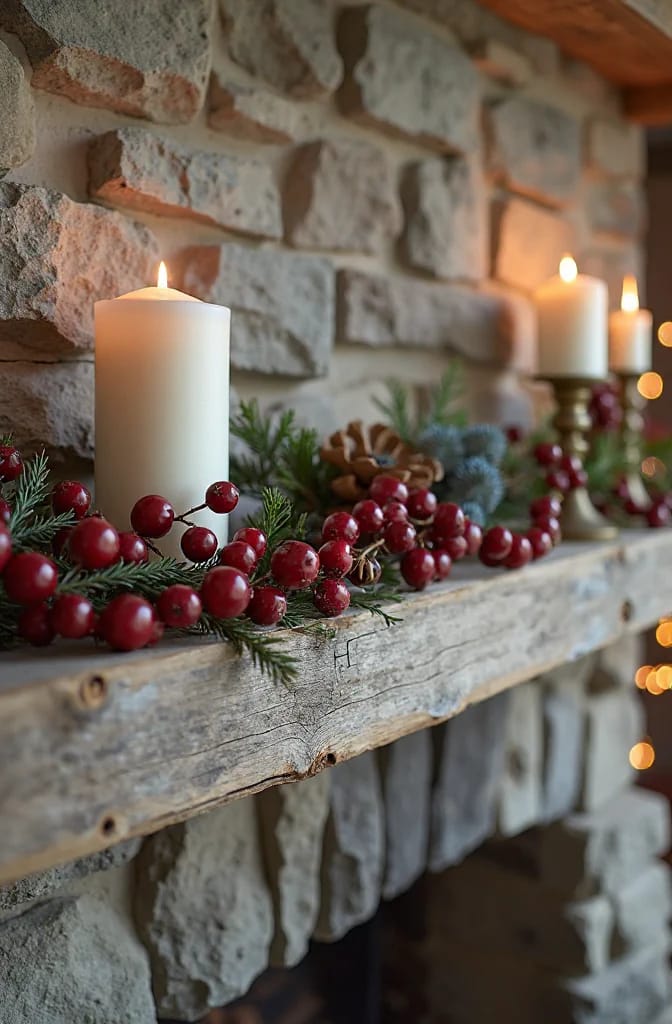
Where the dips should land on the mantel
Keep the lowest point of the deepest swag above the firebox opening, always, whether or not you burn fires. Beyond that the constraint is usually the television: if there is a screen above the mantel, a swagged strand crosses its bottom edge and the two argue. That is the case for skipping the swag entirely, which is covered further down.
Alternate cranberries with wooden beads so the strand stops sagging
Cranberries are light, soft, and all the same size, which means a strand of nothing else pulls into a limp, characterless curve. Slide an unfinished wood bead in every four or five berries and the line holds a shape, because the beads are denser and the berries have something to sit against.
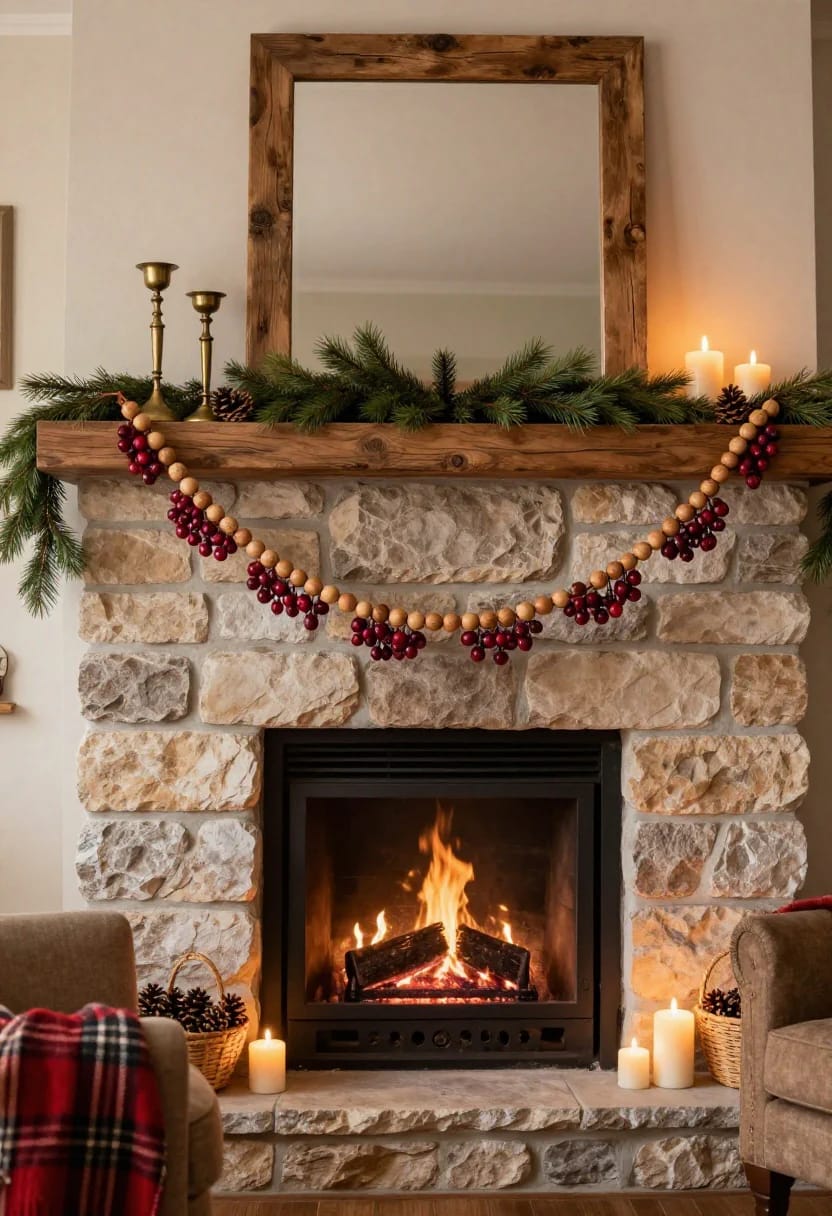
Buy raw beech or birch, 14 to 16 millimetres, and leave them unfinished. Stained beads read as craft-store product and defeat the point of a strand made from a bag of fruit. The other argument for beads is unglamorous: they last. The berries get composted in January and the beads go back in a jar, so the second year's garland costs you three dollars of cranberries and an evening.
Dried orange wheels break up the cranberry red
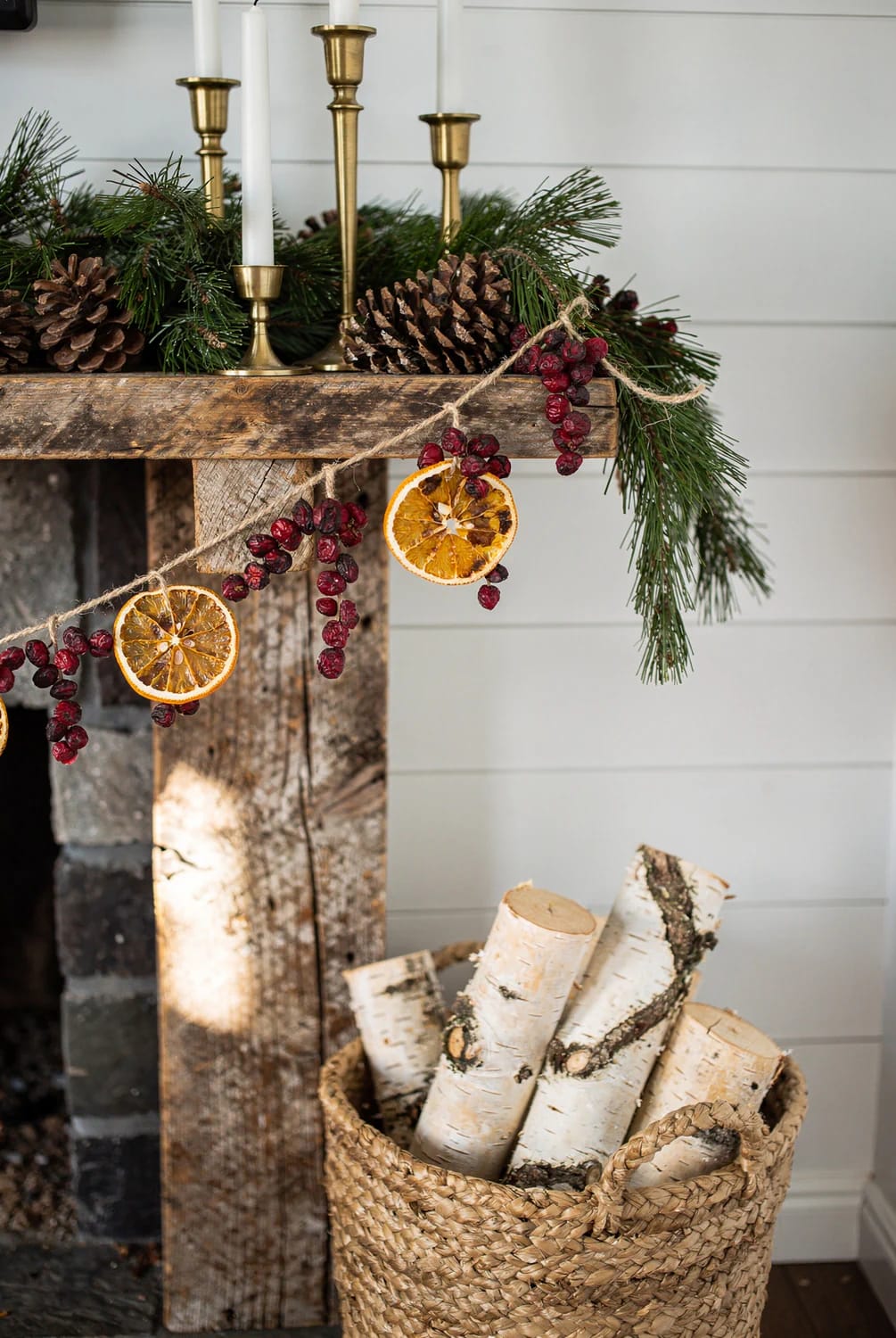
Thread a quarter-inch orange wheel every eight to ten berries, no more often than that. Citrus is a much bigger visual event than a cranberry, and a strand that alternates one-to-one turns into a wheel of fruit with berries as filler. The reason to include it at all is optical rather than decorative: dried citrus goes translucent and cranberry never does, so a wheel with a lamp or a window behind it lights up while the berries stay solid.
Which means placement matters more than quantity. Put the citrus in the section of the swag that crosses in front of a mirror or a window reflection, and leave the run of berries against the wall plain. Our full write-up on drying citrus without letting the slices go brown and leathery covers the oven timings, which are the part people get wrong.
Short cranberry drops instead of a swag, for a shallow mantel
On a mantel shelf under about five inches deep, or one with a screen mounted above it, skip the swag and hang vertical drops instead. Eight to fourteen inch lengths, hooked along the underside of the shelf at uneven spacing, give you the same material in a shape that does not cross anything.
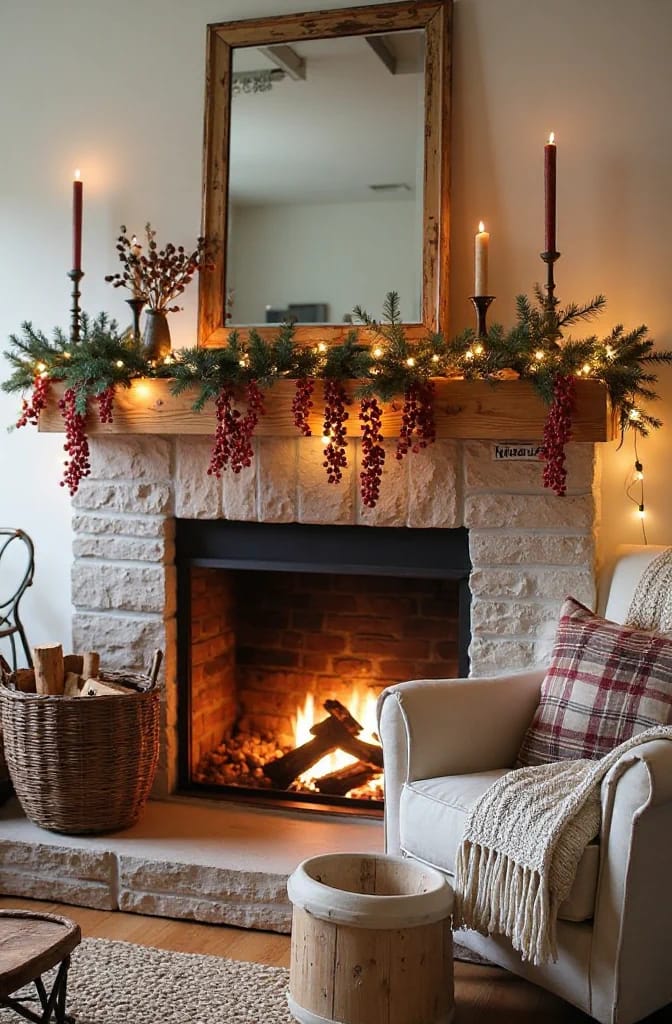
Brass cup hooks are the right hardware if the mantel is yours: they are a two millimetre pilot hole in the underside of a shelf, invisible from the room, and they stay put for the next decade. Renters get adhesive hooks rated for a pound, which is far more than a strand of berries weighs. Vary the lengths rather than cutting them equal, and hang the longest one off-centre.
The popcorn-and-cranberry strand, made properly
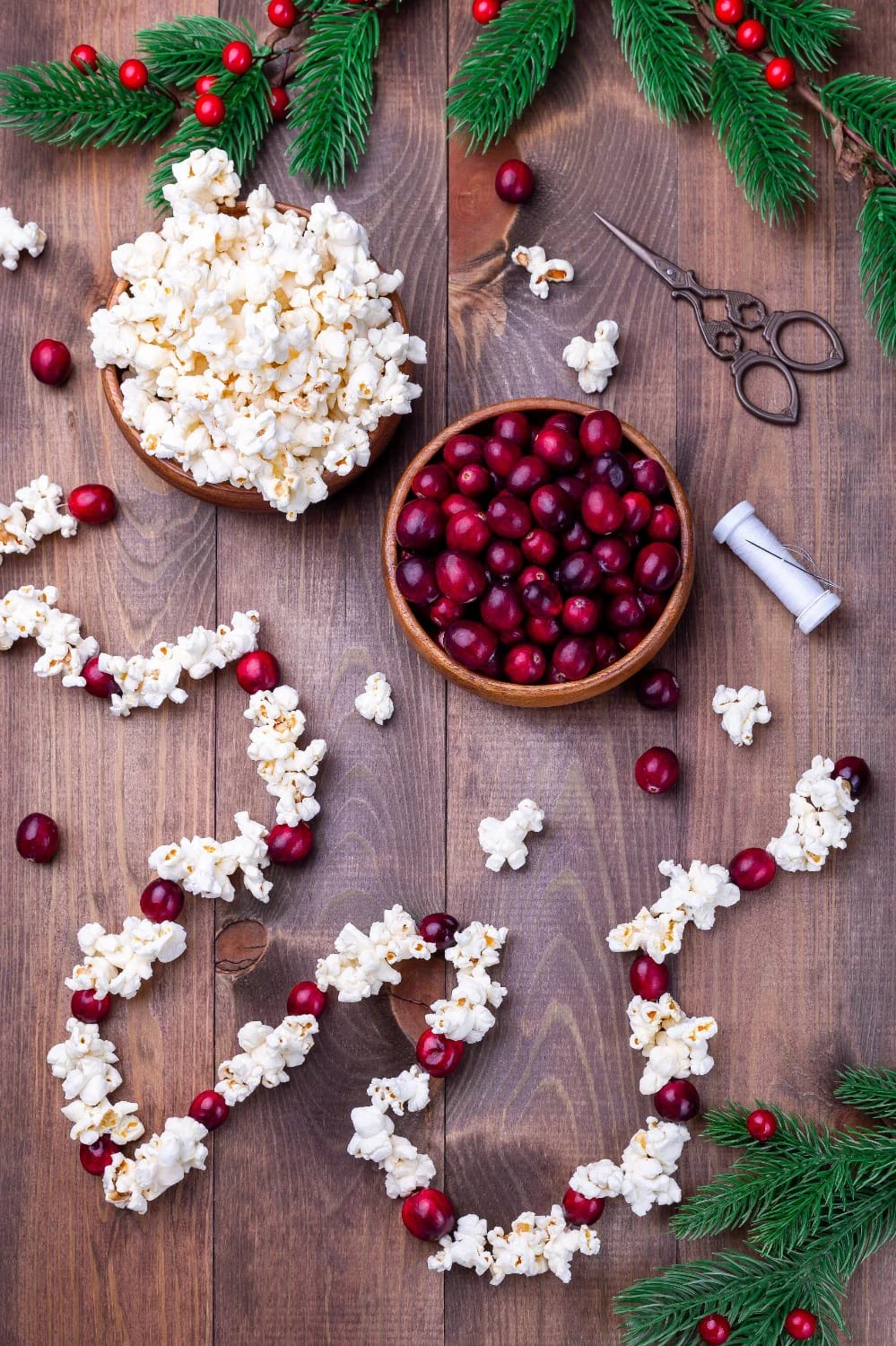
Stale the popcorn first. Fresh popcorn shatters the second a needle touches it, and every source that has actually made one of these says the same thing: pop it, leave it uncovered on the counter for one to three nights, and it threads like a bead. Use plain air-popped with no butter and no salt, which matters less indoors than it will in January when the strand goes outside. A blunt-tipped embroidery needle is safer with kids at the table than a sharp darning needle and works just as well on stale kernels.
Under-dried cranberries mould, and they do it from the inside where you cannot see it until a berry collapses and marks the mantel. Home-drying guides are consistent about the test: pull a berry apart and look for any pocket of moisture, then condition the whole batch in a sealed jar for a week, shaking daily, and re-dry if condensation appears on the glass. The second problem is popcorn, which is a pantry moth invitation if the strand hangs indoors past mid-January. Get it outside before then.
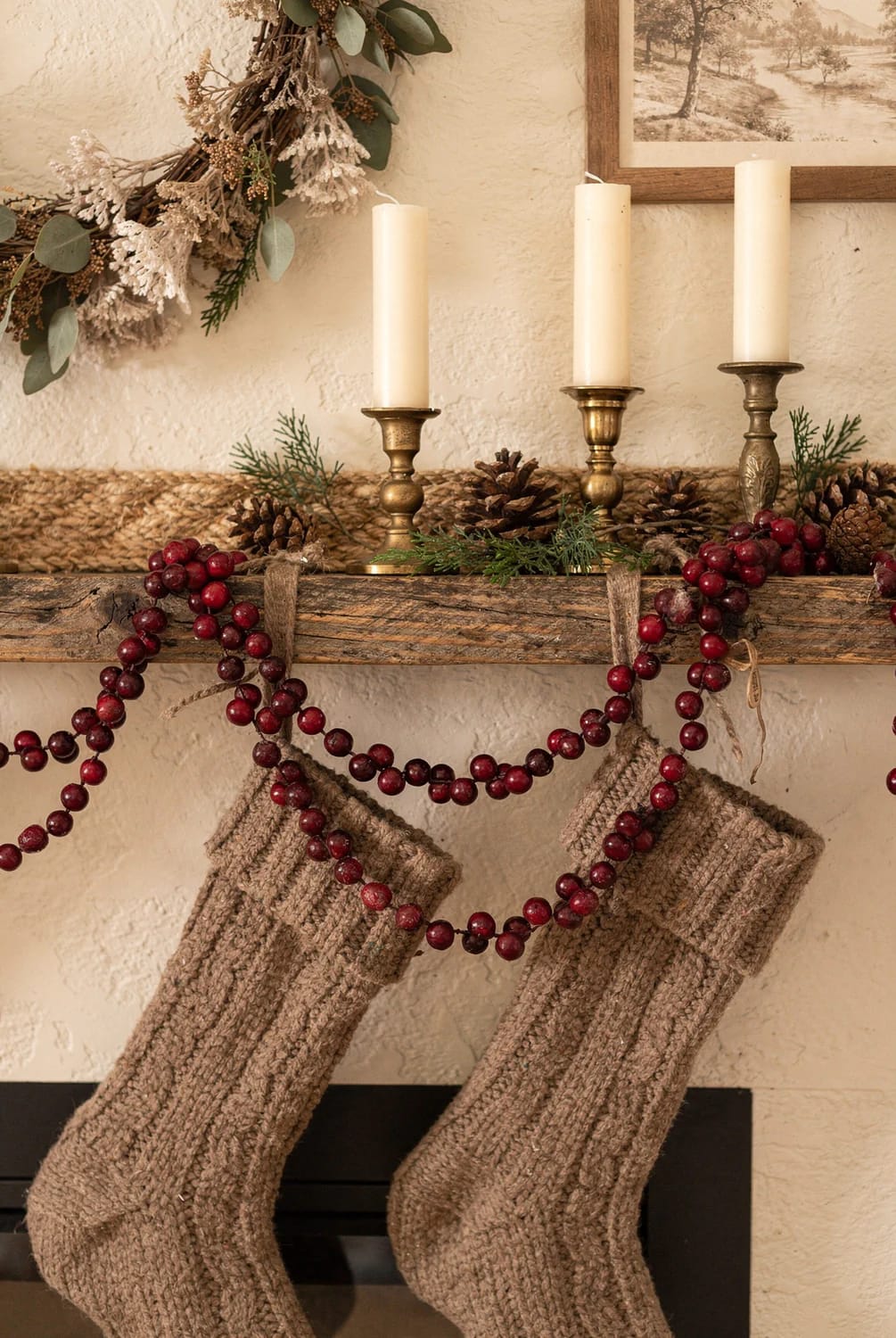
Cranberry reads best against cream and brown, not against true red
A dried cranberry is a brown-red, closer to oxblood than to postbox. Put a true fire-engine red next to it and the berries stop reading as red at all: they go dusty and flat, and the ribbon looks like the only intentional thing on the mantel. This is the single most common reason a handmade cranberry garland disappoints its maker.
The reds that fight it
- Buffalo-check ribbon in bright cherry. It is the default rustic-mantel choice and it flattens the berries completely.
- Glossy red glass baubles, which are a full stop next to something matte.
- Poinsettias. Any of them.
- Red-painted wooden signs, though at that point the garland is not really the problem.
What sits under it instead
Undyed linen, raw or limed wood, brass that has gone brown, oatmeal wool, bleached pinecones, plain beeswax candles. The palette is narrower than it sounds and it works because everything in it is matte and low-contrast, so the berries stay the darkest thing on the shelf. One exception worth making: a small amount of deep forest green, in the form of actual greenery rather than paint, sits fine because it is the colour the berries grew against.
Twist the cranberry strand into cedar rather than laying it on top
Weave the strand through the greenery so it vanishes behind a bough and comes back out three inches later. Laid along the top of a garland, a berry strand reads as an afterthought stuck on at the end, which is precisely what it looks like on every commercial mantel garland sold with berries wired to the surface.
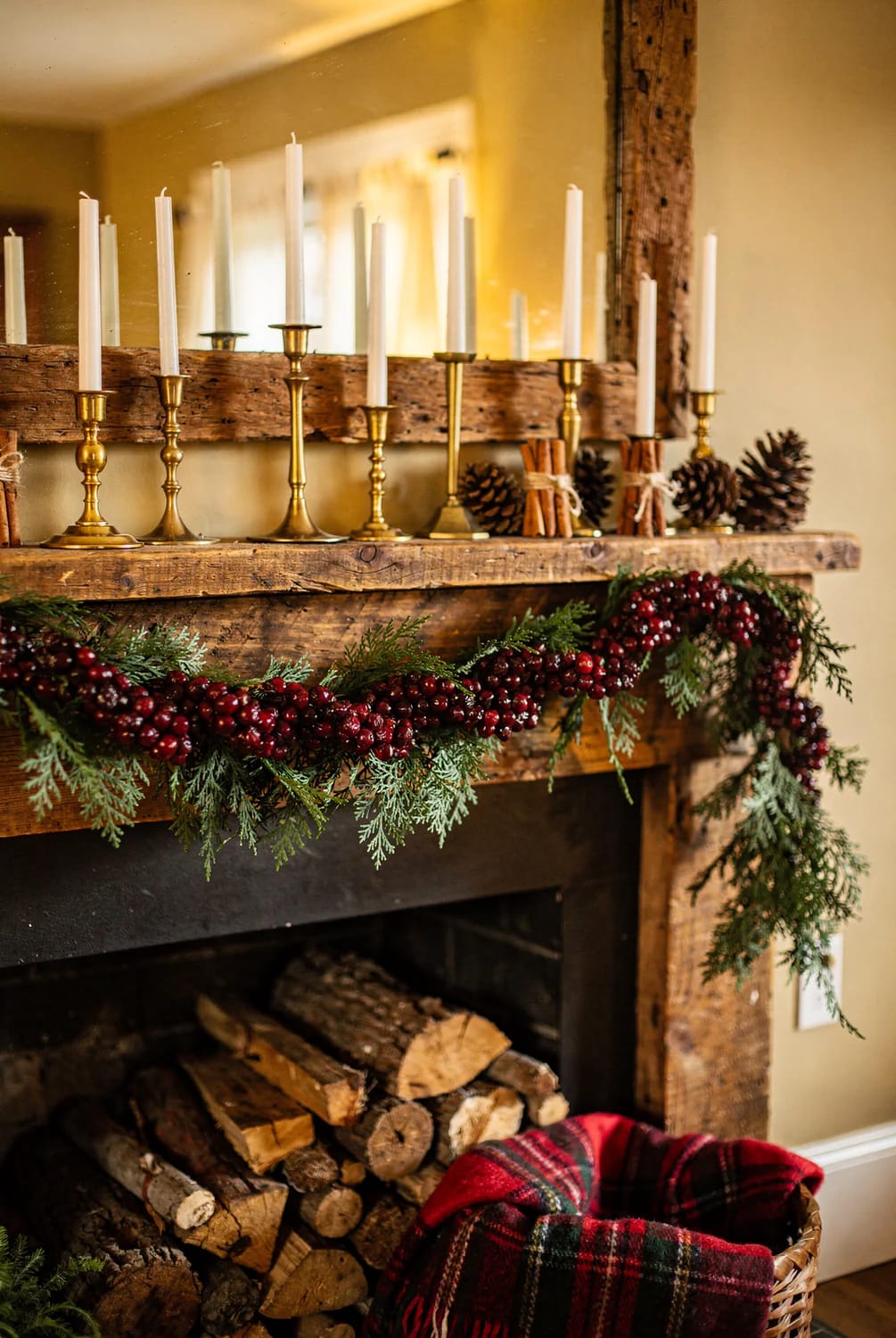
Cedar and fir hold a threaded strand where you put it, because the needles catch it. Eucalyptus does not: the leaves are smooth and slightly waxy, and the berry strand slides down the face of the garland over about two days until it is hanging in a loop underneath. If eucalyptus is what you have, tie the strand to the garland’s wire spine at four or five points rather than relying on friction. Cutting your own greenery changes the arithmetic entirely, and the species that actually hold up once they are indoors are a shorter list than most people expect.
 Fresh Cedar Garland for a Sustainable Christmas Where the cedar was cut, and what happens to it in January, matters more than whether it is real.
Run warm micro-lights behind the cranberries, not through them
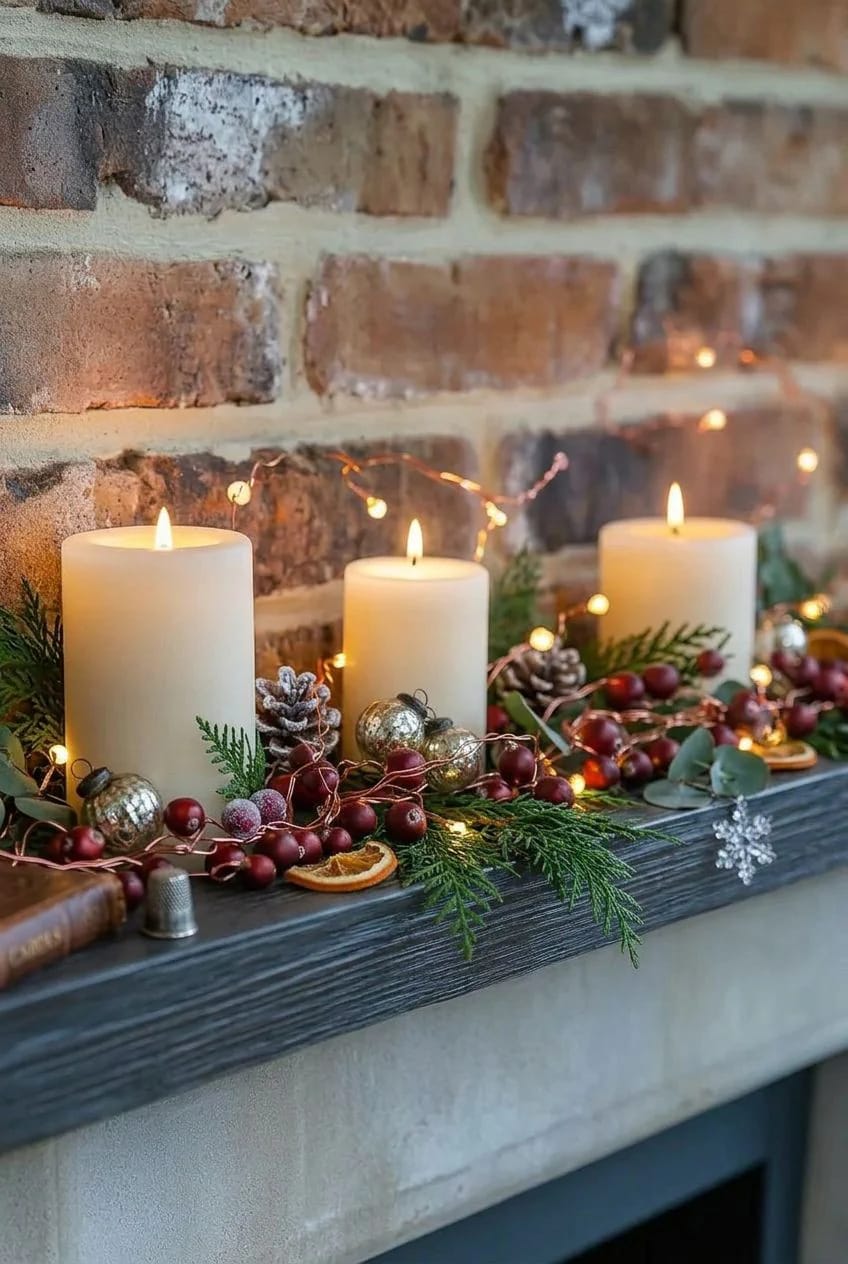
Cool-white LEDs turn dried cranberry a greyish brown that looks like the berries have gone off. Anything at 2700K or lower keeps them red. The reason to put the string behind rather than wound around the strand is duller than the colour argument but more important in practice: copper wire wrapped through a berry garland shows as a bright hairline in every photograph, and the berry skins bounce small hot spots straight back at the lens. Set the pack on a six-hour timer and you will not think about it again.
Over a working fire, swap cranberries for rose hips or winterberry
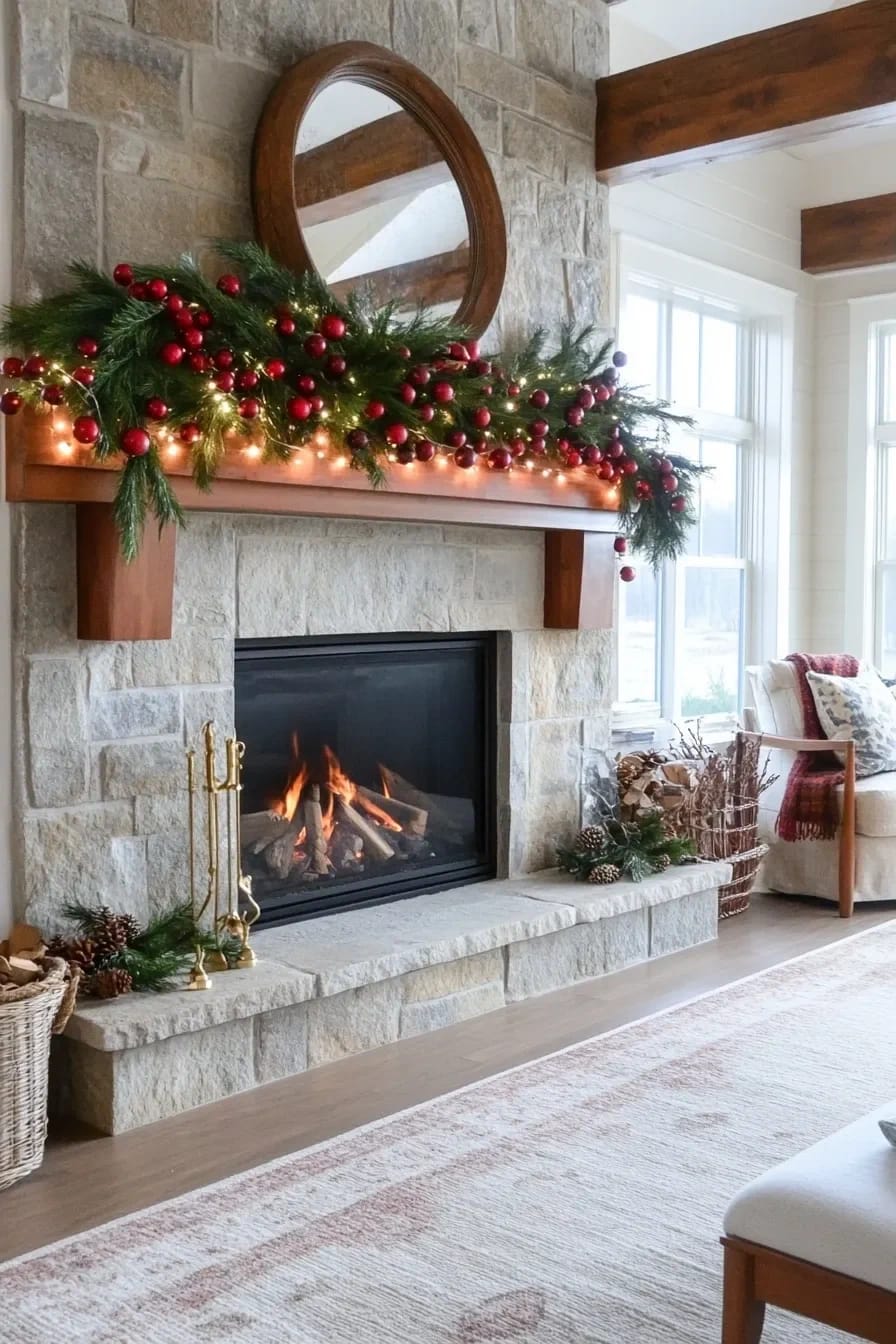
If you actually burn fires, a mantel shelf runs warm and very dry, and dried cranberries respond by going brittle and dropping off the thread by the middle of January. Rose hips and winterberry have tougher skins and hold on considerably longer.
Winterberry, the deciduous holly Ilex verticillata, carries its fruit on bare stems well into late winter and is the closest thing to a free cranberry substitute if you have one in the garden or a neighbour who does. Rose hips from a dog rose hedge are larger and more orange, which reads warmer against oak. Neither of them threads onto a string the way a cranberry does, so this is a wired-into-greenery job rather than a strand, and it is worth reading how to cut and condition the stems so they last before you go out with the secateurs. Do not eat any of it, and keep holly away from anywhere a small child can reach.
In January the cranberry garland goes outside, not in the bin
Take the strand down, carry it out, and drape it over a shrub within sight of a window. A garland made of fruit and grain is the one piece of Christmas decor with a genuine second life, and it is the argument for making the thing out of food in the first place rather than out of the plastic-free alternatives that still end up in a storage box.
What the birds will and won't eat
The popcorn goes first, and fast. Blue jays, crows and squirrels clear a strand of it in a day or two, which is the observation people who hang these report most consistently. The cranberries mostly do not move: raw ones are sour and hard, and most birds ignore them, so they are colour on the string rather than food. If you want the whole garland eaten, Audubon's edible-garland list adds dried apple slices, orange slices and whole unsalted peanuts in the shell, all of which get taken. Audubon also makes a point about placement that is easy to miss: hang the thing within about three feet of a window or well away from it, because the middle distance is where birds hit the glass.
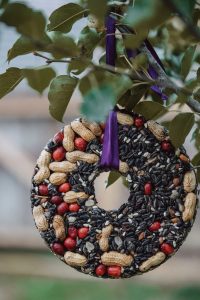 13 Birdseed Ornaments for an Outdoor Christmas Tree the Birds Will Actually Eat Why most seed ornaments get ignored, and the mix and the perch that fix it.
The thread is the part that has to come off
Nylon and fishing line do not break down and do not come out of a hedge on their own, and a length of it left in a shrub is a real hazard to the birds you put it there for. If the garland is going outside at the end, string it on cotton or plain linen thread from the start, and go back for the thread once the food is gone. The berries and any citrus go in the compost, the beads go in a jar, and the only thing left is a small coil of cotton in your hand.
Related Posts
- How to Make a Eucalyptus and Pine Christmas Garland for a Natural Mantel
- Magnolia Leaf Christmas Wreath Ideas for a Rustic Door
- 23 Burlap Christmas Decor Ideas for a Unique Rustic Holiday
- 19 Heartwarming Upcycled Valentine Mantle Decor Ideas
- 25 Green Christmas Fireplace Decor Ideas for a Fresh and Festive Mantel
- 12 Rustic Denim Christmas Wreath Ideas for a Farmhouse Door