
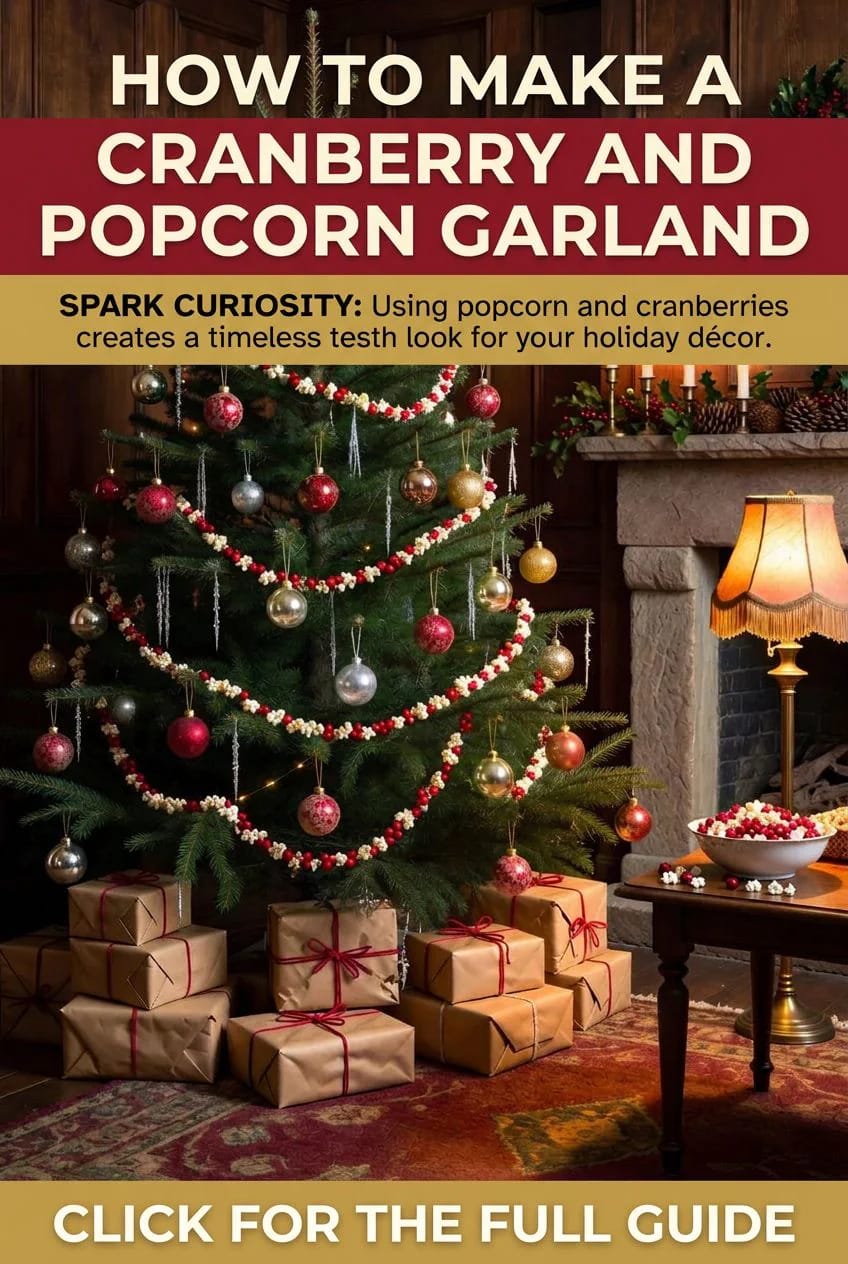
A single strand of popcorn and cranberries covers about four feet of tree and costs roughly what a bag of microwave popcorn does. It is the one decoration that starts as food and, if you make it right, goes back to being food in January. This is the old-fashioned strand built for a sparse vintage tree, and the whole difference between a strand that looks like the 1920s original and one that shatters in your fingers comes down to a handful of small decisions made before you thread anything.
Two of those decisions get made before the needle comes out, and most tutorials get both backward: popping the corn fresh, and reaching for dried cranberries because a hundred posts swore they last longer. Neither is right for a strand you actually want to look at.
Granted, it is slow. Set aside an evening, put something on, and treat the stringing as the point rather than a chore to rush. Made close to Christmas and hung on a thinly decorated tree, it reads exactly like the thing your grandmother's photos show, and when it comes down it composts or goes outside for the birds instead of into a landfill bag.
Why a hand-strung strand still beats the boxed kind
The store versions miss the entire point of the thing. Search the term and the top results are a set of six plastic "popcorn and cranberry" garlands molded in one piece, a wooden-bead strand of burgundy and cream balls, and a crochet pattern. All three are reusable, which sounds like the sustainable choice until you notice what you are actually buying: brown-and-white gumballs on a string that read as plastic from across the room and never smell like anything.
Real popcorn and cranberries cost almost nothing and lean on what is already in the kitchen, which is the same logic behind a garland strung from whatever is growing in your own backyard. The catch, and it is a real one, is that a fresh strand is temporary. You are trading permanence for a material that composts and a look no injection mold gets right. On a vintage tree, where the branches are meant to show through and nothing is supposed to look bought, that trade is the whole aesthetic.
What you need
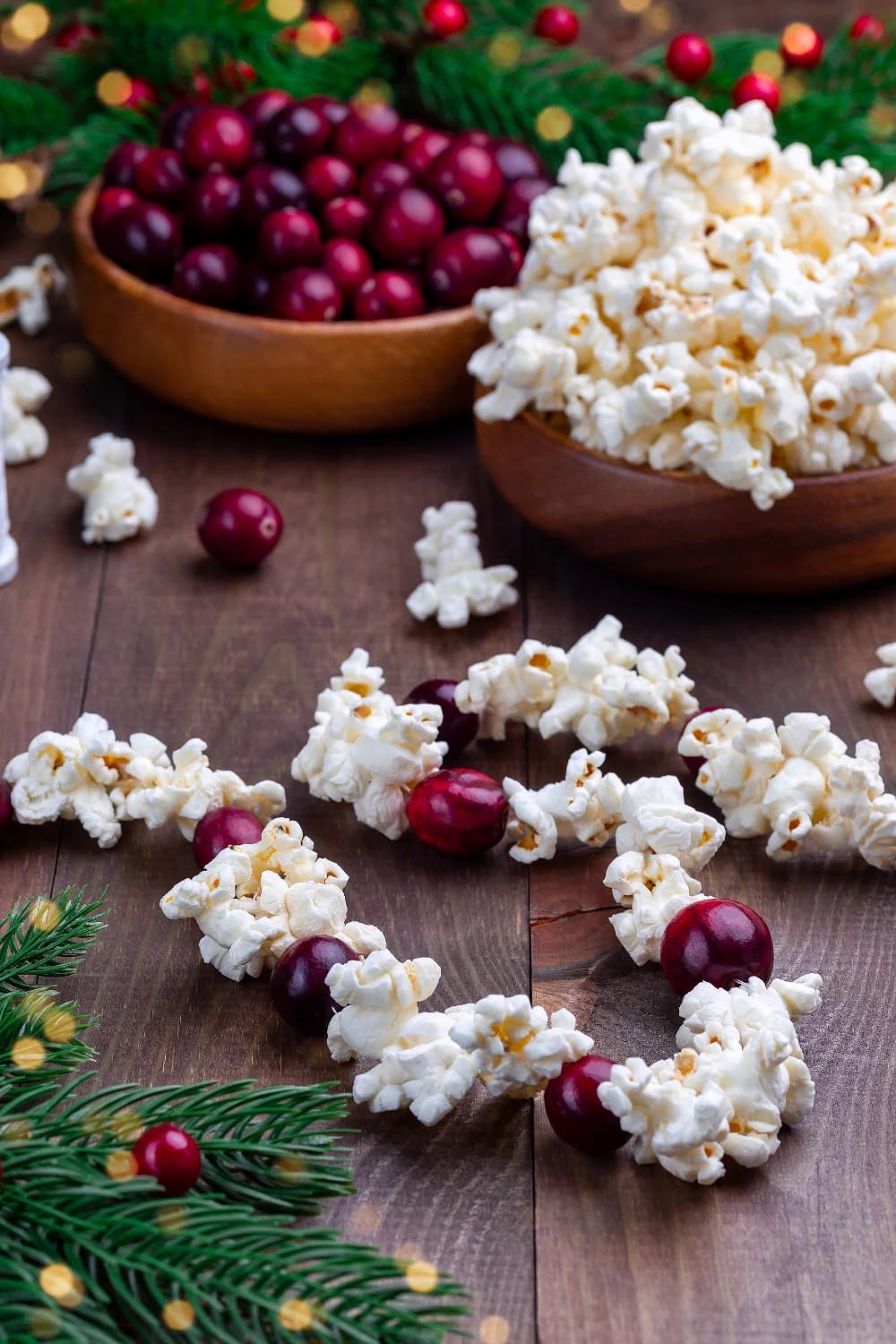
Materials, the things that get used up:
- Plain popcorn, air-popped, no butter and no salt. About half a cup of unpopped kernels gives you enough for a five to six foot strand. Roughly $1 to $3 for a bag of kernels.
- Fresh cranberries, one 12 oz bag, rinsed with the soft ones pulled out. About $2 to $4 in season.
- Strong thread. Waxed button thread, embroidery floss, or waxed dental floss all hold up; fishing line and thin floral wire are the no-needle options. $3 to $6, or free if there is floss in a drawer.
- A few dried orange slices, optional, for color. Free if you are already drying citrus for anything else.
Tools, the things that go back in the drawer:
- A large-eye blunt needle. The blunt tip hurts less when you jab your thumb, and the big eye takes floss without a fight. A threader helps if your eyes and small needle eyes are at war. About $5 to $8 for a multi-size pack: large-eye blunt tapestry needles.
- Scissors, and a short strip of masking tape for the ends if your knots keep slipping.
From scratch, figure $10 to $20. If you own a needle and have floss on hand, it drops to about four dollars in popcorn and cranberries. Prices are rough and shift with the season, so check before you buy.
1. Pop the corn a day before you string a single piece
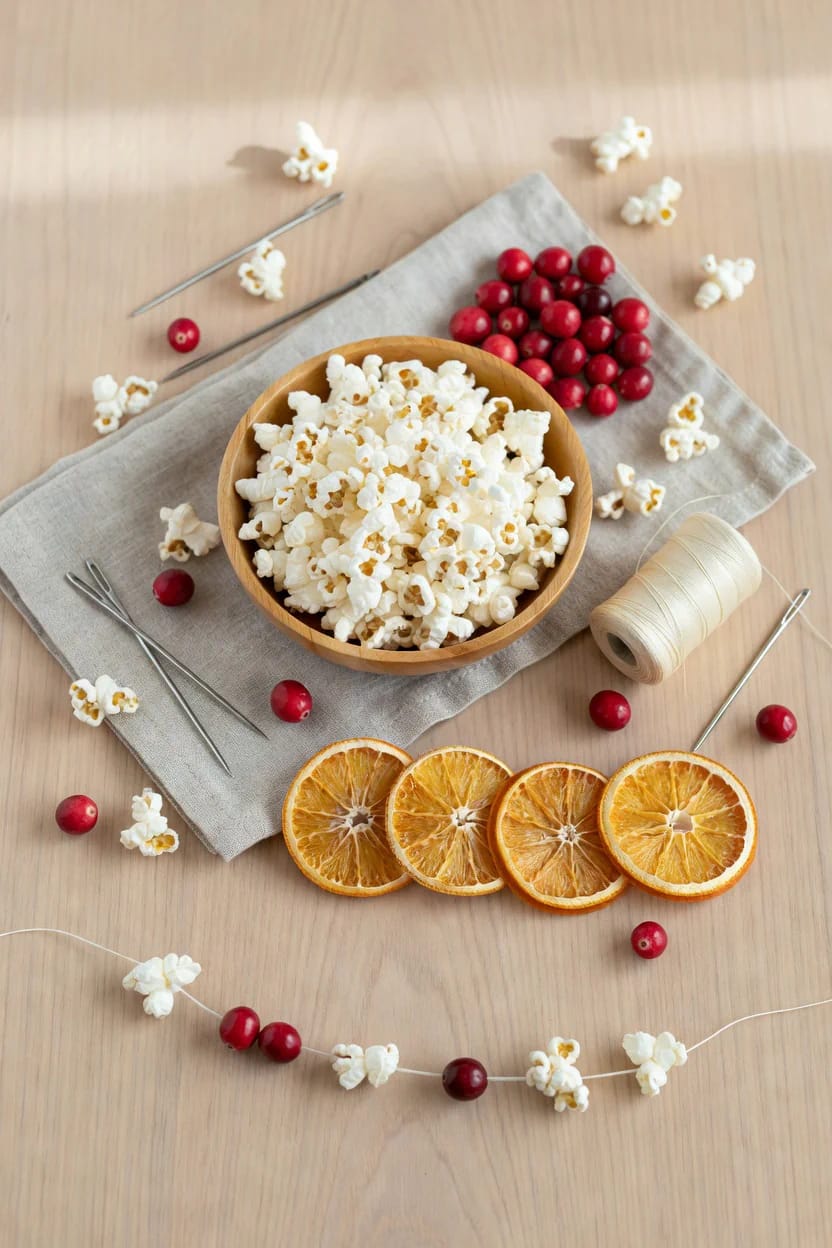
Pop the corn one to two days early and leave it out uncovered so it goes stale. Fresh popcorn is brittle and it will crack and crumble off the needle exactly when you have twenty pieces strung and no patience left; a day of sitting out takes the edge off and it threads without shattering. Use an air popper or a plain bag in the microwave, and whatever you do, not the Orville Redenbacher butter bag that has been in the pantry since last winter. Butter and salt are for eating, and this is not for eating.
Pop more than you think you need. A lot of pieces are misshapen or too small to string, and you will toss maybe a third of the bowl. Sort as you go: keep the big open puffs, set the dense little half-popped ones aside for snacking.
2. Rinse the cranberries, and skip the dried ones
Rinse the cranberries, pull out any that have gone soft, and use them fresh. This is the advice most posts get backward. Dried cranberries get recommended constantly because they last longer, and they do, but on a strand they shrink to dark little knots that read as raisins, not the bright red bead the whole look depends on. The color contrast against white popcorn is the entire effect. Give that up and you have made a beige garland.
Fresh berries are also firmer than almost anything else you could string. Other berries either mush under the needle or hang so heavy they drag the thread into a straight line instead of a swag, which is why fresh cranberries, not blueberries or dried fruit, are the standing choice. If you truly cannot find fresh, string the popcorn alone before you resort to dried. A plain popcorn strand looks intentional; a raisin strand looks like a mistake.
Thread the needle while you are here. Cut an arm's length at a time, three to five feet, because a longer piece tangles and knots on itself faster than you can string. Double the thread over and tie a fat knot at the end, or two, so nothing slides off the bottom. If pieces still creep past the knot, a wrap of masking tape on the tail end fixes it.
3. String in short runs, through the thickest part of each puff
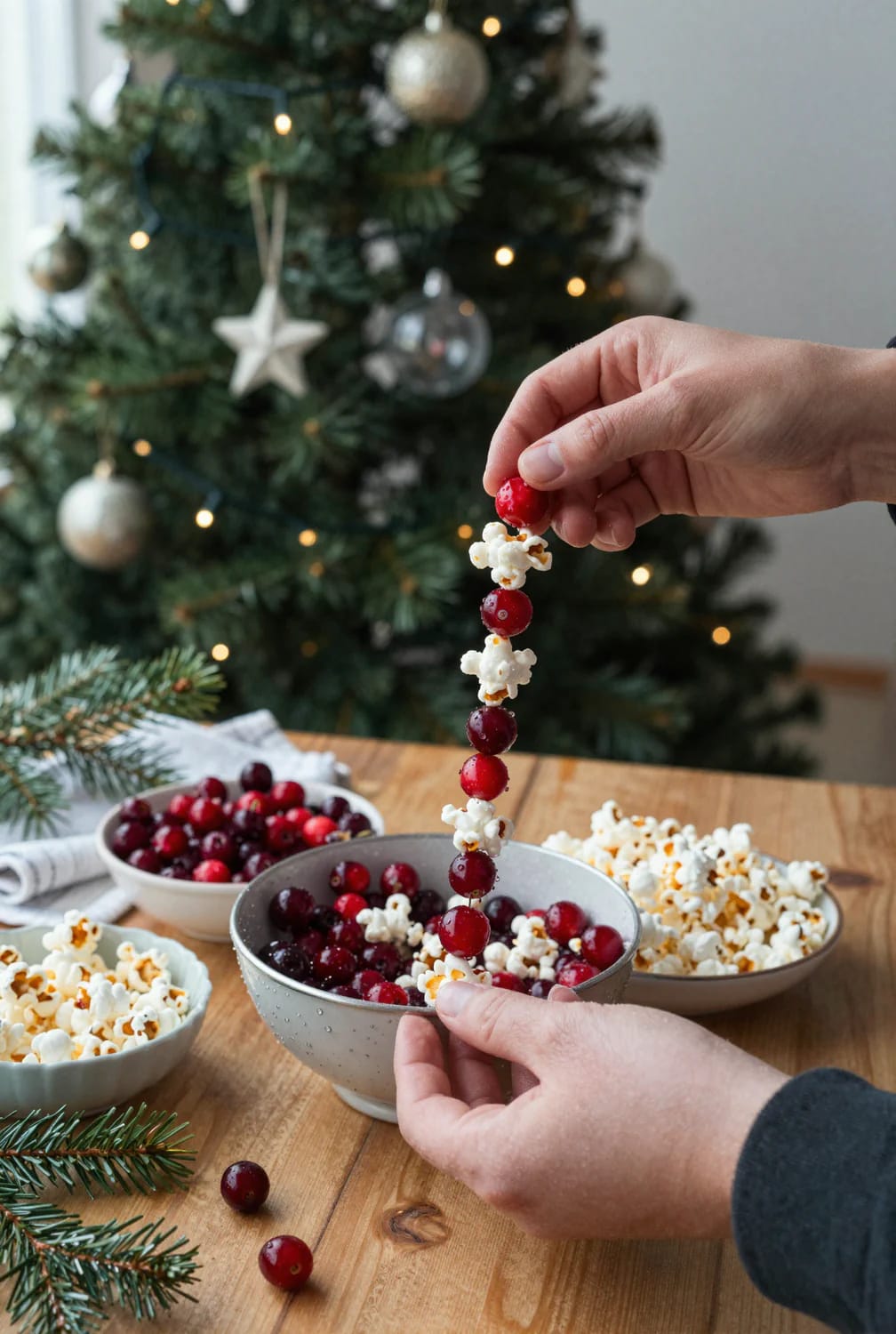
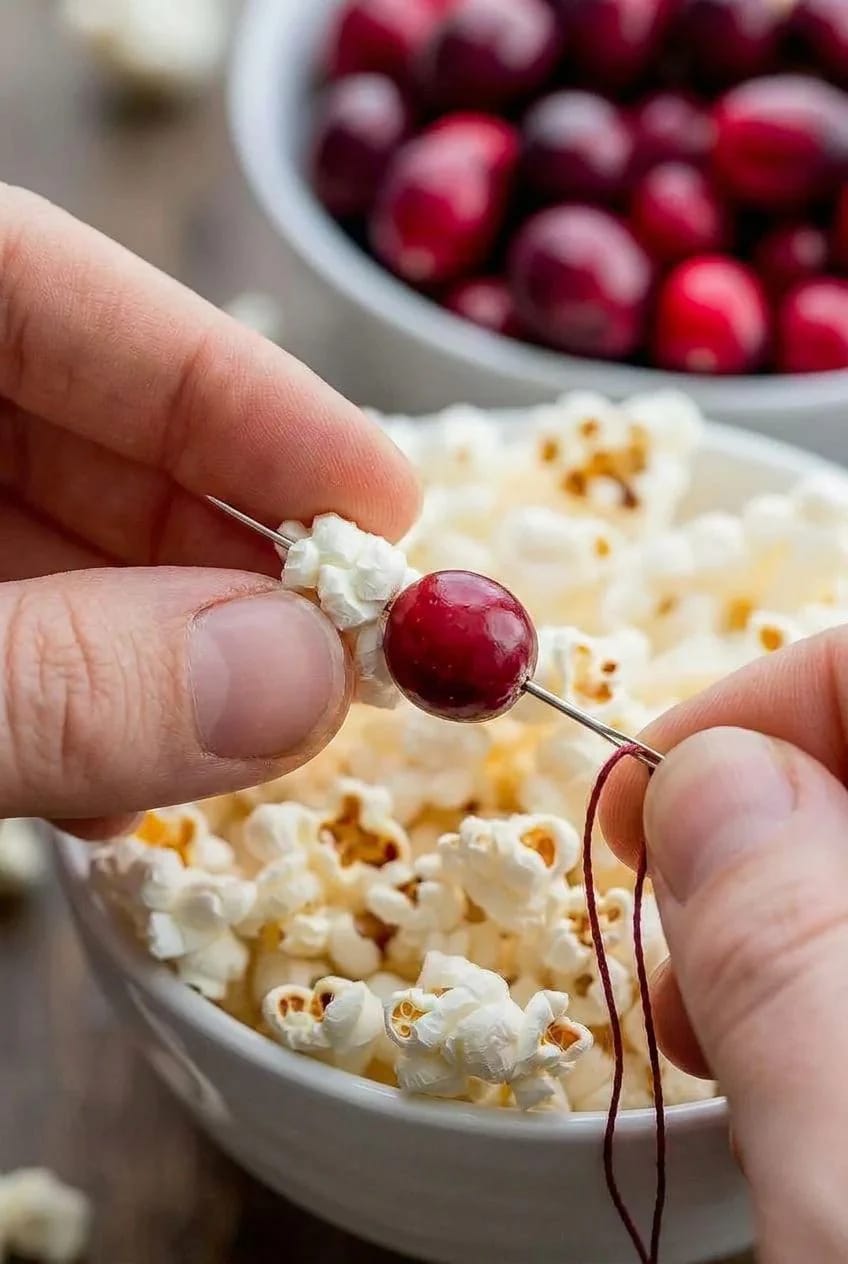
Work in three to five foot lengths and push the needle through the thickest, meatiest part of each popcorn puff, not the thin flaked edges that snap. Slide each piece down to the knot and keep going. You can load two or three popcorn pieces onto the needle at once and push them down together, which speeds things up considerably once you find the rhythm.
The pattern is yours to set, and it is worth deciding before you start rather than freestyling into a mess:
- The classic mix: two or three popcorn to one cranberry, repeated. This is the ratio that reads as the traditional strand.
- Popcorn-heavy: six or seven popcorn, then a pair of cranberries. More white, the cranberries acting as spaced accents. Good on a bushier tree where you want the strand to read pale.
- Just popcorn. Honestly fine, and the fastest.
When you reach the end of a length, tie it off and start a new one; you will knot the finished runs together into one long strand at the end, and the joins disappear into the tree. Do not aim for one continuous fifteen-foot thread. That way lies a tangle and a bad evening.
4. Add dried orange slices only if the thread can carry them
Dried orange slices earn their place only when your thread is strong enough to hold the extra weight. They are heavier than they look, and a single slice pulls harder on the thread than a dozen popcorn pieces, so string them sparingly and space them out rather than clustering. A run of three popcorn, a cranberry, one orange slice, a cranberry, then back to popcorn keeps the load balanced and the slice from sagging the whole section.
Only worth it if you are already drying citrus, though. Cutting and dehydrating oranges specifically for a garland is a second project, and the slices add scent and a stained-glass glow but also a fragility the plain strand does not have.
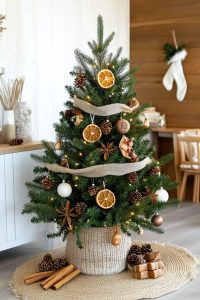 23 Elegant Dried Orange Christmas Decorations for a Cozy Home More ways to turn dried citrus into garlands, ornaments, and scent once you have the dehydrator going.
5. Drape it loose, then let it feed the birds
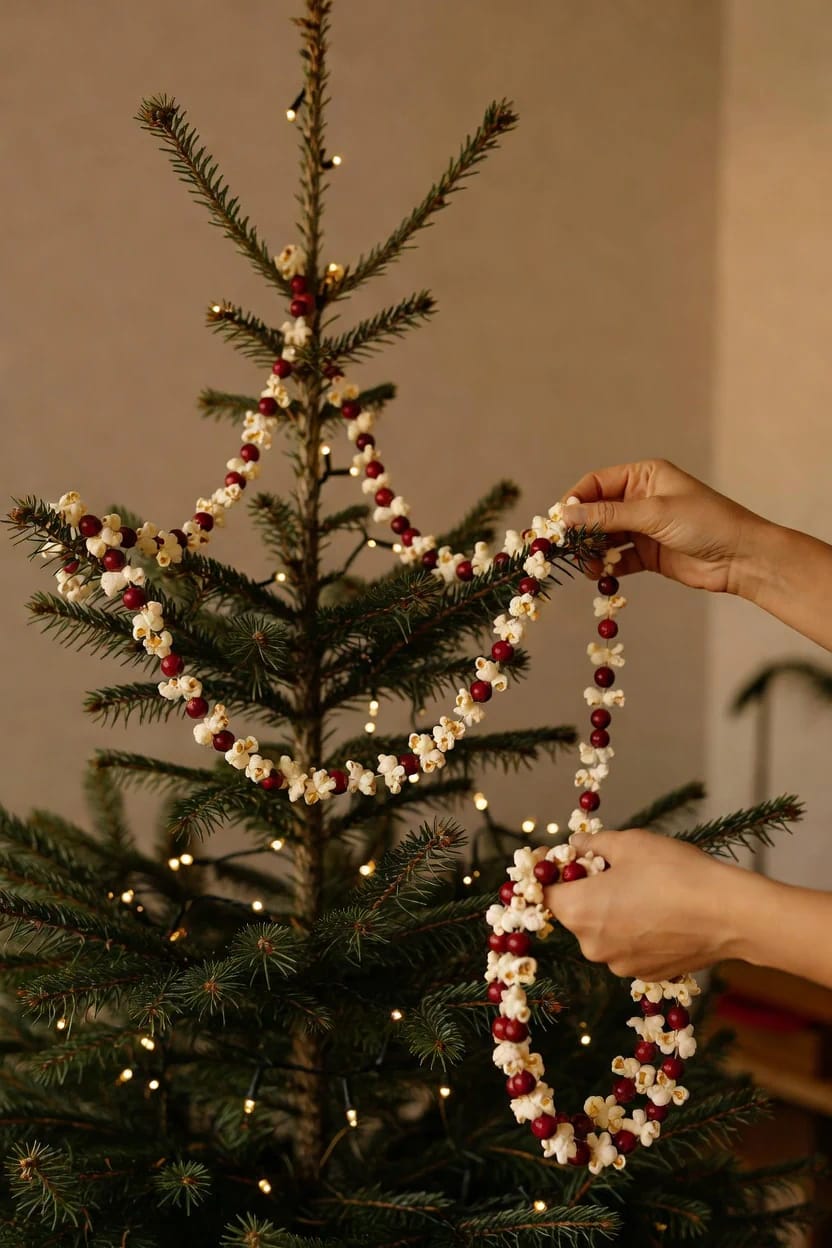
Drape it over the branch tips and let it swag, then plan on it lasting a week or two indoors. Do not wind it tight around the tree like tinsel. Rest it on the outer ends of the branches so it dips between them in shallow loops, which is the line the old strands always had and the reason a vintage tree with gaps showing through suits it better than a dense one. The same loose-swag draping is what makes any strand work on a mantel run of greenery if you decide the tree is not its only home.
On timing, be honest with yourself about the lifespan. A fresh strand holds for roughly one to two weeks in a heated room before the cranberries wrinkle and darken; I could not find a firm number anyone agrees on, because it depends entirely on how warm and dry your house runs. Build it in mid-December, not the day after Thanksgiving, and it will still look right on Christmas morning.
Some crafters spray the finished strand with shellac or a craft sealer to stretch that window. It works, and it also turns a compostable food strand into a plastic-coated object you cannot feed to anything and should keep away from pets and small kids, which quietly cancels the best reason to have made it by hand. Leave it unsprayed. When it comes down, the plain strand goes on the compost or out on a bare branch in the yard, where the same popcorn and cranberries that dressed the tree become bird food through the cold weeks, the way a real garland is supposed to end up rather than a bagged-for-the-landfill exit in January. Keep it to unsalted, unsealed popcorn and berries if the birds are the plan; nothing buttered, nothing sprayed.
Related Posts
- How to Make a Eucalyptus and Pine Christmas Garland for a Natural Mantel
- Foraged Christmas Garland From Your Backyard: 13 Ways to Make One From What’s Already Out There
- Foraged Twig Christmas Decorations From the Garden
- Fresh Cedar Garland for a Sustainable Christmas
- Magnolia Leaf Christmas Wreath Ideas for a Rustic Door
- 10 DIY Denim Christmas Garland Ideas to Make From Old Jeans